As some of the OPFOR documents were published as the UAV revolution began and as they were based on countries known to have substantive drone programs/the means to obtain high-quality commercial ones, it’s not surprising that remote vehicles play a role. In the 1990s documents, they are referred to as “RPVs” (Remotely piloted vehicles)
The American Heavy OPFOR is mentioned as using multiple kinds of drones. Its operational/strategic drones are mentioned as having a maximum radius of around 300 kilometers. Divisions have smaller RPVs for spotting purposes. The Light OPFOR has similar units in its better-equipped formations.
The British GENFORCE-Mobile Forces goes into more detail.
- A combined “reconaissance-strike” UCAV that can spot AND attack.
- Strategic groupings/fronts have an UAV with a 500km range, armies/corps one with 300 km.
- Divisions and brigades have “long” range (70 km) UAVs and “short” range (30 km) ones.
- Artillery regiments/brigades have organic 50 km range UAVs for spotting and laser-designating for smart weapons.
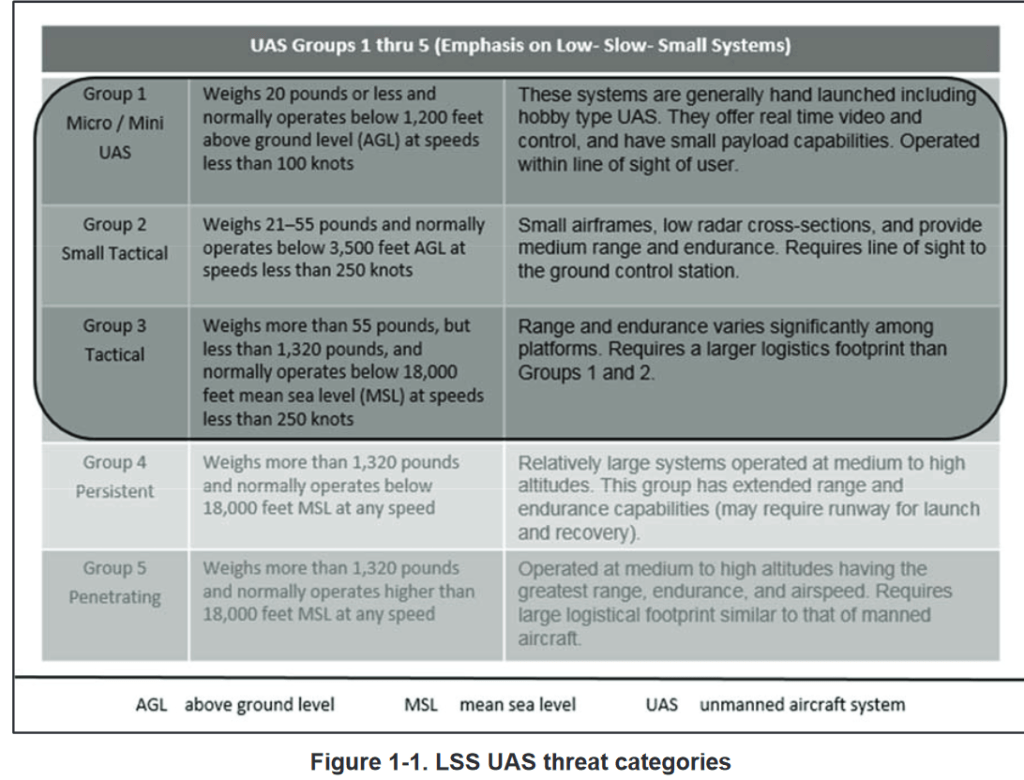
The figures stated are somewhat generic, especially for the bigger and/or more advanced ones, but given the giant number of UAVs in service/development (and undoubtedly even many more since that chart was published around ten years ago!), it’s easy to find representative platforms.

 Fuldapocalypse Fiction