Five Fuldapocalyptic Years

This blog has been active for five years and now has close to a thousand posts. It’s been a joy to make. And it’s unironically and seriously helped change my view of literature as a whole. When I started the blog, my view of fiction and cheap thriller fiction in general was narrow and (unknowingly) distorted. Now I can see a much clearer picture.

So to all who’ve read and commented on this blog, thank you.

Solving The Madness

Ok, “How many shells were fired in the opening megabarrage of a multi-front offensive operation, such as a Fuldapocalypse or All Union’s invasion of Romania?”

Going with the latter because it’s my book, I finally have an answer that’s easier than a vague “Over a million.” Going with “Sustainability of the Soviet Army In Battle” and “Front Operations 1977” as main sources.

A unit of fire for each artillery piece translates to about 80 for 120-122mm, 60 for 152mm, 160 for BM-21s, and 120 for smaller mortars (sust., pg 68). GENFORCE Mobile has similar numbers but adds 40 for big 203+mm pieces. I’ll just split the difference and say 70.

“Thus, for instance, in armies operating on the axis of the main attack, the expenditure of artillery and mortar ammunition in the first day of combat actions without the use of nuclear weapons may be 2.0 to 2.5 units of fire” (front. pg 309)

A front is described in the same document as having 3,400 to 4,200 artillery pieces (front pg. 12), so a very basic napkin calc for two fronts gives 1,176,000 shells. That’s about 25,000 tons even if you assume “only” the weight of a D-30 round for each shell.

So yeah, 100-150 x the number of total artillery pieces for an extremely basic ballpark figure.

Review: Nixon’s War

Nixon’s War

Rick Kester’s Nixon’s War is one in an “alternate presidents” series of alternate history novels. How is it? Well, uh, not very good.

This alternate Cuban Missile Crisis gone hot starts in a conference room. And continues in a conference room. I can sympathize trying to balance exposition with storytelling (after all I’ve had to do it myself many times). This doesn’t really strike a balance. Especially as it jumps to everyone from Lee Harvey Oswald to Elvis Presley to random civilians. All of whom talk like they were in a conference room.

(There’s a lot of exposition, ok?)

Anyway, the B-59 goes ahead with the nuclear torpedo launch that it avoided in real life, and World War III begins. This is at least a slight improvement over the conference room mania, simply because you can’t make a nuclear war completely boring. However, the exposition continues apace. Worse, it’s not even accurate as constant references to “5.7mm” bullets are made, a caliber that didn’t come into being until decades after the events of the book. And apparently the US Army is adopting the Browning Hi-Power (I guess the author likes FN weapons?)

The last third of the story propery after the (realistically) skewed war is mostly just people bumbling around in an uninteresting fashion. The reader is treated to philisophical debates and infodumps on everything from child care policy to plutonium reactors. In fact, the final section of the book is nothing but historical exposition. And this isn’t a small afterward-it’s about a quarter of the whole thing!

I don’t want to be too hard on this book. It does sincerely try to have a wide variety of characters reacting to World War III, does have a large number of battles, and tries to be a good “big war thriller”. It just doesn’t really succeed, which is a shame.

World War III Sports

With the actual war done, the WW31987 blog turns its attention to the really important things: Sports! My personal hunches, since this is in July/August.

  • MLB stops the season and probably either voids it (sure beats the real life World Series cancelations of the 94 strike and the 1904 boycott), or goes straight to the playoffs after the war ends.
  • The NFL hasn’t started yet and won’t start the first game until the second week of September, and the war ends in late August. (Ironically, there was a disruptive strike that year, dunno how the war would affect that). Given its lucrative nature, I can see a wait and see approach followed by starting the season after the war.
  • The NBA and NHL start in the late fall and are thus largely unaffected.
  • For European soccer leagues, I’d say it depends on the country. The historical Bundesliga started several days before the war would have begun, though a crisis could have averted it. My hunch is that the countries not directly hit (ie, France, etc…, would just launch a delayed and possibly shortened season after the war’s end), while Germany, the nuke victims, and the Scandanavian countries that were invaded would wait and possibly cancel the seasons.

One footnote: 2020 was the historical season that Mike Trout qualified for the Hall of Fame (played in at least 10 seasons). With obvious fears of the season not being able to be completed due to COVID, there was talk as if it would count as official. The Hall responded by saying that 1994 counted for the sake of eligibility, and thus even a World Series less 2020 would as well. Or a World Series-less 1987.

Big Vs. Little Targeteering

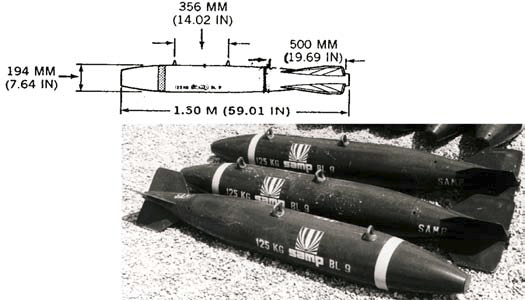
With regards to unguided bombs, one of those things that’s still a little iffy to me is what’s more suited for a few big bombs and what’s for a bunch of little ones. I can guess, with something like a strongpoint or large building being viewed as worthy of a giant demolisher while a group of enemy infantry/soft-skins is better suited for a large stick of small fragmentation ones.

I also have this suspicion that general purpose bombs are acceptable for most aerial targets. This is backed up by the data from the Gulf Wars showing the bulk of dropped bombs being Mk82s and derivatives. And of course, anything that can explode is not useless. Both of these below have uses and both can be deadly.

A Brief History (And Explanation) of Rocket Tossing

Anyone who has recently seen any footage of helicopters in Ukraine has witnessed what I call “Rocket Tossing”. The helicopter lifts its nose, fires off a ton of rockets indirectly, and then peels away. It has the impression of an improvised, ineffective tactic. But it’s not the former and is arguably not the latter.

It’s important to note that doctrine of the 198X Fuldapocalypse era, both western and eastern, details rocket tossing at length. The huge helicopter losses of Vietnam, the precedent of the Iran Iraq War (where the tactic was used constantly), and that air defense wasn’t exactly getting worse all made for sound reasons to know it. So indirect helicopter fire isn’t that surprising.

So how effective is it? Well, it’s basically a light multiple rocket launcher that can fly. Unguided multiple rocket launchers are area weapons, optimized to cover a large piece of land quickly at the expense of long-term rate of fire. (This is why rockets are considered ideal for chemical warfare). Ideal? Not really. Cost-effective? Probably not. But useless? Nah.

Review: The Death of Russia

The Death of Russia

It’s uncommon but not unheard of for a book to have its premise done better by something else in more or less every single way possible. So is the case with The Death of Russia, an alternate history story told through exposition and snippets about Yeltsin dying in the early 1990s and the world sinking into chaos. AH enthusiasts will also know that Zhirinovsky’s Russian Empire was another alternate history story told through exposition and snippets about Yeltsin dying in the early 1990s and the world sinking into chaos. Both started off as forum timelines and then were commercialized.

The first issue one notices is the writing style. Namely, giant breathless blocks of text. The timeline tries to do the “snippets from in-universe books and the like”, but this falls flat because all the “sources” read exactly the same. The second issue is the relentless grimdarkness. While based on stuff that sadly did happen, this just feels gratuitous. There being no real characters or anything but pure exposition makes both problems all the worse.

Eventually things spiral into a nuclear World War III. However, it’s worth noting that a fake interview with Evangelion’s producer starts off the chapter in question. Since pop culture is an obsession of the online AH fandom, this is not exactly a good start. The strike itself is no Arc Light or Red Hammer 1994. I actually fell annoyed at how a (mostly) survivable nuclear war, a topic that fascinates me, was handled so badly. It’s handled with all the grace of a minor league sportsball game report. Namely, a minor league game report written by an basic computer program that saw the box score.

In fact, what’s honestly interesting about the final nuclear exchange, besides the teeth-gritting “it doesn’t work like that” inaccuracies, is how it demonstrates a critique I’ve had for a while now. In the footnotes, the author doesn’t cite those two novels, or any real study on a limited/counterforce-heavy big nuclear strike that would leave society survivable. No, it’s another timeline, an earlier one called Able Archer 83.

But for any normal reading, I’d just say “read Zhirinovsky’s Russian Empire instead”.

Review: Fire and Maneuver

Fire and Maneuver

The second entry in James Ronsone and Alex Aaronson’s 1981 World War III, Fire and Maneuver continues its predecessor’s excellent work. While it does not bring the most novelty to the subgenre in terms of its structure, in execution it does very well, hopping between viewpoints in a way that’s both smooth and fast. And it actually has an M47 Dragon being able to destroy something in a stretch of logic that works for story reasons.

Jokes about the Cold War’s worst ATGM aside, this is a good entry in a scarce genre. If I had to make one criticism, it’s that long, exact system designations are used a little more often than I found credible. But that’s a tiny nitpick and doesn’t detract from the experience.

Simulating the Arc Light Approach

First, a primer on nuclear war terms. Counterforce means military targets, countervalue means civilian ones. That being said, on with the post.

Eric Harry’s novel Arc Light, one of the first reviewed on Fuldapocalypse, has a way to get a large but survivable nuclear exchange. This is to have both sides aiming for an incredibly counterforce-centered approach. Doing such approaches in Nuclear War Simulator (and there are official scenarios that show such focuses being done) generally means something similar to the novel: Around a few million dead on both sides (especially depending on which way the fallout blows), but most “important” stuff still intact, as the damage is concentrated in remote bases.

Besides the obvious “but what if it goes beyond missile silos in the middle of nowhere” objection, there’s also context that the US and Russia/USSR are very big, which makes it more possible to have “remote” areas at all. Have a big fallout wave anywhere near the dense massively populated belt of eastern China and the toll rises dramatically. Do it basically anywhere across India’s generally “spread out” (for lack of a better word) populace or in a smaller country and the result is similar.

I have to repeat that the Arc Light approach is something I find a lot more acceptable (not plausible, I use acceptable as a better term) than the Hackett’s WW3 approach. The strategic exchange is aimed purely at military targets? All right, I can believe that. Tac nukes are used but nothing more? I can also accept that. But just a small number of countervalue targets (ie the infamous Birmingham and Minsk?) That’s harder for me to accept.

Review: Shanghaied on the Rio Grande

Shanghaied on the Rio Grande: A Novel of World War Three

Just looking at the suffix of this book made me go “I had to review this.” Granted, William Joiner’s Shanghaied on the Rio Grande is more like a short story. But it’s still a World War III invasion story. I thought the length of this would mean there was some kind of publishing mistake or the story was unfinished, but no. It’s wrapped up within its few pages.

This reads like a teenager with little knowledge of the military or geopolitics who read far too many 1980s adventure novels writing a fanfic of those. I do not mean this in a negative term. The Chinese seize control of the American nuclear arsenal and walk in, dominating and trying to force Americans to become Buddhists (seriously). Opposing them are heroic Texans, one of whom is named Billy Bob (also, seriously). The story wraps up incredibly quickly (as in two pages) once the Americans get their nukes back and rout the Chinese.

Is this stupid and offensive to Texans and Chinese alike? Yes. But is it fun? Also yes.