Review: Seven Up

Seven Up

It kind of goes without saying that I’m not in author Janet Evanovich’s target audience, and neither is a Stephanie Plum novel the kind of book I was expecting to review at the beginning of this blog. But Seven Up itself and the story behind how I read it is worth it.

Though the seventh book in the series, this was the first tale of the wacky New Jersey bounty hunter that I read. When I read the back cover blurb, the implication was of a thriller. This was wrong. When I started reading the actual book, it felt like it was going to be a duller one about family drama. This was also wrong. I got one of the biggest pleasant surprises I’d ever read.

When I finished the book, it turned to be a hilarious, fast-moving, laugh-out-loud goofy novel of pure fun. Really, despite its initially slow start, I had a great time with it. To be honest, it reminded me of The Simpsons at its height, which is always something that humorous fiction should aspire to. While I’ve heard the series has grown stale since then, Seven Up itself is extremely fresh and enjoyable.

The Worst Book?

While looking for bad books, I came to this post in the Imaginary Museum blog by Dr. Jack Ross. An excellent piece of writing (even if I didn’t know who frequently mentioned David Lodge was), this paragraph in particular rang extremely true for me:

“Ever since I started writing novels myself, I guess I’ve been a bit more chary of parlour games such as this. There is, however, no accounting for tastes, and it can come as a shock that something you mildly enjoyed yourself can be right up there on someone else’s hitlist. A lukewarm response is the worst fate any book can receive, in any case, so I don’t think being on a list of world’s worst novels is likely to do lasting harm to any of the books (or authors) mentioned above.”

Being a writer and knowing the effort it requires dampening a lot of the previous snark? Check. (I’ll put it this way-I don’t think being a critic has helped me with being a better writer, but I think being a writer has helped me with being a better critic). Tastes differ? Check. (I learned of Jon Land from a massively negative review of one of his books). A mediocre reaction is the worst? Often very true, especially for reviewing as opposed to simply reading.

Onto the main subject, Ross sets out very good criteria for “worst book”, something I’ve used very cavalierly in the past (to my dismay now).

You can’t pick a novel you didn’t manage to finish

You can’t pick a novel by an author you entirely despise

There’s no point in selecting something completely obscure

Since I’ve had a tendency (although it’s waned somewhat now-I’m dropping books I find dull at rates I haven’t in the past) to finish books, the first isn’t an issue. The “obscure” part is, however. I don’t want to get dragged into a fandom war or pick a too-easy target, so I’ll go with “did it appear in mainstream bookstores.” While William W. Johnstone had that honor, the second rule strikes him out.

Thankfully, I’ve long had an answer. Not surprisingly, it is…

Ready for it…

Executive Orders by Tom Clancy. It’s one of the most successful authors ever, so I feel no guilt about slamming it. It’s an exceedingly bad book that almost certainly could never have been published by a first author. And while I’ve been critical of Clancy’s entire catalog, his earlier books were significantly better. It all “clicks” into being my choice of the worst.

(And yes, I’ve heard The Bear And The Dragon is even worse, but I haven’t read that and have no desire to-remember the rules)

If I had to give a second choice, it would probably be Sidney Sheldon’s The Other Side of Midnight. That’s another literary big name, I finished it, and it comes across as significantly worse than his later novels after reading them. Those at least can do the “gilded cheap thriller soap opera” better and have lots of out-there set pieces. All Midnight has is just romance novel stereotypes (that I could instantly tell despite barely knowing the genre) stumbling around for the entire book.

Review: Generic Enemy: Mobile Forces

Generic Enemy: Mobile Forces

So now it’s time to do a formal review of an OPFOR document. While an unusual choice, this one I believe is the most interesting, as it’s both a description and a sort of prediction. A 1990s British document made available via their version of the FOIA law fairly recently, the Mobile Forces is my favorite OPFOR publication, and not just due to its massive size.

First, I have to say the obvious thing quickly: This is a field manual written in field-manualese, not anything that’s meant to be any kind of literary work. That being said, its comprehensiveness is something.

Like most OPFORs, it’s an idealized Soviet-style opponent. Unlike most OPFORs, especially the American Heavy OPFOR, it doesn’t just present that (even with post-1991 hindsight/sources) but also tries to look ahead, in this case towards a “hybrid” model that Russia at the time tried and, for obvious reasons, largely failed to actually adopt until decades later. A two-tier force exists, the “Basic” and “Mobile” forces.

The Basic Forces are arranged in traditional Soviet style, only with some differences-special premade forward detachments, a few other organizational changes, and, most importantly, many divisions having only three rather than four regiments at paper strength. The Mobile Forces, meant to be the cream of the crop, use the same “Brigade-Corps” organization that the Soviet tank forces in World War II used.

The Mobile Forces have permanent combined-arms battalions (while still eager to make ad hoc task forces if need be). Their brigades have a large number of battalions under their command. The document goes into massive detail as to how these two types of forces are meant to fight and work together.

There’s also a few changes.

  • The intended rate of advance slows down. Whether this is because of better artillery/enemy mobility/etc… or because the original rates were too optimistic is a good question, but it’s there.
  • Tactical use of nuclear and chemical weapons, while obviously not removed, is de-emphasized, simply because “conventional” weapons have gotten better.

As one of the best OPFOR pieces, this is well worth a read to enthusiasts, wargamers, and the like as a study of a “futuristic” yet still recognizably Soviet force. I’ll admit I’ve taken more than a little inspiration from it for my own writing, simply because of the effective, distinctive, two-tier military it portrays.

Review: Undeclared War

The Home Team: Undeclared War

The first book in the Home Team series of thrillers, Undeclared War boasts another one of those amazing cheap thriller hero names. In this case, it’s Ted Reaper, SEAL turned vigilante out to stop a -ready for this?- terrorist. Unfortunately, the main character’s name is the only distinguishing feature about it.

This is one of the most generic “shoot the terrorist” books there is. It wants to have its cake and eat it too concerning realism, which leads to a bizarre situation where the preparations are handled in realistically drudgerous detail, yet the actual action manages to somehow be both out-there and dull. The whole “we’re scrounging vigilantes but hey, we get rare and exotic weapons from our convenient connections” contradiction doesn’t help either.

The lists of weapon descriptions get excessive even by the standards of the genre. I don’t know what I should have expected from a mid-2000s thriller, but this deserves a pass.

A Thousand Words: Red Dawn

Red Dawn

The 1980s classic invasion movie, Red Dawn is a strange beast. While it rightfully ranks up there with Top Gun as one of the most iconic and remembered movies of its generation, I found it had some fundamental issues. And no, it’s not anything dealing with the actual premise.

The production values are very good. The acting is, at the very least, sufficient. Yet the movie’s biggest problem is its conflicting tone. There’s two types of invasion stories, what I call “grim invasion” and “pulpy invasion”. Grim invasion is what most of the original invasion novels were, while pulpy invasion is something out of, well, guess.

Red Dawn sort of awkwardly teeters between elements of both without really settling into one or the other. While not a deal-breaker for the movie, it sours it somewhat and leaves me with the feeling that picking one type, likely pulpy given the concept, would have made for a better story. That being said, the film is still well worth a watch.

The Distant Vistas

J. R. R. Tolkien’s quote about “distant vistas” is something I’ve thought about. The quote itself is this:

“Part of the attraction of The L.R. is, I think, due to the glimpses of a large history in the background: an attraction like that of viewing far off an unvisited island, or seeing the towers of a distant city gleaming in a sunlit mist. To go there is to destroy the magic, unless new unattainable vistas are again revealed.”

Because Tolkien was nothing if not detailed with his worldbuilding, this quote seemed a little surprising to me. But I can understand it, and definitely sympathize with it. See, when you provide a small glimpse, the world often looks big, mysterious, and wondrous. Give a big detailed view and it ends up looking small and mundane. This is why I tend to dislike excessive “lore”, author statements intended to be definitive, and attempts to explain backstories too much. Not always, but a lot of the time.

Review: Pacific Storm

Pacific Storm

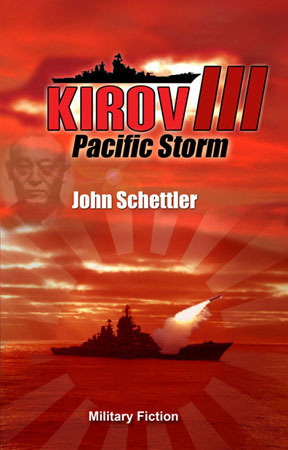
The Kirov series is over fifty books long and counting. But the third entry, Pacific Storm, was planned as a potential stopping point, according to the introduction of a later entry. And while I normally criticize series from Jack Ryan to the Survivalist for passing good opportunities to conclude, it’s for the best that this one sailed right by it.

After having fought through the Mediterranean in the second book, the missile cruiser battles in the Pacific in the third. Besides the issues with the prose, the encounters fall short because the disparity between World War II ships that don’t know what they’re dealing with and a futuristic warship that does means that all the battles have to be contrived in some fashion. Pretty much the only things that work are various surprise gimmicks, close range, and pure numbers, and that’s barely enough to sustain a three-book series.

The ending still involves sequel hooks, but features the ship going back to its present with its crew having realized they started the (nuclear) World War III by firing on an American submarine. When they see the submarine after their “excursion”, they avoid attacking it. Meanwhile, their experiences have changed the “past” significantly. This would be a perfectly good conclusion that still gave room to continue, but it would have concluded three stilted, modestly out-there books. Instead, the series got bigger, more complicated, and, yes, better.

Review: Tiberium Wars

Command And Conquer: Tiberium Wars

The Keith DeCandido novelization of Command and Conquer: Tiberium Wars was widely denounced upon release. I was there on Spacebattles, and I saw the critiques. I read it, and I agreed.

If the book itself was in an original setting, it would be forgettable and bland, a spacesuit commando Marine Force One with a Mary Sue protagonist. The only real quibble would be extremely rapid procurement of new rifles. But as it stands, it doesn’t gel well with the Command and Conquer game. At all.

There might be a mitigating factor in that I’ve also heard that DeCandido got background material for “Tiberium”, the cancelled C&C FPS project and based the book of of that, which would explain some things like the abundance of rifles. However, whatever the circumstances, this is a book to avoid.

Weird Wargaming: Independent Scotland

The subject of what military an independent Scotland might have has gathered a lot of attention. One of the most serious and definitive reports on the matter comes from the respected Royal United Services Institute, a piece entitled “A’ the Blue Bonnets.

The RUSI piece in short depicts a small and light land force not too dissimilar from Ireland’s, unsurprising in light of their similar geography. However it does assume a more capable air/naval element. The report shows a comparably strong navy and an air force with hand-me-down BAE Hawks as its fixed-wing fighters.

Assuming no political issues, something like the KAI Golden Eagle might also work as a basic air defense fighter, an heir to the F-5 of the past. That’s the only real quibble I have with the report, which is otherwise well worth a read.

As for the possible opponents of this Scottish military, far and away the most realistic is, like Ireland, whoever they’d face on foreign peacekeeping operations. For more out-there ones, you have Russia (especially at sea), and if you want to be really out there, you could do a “Kobayashi Maru” situation where the Scots have to inflict as much damage on the invading English/British invaders as possible.

And of course, this assumes a commitment to plausibility-if you strip-mined Scotland’s entire military age population and had an outsider equip and train it, then you could end up with something completely gigantic. But the “Ireland on land and another North Sea state on sea and air” option is the most logical.

Review: Lethal Tribute

Lethal Tribute

A 2000s SuperBolan, Lethal Tribute tells the story of the Executioner as he fights a group of Hindu cultists with cloaking devices and their stolen nuclear weapons. By this point, Mack Bolan plots had long since devolved into “cheap thriller mad libs”. With the books being published at such a fast pace, it’s hard to imagine how they couldn’t have ended up that way.

That being said, this book is one of the better ones, by later Bolan standards-which may not be saying much. It still amounts to little but an overstuffed jumble of action scenes and very much feels (understandably) rushed. It still has the issue of its plot being so shallow (even by cheap thriller standards) that it needs filler. It still has the strange generic feeling that managed to last across different authors in the series. And it still manages to be both over-descriptive of weapons and sometimes inaccurate, listing two different calibers for the same helicopter gun on one page.

But the premise here is at least more out-there than just a plain “shoot the terrorist” novel. Some of the set pieces, from tank attacks to hallucinations, get crazier than usual, a silver lining of a weird “cheap thriller mad libs” result. The filler isn’t quite as obvious or clumsy as it’s been in some other Mack Bolans. Finally and most importantly, the Executioner himself is portrayed as a lot more vulnerable than he is in some other installments. The Gold Eagle Bolans are not what I’d recommend to action readers-they’re very smooth, disposable, mass-produced, measured and forgettable artificial thrillers from the Harlequin assembly line. But in comparison to some of the others, Lethal Tribute still looks just a little better.