Review: ParaMilitary Action-Adventure Fiction, A History

Paramilitary Action-Adventure Fiction: A History

I have loved and respected Nader Elhefnawy’s analyses of fiction. So it’s with a heavy heart that I say that his Paramilitary Action-Adventure Fiction, A History doesn’t live up to his other work on the technothriller.

I saw one big technical error, claiming the SEAL Team Seven series was issued in the 2010s by “Keith Douglass.” In fact, it was reissued from its original run in the 1990s and 2000s after the bin Laden raid and “Keith Douglass” was a pen name used by at least two different people (William Keith and Chet Cunningham) and possibly a third or even more. But a bigger problem is structural.

My biggest criticism is the overly long amount of time spent on the socio-political context of the times, which while obviously relevant at times (such as the crime increase of the 1960s that paved the way for the vigilante novels or the Vietnam War MIA obsession that did the same for action novels in the 1980s), sometimes doesn’t feel like that. It flows a lot worse than the techno-thriller piece does and, worse, zooms out too much. There’s a saying of missing the forest for the trees. This misses the trees for the forest. It’s okay enough when talking about non-print items, but misses the mark when talking about books.

Far more important than what effects the economy had on the national mood were just the simple economics of dealing with anything low-margin, which is what these novels were. The sad, harsh, boring reality is that the kind of disposable paperbacks that the work covers are/were the most expendable bottom feeders of commercial literature. The slightest dip in the economy and/or change in customer tastes could knock out all but the most popular. I don’t blame Elhefnawy for taking the approach he did, but think he was looking in the wrong place.

The Confrontation

See, I’ve always envisioned an out-of-the-norm final confrontation in a hypothetical video game as being in this large vacation home in a beautiful mountain town (kind of inspired by the Adirondacks). The town would otherwise be peaceful. A sort of melancholy but beautiful music would play in the town.

There’d be no enemies except for the principal antagonist, and I’d imagine the confrontation mostly taking place through dialogue. Maybe that’s be appropriate to the genre and maybe it wouldn’t, but it’s sort of how I’d want my dream video game to conclude.

Review: If It Bleeds

If It Bleeds

A collection of short stories featuring the infamous Predator alien hunters, If It Bleeds is the first anthology I’ve reviewed on Fuldapocalypse. From ancient history to futuristic fighting rings, the Predators come to hunt.

In many ways, these aliens are ideal crossover/setting shifters. A combination of a sense of (comparative) self-restraint and a desire for (by their standards) a “fair” fight mean they can be put almost anywhere, and they are. Compare this with the other half of the “Alien vs. Predator” franchise. The xenomorphs are one-dimensional and will inevitably either devour everything or get crushed themselves.

The various writers take advantage of this to bring about various “prey”. For the most part, they’re successful. However, there’s a few small issues. The first is that the stories that go for some kind of mystery don’t work because you know what the anthology features. The second is that there is no story where Theodore Roosevelt fights a Predator.

Otherwise, this is a very fun group of stories that any science fiction or action fan should enjoy.

The Hall of Fame And The Hall of Herb

One of the most amusing things that I look at in sports history is to see how many Cooperstown plaque-holders can match the title record of Herb Washington-one. A little background is in order.

Herb Washington was a track athlete who was hired by the Oakland A’s as a “designated runner”. His lack of baseball knowledge meant that in practice, despite his speed, he couldn’t steal bases effectively. The trend of pinch-running specialists continued throughout the 1970s (in 1976, the A’s had two, Larry Lintz and Matt Alexander), but those were actual baseball players who could run fast. Washington, on an excellent three-peating A’s team, appeared in the 1974 World Series-and promptly got picked off at first. But he still got a title that many Hall of Famers didn’t have.

Just in the inaugural 1936 class, only one inductee (Babe Ruth) exceeds Herb Washington in championships (with seven). Then you have Ty Cobb (zero), and Honus Wagner, Christy Mathewson, and Walter Johnson, all with one, “equaling” Herb Washington.

Review: Eagle Rising

Eagle Rising

The Kirov series, of which Eagle Rising is the 47th (!) installment, is strange. If I’d read it three years ago, I’d probably have unfairly denounced it as the worst series of all time. In my more recent reviews, I’d sort of wavered from criticizing the individual books to admiring the ridiculous (in a good way!) plot and premise of the setting.

Now I have this weird feeling that’s settled. I unironically love the craziness and excess that the series gets into, while remaining just as critical of the many flaws of the individual books. I’ll take this flawed excess standout over a hundred “51% books” any day.

That being said, this book itself has essentially two set pieces spread out of over many pages and takes place in an entire arc with a forgone conclusion stated as early as the first book in the series. Whatever the author’s intention, the impression I got of this arc, with this particular WWIII having long since been established as ending in a nuclear fireball (hence the time travel and changing it in the first place…), was that it served mainly to show off wargaming set pieces.

The set pieces are a big Russo-NATO showdown in Eastern Europe and the shenanigans of the ship and its crew. The former is a strangely intriguing example of what happens when you rely on wargame simulations to an incredible and unprecedented degree. Besides the obvious issues with such a stilted de facto let’s play, there’s also problems when the simulations produce an undramatic (however realistic) result and there’s not much “cushion” of characterization or low-level danger to balance them. Another issue is that this particular conflict setup is not exactly undergamed.

The latter, a far more out there plot, involves the use of a time travel MacGuffin and some of the crew going onto an island and fighting a pack of wolves (it’s a bit of a long story). It also involves long scenes of clunky dialogue, which is less fun.

In a way, this book, with time travel shenanigans and wargame AARs, is its own series in a nutshell. Is this a good or bad thing? Well, it depends on what you want and/or like.

Review: Aurora Invasion

Aurora: Invasion

What better book series to review on the Fourth of July than the ridiculously star-spangled Black Eagle Force? Aurora Invasion is a later entry in Steinke and Farmer’s “masterpiece”, where the BEF battles a new opponent-aliens.

This is a weaker entry in the series. Part of this is because its authors never were the best in terms of literary fundamentals to begin with, something very true here as well. A bigger reason is that, believe it or not, the rest of the series is so bizarre that fighting UFOs is actually more grounded than some of the other stuff the BEF gets up to.

This is still a decent out-there cheap thriller, but there are better books even in its own series.

Review: Hitler Invades The United States

Hitler Invades The United States

I’d thought that Hitler Invades The United States was going to be just a dime-a-dozen work of internet alternate history. I was mostly right, but one part of it was a lot weirder than I thought, and that part both makes it lower quality and more interesting to write about.

The point of divergence is that the Germans delay their campaign so that the wunderwaffe can be ready. With said wunderwaffe, they easily take over the USSR. Then they launch a successful and “essentially unopposed” (exact words) invasion of Britain. Then it comes time to-guess. It’s not exactly the most plausible or original World War II alternate history story out there.

The story itself is a clunky mess of what you’d probably get if you only looked at the most shallow and popular sources of World War II, and then decided that an American invasion had to happen. The Axis invades the US and is only stopped when the Americans drop a nuke on Nuremberg-at which point the war ends instantly. But the real “star” is the conference room.

Barring a few “recollections” from participants, this book is entirely conferences and meetings, written in a fashion that feels like the script for a stage play. I know this genre has a lot of conference room scenes, but this takes the cake. And they’re not even done well.

What I think makes this interesting to look at is how something like this compares with Robert Conroy, who also wrote technically inaccurate alternate history tales of the US getting invaded. At least with Conroy you had a proper novel, even with often-subpar execution.  Here, it’s the kind of “semi-exposition” alternate history that in theory should be used in places where a normal narrative wouldn’t work, but in practice I feel is used likely because it’s easy to write.

What this has in conclusion is the negative elements of two types of alternate history “traditions” (as per Alexander Wallace’s excellent article) amplified at the same time. One perceived negative element of the “print tradition” is that it’s less plausible and tends to focus on the most visible and obvious trends, like the American Civil War or World War II. This is that. However, it also has the issues with storytelling (and then some) that the “internet tradition” can have. The result is the worst of both.

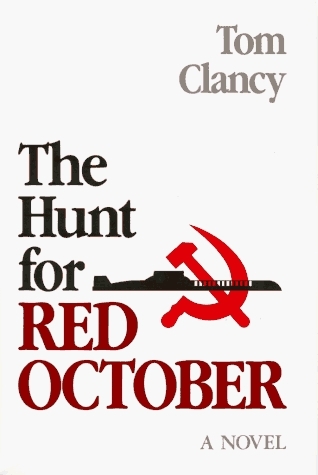
Review: The Hunt For Red October

The Hunt For Red October

This is it. The book that started it all. The book that turned Tom Clancy into a juggernaut. It’s time to review The Hunt For Red October. How is it? In short, it’s well-ok?

What I can say about this tale of a loose super-submarine is that it doesn’t really pass the “if this had been published a year or two later by a different author, would it still be as popular as it was?” test. Many works of fiction are so good on their own terms that they’d succeed in that goal. This isn’t. If it had been written by someone else later on, it’d probably be barely remembered as a middle-of-the-road technothriller.

The novel itself isn’t bad by any standards, but it still has all of the issues that would drag Tom Clancy down later on. It’s just those are in a smaller and more manageable form. There’s some bloat, but it’s manageable here. There’s a few too many subplots, but they’re manageable here. There’s the bias, but it’s manageable here. You get the idea. It’s easy to see why it could be a success in its time, but with hindsight, and with me having read other technothrillers before it, I don’t find it that impressive.

It’s also a little dated. Some of it is technical issues that are understandable and minor (for instance, a western author could be forgiven for getting the type of reactor in an Alfa-class wrong). But some of it is the general “wow” factor, again that would have made them a lot more impressive to someone at the time than to a post-Gulf War reader for whom advanced military technology is familiar. This is of course an issue with all of his books and with technothrillers in general. However, it is not an issue with the lavishly-produced, well-filmed movie.

I would say that, like Red Storm Rising, The Hunt For Red October is more of a historical book than an enduring technothriller that can really stand on its own. However, Red October comes across slightly worse in that regard due to being in a bigger niche. While also smaller than I originally thought, the number of technothrillers is still considerably larger than the number of conventional World War III novels.