Delighted to say that A Period of Cheating, the next book in the All Union series, is now available for pre-order. Its projected release date is April 12.
The ebook can be preordered here.

Delighted to say that A Period of Cheating, the next book in the All Union series, is now available for pre-order. Its projected release date is April 12.
The ebook can be preordered here.
Eurasia Aviation is a fictional company of mine that I can plop into basically any setting I want that’s appropriate.


Eurasia is an unashamed way for me to put any never-was alternate history aircraft (or even aircraft concept) into production. Since it’s a conglomerate with a presence on every continent, it can take designs for every one, and so on. Not the most plausible but I’m having fun with it.
Deciding to look back at the Warhammer 40k tabletop RPGs whose mechanics ended up adapted to Rogue Trader, the choice of Imperial Guard RPG Only War was not exactly a hard decision. Since that army has been my absolute favorite faction by a parsec from the moment I found out about the franchise, I was eager to see how playing them in a character game as opposed to a wargame worked out.
You can practically see the writers trying desperately to make the experience both true to the Guard’s limitations and playable/fun. I trust I don’t need to go into that much detail that an individual guardsman, even an elite one, is at or near the absolute bottom of the galactic food chain. There’s also the reason why Twilight 2000 was set in a scramble rather than in a war-their life is a very regimented existence with little chance for straying beyond orders.
Thankfully, the solutions are fun and interesting. Characters are part of a beginning chosen/created regiment that has set base gear and characteristics. NPC “comrades” are present to act as additional laser sponges-I mean, partners in war. More can be achieved, but only at the cost of chancing the logistics system (as unreliable and risky as it sounds). The regimental system itself allows for everyone from Tempestus Scion commandos to primitive worlders with swords and animal hides.
So yes, I recommend Only War to anyone who wants to be real serious and face the grim darkness of the far future without the need for power armor or super-enhancements.
It’s Groundhog Day, and the holiday brings two famous events to my mind. One is the time that then-New York City mayor Bill de Blasio, in an event that symbolized his less than stellar mayoralty, fatally dropped a groundhog during a ceremony. The second is of course the Bill Murray movie that is the subject of this post.
The film has a simple time loop premise, to the point where, when describing any other work of fiction with such a cycle, you can just say “like Groundhog Day” and people will understand. Main character Phil Connors goes on a loathed news assignment to Punxsutawney, finds himself snowed in, and then finds it’s the same day again and again and again and again.
What makes it a classic is that it works as both a silly and profound movie. You get both spiritual self-reflection and a man stealing a groundhog before driving off a cliff. The cast of Bill Murray and Andie Macdowell is excellent, and the whole thing is probably one of the greatest holiday films ever.
The ninth Survivalist book and end of the de facto first arc is Earth Fire. It takes the “western Fist of the North Star” theme to its climax as John Rourke prepares his shelter for the firestorm engulfing the world and moves to stop the main Soviet antagonist from using the other suspended animation shelter in Cheyenne Mountain.
I’ve mentioned many times that this was an ideal stopping point for the series. Take this perfectly fine arc and the beginning of Book 10 where Rourke wakes up after the timeskip and sees the Eden Project spaceship lifeboat return and you have an excellent self-contained narrative. As it stood, the series kind of meandered on, becoming first a pet sci-fi setting and then hurriedly sputtering out after 1991.
In fact, later arcs would render this much less important via retcons. Here the Soviet Politburo is shot down as they attempt to reach Cheyenne Mountain because they don’t have a viable shelter of their own. Later on it turns out that the Soviets indeed had an underground city after all! And the Argentines, and the Icelanders, and pretty much everyone! How about that!
Still, this is a fine piece of ridiculous 80s excessive men’s adventure, and can be appreciated for what it is. The later sourness doesn’t make this any less sweet.
It can be fun to put an alternate airliner into service, but unless it’s really big, really fast, or both, a lot of people wouldn’t notice much difference. That being said, the same can be said about a lot of things and it’s never stopped alternate history writers before.
I’ve even made a couple “formal” tiers:


Planes like these (in this case the MD-XX and the An-218 “777ski”), are going to be barely noticeable to non-aviation afficiandos, however different they may be on the inside.

The dreaded propfan is one instance of these airplanes having one obvious standout in addition to their other more subtle features. Others include a distinct shape like the 747 fuselage or even a “four engines all in the back” like the VC-10/Il-62
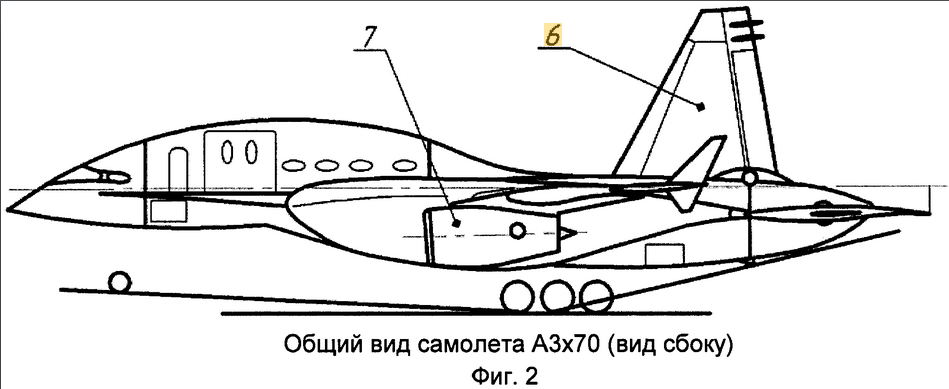

These involve strange but technically plausible shapes like lifting bodies or circular hulls of various nature. Their mere appearance makes them stand-out. This ironically applies to delta wings and civilianized early jet bombers.
These are the ones that ascend into pure science fiction.
So World War III 1987 has responded to my response to the “Squishy Problem”.
It can be seen here.
Russell Tilstra’s Small Arms For Urban Combat seems at first glance to be just what the title says. It’s a nonfiction reference book about various small arms and their usefulness in urban war. However, it turns out to be a lot more shallow than that.
Sadly, this is less an analysis and more of a “Basic first guide to small arms”. While not bad by itself, it would have been a lot better with a more honest title. The urban warfare part feels like an afterthought.
So the World War III 1987 blog just posted “The Squishy Problem Facing World War III Writers“. And come on, there’s no way I can not write a post in response to that. Here goes. The original blog is in Italics. I’ll start with the opening.
World War III novels, movies and even blogs are as diverse and imaginative as their authors choose to make them. Even in instances where multiple works of fiction examine the same hypothetical theater or overall conflict there will not be many similarities throughout the bulk of the novels. Different writing styles, plots and points of view are guaranteed to keep the reader fixed on a uniquely original WWIII scenario brought to life in novels.
I would somewhat disagree with this. Yes, on a micro-scale they can be different on paper (ie, it turns out very few involve invading Iceland!). But even by the standards of cheap thrillers, it’s a very small and very narrow genre. This is not an insult. It’s just how it is and how a “normal” reader will look at them.
But when the final chapters and plot conclusions roll around, it’s a totally different ballgame altogether. And so emerges the root of a squishy problem.
You see, the majority of popular NATO-Warsaw Pact, Cold War World War III novels, movies and other types of fiction end in either nuclear war or the overthrow of the Soviet general secretary and politburo just moments before the Kremlin decides to launch an all-out nuclear strike on the US and Europe. Other novels and fiction incorporate aspects of both options in their concluding chapters, creating an ending that is somewhat different from those above, but lacks the creativity to be considered entirely new and exclusive.
Ok. I’m going to argue that this is the most realistic and sensible part. Because the loser is likely to go nuclear. And if not, some plot contrivance is necessary to stop that. I guess you could have some kind of negotiated surrender, but I can understand why readers wouldn’t find that very satisfying. The alternative is either a Red Army-style clean OPFOR win or just making a horrible squash, the latter of which is not exactly appealing.
The squishy problem facing writers of the World War III genre is similar to what Zombie genre has found itself confronting in recent years: How to make an age old topic fresh and appealing when a good part of the audience or readership already has a good idea of how it is all going to end?
Good question and one that I will definitely come back to.
Here is a logo for Asialink, a fictional airline I’ve made headquartered in Singapore and focused on linking all of one continent (guess which ).

The yin-yang (Asia) and circular chain (link) were made seperately in Stable Diffusion XL and edited together externally. The text was manually added and uses the Shojumaru font.

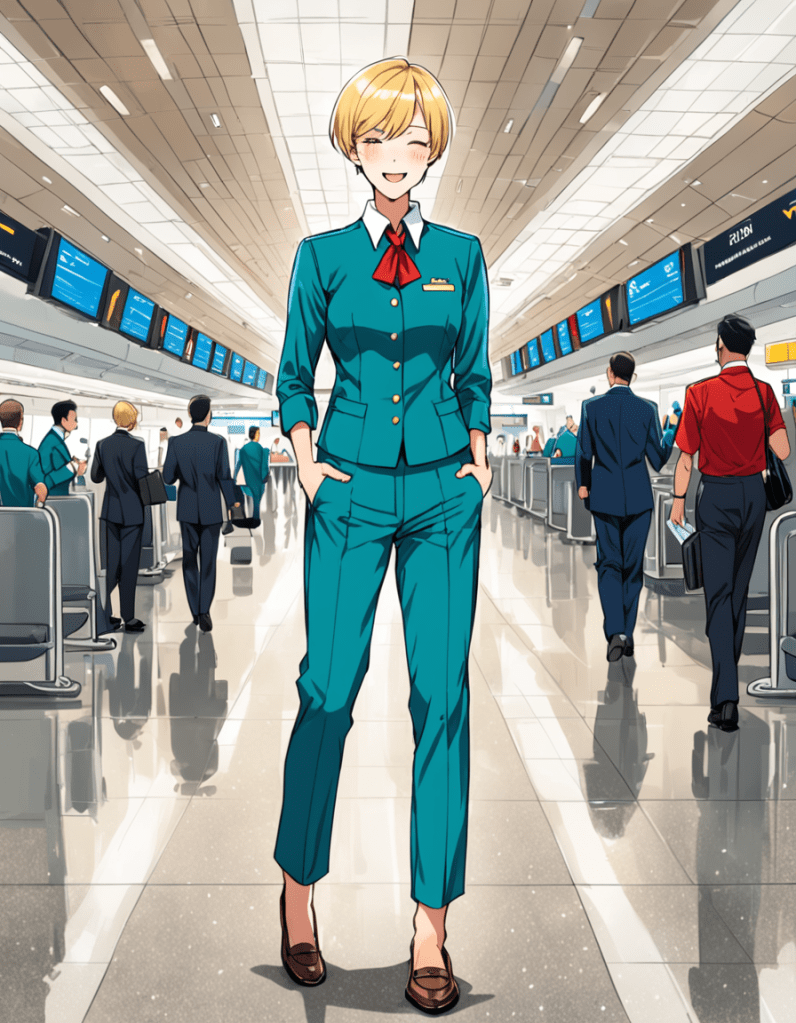
Asialink flight attendant uniforms are the same combination of teal and/or light green with red neckwear.
 Fuldapocalypse Fiction