Review: The Inside Ring

The Inside Ring

Mike Lawson’s debut thriller in the Joe DeMarco series, The Inside Ring, is a less-than-coherent thriller. Its stakes zig-zag from high to low to nonsenscially high again at the last second. The cast seems to consist entirely of either slobby white ethnic greasers (including the main character, who is one of the least likable thriller protagonists I’ve seen in recent memory) or slobbier rednecks.

I’ll put it this way. How bad do your rural southerners have to be for a New Yorker like me to go “you’re going way too far here. Ugh”? They’re that bad. The plot is ridiculous, with the villain wanting to do something that would make him far more of a target than if he just did the “conventional” easy thing. Then comes a stereotypical conspiracy to make it even dumber.

While not the worst I’ve read, the literary fundamentals aren’t nearly good enough to salvage this novel. There are better individual thrillers out there, and if nothing else, the series started off on a bad note.

Review: McNamara’s Folly

McNamara’s Folly: The Use Of Low-IQ Troops in the Vietnam War

Involving applicants and draftees who would previously have been rejected, Project 100,000 was one of the least-covered but most horrendous parts of the Vietnam War. Hamilton Gregory, who served along multiple “entrants”, writes one of the most scathing and personally touching history books in McNamara’s Folly. I say “personal” because I have some mental conditions, and growing up, went to school with others with traits very similar to those described in the book. To send these people into battle, whatever one thinks of the Vietnam War as a whole, feels particularly wrong-as did the theory that military service would make them better.

Project 100,000 was done mostly to avoid tapping into a National Guard/reserve force that came from a wealthier and more politically sensitive background (only around a hundred National Guardsmen were killed in action in the whole war). Its recruits were killed in action at a rate three times greater that of serving soldiers as a whole. Officers of all ranks hated the program, and their reactions ranged from trying to steer the “Moron Corps” (or less nice terms) people into the least dangerous areas to having them be the point man on patrols because of perceived expendability. Gregory is clear to point out that he could not find any confirmed cases of Project 100,000 recruits being deliberately executed by their compatriots to prevent their ineptitude from resulting in more deaths, but the constant rumors are telling.

Weaving personal experiences (such as one particularly chilling story of a fellow recruit who didn’t even know that the Vietnam War was happening when he entered boot camp) with scholarly research, this is an excellent recounting of a project that benefited no one, save for maybe the North Vietnamese.

Clustering launchers for fun and profit

You are a rogue state with limited resources, and you want to make more powerful rockets. What is your improvised expedient? The answer, be it in North Korea or (with the most documentation) in Saddam’s Iraq, is frequently to cluster existing engines.

And what kind of engines would they be? There are the ubiqutuous Scud derivatives, but there’s also something even more readily available-surface to air missile engines, especially those (ie, SA-2s) becoming ever-less effective against actual opposing planes. Iraqi rocket/missile designs made extensive use of repurposed Guideline engines.

It’s gotten to the point where I’ve been making (oversimplified, of course) hypotheticals using the launcher and ballistic missile online calculators. Just input the relevant characteristics, thrust and size dimensions for the engines/rockets in question, and see the result! Quite an interesting bit of diversion for me.

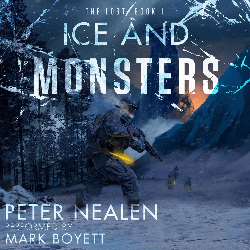
Review: Ice and Monsters

Ice and Monsters

When I saw that Peter Nealen was doing an entry in the same “Wargate” military isekai series as Forgotten Ruin, I knew I had to instantly get it. So I did instantly get Ice and Monsters. It has the same basic concept as Forgotten Ruin, only the deliberate expedition gives way to an inadvertent gate transport, as recon marines on an exercise near Norway find themselves in a Norse-themed horror fantasy world. It also has the same basic strengths-and weaknesses.

The strengths are that the action is good and the modern forces weaknesses and vulnerabilities are emphasized instead of their capabilities and advantages. The weaknesses involve not taking advantage of the potential for worldbuilding in favor of just an artificial swarm of trash mobs. What’s grated upon me after seeing it the second time is the nominal commander being a cross between a Gorman-style out-of-his-depth boss and a “we need to talk things out” nebbish. As the narrator even admits, you should have to see what local ties you can forge when severely outnumbered.

But nope, the captain is clearly duped by the Evil Magic Viking one-dimensional savages from the get-go, and all hints of moral ambiguity are tossed aside once the protagonists find a set of imprisoned “good guys”. How convenient! Yes, it’s a cheap thriller in what’s openly stated as an Adventure Friendly World. But a little more worldbuilding would go a long way.

Also there’s a personal stylistic nitpick, which is that Nealen clearly is comfortable writing in first person when I prefer his third person thrillers. But I kind of expected that. This is a decent cheap thriller but it still could have been better with just a bit more thought and finesse.

Review: Blue Masquerade

Blue Masquerade

T. K. Blackwood’s Blue Masquerade is a treat I knew I had to read. First, it’s one of those beasts that are as rare as left-handed baseball catchers or male calico cats-the conventional World War III novel that takes place as an alternate history after the Vietnam War. That its premise involves two of my personal tropes I wish got used more often made it even more appealing.

The first premise is that instead of the USSR backsliding after a successful August Coup or something like it, it reforms enough to avert such a thing. This happens here. Don’t expect to see MiG 1.42s or robot-turret supertanks here-it’s just the classic tanks and BTRs/BMPs. Still, it’s heartening to see this gimmick after wanting to for so long. The second is Yugoslavia, the tinderbox of Europe, being the catalyst for the war. This is a lot more plausible than some other World War III novels you may have heard about.

As for the substance of the book, I would call it a “51% World War III big war thriller”. It gets enough of the basics right and never comes across as truly “bad” in any way. That being said, I have seen everything it does being done better in other books. However, I’ll adjust for context, since this subgenre is extremely hard to do well. In that case, a 51% book is quite the accomplishment, like a baseball pitcher having a positive win-loss record while playing for an otherwise bad team.

If you like alternate history, conventional World War IIIs, or both, check this out. For another opinion, see Alexander Wallace at Sea Lion Press.

Review: Building The Tatmadaw

Building The Tatmadaw

Likely because it’s lacked the direct confrontation with a major western power that North Korea or Middle Eastern states have had, Myanmar is one of the more forgotten and undercovered of the militarized pariah states. That military dictatorships are not exactly known for their openness and transparency doesn’t help things. Thankfully, Maung Auyng Myoe has risen to the challenge with Building The Tatmadaw.

The often murky and convoluted history of the military, as well as the brutal but often underreported internal wars, is shown in depth. As is the Tatmadaw’s force structure and conventional paper doctrine. For the former, it follows (at least as of the writing of the book) a common in Southeast Asia pattern of having “regional forces” tied to a certain area and mobile reaction forces (known here as “light infantry divisions”) that can travel where needed. Regarding the latter, Myoe’s description comes across as basically a Light OPFOR right out of Central Casting. The picture is that of an infantry-heavy force where advanced and heavy equipment is present but not dominant, and where the strategy against an external opponent consists of fortifications and irregular tactics to counter the material disadvantage.

Published in 2009, this is bound to be outdated, especially given the massive tumult that has happened since then (the “thaw”, the anti-Rohingya campaign, and the military re-takeover). But as always, that’s not the author’s fault. I did notice a few slip-ups and a bit of clunkiness when talking about specific military issues, but none of those are very big or bad. If you want to learn about the Tatmadaw, this book is an excellent resource.

Review: The Day After Tomorrow

The Day After Tomorrow

Allan Folsom’s debut novel, The Day After Tomorrow (no relation to the 2000s movie) is-something. It’s definitely one of the best worst novels I’ve read recently. The prose is as blocky as it is purple (including, yes, the love scenes), and most importantly, much of the book is just people traveling. It’s supposed to be an unwinding conspiracy thriller…

…But it has an anti-Goldilocks effect. It’s too unrealistic and bombastic to be a cloak-and-dagger story, too dull and clumsily written to be an action novel, too narrow in scope to be a pop epic, and too shallow to be a character novel. And then there’s the big twist.

See, this book is basically a novelization of They Saved Hitler’s Brain, down to his actual head playing a role in the plot (although this one is not yet alive). It boils down to using convoluted superscience to clone/revive Hitler, for….. uh….. Anyway, the biggest part of the plot is foiled by someone other than the doctor and detective who serve as the protagonists, leaving a reasonable assumption of “what’s the point”?

Well, the point is that I learned of this book from a bad review. And while I don’t recommend it to anyone “normal”, I had a blast reading it.

Megafood

As the kind of person who likes reading dry academic papers for fun, I occasionally find something that brings a huge smile to my face. In this case, it was the work of the Alliance To Feed The Earth in Disasters (ALLFED). Especially their proposed megaprojects of building a ridiculous number of greenhouses, seaweed farms, “coal butter” plants, and so on. A way to ensure that eight billion people can still eat well after a major catastrophe (nuclear war, Yellowstone-esque eruption, etc…) that massively disrupts conventional agriculture.

It honestly reads like something you’d expect from a popular science magazine in 1958. And that is not meant to be an insult in the slightest. Having lived through the COVID pandemic, having seen both a genuine societal disruption and a massive ramp-up of special production, I can say that while one is right to be skeptical about the smoothness of such an endeavor… something like it is still possible in broad strokes.

Weird Wargaming: The Soviet-Romanian War

If you want to use small-unit wargames in my never-was draft percolating of a futuristic USSR deciding to finish off a surviving Ceausescu, some basic guidelines. Obviously, it’ll depend on the exact ruleset, but here’s the basics:

Union of Soviet Sovereign Republics

The USSR, under a Sovereign Union that in real life got scuttled by the August Coup, follows the 1990s GENFORCE “Mobile Forces” concept. Which is to say a multi-tier force. The “Basic Forces” divisions resemble slightly better late Cold War ones. The Mobile Forces ones have more futuristic equipment, better body armor/night vision, and substantially better training.

Mobile Forces battalions are organically combined arms mixed. APCs/IFVs are three to a platoon with each squad having a magazine LMG and rocket launcher. Company weapons platoons have lighter ATGMs and belt/tripod GPMGs. All Mobile Forces mechanized battalions have a large number of organic 2S31s (or Nonas for less-equipped formations).

Given the terrain, mountain formations have been plucked and sent in. GENFORCE mountain brigades are a four-infantry-one-tank battalion setup with supporting equipment suited for high altitudes (ie, lighter and higher-angle artillery). They also have a separate APC battalion that can be used to motorize if the terrain is appropriate. The one historical Soviet mountain brigade was inherited by Kyrgyzstan and consisted of two BMP and two soft-skin battalions with some attached cavalry and pack animal units.

Soviet Allies

The main contributors to the Soviet effort are Bulgaria and the stabilized Afghanistan. The former mobilizes to its full ability, which means it runs the gauntlet from “1980s NSWP” to “T-34s and World War I heavy artillery” (hey, if it can shoot and make a big explosion, it’s still worth something). The latter contribute a fairly standard BTR-equipped motor rifle division and numerous commando units.

Romania

Romania has a regular army with a degree of military modernization that it lacked. While select units have SRBMs based on foreign civilian sounding rockets, bespoke grenade launchers, and more (comparably) advanced tanks like the bizarrely shaped TAA, others are bottom of the barrel. All units should be mostly low quality, but some (particularly Securitat irregulars) will have better morale than others if applicable.

Organizationally, most should resemble lower-tier eastern forces.