
Fuldapocalypse may be light because I’m in full swing on a new novel. This is unrelated to my others and has the title Terrible People and Terrible Things. This is yet another reason why posting is down. But I’m having a lot of fun writing it.
Author: coilerxii
Weird Wargaming: The All Union US Military Part 2: Air Force(s)
Part two of this alternate history series.
Background/USAF
Until September 9, 1998, the US Air Force and Navy was mostly in a holding pattern. About the only large procurement decision was going ahead with the A-6F and F-14E Super Tomcat programs due to the continued USSR, leaving the Super Hornet as a paper plane in this timeline.
Then the Sovereign Union destroyed 80% of Romania’s air force on the ground in minutes, and panic set in. V/STOL research and dispersed operations immediately began taking the highest priority, and as an interim measure, the first major foreign-built fighter in American service since the AV-8A was made in the form of the F-21 Griffin, aka the Gripen. A huge fight ensued over whether to phase out the F-16 or keep it. The results were mixed.
US Naval Aviation
The US Navy and Marine Corps have a mixture of Super Tomcats, F/A-18A-Cs, Sea Gripens, F-24 NATFs, and A-6Fs in a support role. The Intruders and Hornets are being phased out. No, this is not just an excuse to run scenarios in CMO.
5th Gen/Updates
A lot of helicopters, high-performance VTOLs, and the F-24 being “Phantomed” into the Air Force as well. The equivalent of the F-35 is just the F-35 B/C equivalent, since a pathological fear of normal air bases exists. (Ironically the Sovereign Union does NOT have quite a fear despite knowing what it can dish out, but that’s another story).
Stalin Death Day
On this day in 1953, Joseph Stalin died.

(I love this movie)
Review: The Last Dive
The Last Dive
Bernie Chowdhury’s The Last Dive is about one of those ever-evergreen true horror tragedies-a diving accident. With personal knowledge of the victims in the Rouse family, it should be good. But it’s a disappointing book. So much of it is basically an autobiography written in first person. Which is fine but isn’t really the point of the book.
So much theoretical potential amounts to just variants of “they died” (which is about as much of a surprise as The Death of Stalin ) . There’s also “other divers died in similar dives” and “Diving is dangerous.” These three sentences take up a three hundred page book. Which is a shame because the subject matter is so good that the book can’t be all bad. Just mostly bad.
Pokemon Day!
Happy Pokemon Day, the anniversary of Gen 1’s release! It’s a blockbuster series I’ve loved my whole life. (PS: Gen II is still the best one 😛 )
New SLP Article: Alternate Anatomy of A Gridiron Line
My new Sea Lion Press article on (American) football is up. Enjoy!
The Megaliners
I mentioned a long time ago how I had a fascination for “megaliners”, “superjumbos”, or aircraft designed to hold more passengers than a 747. Leaving aside the impracticality of them, most were/are pretty conventional. They just took an existing jumbo and either added or stretched the upper deck.
But not the Tu-404. This not-found Tupolev design was a flying wing for maximum passenger space.
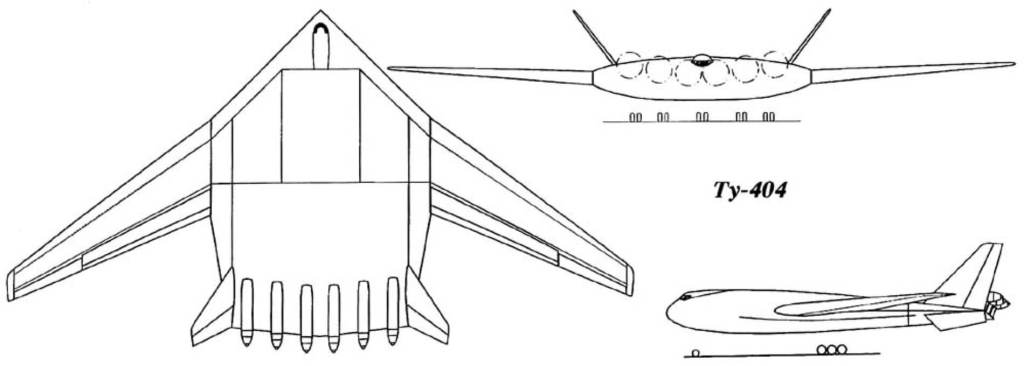
Some variants stretched capacity into the four digits, and it would have been driven by six propfans.
Review: Military Strategy For Writers
Military Strategy for Writers
I’d love to see a book that can concisely explain strategic concepts to non-army nerds. But Stephen Kenneth Stein’s Military Strategy for Writers is not that book.
The biggest problem is the tone. It’s less “here’s what strategy is and why it’s often overlooked” and more “The generals are idiots, the writers are idiots, but I the great Historian shall tell you why all of them are wrong”, a tone that at absolute best is unhelpful.
It doesn’t help that I see typical pop-history cliche sneers that trigger alarm bells. WRT Vietnam and Iraq, for example it,s “hurr durr greeted as liberators” (during the actual invasion, that was largely accurate) and “Hurr durr us did big conventional war in Vietnam not smart coin like the British in Malaysia ” (they did that because the north was also doing it, with large northern armies being a complication that pure guerilla wars never had).
Ironically you could use Vietnam and Iraq to show the limits of strategy. Like the best case in Vietnam was going to be a Korea-style divided country, likely without South Korea’s economic boom. As a powder keg held together solely by a dictator’s lash and with a neighbor that had the ability to stir up trouble and the reasonable fear it could be next, Iraq was always going to pose a challenge.
Anyway, it fails to balance storytelling. Like yes, you get unrealistic amounts of decisive battles in fiction, but that’s because not every work needs or wants to be a hazy grey tale and because decisive conflict works for storytelling.
Happy Valentines Day
Happy Valentines Day!
Review: Alamo on the Rhine
Alamo on the Rhine
For the first World War III review of the new year, I turn to T. K. Blackwood’s Alamo on the Rhine, a spinoff/side story of the Iron Crucible 1990s World War III. It’s about a daring strike on a vital air base at the start of the war. Told with the same effectiveness as the other entries, I greatly enjoyed it.
I couldn’t help but see the parallels to Market Garden, Kitona, and Hostomel and wonder what role those historical battles played in the crafting of this book, similar to how I wanted a “Soviet Gulf War” in All Union but not an exact one. It’s to Blackwood’s credit that the excellent story does not come across as a simple historical copy-paste.
This is a very fun book of the kind I haven’t read in a while. Nice job.
 Fuldapocalypse Fiction