Review: The Foundation (Steve P. Vincent)

The Foundation

Not to be confused with Asimov’s sci-fi classics, Steve P. Vincent’s The Foundation is a cloak-and-dagger story. In it, journalist protagonist Jack Emery battles the super-conspiracy known as the Foundation for A New America. The Foundation thus takes its place alongside the Patriots, Those Who Slither In The Dark, “Valhalla”, the Kataru, the Delphi, the X Syndicate, the Y Syndicate, the Socrates Club, the Council of Ten, the “Wise Men”, and even more super-conspiracies I’ve forgotten about.

(Look, I read a lot of cheap thrillers with super-conspiracies in them, all right?)

This is very much a 51% book through and through. There’s a super-conspiracy, there’s a conventional war between nuclear states in the background where no one seems particularly concerned with it going nuclear (did the zombie sorceresses come in?), and, slightly unusual for the genre, the main antagonist is a woman. Otherwise it’s just middling cloak and dagger fiction.

Weird Wargaming: The UN Standing Army

An underappreciated and underutilized force for wargaming (particularly as it can be made with existing surplus equipment), the UN standing army as discussed in books like A UN Legion. Unlike some other entries in Weird Wargaming, the nature of this force makes describing it in any exact detail much harder.

On one end, there’s light peacekeepers with nothing but small arms or vaguer proposals. On the other, there’s the incredibly detailed “Vital Force” proposal. The bigger “world army” proposals also tended to be the most vague in terms of equipment. Yet it’s easy to find analogous historical units. Either the entire force or a large chunk of it could easily be structured like existing high-deployability forces. Airborne and amphibious units provide an excellent, well-documented guide.

For “world armies” with more conventional units, there’s plenty of national and/or theoretical inspiration to be drawn, possibly with some inferences (for instance, a priority may be on allowing smaller units to operate as independently as possible). The heavy divisions in the rapid-response units may get prioritization for upgraded equipment. As for that equipment, it can be anything from purpose-built (especially if it’s intended to be airdroppable/amphibious) to surplus.

The proficiency levels of a “small force” should be high, as creating a handpicked, well-trained force over clunkier ad-hoc formations is the entire point of their existence. Bigger “world armies” are going to be inevitably diluted, but should still err on the side of greater skill.

A Thousand Words: Violence Fight

Violence Fight

The video game Violence Fight is a very, very strange game. It’s also very, very bad. One of the pre-Street Fighter II arcade fighting games, this Taito “masterpiece” only stands out for two reasons.

The first is its “story”, where, in the 1950s an underground fighting tournament is popular among (exact words) “mafia, reckless drivers and general businessmen.” This is a 1950s that includes a World Trade Center, a wannabe Mr. T, and multiple tigers for the player to fight. It’s weird, but this is an old video game, so it’s a little less weird in context. The second is the bizarre effects that occur with a hard blow, like “GOGON” and “BOGOON!”.

Otherwise, it’s not very good. The controls are multi-axis but bad, like Pit Fighter, another dud from the same time period. The graphics aren’t bad for the time, but that’s pretty much it. It’s a weird period piece and that’s all.

The Nature Of It All

This is the 300th post on Fuldapocalypse, and it’s fitting that it comes now, because well, I’m in what feels like a blog midlife crisis. I don’t want to overstate this, because the diversification of the blog, which I’ve talked about many times, means there’s no problem with supplying actual content. But there’s still a strange feeling in me.

See, there’s an increasing feeling in me that the well is running dry. I’ve said many, many times that there’s a lot fewer World War III books than I thought. And that’s only a little less true for “big war thrillers” in general. It’s a little weird knowing your views were distorted by a combination of one field where those tropes were common (wargaming) and an internet trend that, in hindsight, was no more significant or influential than a long-ago boomlet on Spacebattles of who-would-win matches involving lions (yes, this actually happened).

And yet, for the fiction of that type that actually exists, my initial wariness still often holds true. It’s still often a cross between conference rooms and paper-thin Steel Panthers Characters. Sturgeon’s Law still applies, and in any exposition-heavy format, I consider the “floor” to be lower than in a lowbrow action thriller. So I’m in the strange position of, regarding the supposed subject matter of this very blog, either having already read or having little desire to read a lot of the of “Icelandic” books I set it up to review. Not all-I still have some I want to read, and genres should never be discounted altogether. But a lot.

And what else that’s come to me is the sense that this kind of “big-war thriller” is just harder to write well than a conventional cheap thriller (I’m not saying it’s impossible, only harder). I’ve felt this way about alternate history, and think it’s also true here. You have to balance a good and reasonably accurate picture of the conflict/divergent setting with a good story and characters, and sometimes those are at cross purposes. It’s why, with my annoyance at there seemingly being too many “conventional WWIII” stories having long-subsided, I feel that there aren’t enough, and that there especially isn’t enough cross-pollination (which is understandable, but that’s a subject for another post).

So what I’ve been experiencing is something very much like the bittersweet feeling someone gets when they finally finish a long series that they enjoyed. I felt this way with the Survivalist. I felt this way with Blaine McCracken. I felt this way with video games and movies and TV shows that I liked. In all those cases I found later replacements (for the Survivalist, it’s responsible for getting me into an entire genre) but the feeling still remains.

And so it feels this way for here. I’ve reviewed, judging by tags and discounting essay posts, about 28 “World War III” books. They range from good to bad, from rote to pulpy to clunky to outright bizarre. I’ve experienced a huge range. In many ways I’ve accomplished what I’ve set out to do. And while that sort of thing can bring about justifiable pride, it can also bring about a sense of understandable emptiness.

My feeling isn’t “what do I do now?”, since the answer (read and write about either other types of fiction or history/theory in general) is what I’ve been doing. Rather, it’s a simpler “So, that’s it? That’s all there was?”

Review: Black Friday

Black Friday

I decided to finally do it, reading a book by a super-famous author. James Patterson’s Black Friday (original title Black Market) is a thriller of financial and physical chaos. It’s also a book that’s (as far as I can tell) genuinely his and not simply a “James Patterson’s” book with his name on it.

The chapters tend to be very short, in a style I already knew about from secondhand talk of his writing. I generally don’t mind short chapters, and he was not the first author to use them, but somehow they didn’t fit here. I think it’s a combination of them and a ton of shifting viewpoint characters that make the whole thing just look disjointed and sloppy.

And then there’s the tone, which is this constant plodding of Deep, Dark Seriousness. The jarring differences between that and the inaccuracies, particularly surrounding firearms, is astounding. This isn’t (just) having guns work on action movie logic or making mistakes like calling an SKS “automatic” and not knowing which airborne division has an eagle as its symbol. It isn’t even having a character use an American-180 for no discernable reason except the “it’s an exotic gun I’ve heard of” factor.

This is references to “machine gun pistols” (Exact words). This is talking about how submachine guns weren’t used in city fighting due to their high rate of fire (er…), and a gun that combines ridiculously effective silencing (even by cheap thriller/action movie standards) with implied heat seeking bullets. Said gun is only used in a single scene. It’s bad, even by the standards of someone who’s read a lot of cheap thrillers.

The plot feels like an absurdist jumble of cheap thriller cliches. There’s a super-conspiracy, lots of cutaways, and everything from international terrorists to crazy veterans. But with the tone and janky pacing getting in the way, it’s not the kind of book where you can enjoy the excess. There are a lot better books, even mainstream thrillers, out there.

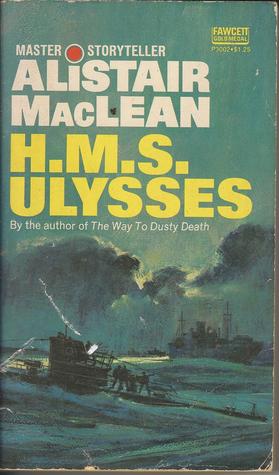
Review: HMS Ulysses

HMS Ulysses

A rightful classic, HMS Ulysses is, in my opinion, the greatest naval action novel of all time. Author Alistair MacLean, a veteran of the Royal Navy in World War II, could draw on a lot of personal experience, and it shows in this masterpiece. People who know their naval history can look at the obvious parallels between the actions of the book and the ill-fated Convoy PQ-17 (which MacLean served on), but that doesn’t change its effectiveness.

The way MacLean sets a tone is hard to describe, but he succeeds brilliantly. The travails of the convoy, in no small part thanks to the PQ-17 historical experience, are both dramatic and plausible-seeming. The feat of squaring the circle cannot be applauded enough. Historical military fiction, at least to me, has had the issue of “it’s going to be either realistically dull and un-dramatic, in which case I’ll read a history book that makes no pretense at narrative, or it’s going to be exaggerated, in which case I’ll read a cheap thriller that doesn’t have to be bound to an existing war.”

This avoids both of them by throwing one (plausible) German threat after another at the convoy and emphasizing the wear and tear the climate and stress imposes on the sailors. I cannot recommend this book enough.

Some Blog Updates

Just some blog updates here.

First, I found out about Never Was magazine, an online magazine devoted to alternate history, after they announced a partnership with Sea Lion Press. Signing up and liking what I saw, I’ve posted a link to it on the sidebar blogroll. Looking a little deeper, I saw a piece on a subject dear to Fuldapocalypse-World War III Without Missiles. I recommend checking it out.

Second, as you may have noticed from the Red Hammer Down review, I’m experimenting with changing the layout just a bit. Nothing too big, just something done for the sake of curiosity.

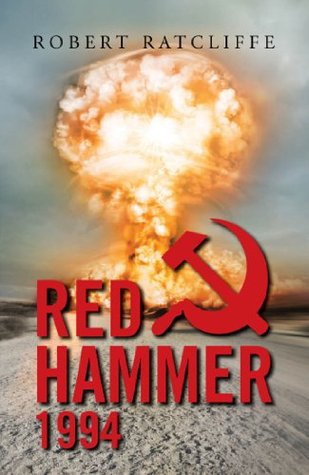
Review: Red Hammer 1994

Red Hammer 1994

Robert Ratcliffe’s Red Hammer 1994 is a tale of an alternate nuclear World War III in the early 1990s. The feared regression to authoritarianism takes place in post-1991 Russia, and its leader proceeds to launch a nuclear strike on the west. Cue a big picture, wide-scope look at everything from bombers to silos to submarines to, yes, conference rooms.

The characters feel just like they’re just there to operate military equipment instead of being actual characters. The plot is basically “have a nuclear war that stays mainly counterforce and thus only mauls civilization instead of wrecking it totally, and show every part of it in set pieces”. The grounded and frequently realistic (at least technically) nature of the book is somewhat admirable, but works against it when questionable moments like a giant force of super-Spetsnaz in the continental US emerges-or for that matter, the basic plot happening at all. The ending is incredibly abrupt (and not in a plausible Dr. Strangelove way) and the most positive elements are some of the set pieces themselves.

This is what it is. If you like technical detail and want to see Herman Melville’s Story Of A Moderate Nuclear War, you’ll like this book. But if you want a solid narrative, this isn’t it.

Review: Primary Target

Primary Target

Jim Heskett and Nick Thacker’s Primary Target is not the deepest story, nor does it have the most plausible premise. Basically, circumstances lead to assassin Ember Clarke having to participate in a trial by combat, fighting off other assassins trying to kill her over the course of several weeks.

However, in spite of this setup, it’s well done. Yes, it has the “this isn’t a movie but I do super stuff anyway” gripe I’ve seen far too often, and its premise deserves action far more bizarre and over the top than what actually occurs. But the book remains a solid cloak and dagger thriller.

Granted, I’m not the biggest fan of such novels, but I still like variety. And this is cloak and dagger done very well.