Review: Drakon

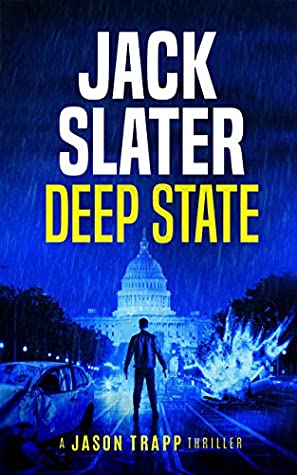
Drakon

drakoncover

The fourth book in the Draka series, Drakon is the story of the Draka utterly triumphant, having bioengineered humanity into master and servant subspecies-in one universe, with only the descendants of those who escaped the “Final War” to stand against them. Too bad homo drakenis Gwendolyn Ingolfsson got sucked through a wormhole experiment into the then-present. She plots to take over the world for the Draka, with only a strange cast of people from multiple universes to stop her.

This isn’t really alternate history, even in the most fleeting sense. It’s pure cheesy science fiction, a “fight the Terminator-Predator-Amazon” story. Drakon is as sleazy as it’s cheesy, with Stirling never missing a chance to throw in a lurid detail. And while it works as a turn-your-brain-off “51% book”, there are some legitimate and serious flaws.

First, it doesn’t have, say, Jon Land’s sense of buildup. Too much is revealed too fast, and the residual baggage of the alternate history background burdens it even more. Second, the conclusion is an utter clunker. That is to say, it’s a simultaneously confusing and rushed mess of escalation that ends with a contrivance and ridiculously obvious setup for a sequel that understandably never came. Third, the only interesting character is Ingolfsson herself, and even she could be done a lot better.

Take away the fandom controversy and the legitimately distinct (however dubious) alternate history that made up the first three installments, and all you have is, as I’ve said before, tawdry fiction that, while not unreadable or unenjoyable, wouldn’t really stand out.

Clive Cussler, RIP

Clive Cussler died on Monday, February 24, his publisher confirmed. And it’s hit me because of how much of a spark his books were in getting me into cheap thrillers. The very first real “cheap thriller” I read was a Clive Cussler NUMA Files book, Fire Ice. More and more Cusslers soon found their way into my hands, both the earlier ones and the later “Tom Clancy’s” ones with different authors doing more and more of the heavy lifting.

Before Blaine McCracken, before Hawker Hunter, before John Rourke, before even Patrick McLanahan,  there was Kurt Austin and Dirk Pitt taking me through thrilling and sometimes strange adventures on the page. RIP.

The Survivalist’s Legacy

I really think the review of the first Survivalist book, Total War, was the moment that Fuldapocalypse really broke out of the cage I’d originally put it in. I’d already been tiptoeing away from the specific “198X conventional World War III” books, but even then had just pushed mostly to other “big war thrillers”.

This was something where I acknowledged in the review that my entire paradigm wasn’t made for something like this. It wasn’t immediate, but it put me on the path to first changing and then eliminating the formal categories altogether. It also made me review (and read) a lot of “Men’s Adventure” books, a subgenre that I intend to write a lot more about.

Oh, and for whatever weird reason, I binge-read the entire series. I’m still strangely impressed by that.


Review: Condition Zebra

Condition Zebra

conditionzebra

The (supposedly) final arc of John Schettler’s epic Kirov series, now exceeding even The Subspace Emissary’s Worlds Conquest in terms of word count, begins with Condition Zebra. This is the story of a contemporary World War III, after the Kirov timeshifted away from another contemporary World War III, possibly making it the first series to have multiple World War IIIs in it.

Having read two books in the 49-and-counting series, I figured it would at least be the same as before.  I was wrong. It somehow managed to be worse. And it manages to be worse in ways that might be considered contradictory at first glance.

One one end, the basic nuts and bolts writing has all the problems of the past Kirov books (characters who exist solely to operate military equipment, rote technical descriptions of the battles that give away the wargames used to sim them, and overall clunkiness) and just feels sloppier, with the dialogue, grammar, and even structure seeming worse.

On the other, the giant timeline tangles get bigger, more confusing, and somehow more pointless-seeming than ever. Knowing the end result and purpose, it just feels like the developers of Madden, 2K, or The Show making up a gigantic plot about time machines and time-traveling team general managers to explain why past players can appear in a game with current stars.

Maybe it’s those above flaws and maybe it’s just that the novelty of seeing the world’s longest wargame let’s play has worn off after three books, but this doesn’t even seem bad in a bemusing way anymore. It’s just bad.


Review: Howling Wilderness

Howling Wilderness

The sourcebook Howling Wilderness sets the basis for the remaining North American setting in Twilight 2000.

I feel that in an isolated spherical cow world, the North American modules of Twilight 2000 should have been a different setting, something like “Apocalypse 2000”. It would probably be a good idea to alter the rules so that the out-there adventures can be a lot more viable. But theme alone would be enough to make the switch.

There’s two literary problems with actually keeping it and the original European setting part of the same universe. The first is the creative regression. The European setting is a clever way to square the circle of “Ok, we want you to be in the army but we also want you to be able to run free. We’ll make this post-apocalyptic, but not too post-apocalyptic, since we still want there to be tons of those tanks around.” There are still flaws, and not just the impossibility to balance dark struggles for survival, rivet-counting crunchy gaming, and traditional RPG adventure that all appear in the rules.

Enter this, where the setting is more of a traditional post-apocalyptic one. North America has been crushed by a mega-drought and everyone has withered down. This leads to the second problem, which is how this led to gimmicks. It feels like the setting should be doubling down on the “grim survival” element, but then an individual sourcebook has a submarine plot right out of Jerry Ahern’s Survivalist, making things more muddled than ever.

I don’t blame GDW for releasing new content out of business necessity. I also think that, given the flexibility GMs have for actually running games, the negative effects of any official supplement are inherently limited. But I still feel that, like how the Survivalist jumped the shark post-timeskip, Twilight 2000 also jumped post Atlantic crossing.

Review: Divided Armies

Divided Armies

Jason Lyall’s Divided Armies is a big look at how societal inequality can influence military peformance. It’s mixed and uneven but still worthy.

First, the research is exhaustive and extensive. Lyall specifically aims to avoid a Eurocentric/great war bias by looking at a gigantic sample size of conflicts around the world from 1800 to the present. The book is not the easiest read and is written in “Academic-ese” with lots of political science formulas. However, I didn’t consider this a bad thing so much as just being part of its very nature (it’s not the only book of this type of I’ve read). The case studies feature more and more obscure battles. It’s a solid, disciplined set of information that shows a lot of underappreciated and understudied wars.

Of course, this book also has the weakness of the approach. I had two main doubts about this book. One was that Lyall would overcorrect and make the issue too dominant. Although not quite as bad as I feared, I saw a lot of this happening.

The weakest part of his research by far is, ironically, when he goes into great power wars. His study of the World War II Eastern Front, despite citing modern scholars, is still disappointing and clearly viewed through the lens of his thesis. So it means an overt focus on the early war (because the Soviets were clearly doing poorly), and an over-focus on Stalinism at the expense of other factors (because it fits the tone of the book). This image is rather distorted, to say the least.

A far less bad but still iffy example comes from his comparison of Ethiopa in the 1998 war with Eritrea and the DRC in the simultaneous Second Congo War. Despite Lyall’s box-checking and vigorous arguments, I’m still left thinking of the two having far more differences than similarities. They’re not the ones I’d use in a direct comparison, the former having overwhelmingly more experience with large, conventional operations.

The second doubt I was also vindicated with was a sense of “you needed a ton of formal data to say this?” The conclusion of less cohesive societies translating that into ineffectual military performance was not exactly the most shocking or counter-intuitive one.

However, with those caveats in mind, as well as the usual focus on keeping eyes open, the book is still a worthwhile read. The basic conclusion is sound, the examination of previously under-explored conflicts is fascinating, and if the “what” isn’t the most interesting or noteworthy, the “how” definitely is.


Review: Red Phoenix

Red Phoenix

redphoenixcover

Larry Bond’s Red Phoenix, telling the story of a second Korean War, is something I’ve struggled with for a while but now, after a lot of other books read, have the words to successfully describe. In short, it’s the Marine Force One of “big war thrillers”.

Every archetype of the small genre is there. The shifting viewpoints from top to bottom. Going into every part of the theater. And so on. And they’re executed with enough skill to not be bad, but not enough to be truly memorable or standing out.

What does stand out, and which I also have a more nuanced view of than I used to, is the long intro setting up the war. I’ve thought it, from a literary perspective, to be less than ideal. It’s taking a huge amount of effort to set up something the reader already knows will happen.

But from a plausibility perspective, given the massive unlikelihood of a Second Korean War even at the height of the north’s power, I can forgive it for putting in the effort to set up a situation where it could happen. It’s certainly better and less ridiculous than Cauldron at any rate.

And what else is there to say? This is very much a “if you like the genre, you’ll like this book. If you don’t, you won’t” kind of novel.

A Thousand Words: Yume Nikki

Yume Nikki

The early indie game Yume Nikki is, even by the standards of what this blog has become, a strange choice. It’s a cult classic art/puzzle game. There really isn’t that any plot or explanation beyond the surreal illustrations as a pigtailed shut-in named Madotsuki wanders around various dreamworlds. For an indie game, it has a distinct, memorable artstyle, and its early origin, much like Cave Story’s, helped it along significantly.

Of course, the other side of this is that it combines the type of low-intensity gameplay later referred to derisively as “walking simulation” with (barring looking it up online) often impenetrable puzzles. It’s definitely a cult classic, but it’s easy to see why it hasn’t become anything more.

There could hardly be anything less like the usual fare of Fuldapocalypse. Which is kind of why I selected this. A huge part of the appeal is in wondering what everything is and what it means-all the many, many, many guesstimates of who Madotsuki is, what happened to her, what all the monstrous dreams mean, and even the seemingly obvious ending, add to the appeal of mystery and uncertainty.

It would be ruined if there finally was a definitive, official explanation for everything.

And yet, in the technothriller and especially “alternate history as a genre” style of story, massive detail is a centerpiece. This could just be apples and oranges, but a thought that often comes across when I read such tales is “Is this detail really necessary? Would it often be better, or at least not any worse if it wasn’t spelled out so much?”

It’s good food for thought.

The Second Soviet-Finnish War

Based on various general doctrine goals and precedents in similar regional conflicts, I’ve put together a hypothetical Second Soviet-Finnish War. No direct external intervention on behalf of the Finns, no other conflict it’s in the middle of to distract them.

I haven’t done any formal wargaming, but still came up with this outcome:

  1. The Soviets overrunning all of Finland in around a week, maybe a little more. I’m using their best-case on-paper rates of advance against China, which, though not a perfect analogy, was also underequipped, had lighter infantry and a doctrine focused around them, and had rough terrain in the border regions.
  2. Low/mid single-digit thousands killed (assuming a gigantic invasion force, the Finns standing and fighting, and the Soviets willing to press the attack, all of which are reasonable).
  3. Tank losses in the mid-high hundreds, with a similar amount of other AFVs. How many aren’t repairable is an open question.
  4. I want to say around mid-double digits for aircraft. That’s the biggest question mark.

The Finnish armed forces are, of course, wiped out, at least conventionally.

I’m sure this can and will be disputed. For instance, using a 30 km/day advance rate (rough terrain, NATO opponent) means it’ll take almost three weeks to reach the western coast from the eastern border. Of course, the Soviets can withstand three weeks of vicious attrition a lot better than the Finns can. They also likely wouldn’t need to overrun the entire country to accomplish their political goals, but this is a spherical cow scenario.