Review: Diggstown

Diggstown

Leonard Wise’s Diggstown is a 1978 novel about a small town in the Deep South that is obsessed with boxing to the point that it’s named after a local who became a world champion. It’s also about an attempted swindle by a scam artist from up north that leads to boxer Honey Roy Palmer having to run a gauntlet of ten Diggstown dwellers in the ring. A colorful sports thriller, it nonetheless works a lot better as a comparably low-stakes sports novel than when it tries to be a serious thriller.

This unsteady wobbling also applies to its treatment of sensitive and difficult topics. For a 1970s book set in the south, I was pleasantly surprised to see it being tasteful and well-handled in terms of race. Yet the same cannot be said about it regarding its sex scenes. Those are not tasteful or well-handled.

The book also tries to be too setting-focused, taking its time before it finally gets to the climactic boxing matches. Yet once it gets there, those are as well-written as any other good sports fiction. You could do a lot worse than this book if you like boxing or old thrillers.

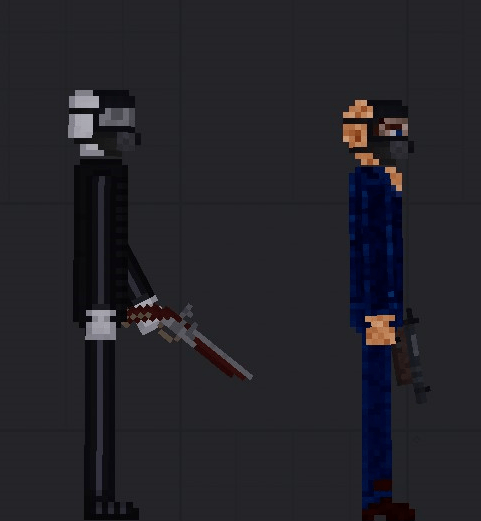
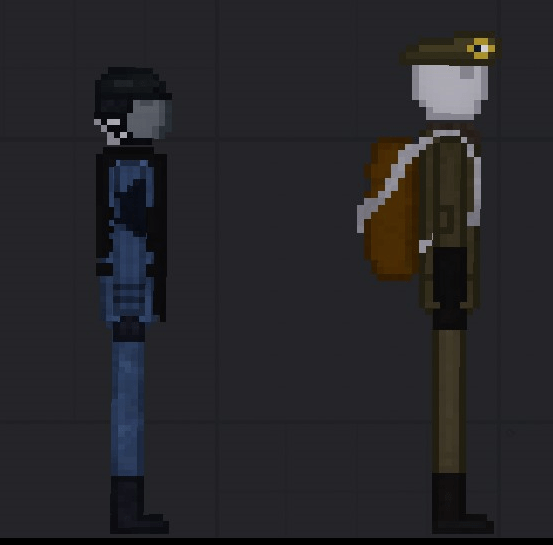
People Playground Peoples

People Playground Peoples

My favorite go-to relaxing game now, especially after I’ve discovered the massive and excellent mod scene, is People Playground. I of course act out a lot of scenarios-ok, a few types of scenarios, involving the mysterious mad science facility. And here are the “roles”.

Subjects

Represented usually by the default “humans”, subjects are the test subjects who are either being killed in terrible ways (don’t feel too bad for them, they struggle to walk several steps) or rebelling in some form (and usually ending up getting killed in terrible ways).

Technicians

Dressed in work-esque outfits, technicians usually sport some kind of chemical mask. They’re often placed by pieces of machinery, where they operate them and oversee experiments (very, very frequently becoming collateral damage). Unlike troopers, technicians mostly use a min-max arsenal-either finicky destructive contraptions or simple/improvised-type weapons that they built themselves.

Troopers

Troopers are the enforcement arm of the facility, being dressed in various kinds of military uniform and carrying a large variety of conventional weapons. Don’t worry, they always get killed in quantity too.

Commanders

Clad in various types of ornate and/or formal clothing, commanders wield sidearms and direct the “experiments”. However, a field commander is just as vulnerable as anyone else on the playground.

Review: Brink of War

Brink of War

Logan Ryles’ Brink of War is a rather strange action thriller. It’s equal parts 51% action thriller that plods along just fast enough and just well enough to be sufficient (when it’s focused on that), tepid attempt at a technothriller that falls short because of how little research is done on the various pieces of military equipment mentioned (at times it comes close to Ian Slater levels of inaccuracy) and justification sequences. Yes, justification sequences.

See, the premise of the book is that action hero Reed Montgomery (again with the action hero names) is sent to investigate the mysterious downing of this plane called, uh, Air Force One in eastern Turkey. And despite being in one of the most militarized regions of the world, the Americans need an action hero who’s in Latin America at the start of the book. I don’t mind contrivances, but this spends way too much time dwelling on its justification for having an action hero.

So a third of the book is a “decent enough” action hero novel. But two thirds of it are not. I guess that makes it uh, a 16.83% book? Whatever it is, there’s sadly much better cheap thrillers out there.

A Thousand Words: The Assassination of Trotsky

The Assassination of Trotsky

Directed by Joseph Losey and starring Richard Burton as the title character, The Assassination of Trotsky is often placed on many “worst movies ever” lists. It is a well deserved placement. For this is a terrible, terrible movie. And it’s deliberately terrible-it’s not due to circumstances, but due to creative choices.

First off is Richard Burton’s performance. His Trotsky looks like a cheap Colonel Sanders mascot and acts like that aging beatnik professor you had in college and loathed. You will learn absolutely nothing about the historical context from this film. In fact, the only way to make sense of the incoherent plotting is to assume that Losey thought the audience would already know everything historically relevant.

Second is the massive, massive padding. Since it doesn’t take ninety minutes to have an ax hitting someone in the head (SPOILER ALERT!), Losey fills the movie with filler. This includes a scene involving rabbits being raised, a long gondola ride where Stalin’s image appears in the water, and, worst of all, a long and gruesome bullfight scene. The only attempts at suspense involve dragging every scene out and playing minimalist music. This gets old after about, oh, two such scenes.

About the only sympathetic character is Romy Schneider’s “Gita”, who is as confused with the situation and disgusted with the bullfight as the audience is. Sadly, she cannot carry on her own, and is the subject of a padding scene as well.

This is a terrible, terrible mess that’s almost so bad it’s good. Almost.

The Warhead Mystery

David Seed’s magisterial analysis of nuclear terrorism in fiction has confirmed one large suspicion I had about such books: The warhead MacGuffin is, far more often than not, stolen or donated by a sinister benefactor instead of being scratch-built. The Sum of All Fears is one big exception, just as how Red Storm Rising has Iceland invaded and the war staying completely conventional from start to finish. Because I love overthinking stuff like this (in violation of the wise words of literary theorist Mr. Hippo that not every story has to have significance), I have a few possible theories.

Theory 1

Theory 1 states that this is an example of being, even accidentally, technically reasonable. There are large practical issues with constructing even the simplest Little Boy-esque designs. The biggest and most obvious is appropriate fissile material, but there’s more that’d be hard to do and harder to do in secret. Of course, most authors would probably be going with their gut telling them it’s just easier to skip that step. Seeing so many writers get absolute basic technical details wrong makes me think it’s more a broken clock being right at that moment than anything else.

Theory 2

Theory 2 is less generous and states that it’s because it’s easy to write, means you don’t have to research, and can just say “here, they got a nuke.” Even The Sum of All Fears, as (over)-researched at it was, did this in a way by almost literally dropping the Israeli bomb into the laps of the antagonists.

Theory 3

Theory 3 is simply the result of bandwagoning. Because everyone else is having the nukes being sold or donated, the authors are simply writing what they know. Tom Clancy is weird in that while a lot of people adopted his themes, his exact style is not replicated nearly as much (and understandably so)

_ _ _

The warhead issue symbolizes something I’ve noticed about fiction: Realism is often not really that much of an asset. Roughly speaking, a lot of the people won’t know any better, many of the ones who do know won’t care, and a giant subset of those who do care will find issue no matter what. This combined with thrillers almost always succeeding and failing based on execution and not concept means my advice would just be to write what you’re comfortable with.

My personal take is this: Since I’ve been reading so much on the topic, and since I find the stolen/gifted nuke overused, I feel like I’d have the warhead be scratch-built if I wrote a book on the subject.

Review: US Narratives of Nuclear Terrorism

US Narratives of Nuclear Terrorism Since 9/11

Because of my current “itch” for material involving nuclear weapons, I knew I had to read Liverpool University professor David Seed’s US Narratives of Nuclear Terrorism Since 9/11. In spite of its title, this covers material written long before 2001. As I love highbrow analyses of lowbrow fiction, I dug deep into this book.

Doing more than just digging into stuff like The Sum of All Fears, Seed in fact wades through the Augean Stables of fiction that makes up what I’ve dubbed the “shoot the terrorist” subgenre. To have read so many books of that nature seems astounding even to me, who loves cheap thrillers. Some are books that I’ve read from big names like Tom Clancy and Mario Puzo (Fears and The Fourth K). Some are from series that I’ve heard of (like SEAL Team Seven). Others are extremely obscure and unknown to me prior to seeing Seed’s compilation.

This isn’t perfect. At times the book gets a little too stereotypically “academicese” in it writing, and there are the occasional typos here and there. And while it sounds like a clickbait video, I’d have loved to see someone with more technical knowledge critique the plausibility of many of these scenarios. Seed tries and often does a good job, but an actual nuclear expert could probably do better.

But it’s something very near and dear to my heart, and as a review of thriller fiction, I remain in awe of this smooth narrative. Where else could I hear of books like Thomas Fillinger’s Chameleon’s Shadow, where Seed mentions the following plot point in a deadpan fashion:

“Detroit is destroyed when a nuclear bomb detonates by accident, but this proves to be a sideshow from the main search for the leader of the conspirators, who are all depicted as stereotyped fanatics.

It’s plots like that that make me love my reviews. And this brave struggle of a book has warmed my heart. I mean, even I probably couldn’t make it through that many “shoot the terrorist” novels without gaining an insatiable urge to lick the Chernobyl Elephant’s Foot. It’s not Seed’s fault, but so many plot elements repeat throughout his summaries: Warheads stolen by/sold to the antagonists and the dreaded “suitcase nukes” are two of the most common. Granted, this comes with the cheap thriller territory, and these kind of books succeed or fail more on execution than concept, but still.

There are definitely a lot more terrorist nuke books than conventional WW3 books, and this does a great job covering them and (however accidentally) showing the different subgenres of thrillers.

A Thousand Words: Camera Obscura

Camera Obscura

One of many indie platformers, Camera Obscura is the story of a photographer-woman trying to climb to the top of an ancient clockwork tower. The big gameplay gimmick is that you can take photos, and the “afterimages” will move for a bit before freezing. This creates temporary platforms.

A (mostly) slow-paced puzzle game, this is not an easy finish. The excellent (I’d recommend the game for the soundtrack alone) original music kind of fits with each area. The story, which is a combination of exposition about the tower builders and a really pretentious, almost stereotypical love story plot involving the photographer, doesn’t really do so. But it’s a small part.

As far as indie games go, you could do a lot worse. Did I mention the music is amazing?

Review: Act of Justice

Act of Justice

Former SEAL Dick Couch’s Act of Justice is a thriller with one of the most distinct premises I’ve read. If it can even be called a thriller, for most of the book amounts to one strange plotline. When I saw the tagline of “alternate history”, I was intrigued. Though this book really tiptoes on the line between alternate and “secret history”, where there are divergences that didn’t change the results of history as we know it. Taking place in the War on Terror, this book offers an alternate/secret story for how the government managed to find Osama bin Laden. It starts with a Herman Melville-level description of the Abbotabad raid, and then goes… places.

First, Couch uses this as an opportunity to plug his previous books, taking the super secret special hired “Intervention Force” and making them central. While I haven’t read any of them, their inclusion and the references were still kind of glaring and gave the impression of “look at my Mary Sues”. Second, the bulk of the book is, well… it could be called “They Saved bin Laden’s Kidneys” for accuracy. The plan involves using superscience listening devices implanted in a set of fresh kidneys, making bin Laden more useful alive than dead. Most of the effort is devoted to the ways the operation is set up and finally conducted.

It’s fanciful, especially because all the parts of the plan fall into their lap. Thus while different, that’s really all that it is. But it still has the qualities of a 51% book, and I’ll gladly take a Dark Rose-style 51% book with a weird premise over a 51% book without one.