My First Technothriller

If one counts Clive Cussler (or, in this case, “Clive Cussler’s”) novels as technothrillers, then one called Fire Ice was the first techno-thriller I read. Then it gets weird because well, I honestly can’t remember the next ones I read until reading the The Big One alternate history novels, which is kind of like getting into cinema by watching The Room, Who Killed Captain Alex, and Plan 9 from Outer Space.

My next mainstream technothriller was Dale Brown’s Flight of the Old Dog, a perfectly good choice. My first Tom Clancy was Red Storm Rising. The big crossover was the Survivalist novels, where the tiny thread connecting the po-faced technothrillers I’d read before to the ridiculous action excess that series revealed to me was that both were technically World War III novels.

Review: Tehran’s Wars of Terror

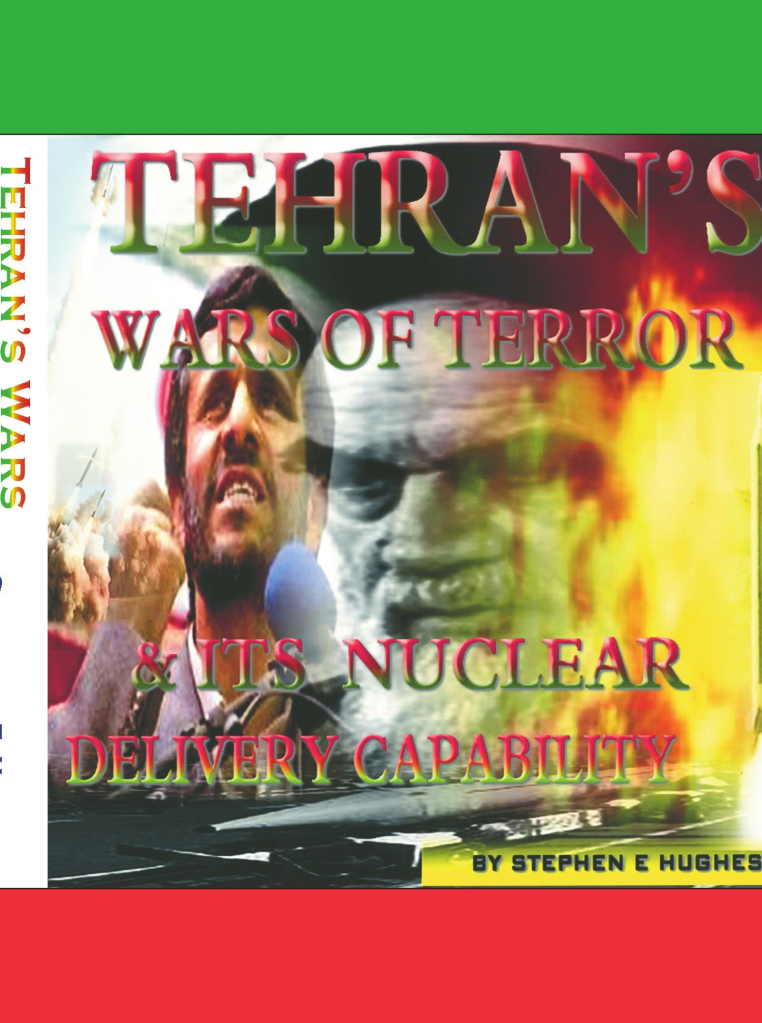
Tehran’s Wars of Terror and Its Nuclear Delivery Capability

The worst book cover deserves to be seen in all its “glory”

Stephen Hughes’ The Iraqi Threat was a letdown. This is even more of a letdown. Trying to move through the smoke of the infamously secretive post-revolutionary Iranian military (with their five million new systems that appear in every new parade) would be a worthy and very useful endeavor. This not only fails in that regard, it acts like it doesn’t even try.

First off, I’m a “you can’t [usually] judge a book by its cover” type of person. I can understand having a bad cover or a crude cover. But this is an exception, because the cover of Tehran’s Wars of Terror is, without a doubt, the worst I’ve seen of any military reference book. And one of the worst I’ve seen period.

The cover is perfectly representative of the absolute slapdash mush inside. The Iraqi Threat at least had a central theme that it followed. This is just a rambling collection of various articles that are connected with only a vague link to Middle Eastern warfare. It doesn’t even work as a basic “know your enemy” primer because it’s so gargantuan and aimless. I feel surprisingly confident in saying that it’s quite possibly the worst military reference book I’ve read. And if not, it’s certainly down there.

NaNoWriMo Announcement

So, I’m going to be doing NaNoWriMo. You might see fewer posts on this blog during that time because of obvious changed priorities. I feel confident because when I wrote the Smithtown books and The Sure Bet King, I was able to write at a pace that met the equivalent of the NaNoWriMo goals.

As for the subject matter of the book, while I want to keep a lot of the exact details hidden, I will say this: I’m going to be using NaNoWriMo to be my first step into the pool that is the Larry Bond-style “big war thriller.” I figured the format works well for taking a step towards something new, and I’m really, really excited to take a crack at a genre I frequently love to read and made this blog to review.

Review: Point of Impact

Point of Impact

Stephen Hunter kicks off his Bob Lee Swagger (aka Deadshot-13) series of sniper thrillers with Point of Impact. I was eager to finally get the chance to read this book, as I’ve heard good things about the series. I was not disappointed. This was a great novel.

Now, granted, there are some bumps. The amount of machismo in the writing’s tone is a little much even for me. More importantly, it has an awkward mix of “Herman Melville for snipers” where it talks about grounded, important setting up for a shot, and “Sniper John Rourke” where the main character can fight at the level of a video game hero and make very accurate shots in a very short amount of time.

But these are not deal-breakers by any means. The action is excellent. The book is long yet well-paced and never feels like it drags on. It has the “slow buildup” of Jon Land at his best applied to a much more serious plot and executed quite effectively. Finally, the big twist feels like an unintentional/accidental critique of the worst “shoot the terrorist” thrillers where the main character doesn’t actually have that much agency. This is definitely not one of those.

I loved this book. I recommend this book. It’s not the absolute best thriller I’ve read, but it’s definitely up there.

Review: Russian and Soviet Ground Attack Aircraft

Russian And Soviet Ground Attack Aircraft

Alberto Trevisan and Anatoly Borovik’s Russian and Soviet Ground Attack Aircraft is the latest addition to my collection of technical, diagram-filled books on aviation history. It’s meant to be a comprehensive, picture-heavy catalogue of all the “Samolety Polya Boya”, a term that can be very awkwardly translated to [their definition] “Battlefield Aircraft”. The “Russian” in the title is accurate, as this book also includes World War I and post-1991 designs.

The “Samolety Polya Boyas” in this book range from the famous Il-2 and Su-25 Sturmoviks to low-end propeller planes to high performance edge cases like the MiG-23BN/27s (the proposed but never adopted final upgrade package that included the ability to mount radar pods and refuel in midair warms my Flogger fan heart). It also looks at never-were designs in the same range, most notably the postwar Illyushins, which were victims of technology, doctrinal changes, and being extremely ugly.

Some of the types it does and doesn’t focus on can feel a little arbitrary. While I suppose that’s the perils of dedicating a book to as vague a term as “ground attack aircraft”, I feel obligated to point it. Thankfully their choices never feel too weird or too bad, and I can understand the desire to avoid mission creep.

If I had one quibble (besides a somewhat iffy layout), it’s that there isn’t enough “how” in the book for my tastes. I would have liked to see an Air Battle Central Europe-esque section on the doctrinal “division of labor” between them, helicopters, and higher-performance bombers/strike aircraft, and how it evolved and changed. While I can get information on that from other sources (and/or intuit it based on capability-your slow short-legged ground attackers are not going to be used for deep, well-defended targets if they can help it), it’s still a lacking feature.

But the rest of the book is still great. The artwork is excellent, the list of aircraft covered is very big despite its self-imposed limitations, and the technical detail (especially for paper aircraft with fewer sources available) is surprisingly high. Even without the parts I would have liked, this is still a great resource for a centerpiece of the VVS.

Review: The Ringmaster Part 1

The Ringmaster Part 1

Robert Reed has been one of my most treasured finds. One of the few people who makes music in the style of the legendary Mike Oldfield, he has just released a new album, The Ringmaster Part 1. I instantly got it and listened to it as I type this sentence. Having listened to a lot of Reed’s other work, this is a fine successor.

This kind of long-form instrumental progressive rock (including Oldfield himself) is ideal writing music for me. It’s long, so it’s not repetitive. Yet it’s not as intense as vocal music. A lot of prog rock has long sections of filler you don’t really pay much attention to consciously (though not in a bad way) followed by big set pieces that you do-a perfect combination for when you need that occasional jolt.

If you like instrumental rock, you should get this album (and Reed’s other work).

The Three What-Ifs

It’s my 600th post on Fuldapocalypse. I’ve gotten a lot of books recently on never-were aircraft. Thus it’s fitting to make this post about a pattern I’ve seen in equipment that never was. From least to most interesting, here are the three big categories I’ve seen.

The first is “a different proposal for the same requirements”. This is often the least interesting, because the different proposals are still designed to meet the same goals. Most of the time you get something that just looks different but has similar (theoretical) performance, and sometimes not even then. There can be real and appreciable differences, but they especially aren’t noticeable on the outside.

The second is kind of related to the first, and that’s “a proposal that lost, and whose reasons for losing are obvious”. For instance, it’s very easy to see why the T-8 design won handily for what would become the Su-25 compared to its competitors-and not just from other bureaus. It faced the anachronistic Il-40/102, and some shoved-in kitbashes of existing aircraft (Yakovlev put forward a variant of its not-exactly-ideal existing designs, Mikoyan used something based off the classic Fishbed, and even Sukhoi itself had a derivative of the Su-15 interceptor that looked very little like its “parent.”).

The third is the real fun part, and that’s stuff made with totally different goals. This is where you get all the giant napkinwaffe planes. But you also stuff that’s knowingly lower-performance for the sake of affordability.

Review: Drawing The Line

Drawing The Line

Peter Nealen’s Drawing The Line has been given out as a newsletter sign-up bonus. An American Praetorians story set on the southern American border, I wanted to see how it went. And it was what I basically expected it to be.

Now, the American Praetorians series as a whole is the least good of Nealen’s contemporary action. I say “least good” instead of “worst” because they’re still very good thrillers. It’s just two things get in their way. The first is the feeling of an author still finding his footing, which is less of a problem in this smaller, less ambitious work. The second is writing it in first person, which I don’t think is the best perspective for the genre.

Still, this is intended as a snack, and it’s a very good snack.

Review: The Afghan Way Of War

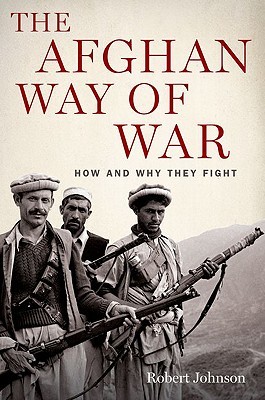
The Afghan Way Of War

Robert Johnson’s The Afghan Way of War was an obvious buy for me based purely on its relevance to current events. I was expecting a concise military history of that country and got it. But I also got more. The “more” had a few rough spots but was mostly good. As the book was published in 2011, it does not contain the decade that saw massive changes in the war even before the fall of Kabul. But that’s not it’s fault. Anyway, this was an interesting book, and not just because of its subject matter.

From the get go, the book wants to avoid and debunk “Orientalist” stereotypes. Because of this, at times it can get a little too “argumentative”, for lack of a better word. There are some passages that remind me of Stephen Biddle’s Nonstate Warfare in terms of being a little too focused on going “Well, these sources are wrong”. But only a few, and they aren’t deal breakers by any means. That the book succeeds at achieving its goal helps a lot.

And when The Afghan Way of War goes from being “argumentative” to “informative”, it works wonderfully. Johnson avoids not just the “idiot fanatic savage” stereotype, but also its cousin, the “cunning inscrutable super-warrior that the poor dumb lazy westerner cannot comprehend” that the likes of William Lind and H. John Poole like to trot out. The Afghans from the 1700s to the present are shown at their best and worst, never being truly dominant even in irregular warfare but always a threat.

One of the most fascinating and best written sections dealt with the Soviet war in the 1980s. The picture it paints of the mujaheddin there is not a flattering one. They come across as being substantially and massively flawed, and accomplishing as much as they did purely due to external support and the inherent advantages of irregular war on home ground.

Granted, its conclusions are not exactly shocking to anyone knowledgeable. Said conclusions amount to “a country known for poverty and disunity will have that manifest in its military and operations”. And it sometimes dives a little too deeply into supposed motivations (the “why”) when a deeper dive into operations (the “how” ) would have been, at least in my opinion, more useful.

Still, this is an excellent book and I highly recommend it.