Review: The Ninja

The Ninja

Eric Van Lustbader’s The Ninja is a very fascinating book. On one hand, it played a big role in the 1980s “Western Ninja” craze. On the other, the book itself is… bad. To put it very mildly.

The actual substance of the first Nicholas Linnear novel consists of little more than sleaze, padding, and ridiculously purple prose. I mean, it makes Kenneth Bulmer at his worst look like a field manual in comparison. That’s how bad it is. What’s interesting is how it was successful.

While literary tastes can be very different, this still feels strange that what got a subgenre going was something like this. It’s as if The Hunt For Red October was a thousand-page impenetrable mess where the protagonists effortlessly sink the Northern Fleet. Or if War Against The Mafia was full of exclamation points! in weird spots and couldn’t even keep its main character’s name consistent. It’s something, but it’s not exactly something I’d recommend.

Review: Dance of the Vampires

Dance of the Vampires

The ebook Dance of the Vampires is a behind-the-scenes look at the wargaming Larry Bond used for what would become Red Storm Rising. It’s fascinating to see how this battle was conducted. For someone who’s worked on Command, seeing this comparably ancient system is like looking at one of Naismith’s original basketball games.

Most of the book is composed of after action reports and figures detailing the games. Besides the ones that play out similarly to the actual book, there’s a short summary of the “Keflavik Turkey Shoot”, a scenario where the Soviets attempted to force the GIUK Gap with heavy bombers and got crushed (despite legitimately clever play on their side). This was what required them to take Iceland in Red Storm Rising proper. The smaller-than-I-thought presence of that country in World War III fiction started here.

This is in many ways a book about struggles, because they were on unfamiliar ground, and not just about rivet-counting specifics. When something like this hadn’t been done in this way before, there’s bound to be issues. And there were. But the results were still impressive, and so is this chronicle of the wargames. For those interested in this kind of history, I can recommend this book.

A Thousand Words: Final Justice

A Joe Don Baker story about a trip to Malta where mobsters are (supposedly) fought, Final Justice is a terrible movie. It is a movie so bad that not even the Mystery Science Theater 3000 team could make it bearable. It’s certainly down there on my list of worst movies ever, although it inevitably faces some tough competition.

Still, this is a very bad movie consisting almost entirely of the main character walking around Malta and repeatedly getting berated by the Maltese police chief. It’s like someone did a faithful adaptation of one of those horrendous “action novels without action” paperbacks. And the acting is as “good” as you’d expect. But really, this is a terrible film. A terrible, terrible, terrible, terrible, terrible film.

Review: Starmageddon

Starmageddon

In 1986’s Starmageddon, Richard Rohmer struck again. By this time, The Hunt For Red October had been out for some time and Red Storm Rising was soon to come. One of my comments about Tom Clancy has been that his success and popularity was more due to being able to tap the trends of the time than any directly superlative writing skill. Well, for Rohmer, that kind of trend-chasing, mixed with inertia, was the sole reason for him being as successful as he was.

I’m reluctant to call anything the “worst ever”. But in terms of the worst World War III book written, Starmageddon is at least up there. Especially in the category of “worst World War III book by a big name author/publisher”. So what is this book?

Basically, take the hot-button issues and events of the day, in this case the KAL007 shootdown, the Strategic Defense Initiative, and trade concerns with Japan and South Korea. It’s okay to wonder what the third has to do with the first two, and that’s because it’s part there to set up the “plot” (which in turn cycles back to just reasons for showing those topics) and more there for just padding.

Shove them into a barely fictionalized form. In Starmageddon’s case, toss it into a lame, low-effort “future” where everything besides one superweapon is still at present-day technology levels. Add in what feels like the outline for a military/technothriller, and tell it completely in the form of conference rooms and scenes so flat they might as well be in conference rooms. Jumble them into an only slightly coherent plot. End on a “cliffhanger”.

This is nothing new for Rohmer, although he has regressed at least a little from the very small “height” of Periscope Red. Combining his writing “quality” with a World War III subject matter (no matter how halfhearted) automatically makes this book one of the worst ever in the small subgenre. This is especially so given the context. By this time, other authors were doing similar themes with far more skill, leaving Rohmer well behind.

Review: Assault Into Libya

Assault Into Libya

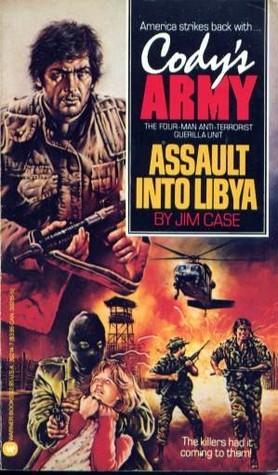
With this post, I will have reviewed every book in the Cody’s Army series on Fuldapocalypse. How does the second, Assault into Libya, hold up compared to the others? Well, it does what a men’s adventure novel is supposed to. Like some of the other entries, it’s a 51% book in a 51% series. Beyond the basics, it only really stands out in being a little more willing than some when it comes to killing off supporting characters.

For the series as a whole, it’s ideal for showing off the most single representative example of what 1980s men’s adventure was like. Teams of secret agents pursue terrorists through headline-ripped locations (this particular book has Libya, the crown jewel then). There’s lots of at least moderately effective action. And yet this book has the same issue that all Cody’s Army entries save for the truly engaging Hellfire in Haiti share-they’re mostly interchangeable and there’s no reason to pick them ahead of better examples in the same genre.

Review: Periscope Red

Periscope Red

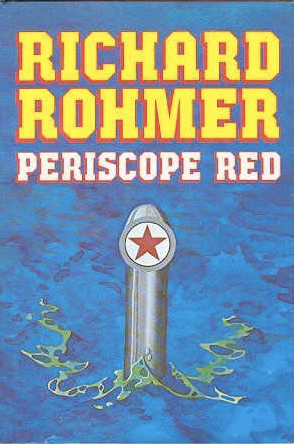
Richard Rohmer’s Periscope Red is a novel ahead of its time in the worst ways. That its concept of a Soviet covert-to-overt campaign against the world’s oil tankers is interesting makes the flawed execution all the more disappointing. The presence of numerous conference rooms and technical infodumps without any substance or excitement to “balance” them leads to a mismatch. It’s the equivalent of watching a sporting event where quarterbacks throw tons of incomplete passes as rushers stay on the side, basketball players attempt and miss three pointers by the dozens, or where baseball hitters strike out en masse but have absolutely no power when they do make contact.

That the literary fundamentals are slightly improved from Ultimatum and Exxoneration in a way doesn’t help it. It’s still not good by any means, and this quality makes it slightly more generic. Going from “interestingly bad” to “un-interestingly bad” isn’t necessarily a good trade off.

Thus this book is somewhat more realistic than Rohmer’s “invasion of Canada” novels, but lacks their out-there premise. It’s somewhat smoother in its pacing than those, but lacks the weird “appeal” of seeing just how blatant the padding can get. By conventional literary standards, it’s still very, very, bad. The technothriller style would have to wait until better authors than Richard Rohmer came along to achieve mainstream prominence.

A Thousand Words: Time Gal

Time Gal

The 1983 video game Dragon’s Lair pioneered a feature to get around the then-primitive graphics of the time. Animated scenes would play via laserdisc while the player engaged in what are now called quick-time events. One of the more memorable versions of this is 1985’s Time Gal.

First, it has legitimately good-quality animation, no doubt due to the presence of the big-time Toei Animation doing the work there. Second is its premise. Basically, someone stole a time machine and Reika, the game’s heroine, must pursue him throughout many times, from the far past to the far future. Goofy anime antics and quick-time events galore ensue. There’s a tiny bit more depth in that from time to time, the game will briefly stop and allow the player choices, only one of which will succeed.

One of the more bizarre coincidences of the game is the one that ties it to Fuldapocalypse. The “AD 1990” stage features Reika avoiding M1 Abrams tanks and an AH-1 Cobra helicopter on a battlefield. The closeness of the then-future date to the actual Gulf War is uncanny, especially given how pop-culture to outright wrong everything else is.

This is a goofy spectacle that was meant to be a goofy spectacle. For the voice acting to be technically “better” or the animation to be more recent and even smoother would ruin the experience. And while many “interactive movie” games were cheap bandwagon-hoppers, this is not.

Review: Philippine Hardpunch

Philippine Hardpunch

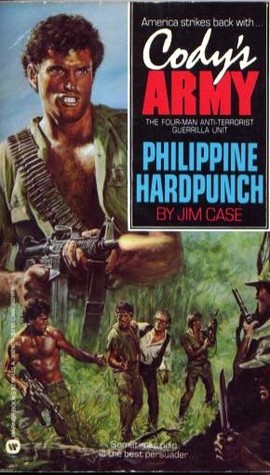
Of all the books in the Cody’s Army series, Philippine Hardpunch may be the most middling. Given the nature of 1980s “men’s adventure” fiction, that’s very forgivable. It could easily have been something worse than “middling”, and can still succeed as a time-passer. John Cody and his “army” of three other people still fight, and the result is still a competent cheap thriller.

That being said, in hindsight it falls particularly short. The later Hellfire in Haiti takes its basic premise (associate of a recently ousted, headline-grabbing dictator tries to retake the country, the “army” opposes him) and has a spectacularly better execution. Thus, this becomes one of those books that I’d put in the “only for genre ultra-enthusiasts” category. Not because it’s bad, but because it’s in a genre where there’s just so much available that it has to be really good to stand out. And sadly, this isn’t.

Review: The Seventh Secret

The Seventh Secret

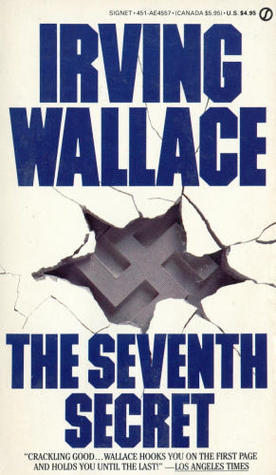
One of those “just a little bit more highbrow than the mushiest mush” popular fiction authors, Irving Wallace had The Seventh Secret as one of his later books. This is an entry in a subgenre that can best be described as “HITLER LIVED!”, the kind of “secret history” book that embodies a trope that probably started the moment the war ended.

This book has a lot of detail that’s basically higher-brow versions of “I know the exact designation of a Scud TEL”. It has Wallace’s reputation for sleaze come across as well. While this sort of thing is common among cheap thrillers, it’s a little bit worse here. Yet the book manages to flow well in spite of these, to his legitimate credit. It also has surprisingly good buildup.

Yet the book ultimately comes across as, weirdly, both too bizarre and too mundane at the same time. Part of this is the very premise. Part of it is a comparative lack of action, with only a handful of humdrum fight scenes. The biggest part, and one that takes away from the effective buildup, is that there really isn’t that much of a villainous plot, expecting the audience to take “HITLER LIVED” as awe-inspiring enough by itself. Still, this was a satisfactory book.

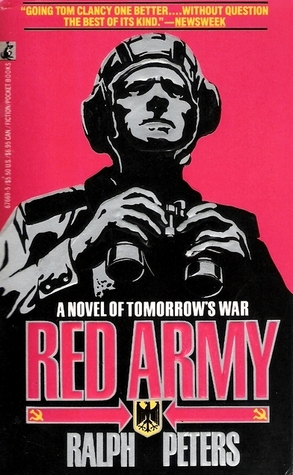
Review: Red Army

Red Army

So I actually haven’t done a formal review of Ralph Peters’ masterpiece Red Army on this blog yet. I think I should, because well, it’s my clear choice for “best conventional World War III book of all time.” It has fewer competitors for that title than I originally thought when I first read it, but still manages to stay above them.

The story of a conventional WW3 in 198X, the book jumps between the perspectives of various Soviets as they carry out the war. One of the best “big war thrillers” at managing the viewpoint jumps, it never feels awkward or clunky in that regard. The characterization is very good, especially by the standards of the genre. And it works very well at avoiding an excessive focus on technology.

Of course, Peters has the Soviets win, and thus deserves extra credit for going against the tide. At the time the book was published, there was a (justifiable) sense of increasing triumphalism. Having them win and win handily was a good move. Especially since it doesn’t come across as being done for cheap shock value.

There’s a few sour parts. While the viewpoint jumping is good, the two messages of “humanize the Soviets” and “show how they can beat NATO” sometimes don’t work well, especially as the latter means characters done just to explain things (granted, as someone who’s read the translated Voroshilov Lectures and similar materials for fun, I understand it in ways a casual reader at the time almost certainly wouldn’t). There’s criticism of how the Soviets advance too fast, which is valid but which I consider a mild issue, no worse than Team Yankee’s similar problem with lopsidedness. My biggest complaint is how the situation is set up to let the Americans almost entirely off the hook for NATO’s defeat.

But these are small problems at most. Red Army is an excellent book, and I have no problem considering it my favorite “Conventional WW3” novel of all time. And it has one of my favorite book covers ever.