A Thousand Words: Postal 2

Postal 2

Running With Scissors’ 2000s “masterpiece”, Postal 2 is a game about a man in a small Arizona town whose goal is just to complete mundane errands. However, a lot of stuff gets in the way. This game is infamous for its tasteless dumb humor, its gore, and the ability to use cats as silencers.

The humor is either dated, unfunny, or both. It’s very much in the style of the shock-the-oldies Dennis Rodman meets Bart Simpson style of the time. The actual gameplay, especially in the plot missions, combines two of the worst elements of turn-of-the-millenium FPSes: A post-hitscan, pre-regen system where combat is a deterministic exercise in power ups, and wandering through very similar hallways.

And yet, there’s stuff that’s genuinely good about it. Part of it is that, off the beaten path, it provides the opportunity for silly spectacle. This is helped by the open-world element being genuinely good. Almost all buildings are enterable, there are locations that have nothing to do with the main missions, there’s plenty of easter eggs, and a silver lining of the combat is that there’s often legitimate power ups (and hence reasons to explore) in the nooks and crannies. Another small part is that there’s just a hint of slyness in just wanting to do chores but getting confronted by everyone from creepy mascots to Gary Coleman.

This is a stupid, clunky, awkward game. And it’s fun.

Review: The Bear And The Dragon

The Bear And The Dragon

Tom Clancy’s The Bear and the Dragon is not just the greatest technothriller of all time, but also one of the greatest novels of all time. With its accuracy and evenhanded portrayal of various cultures, it transcends the shackles of genre fiction to create a new class of literature. Not since Vasily Grossman has a writer truly understood and shown the effects of war in its entirety-

-AHAHAHAHAHAHAHAHAHAHAHAHAHAHAHAHAHAHHAHHAHAHAHAHAHAHAHAHAHAHAHAHAAHAHAHAHAHAHAHAHAHAHAHAHAHAHAHAHAHAHHAHHAHAHAHAHAHAHAHAHAHAHAHAHAAHAHAHAHAHAHAHAHAHAHAHAHAHAHAHAHAHAHHAHHAHAHAHAHAHAHAHAHAHAHAHAHAAHAHAHAHAHAHAHAHAHAHAHAHAHAHAHAHAHAHHAHHAHAHAHAHAHAHAHAHAHAHAHAHAAHAHAHAHAHAHAHAHAHAHAHAHAHAHAHAHAHAHHAHHAHAHAHAHAHAHAHAHAHAHAHAHAAHAHAHAHAHAHAHAHAHAHAHAHAHAHAHAHAHAHHAHHAHAHAHAHAHAHAHAHAHAHAHAHA

-Just kidding, by all accounts it’s even worse than Executive Orders. April Fools!

Review: Russian Air Power

Russian Air Power

The 2002 book Russian Air Power, by Gordon and Dawes, is something I was eager to get for the sake of seeing a past snapshot. I was not disappointed. Sure it’s dated (including a laughably inaccurate prediction that by 2010 the Russian Air Force would have streamlined down to three platforms, including the PAK-FA), but I expected it to be dated. A slightly worse criticism is how the doctrinal specifics of a high-intensity “air operation” are left a little vague for my liking.

But I have the Heavy OPFOR stuff for that, and the rest of the book is good. That I already knew much of it was no knock against it. And the part about the air force’s role in the Chechen Wars is excellent (and further reinforces my belief that, despite huge investment in the twenty years since, it may have actually regresssed from that in terms of overall capability in the early part of the Ukraine War.)

If you can get this book, do so. It’s a good historical reference, and Dawes keeps a lot of Gordon’s issues in check.

Review: The Counter Terrorist Manual

The Counter Terrorist Manual

I’ve had a soft spot for Leroy Thompson’s The Bodyguard Manual, simply because of its excess. Sadly, The Counter Terrorist Manual is not quite as well, excessive. The impression I got of this was, well, like one of those “here’s what happens!” picture books, giving a very basic history and overview of SOF units. So it’s not even a book for mall ninjas. It’s a book for wannabe mall ninjas.

But, that’s not necessarily a bad thing. This does give the idealized basics of counter-terror special forces. Just take everything in it with a highway truck of salt and you’ll be fine. And don’t read if you desire the slightest depth or critical perspective.

Review: The Inside Ring

The Inside Ring

Mike Lawson’s debut thriller in the Joe DeMarco series, The Inside Ring, is a less-than-coherent thriller. Its stakes zig-zag from high to low to nonsenscially high again at the last second. The cast seems to consist entirely of either slobby white ethnic greasers (including the main character, who is one of the least likable thriller protagonists I’ve seen in recent memory) or slobbier rednecks.

I’ll put it this way. How bad do your rural southerners have to be for a New Yorker like me to go “you’re going way too far here. Ugh”? They’re that bad. The plot is ridiculous, with the villain wanting to do something that would make him far more of a target than if he just did the “conventional” easy thing. Then comes a stereotypical conspiracy to make it even dumber.

While not the worst I’ve read, the literary fundamentals aren’t nearly good enough to salvage this novel. There are better individual thrillers out there, and if nothing else, the series started off on a bad note.

Review: Building The Tatmadaw

Building The Tatmadaw

Likely because it’s lacked the direct confrontation with a major western power that North Korea or Middle Eastern states have had, Myanmar is one of the more forgotten and undercovered of the militarized pariah states. That military dictatorships are not exactly known for their openness and transparency doesn’t help things. Thankfully, Maung Auyng Myoe has risen to the challenge with Building The Tatmadaw.

The often murky and convoluted history of the military, as well as the brutal but often underreported internal wars, is shown in depth. As is the Tatmadaw’s force structure and conventional paper doctrine. For the former, it follows (at least as of the writing of the book) a common in Southeast Asia pattern of having “regional forces” tied to a certain area and mobile reaction forces (known here as “light infantry divisions”) that can travel where needed. Regarding the latter, Myoe’s description comes across as basically a Light OPFOR right out of Central Casting. The picture is that of an infantry-heavy force where advanced and heavy equipment is present but not dominant, and where the strategy against an external opponent consists of fortifications and irregular tactics to counter the material disadvantage.

Published in 2009, this is bound to be outdated, especially given the massive tumult that has happened since then (the “thaw”, the anti-Rohingya campaign, and the military re-takeover). But as always, that’s not the author’s fault. I did notice a few slip-ups and a bit of clunkiness when talking about specific military issues, but none of those are very big or bad. If you want to learn about the Tatmadaw, this book is an excellent resource.

Review: The Years of Rice And Salt

The Years of Rice and Salt

Kim Stanley Robinson’s The Years of Rice And Salt is probably the most highbrow and audacious work of alternate history printed by a mainstream publisher and aimed at a wide audience. A sweeping magical realist epic, this starts with the question “what if there was no Europe?”

To achieve this, Robinson uses a plot disease to wipe out Europe’s population in the Middle Ages while leaving the rest of the world mostly unscathed. It’s basically the literary, sophisticated version of The Seventh Carrier’s haywire satellites knocking out every jet and rocket engine. While there are many contrivances and valid criticisms, it’s clear what the author is trying to do. Alternate history by English-speaking authors can understandably be kind of Eurocentric, something which he takes a chainsaw to with his divergence. Robinson tries to be different.

And he succeeds, going from character to character in a millennia-long saga, with excellent prose and a great sense of wonder. It manages to achieve the not-easy feat of being both broad and human at the same time. The writing style and structure helps a lot in this regard.

Unfortunately, even something as distinct as Rice and Salt can still fall victim to a common issue with alternate history: Getting worse as one gets farther away from the point of divergence. The last part of the book has both clunky historical parallels (like a giant decades-long World War I static conflict) and political soapboxing ramped up. But even this can’t harm the book too much.

Alternate history fans should read Rice and Salt. It’s a rare anomaly in an otherwise constricted genre.

Fatadin Mukhamedov

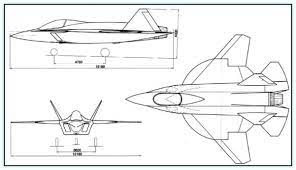
In one of those weird footnotes of aviation history, Mukhamedov, like Stavatti in the west, has been a maker of so-called “paper planes”. The company owes its existence to Fatadin Mukhamedov, a Soviet/Tajik engineer who had a successful career with the big bureaus (for instance, the Dushanbe center of Mikoyan) before striking out on his own. No actual aircraft were produced by the Mukhamedov bureau before Fatadin’s death in 2013, but the bulk had one specific shape.

Mukhamedov designed everything from fifth-generation fighters to gargantuan transports with the same distinctive circular inner wing. The most practical and achievable design was an advanced jet trainer/light strike aircraft for the competition eventually won by the Yak-130. Not coincidentally, the design may have found its way to Iran as the would-be HESA Shafaq. All of the other circular planes were just interesting and distinctive dreams.

But, in other timelines, dreams can come true….

Review: Invasion Downfall

Invasion: Downfall

DC Alden’s Invasion series is infamous. After reading Downfall, the first installment in the series, I soon found that this infamy is completely deserved. First, the obvious part: This is a book about an Islamic superstate invading the UK. And it has the politics you’d expect from such an invasion novel. Yes, there’s a lot objectionable about it, including the “traitorous fifth column in waiting” trope taken to extremes even by the standards of the genre.

Of course, I found something else objectionable, which is that it started off in a conference room. And we see a lot of those, and not in a well-handled way. At least the “setup phase” isn’t too long, even if what’s going to happen is completely obvious.

When push finally comes to shove, the military action is not exactly a rival to Larry Bond. The enemy uses a surprisingly bland array of mostly western equipment (not helped by later editions trying to make it “contemporary” by erratically changing names), and there are iffy set pieces like an E-3 letting itself get in range of a short-range missile. The infamous “strong but weak” trend that I was already on thin ice about picks up. “The horrible hordes can easily overrun England-but they can lose multiple strategic aircraft in one battle with named characters.” Like a slightly less intense version of Joly’s Silent Night, nearly all of the British military is incapacitated by irregulars before the conventional forces land.

Just a little bit more research and/or imagination would have made the battles a lot better. As would having the opponents actually earn their victory in Operation أسد البحر. The actual book is a “get the conference rooms right, but not the battles” mediocrity.

Review: Tehran’s Wars of Terror

Tehran’s Wars of Terror and Its Nuclear Delivery Capability

The worst book cover deserves to be seen in all its “glory”

Stephen Hughes’ The Iraqi Threat was a letdown. This is even more of a letdown. Trying to move through the smoke of the infamously secretive post-revolutionary Iranian military (with their five million new systems that appear in every new parade) would be a worthy and very useful endeavor. This not only fails in that regard, it acts like it doesn’t even try.

First off, I’m a “you can’t [usually] judge a book by its cover” type of person. I can understand having a bad cover or a crude cover. But this is an exception, because the cover of Tehran’s Wars of Terror is, without a doubt, the worst I’ve seen of any military reference book. And one of the worst I’ve seen period.

The cover is perfectly representative of the absolute slapdash mush inside. The Iraqi Threat at least had a central theme that it followed. This is just a rambling collection of various articles that are connected with only a vague link to Middle Eastern warfare. It doesn’t even work as a basic “know your enemy” primer because it’s so gargantuan and aimless. I feel surprisingly confident in saying that it’s quite possibly the worst military reference book I’ve read. And if not, it’s certainly down there.