When I was young, one of my favorite games was the Rube Goldberg generator known as The Incredible Machine. Now I’ve been delighted to announce that I’ve found a spiritual successor, People Playground. You can make all sorts of contraptions there in a physics sandbox-that mostly have the end goal of killing people. Or monsters. Or robots. For someone with as frequently twisted a sense of humor as me, I’ve loved it.
Yes, you can manually spawn a weapon and just kill your test subjects, but where’s the fun in that? One example of the breadth of this game is my most satisfying creation. One victim was strapped to a chair while another had an incandescent light bulb wired to him. The light bulb was switched on and given a heat transfer, causing the first victim to burn to death. A heat pipe was then attached to the second victim’s head, leading it to light up like a candle, before the whole body followed suit.
There’s a real sense of satisfaction in making an elaborate deathtrap that finally, actually works, and it’s for that reason that I recommend this game for people who like messing around in sandboxes. It’s very fun.
As something that’s very much a “51%” book, Marc Cameron’s National Security is hard to really review in depth. The first full-length Jericho Quinn (what a name!) book, it fits in the category of “light but fun.” In fact, it’s arguably a better example of the “The ultimate 51% book” than Marine Force One, my past go-to novel, was.
If one was to play a drinking game for cheap thriller cliches in this book, they would die of alcohol poisoning less than halfway through. Everything from the antagonists to the hero, to the way the hero’s operation is set up is there and very familiar to genre enthusiasts like myself. There’s even the weird weapons like silenced .22LR Glocks and air-launched Tomahawks. It’s dumb, it’s sometimes tasteless, and it’s the kind of book I love.
Over the course of many years, theorist and commentator William S. Lind wrote a novel called Victoria. In the 2010s, he finally published it under the pen name “Thomas Hobbes.” When little doe-eyed me got the book, I thought “well, this sounds like a kooky bit of ‘Patriot Fiction’, but at least it’s got a renowned military commentator writing it. So the battles should be good.” What I actually got was a neoreactionary tribute to Old Prussia and a bitter axe grinding by a washed up charlatan who knew only the “ten of the last three financial crises” approach to critiquing military policy.
So the plot goes like this. Captain John [Mary] Rumford, of the USMC, cannot bear to hear a woman say “Iwo Jima” in a casualty remembrance ceremony because it was insulting to the dead (none of whom were woman). So he interrupts her, gets drummed out of the Corps, and meets William [Sue] Kraft. Then comes a frenetic pace as they cakewalk their traditionalist state to victory against one drooling opponent after another. The prose and pacing are actually decent-to-good, which makes the blows hit a lot harder.
However bad the politics (The book has African Americans “willingly” return to being happy farm workers, emphasizes the pure Spanish noble heritage of the only good Latina character, and has societal peer pressure stop the use of most Evil Modern Technology just to give two examples), what I found far more fascinating was just how bad the military aspect of it was. This was earnestly surprising to me at first. After reading more of Lind’s nonfiction writing, it wasn’t in hindsight.
I would sum it up this way: Lind can’t even do failure properly. The best example is this a scene involving the classic Briefing of Doom where Rumford falls asleep. Now the right way to do this would be to have it be badly done with a million terrible overproduced Powerpoint slides or something similar, leading an exhausted Rumford to, to his horror, doze off. Instead the actual subject matter of the briefing is treated as being at fault, with the narrator’s nap being a form of “and nothing of value was lost” contempt. What is the subject matter? Just minor, insignificant details like maps, roads, and local weather. You know, the kind of thing that an army, especially the wunderjager light infantry that Lind loves, doesn’t need to know.
In fact, this blind spot envelops the whole book in a way that’s actually a little funny when looked at. Rumford does not actually fight (the closest he comes in the entire book is having to draw his pistol when near the scene of a drive-by), and he doesn’t really command either. He just hovers around, jumps in from time to time, and gives advice. Almost like it was written by a civilian theorist who hovered around the military, jumped in from time to time, and gave advice.
I counted at least two arcs in the book where a light infantry sneak would have been genuinely effective. But Lind just did not want to write any actual battles. Just pointing at the scene, dispensing generalist advice (and/or coming up with a super-gimmick) and watching the stomp ensue. Lind makes Liddell-Hart look like Luigi Cadorna in comparison in both this and his nonfiction. Because of this, all of his potentially good points and legitimate critiques are squandered.
That Lind gets a lot of the fundamentals right just means the crazy is unfiltered. This book is both distinctive and a huge waste.
Declan Finn’s A Pius Man is a very weird thriller. It was intended as a conservative Catholic response to The Da Vinci Code and its array of knockoffs, yet delays in the publication of the book had the unfortunate effect of making it appear after the trend had already gone away. So it’s like a scathing critique of disco music-that came out in 1989.
As for the book itself, it’s an awkward mixture of conventional thriller (see the central casting Thriller Protagonist!), out-there thriller (See the pope in his super-armor confront raised-from-childhood KGB assassins!), and a self-serious defense of Pius XII’s historical record that reads like a mediocre undergraduate essay. All this is clumsily shoved together.
I still wouldn’t call this book really “good”. But it’s at least different and a little distinct. Your liking of it will depend on your liking of difference for its own sake. It’s the “mean 51%” compared to stuff like Marine Force One or other rote “shoot the terrorist”‘s “median 51%”.
Peter Nealen’s Drawing The Line has been given out as a newsletter sign-up bonus. An American Praetorians story set on the southern American border, I wanted to see how it went. And it was what I basically expected it to be.
Now, the American Praetorians series as a whole is the least good of Nealen’s contemporary action. I say “least good” instead of “worst” because they’re still very good thrillers. It’s just two things get in their way. The first is the feeling of an author still finding his footing, which is less of a problem in this smaller, less ambitious work. The second is writing it in first person, which I don’t think is the best perspective for the genre.
Still, this is intended as a snack, and it’s a very good snack.
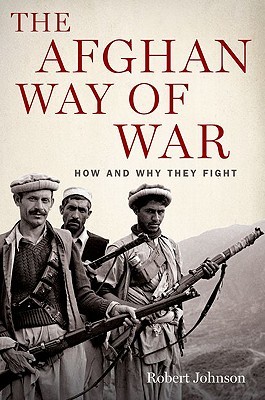
Robert Johnson’s The Afghan Way of War was an obvious buy for me based purely on its relevance to current events. I was expecting a concise military history of that country and got it. But I also got more. The “more” had a few rough spots but was mostly good. As the book was published in 2011, it does not contain the decade that saw massive changes in the war even before the fall of Kabul. But that’s not it’s fault. Anyway, this was an interesting book, and not just because of its subject matter.
From the get go, the book wants to avoid and debunk “Orientalist” stereotypes. Because of this, at times it can get a little too “argumentative”, for lack of a better word. There are some passages that remind me of Stephen Biddle’s Nonstate Warfare in terms of being a little too focused on going “Well, these sources are wrong”. But only a few, and they aren’t deal breakers by any means. That the book succeeds at achieving its goal helps a lot.
And when The Afghan Way of War goes from being “argumentative” to “informative”, it works wonderfully. Johnson avoids not just the “idiot fanatic savage” stereotype, but also its cousin, the “cunning inscrutable super-warrior that the poor dumb lazy westerner cannot comprehend” that the likes of William Lind and H. John Poole like to trot out. The Afghans from the 1700s to the present are shown at their best and worst, never being truly dominant even in irregular warfare but always a threat.
One of the most fascinating and best written sections dealt with the Soviet war in the 1980s. The picture it paints of the mujaheddin there is not a flattering one. They come across as being substantially and massively flawed, and accomplishing as much as they did purely due to external support and the inherent advantages of irregular war on home ground.
Granted, its conclusions are not exactly shocking to anyone knowledgeable. Said conclusions amount to “a country known for poverty and disunity will have that manifest in its military and operations”. And it sometimes dives a little too deeply into supposed motivations (the “why”) when a deeper dive into operations (the “how” ) would have been, at least in my opinion, more useful.
Still, this is an excellent book and I highly recommend it.
The sixth book in the Dan Morgan series, Threat Level Alpha is unfortunately a step back. The first problem is that the book reverts to the mean of “shoot the terrorist”, and a clumsy attempt to raise the stakes by making the threat supposedly more dangerous simply doesn’t work. The second is that there are two basically unconnected plotlines in the book.
There are better books in this series. I do not recommending reading this one. It may very well be the worst entry in the Dan Morgan series that I’ve read so far. Read the other five books instead.
The fifth Dan Morgan thriller, Leo Maloney’s Rogue Commander solidifies his status as the “second-best Jon Land.” Like I’ve said before, this series is the closest I’ve gotten to the excessive fun that was Blaine McCracken and Land’s other heroes. The subject matter is more mundane than Land’s, but the structure, especially the excellent “slow reveal” is very similar and just as effective.
This book in particular emphasizes another trait shared with Land-the swerve where characters dramatically show they were on the opposite side then previously implied. In this case, the titular “rogue commander” is all but stated to be someone-and then, in the climax, revealed to be-gasp- someone else. It’s silly, it’s ridiculous, it’s not high literature in the slightest-and it’s very very fun.
It still isn’t the best in the Dan Morgan series (that would be Black Skies as of now), but you could still do worse than this as your first entry into Maloney’s action hero fantasy. It has everything good about Dan Morgan, and all the fundamentals are solid.
I’m doing it. I’m breaking all my rules. I’m reviewing an in-progress internet online alternate history piece by an author I overreacted to in the past, at one point calling his TLs the “worst ever”, something which is not true and which I apologize for. I speculated as to why I felt as negative as I did in the very review itself, and with years of hindsight I can say that, sadly, it was just personal stress mixed with tunnel vision. The actual view I have of them is what I said I’d have felt in isolation before-middling Hackett-fics, no better or worse than say, Operation Zhukov and not really the most able to build a long review around.
But I think this new TL is worthy. I feel I’m calm enough to look at it more objectively, unlike my past axe-grinding. Like with New Deal Coalition Retained, I feel that this isn’t an obsession and that one post on an internet timeline won’t overwhelm dozens of those on other topics far less controversial to me. And I feel it does have something to say about the genre. I don’t want to come across as gatekeeping or saying someone shouldn’t do anything that they and others enjoy. I’m just giving my personal opinion. And of course, if my opinion on it changes as new updates emerge, I will gladly make an update post.
The timeline is called People’s War, and it’s about a surviving East Germany.
What I consider People’s War to show actually has a parallel in sports betting. What William Leiss calls “manual research”.
Now obviously literature is not a zero-sum game like sports gambling is. Everyone has to start off with the surface level details, and not everyone can or wants to do Kirov-level simulations. But this kind of ultimately surface research applied to a pseudo-Hackett pure exposition style has made me see the strengths and weaknesses of it.
The biggest strength is that there is a lot more verisimilitude. This is something that Young Grognard Me took for granted because I started with nonfiction books and wargames and went backwards from there. Now I know how rare even nominally accurate military fiction is in a world of “machine gun pistols”, “Flamethrower M60 Abrams”, and “A-130 helicopter gunships”. More to the point, this and the WW3 TLs that preceded it and which I got far too angry about are far more sensible than the clearly just tossed carelessly out “stock photo and a wikibox” stuff like the infamous New Deal Coalition Retained Part II. It’s one thing to arguably lean too heavily on Hackett, Bond, and primary sources as Lions Will Fight Bears and its successors did. It’s quite another to avoid them completely in favor of BIG NUMBERS, as NDCR Part II did.
But Hackett, Bond, and the WW3 TLs were dealing with a hypothetical conflict that had decades and decades of simulations, analyses, and sources dedicated to it. Said documentation is a big reason why it’s up there with the American Civil War and World Wars for wargaming and “hard” alternate history. But what happens when you’re dealing with something that doesn’t have that paper trail?
Trying to Hackett-ify a 1980s technothriller scenario is one thing. But this TL is trying to Hackett-ify what’s essentially a 1990s technothriller, where a surviving East Germany ruled by Honecker’s widow comes into conflict with the western world. Now looking at the reams of studies of a theoretical conventional Fuldapocalypse is one thing. But where are the think tank papers for “Fighting a somehow surviving ex-Warsaw Pact state post-USSR, especially with the hint of threat balancers you’d find in a Larry Bond novel?” They aren’t there. The closest are clear surface details like the names and amounts of weapons that end up feeling close to the more shallow “here’s the exact designation of a Scud TEL” than what effect barrages of those missiles would have in practice.
And this is my objection. Because there’s less opportunity to look, this sort of thing just feels kind of shallow to me without either simulation/deep analysis or just setting up the basics and running with a conventional story. And the TL format prevents the latter.
It’s still far superior to the outright Calvinball of NDCR’s Neo-Timurid Empire or postwar AANW’s “Eastern Siberia as an American state.” The military details are still far greater and more plausible than 3 million Soviet troops sloooooooooooowly advancing against 2 million NATO ones. Compared to “historical fanfiction” AH, it is better.
But there still doesn’t like a real solid base is there. And by the standards of either wargaming or literary fiction, I feel it doesn’t reach its potential.
Especially because this is a redo of a previous concept for a surviving East Germany war that was ultimately abandoned in part because, unsurprisingly, its base was too one-sided strategically. This is what I think goes full circle back to the “Manual Research” video, because Leiss specifically talks about the follies of using manual research for an obvious mismatch. Manual research can tell you what common sense and the odds show-that the powerhouse team against a paid-to-lose punching bag will easily win. But it can’t tell you how likely the opponent is to cover the inevitably massive point spread.
The force regarded as the best non-Soviet Warsaw Pact military can definitely still threaten the characters in a normal narrative and can definitely still do more damage than Saddam’s army did. It’s just that this and other works like it sit in an awkward middle ground between hard and soft. I wouldn’t call it a trinket, but it still feels less than whole.
It’s close to the anniversary of the release of Fallout: New Vegas. That game is one I played a gigantic amount several years ago, and it’s one that seemed to suit my style more than the “Bethesda Fallouts” ever did.
New Vegas has a very simple plot. You control a deliveryperson who gets ambushed, shot, and left for dead by someone in a bad suit who wants to gain control of a Las Vegas that’s been left intact after the nuclear war. After being saved by a robot, making your way to Vegas, and dealing with the guy in a bad suit, you get to decide who gets to control it. The plot is simple, but the setting is amazing. It’s this very interesting “post-postapocalyptic” theme where society has fallen-and risen again with big cities and big armies. It feels alive.
What makes this an orange to the “apples” of Fallouts 3 and 4 is that this is more linear. You’re railroaded on the main quest route both by dialogue and the game placing powerful monsters in all the places you’re not supposed to go, and the world is a lot less flat and explorable than in those two. But because my strategy was to just go through the main quests, I didn’t mind.
While this has the infamous “Gamebryo Bugs” and balance issues (speech is an overpowered skill that there’s no point in not maxing unless you want a self-imposed challenge), it’s still my favorite PC RPG of all time.

 Fuldapocalypse Fiction