Review: Ripple Effect

Ripple Effect

I’ll be honest. The sole reason I was attracted to Ripple Effect was the name of its main character, “Bear” Logan. Given how I like thrillers with ridiculous character names, I figured I had to check this one out. So I did. And this time the “the more ridiculous the name, the better” explanation didn’t really work out.

It’s not bad, but it’s only merely adequate at best in a genre filled with adequate books. The only standout feature, besides the name, is how it jumps between first and third person perspective in its writing-something that I don’t think really adds anything. The action is adequate. The pacing is adequate. The characters are adequate for this kind of book. You get the idea.

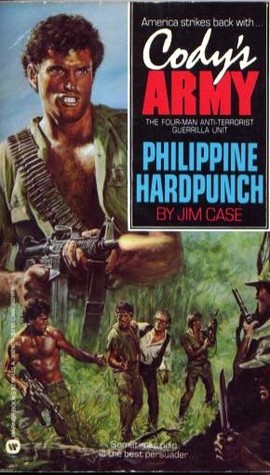
Review: Philippine Hardpunch

Philippine Hardpunch

Of all the books in the Cody’s Army series, Philippine Hardpunch may be the most middling. Given the nature of 1980s “men’s adventure” fiction, that’s very forgivable. It could easily have been something worse than “middling”, and can still succeed as a time-passer. John Cody and his “army” of three other people still fight, and the result is still a competent cheap thriller.

That being said, in hindsight it falls particularly short. The later Hellfire in Haiti takes its basic premise (associate of a recently ousted, headline-grabbing dictator tries to retake the country, the “army” opposes him) and has a spectacularly better execution. Thus, this becomes one of those books that I’d put in the “only for genre ultra-enthusiasts” category. Not because it’s bad, but because it’s in a genre where there’s just so much available that it has to be really good to stand out. And sadly, this isn’t.

Review: Trigger Point

Trigger Point

The first book in the Gabriel Wolfe series of thrillers, Trigger Point is a novel saved from “51%” mush by its bizarre plot. The title character is a conventional cheap thriller protagonist to a fault. Of course he’s an SAS veteran. Of course he’s haunted by the man he had to leave behind. Thankfully, this is the genre where it isn’t that much of an issue.

That being said, the bigger problem is the execution, with the action scenes and prose coming across as subpar. Another huge problem is that the plot takes a weird turn, with the antagonist being an ultra-connected billionaire plotting to take over Britain in a coup-and yet he has to rely on pathetic American hicks for the weapons-and mundane weapons at that in the form of heavy machine guns in use for a very long time. It’s this weird zigzagging between too big and too small.

Still, in an incredibly crowded genre, there’s just better books out there.

Review: The Ninth Dominion

The Ninth Dominion

The second, and as of now last book in the Jared Kimberlain series, Jon Land’s The Ninth Dominion is a par-for-the-course crazy ridiculous action-adventure book. By the standards of classic Jon Land novels, it has some issues. While it doesn’t help that its immediate predecessor was arguably his most ridiculous (in a good way) novel yet, there’s issues beyond this.

It’s a little less crazy. Beyond that, the biggest issue is that it doesn’t take full advantage of its almost Batman-esque premise of the craziest and most dangerous serial killers escaping. The prose and pacing are a little below Land’s height.

That being said, it still has all the strengths of a Jon Land thriller, and I still enjoyed it significantly. By the standards of more mundane thrillers, it’s quite goofy indeed. Its flaws are not deal-breakers by any measure, and there’s no shame in falling slightly short of a very high bar.

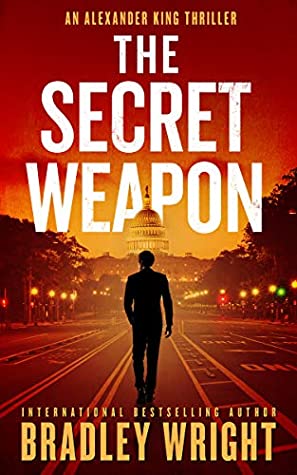
Review: The Secret Weapon

The Secret Weapon

A thriller in the Alexander King series, Bradley Wright’s The Secret Weapon is an example of how tough it is at the margins. My history with the author is a little strange. I’d read some of his books in the past, where they faded from memory as bland and mediocre. Then I saw this book, felt it was bland and mediocre-and then realized I’d read the same author before.

Anyway, the book isn’t really the worst ever. On-paper, it does what a cheap thriller is supposed to do, and only feels like its slightly below average in every category that matters-the action is slightly less exciting, the pacing slightly less efficient, and so on. Yet it’s that little bit that makes the difference.

Because the “action hero” genre is so big, has so many choices, and is reliant on execution rather than concept, for something to fall behind somewhat means there’s a lot out there that’s better. This isn’t like the much tinier “big war thriller” genre where a flawed entry like Chieftains or Arc Light can still be conceptually interesting enough to recommend. Instead, its flaws means it sadly misses the cut.

A Thousand Words: Revolution X

Revolution X

What happens when you take a pair of has-beens fading rapidly from relevance and merge them together? You get Revolution X, an arcade light-gun shooter starring a past-its-prime Aerosmith. The plot is simple-save Aerosmith from a bunch of people in yellow gas masks who’ve outlawed fun. You do so with a gun that fires CDs as well as bullets. Yes, it’s that kind of game.

The gameplay is mostly simple-fire at the hordes of enemy goons on your screen, put more quarters in when they inevitably kill you, repeat as necessary. Two of the later levels make this worse by trying to be more complicated. One, a maze, is simply annoying. The other, a time-sensitive mission where you have to completely destroy a bus before it reaches its destination, is considerably more aggravating.

By the time of its release, Aerosmith had long since fallen from the heights of their popularity, and with more powerful and smaller consoles just coming out, arcades would soon follow. This game is one of those weird novelties that can only happen at a specific time.

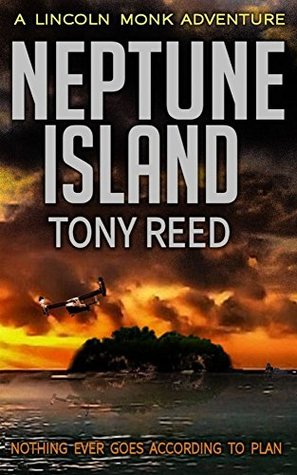
Review: Neptune Island

Neptune Island

The first in the “Lincoln Monk” series (how’s that for a protagonist name) by Tony Reed, Neptune Island is a delight to read. One of the biggest problems with trying to find good cheap thrillers is that the cover and even the blurb alone can’t easily tell whether a book is going to be good or bad.

That being said, this book of a Cheap Thriller Protagonist (capital-that’s how blatant it is), a supervillain billionaire, a superweapon, a beautiful biathelete, and a giant mutant crab is the most fun I’ve had reading a thriller in some time. It’s the kind of book that tosses every sort of “restraint” and “realism” aside in favor of ridiculous spectacle, and it’s great fun, especially after a period of more serious and sedate works.

It’s amazing, and is the kind of book that’s a delight to find. Sure it’s “implausible” and there’s a lot of contrivances, but those are small potatoes. The action is great, the setup is great, it manages to have very good buildup (which I’ve found is surprisingly rare among cheap thrillers), and the whole thing is just incredibly goofy-and really, really fun.

Review: The Eleventh Commandment

The Eleventh Commandment

It’s time for Fuldapocalypse to turn to another author of high sales but low reputation, British writer, politician, and convicted criminal Jeffrey Archer. Even though a lot of Archer’s books, from their descriptions, come across as the type of work I call the “pop epic” (ie, Sidney Sheldon), CIA thriller The Eleventh Commandment looked like a grocery store cheap thriller. In fact, it looked so much like a grocery store cheap thriller that I felt a bit of trepidation-would this be nothing but a Marine Force One with a more well-known author’s name on the cover, forgettable mush?

The answer is “kind of.” Its realism, or lack thereof, comes from simply adopting a different baseline. It wants to be a serious cloak and dagger story, which makes every inaccuracy and contrivance more glaring. Furthermore, the prose is very blocky, the pacing slow, and despite seemingly high stakes on paper, it doesn’t feel that way in practice. At least it’s not too long, but it’s just dry and clunky.

The result is something that feels like it has all the weaknesses of a cliche cheap thriller, but few to none of the strengths. Whatever Archer could write, this kind of novel is not it.

Review: Lethal Tribute

Lethal Tribute

A 2000s SuperBolan, Lethal Tribute tells the story of the Executioner as he fights a group of Hindu cultists with cloaking devices and their stolen nuclear weapons. By this point, Mack Bolan plots had long since devolved into “cheap thriller mad libs”. With the books being published at such a fast pace, it’s hard to imagine how they couldn’t have ended up that way.

That being said, this book is one of the better ones, by later Bolan standards-which may not be saying much. It still amounts to little but an overstuffed jumble of action scenes and very much feels (understandably) rushed. It still has the issue of its plot being so shallow (even by cheap thriller standards) that it needs filler. It still has the strange generic feeling that managed to last across different authors in the series. And it still manages to be both over-descriptive of weapons and sometimes inaccurate, listing two different calibers for the same helicopter gun on one page.

But the premise here is at least more out-there than just a plain “shoot the terrorist” novel. Some of the set pieces, from tank attacks to hallucinations, get crazier than usual, a silver lining of a weird “cheap thriller mad libs” result. The filler isn’t quite as obvious or clumsy as it’s been in some other Mack Bolans. Finally and most importantly, the Executioner himself is portrayed as a lot more vulnerable than he is in some other installments. The Gold Eagle Bolans are not what I’d recommend to action readers-they’re very smooth, disposable, mass-produced, measured and forgettable artificial thrillers from the Harlequin assembly line. But in comparison to some of the others, Lethal Tribute still looks just a little better.

Review: ParaMilitary Action-Adventure Fiction, A History

Paramilitary Action-Adventure Fiction: A History

I have loved and respected Nader Elhefnawy’s analyses of fiction. So it’s with a heavy heart that I say that his Paramilitary Action-Adventure Fiction, A History doesn’t live up to his other work on the technothriller.

I saw one big technical error, claiming the SEAL Team Seven series was issued in the 2010s by “Keith Douglass.” In fact, it was reissued from its original run in the 1990s and 2000s after the bin Laden raid and “Keith Douglass” was a pen name used by at least two different people (William Keith and Chet Cunningham) and possibly a third or even more. But a bigger problem is structural.

My biggest criticism is the overly long amount of time spent on the socio-political context of the times, which while obviously relevant at times (such as the crime increase of the 1960s that paved the way for the vigilante novels or the Vietnam War MIA obsession that did the same for action novels in the 1980s), sometimes doesn’t feel like that. It flows a lot worse than the techno-thriller piece does and, worse, zooms out too much. There’s a saying of missing the forest for the trees. This misses the trees for the forest. It’s okay enough when talking about non-print items, but misses the mark when talking about books.

Far more important than what effects the economy had on the national mood were just the simple economics of dealing with anything low-margin, which is what these novels were. The sad, harsh, boring reality is that the kind of disposable paperbacks that the work covers are/were the most expendable bottom feeders of commercial literature. The slightest dip in the economy and/or change in customer tastes could knock out all but the most popular. I don’t blame Elhefnawy for taking the approach he did, but think he was looking in the wrong place.