Review: The Nash Criterion

The Nash Criterion

After three stumbles, Erec Stebbins suddenly struck the right note with The Nash Criterion.

After one bad and two middling thrillers, Stebbins suddenly turns into Jon Land-if not Hideo Kojima- with this ridiculously overstuffed tale of a second American Civil War and ancient world-controlling super conspiracies. This book just was so over-the-top that I grinned at every single later page.

A lot of times it’s hard to review additional books in a series. This is not one of them, as it offers a distinct change. Many more times, if there’s a distinct change worth pointing out, it’s a negative one as the series drops in quality. Here, the opposite is thankfully true. The INTEL 1 series has gained in quality with this book, and I was very glad to see it.

Review: Phantom Force

Phantom Force

A Mack Bolan novel from 1991, Phantom Force is the sort of book that you’d kind of feel would come out of a rushed adventure assembly line. Written by Rich Rainey, it tells the story of the Executioner fighting an evil Japanese cult.

It’s a 51% book through and through. I was not surprised in the least to feel this, for it’s what I expected it to be. No doubt it would accomplish its purpose for the person seeking a small, safe literary diversion. It’s just that even in the context of the cheap thriller, this sort of thing can be done so much better. I inevitably thought of Jerry Ahern’s The Yakusa Tattoo when I read this, and that book’s gonzo excess compared to the rote box-checking of this one could not be more different. You can probably judge for yourself which one would be more memorable.

At this point in time, the pulpy, rapid-fire “men’s adventure” genre was imploding even faster and even more thoroughly than the technothriller. The biggest reason was simple economics-these kind of slim throwaway books were just too low margin in a market already starting to decline and consolidate. The second-biggest was that visual media was now quite able to provide violent, trashy entertainment in a much more suitable form. But a lack of quality cannot be overlooked.

I know this from personal experience. Even when younger and hungry for cheap thrillers, the output of the collapsing Gold Eagle line never appealed to me. I’ve read a few of them since then, but never to the degrees I’ve gone for other lines. And Phantom Force doesn’t seem that much different.

Of course, it’s another comment on the book’s value when writing about the context is more interesting to me than writing about the story itself.

Review: The Hard Kill

The Hard Kill

hardkillcover

Reading The Hard Kill got off to a good start when I saw it was by “the Manning brothers.” Though a coincidence, I was reminded of the quarterbacks. This sports joke got me in the perfect lighthearted mood for a book that defines the term “Cheap Thriller”.

It stars a John Stone out to save his goddaughter and keep the Macguffin out of the wrong hands. Now, I’ve already read cheap thrillers starring a Mark Stone and a Luke Stone, so I guess someone else with that last name was inevitable. The time this book really clicked for me was when John pursued a villain named Karl (which also brings up a sports reference to my mind, one of the the greatest basketball duos ever) in a vehicle chase involving an Audi R8 and a bunch of conveniently placed big vehicles the R8 hits.

Then after that there’s a finale where the main character brings a rifle, a pistol, and a submachine gun to the fight. What I’m trying to say is that this is an incredibly over-the-top thriller despite its pedestrian plot. It’s also incredibly fun. In fact, it’s the most fun I’ve had reading an action hero thriller in some time, and I highly recommend this book to anyone who likes “cheap action”.

Review: The Return of the Dog Team

The Return of the Dog Team

It’s time for Fuldapocalypse to dive into the world of “William W. Johnstone’s” novels. Johnstone himself wrote (and apparently considered his proudest work) the original Last of the Dog Team in 1981. By 2005 he was dead, though he lived on as a “Tom Clancy’s”-esque brand name, with its sequel being written “with” “Fred Austin” (who I’m convinced is just a house name).

To be honest, this isn’t really that bad-or that good. Yes, the heroes are ridiculous unstoppable Mary Sues, but this is far from the only book to have that issue. Yes, the military details are frequently inaccurate, often to excess (behold the “A-130” gunship helicopter), but that’s also common. Yes, there’s axe-grinding politics and horrible stereotypes, but-you get the idea.

In a strange way, William W. Johnstone stood out. This doesn’t. It’s just “shoot the terrorist” mush that hundreds of writers have done better without the baggage attached to the name. It’s a little better technically than Johnstone himself, but still. People remember the 1899 Cleveland Spiders. They don’t remember the 2002 Kansas City Royals.

Review: Destiny In The Ashes

Destiny In The Ashes
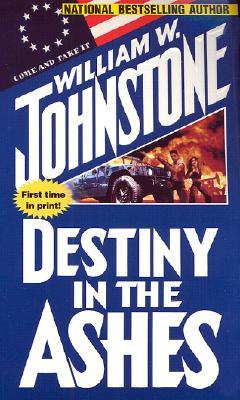
ashesdestinycover

William W. Johnstone’s Destiny in the Ashes is the 32nd (!) book in the series. Released near the end of Johnstone’s life, there are legitimate questions as to whether it’s the work of Johnstone the person or “Johnstone”, the pen name used by his niece and an army of ghostwriters behind ironclad NDAs since his death. I will only say that it reads like the real Johnstone and certainly isn’t any better than anything unambiguously written by the real Johnstone.

It took over ten books for Jerry Ahern’s Survivalist to stop being truly post-apocalyptic. It took Johnstone less than one. Instead it was focused entirely on societal commentary, if the commentary came from a pretentious, incoherent redneck.

The “plot” of this book is a Middle Eastern terrorist is striking the “US” run by the EVIL LIBERAL GUN GRABBERS, and they are forced to call upon Raines in the Great People’s SUSA Utopia for help. Raines steps up, in part with lectures about the inferiority of helicopters for troop insertion compared to HALO jumps. Naturally, the Americans go in with helicopters and get killed, while the Rebels HALO drop with ease.

The “military action” in this book (and the whole series, I must add) is legitimately strange and not just poorly written. It would be one thing if, by accident or design, it involved unrealistic and overly cinematic action. There’s some of that, but there’s also hunched strategy sessions that just make no sense and end in Mary Sue stomps.

The conclusion of this book involves an effortless jaunt out to Iraq in a passage that reads like a far worse version of a Chet Cunningham SEAL Team Seven novel. This continues the trend made far earlier in the series when Johnstone ran out of domestic “punks” for Raines to kill and had to send him abroad to get more.

The writing is terrible, the pacing is only somewhat bad, the plotting is terrible, and the characterization is extra-terrible. Yet, if it makes sense, the Ashes series is genuinely and distinctly terrible. A horrendous writer got a conventional publisher to produce and distribute literally dozens of his picture-book war stories and become successful enough that he endured as a “Tom Clancy’s” -esque brand name. That’s what makes it stand out.

Weird Wargaming: Payday

Payday: The Heist

The focus of this Weird Wargaming is the game series that started off as an obvious homage to classic heist movies and became a struggle against a world-controlling super-conspiracy that ended with confronting an evil dentist in a cave underneath the White House.

The Payday Gang themselves are more customizable, and their opponents shouldn’t be too much of a problem to come up with. Bulldozers have heavier armor, cloakers are stealth and possibly melee-based, tasers use electricity, and shields should be obvious. Not all of the specials are suitable for all kinds of rules, so use common sense.

The big issue is choosing between “hard” and “soft”. In “hard” mode, there’s at least a pretense of grounding, everything has to be stealthed if possible, and even loud heists are, by definition, short. In soft mode, closer to the game, the gang massively outclasses its opponents individually and can take on gigantic waves of people. All this depends on the rules and the theme, but Payday certainly offers a lot of chances.


Review: Deep State

Deep State

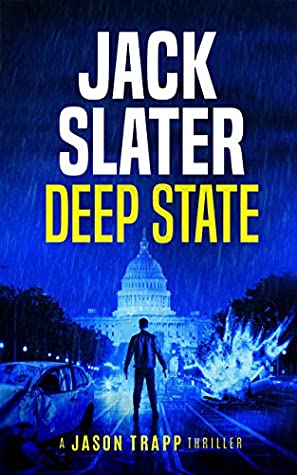
slatercover

Jack Slater’s debut, Deep State , is a very zig-zaggy book. It features super-operative Jason Trapp (another action hero name for you) as he foils the same kind of “attempted American coup” plot that has been going on in cheap thrillers since Seven Days in May. Despite its title, it’s not really that political, which was a pleasant surprise.

This book has one of my cheap thriller pet peeves front and center-when the writer repeatedly goes “this isn’t like the movies” but then has the characters do ridiculous stuff anyway. This is why the book goes up and down so much. It wants to go “THIS IS SERIOUS AND NOT MOVIE-LIKE” but then has Trapp doing incredible things. It also has a few extraneous characters, a villain contrivance so powerful it needs a heroic contrivance to compensate, and manages to hit a few too many genre notes (although that could just be me having read waaaaaaaay too many of these kinds of books).

In spite of all this, the fundamentals are good enough (barring the “this isn’t like the movies, he just does incredible things in an un-cinematic way” dissonance) and it flows well enough to make all of that forgivable. This is still worth a read.

Review: The Vengeance Of The Tau

The Vengeance Of The Tau

The first Blaine McCracken book to stumble, The Vengeance Of The Tau is an interesting case study in how a series can lose its mark while still remaining good. This still has all of Land’s strengths and weaknesses.

Where it goes wrong, besides just having big shoes to fill, is in the revelation of its MacGuffin. While Land is normally great at slowly building up and finally showing what ridiculous premise the book has as its foundation, here he implies something incredible and reveals it to be more lame and mundane. This isn’t just the final gimmick turning out to be something less than Land’s most out-there, it’s an example of going backwards that he almost never does in other books.

This, combined with somewhat less crazy set pieces, makes this lesser in comparison to McCracken books that came before and after it. In a vaccuum it’s still Jon Land, and it’s not even the worst book in the series, but there are definitely better ones.

Review: The Ragnarok Conspiracy

The Ragnarok Conspiracy

Erec Stebbins’ debut in the INTEL 1 series is The Ragnarok Conspiracy. If you can accept A: Politics that are flipped 180 degrees from the stereotypical “shoot the terrorist” thriller (without spoiling much, it involves western antagonists destroying Muslim holy sites from the get-go), and B: Said politics being too-frequently pushed with all the subtlety of an after-school special, it’s not a bad thriller.

The political preachiness is a knock against it, but it’s not nearly bad enough to get in the way of a thriller with good fundamentals. Yes, it’s a rote thriller. Yes, its message doesn’t exactly go well with a main villain who’s the kind of person Blaine McCracken deals with on a daily basis. But I’ve definitely read worse.


A Thousand Words: xXx: State Of The Union

xXx: State Of The Union

One of the few comparative advantages that books have over visual media in the spectacle department is that huge feats can be added with no extra cost. The time and money spent on an author writing something is, for most intents and purposes, the same whether the author is writing a nonviolent office romance or a baseball third baseman fighting evil Georgists on the moon.

The flip side is that this makes most thrillers hard to actually adapt. Only the most successful can get movie/TV adaptations, and those have a bunch of risks. Smoothed out, they have many changes. Enter xXx: State Of The Union, the movie that most accurately shows the spirit of the most ridiculous “airport thrillers.”

The original xXx, starring Vin Diesel, was considerably worse. That was a period piece dated immediately in the “90s X-Treme” area (despite being released in 2002). This sequel, starring Ice Cube, manages to transcend all of that. You have stormtroopers in futuristic masks participating in an American coup attempt. You have a tank battle on board an aircraft carrier. You have a finale where a car’s tires are deliberately ripped so it can go on train tracks (where of course it fits perfectly).

Somehow it all added up so that this one and only representation of the craziest cheap thrillers ended up getting on the screen with a budget that did it justice. Something with this exact blend of “amazingly stupid” and “stupidly amazing” very rarely comes around. And that it is why, in spite of all its many, many faults, I just love this movie.