Review: Airframe

Airframe

Michael Crichton’s Airframe is a book I really, really wanted to like given my interest in disaster investigation and systemic failure. One of the issues is that I already knew a lot about the topic. But there’s two more.

The first is that has Arthur Hailey meets Herman Melville levels of “look how much I know/research I did.”. The second is that air disaster investigations, while a fascinating topic, are one of the worst main topics for a thriller novel, especially with the setup Chrichton makes. He has to use a large impending sale as a mostly artificial way to increase the stakes, race the clock, and create a conflict (said conflict is: The accident might cost the manufacturer a large order. Oh the huge manatee!) The reality is that disaster investigation is one of the least punitive or conflicting events there is, with the worst being various stakeholders understandably trying minimize their direct fault. Which can be problematic and difficult, but isn’t exactly Jon Land conspirators trying to rule the world.

Spoiler Alert: The problem is that it tries to shoehorn the Aeroflot “kid in the cockpit” disaster in, when a far more interesting and realistic method would be to have even the highly trained pilot making a mistake, especially given that what happened (tried to keep controlling it manually too long, which is what someone with a lot of skill would be more vulnerable to falling for.)

So yes, this doesn’t get off the ground. Metaphorically speaking.
Review: War Dispatches Volume 1

War Dispatches Volume 1: Stories from the Front Lines of World War III

War Dispatches Volume 1 (note: not the most smooth title) is what is known in the anime/manga industry as an “omake” to Alex Aaronson’s 1980 World War III alternate history. It’s a set of stories that didn’t quite fit into the main books, but were/are still interesting enough to be told. These take place in the Middle East, from the Caspian Sea Monsters to MiGs in the sky to BMDs on the ground.

Being omakes, they are limited in scope. But this is no knock on their quality. In fact, they’re influential and good enough that I’m already starting work on a similar set of vignettes set in the Soviet-Romanian War. How’s that for a positive opinion?

Women in the Cockpit

The International Society of Women Airline Pilots has a graph (at least as of 2023, but the trend should be clear) of stats involving female aviators. (And yes, to get this out of the way, there is no significant difference in accident rates and never was).

  • India is a surprising large first at around 12%
  • Scandinavia is likewise surprisingly LOW at around 4% (worse than the 5.5% of the knuckle-dragging Yankees)
  • Global average around 6%
  • East Asia has an abysmal rate that leaves everyone else in their dust. Even the Middle East has substantially more.

I do think the skew is going to stay because no matter how good the policy, pilot is about the least mom-friendly career by its very nature. But it’s still a very interesting look at demographics.

Hyperfans

I just came up with an alternate aviation term. Hyperfan, referring to such gigantic bypass ratio-turbines as the NK-93 and Rolls Royce Contrafan. These so far never-were powerplants get amazing fuel efficiency-at the cost of basically everything else. Like complexity, size (that drag can’t be good), and other stuff I don’t know because I’m not an aeronautical engineer.

In real life these concepts get names like “shrouded propfans” which are very cumbersome and not very intuitive. Furthermore, there isn’t a consistent definition of them. Hyperfan is obvious and very smooth-flowing. It’s a hyper-powered fan engine to the layman, and that’s who names them.

Review: Red Bandit

Red Bandit

Mike Guardia’s Red Bandit is a brief history of the MiG-29, covering its basic designs and all the conflicts it participated in. Do not expect a technical deep dive or a massive tactical overview. This is a short and small book.

It’s also a book that won’t surprise any serious scholar. The MiG-29 was really just a rich man’s Fishbed meant as a point interceptor first and foremost. It did not have the versatility or capability of western 4th gen fighters or the Su-27. In most of the conflicts it’s fought in, it’s suffered heavy losses, though not always by fault of its own. We see its service in the Gulf War to Ukraine in a short overview.

This isn’t the most illuminating book on the Fulcrum. But it is an excellent start for a plane I have a soft spot for.

Review: Russian Gunship Helicopters

Russian Gunship Helicopters

The content of a book called Russian Gunship Helicopters should be pretty self-explanatory. Especially as it’s a Yefim Gordon book. This means you get tons of technical details that are uncited and frequently questionable, mixed with bad formatting and huge diversions into the pros and cons of various scale model kits. And a ton of pseudo-witty quotes that are really jarring compared to technical analysis. They come out of nowhere.

This book naturally covers the Mi-24, Mi-28, and Ka-50. As it was published in early 2013, it’s dated and doesn’t cover things like the Ukrainian and Syrian wars where these saw their first extensive use. It’s one big infodump and model kit review on the Hind, then one on the Havoc, then one on the Hokum.

The biggest problem is that while we get long explanations of what various components are on the helicopters, there’s one glaring omission. That’s how they’re actually used. The Mi-24 with its extensive track record is treated as an afterthought with Wikipedia-level “it flew around and shot things and occasionally dropped off people” simplicity. Reading a single Heavy OPFOR free document gives a lot more info on the actual doctrine of these things.

This is like many aviation enthusiast books: Weird and clunky but detailed. Even if in the wrong ways.

Paradrops

The problem with large parachute drops, especially post-World War II, is that you need to be able to get a bunch of large transport planes to the DZ. However, if you are able to do that, chances are you won’t need to do something as risky as a parachute landing anyway.

Then you run into the issue of whether or not the resources spent on guarding the paradrop are worth it or not. There’s a reason why large operational/strategic paradrops are more in the theoretical than real. However, even theoretical offers an advantage. The force in being strategy means that a defender must prepare for the possibility that a paradrop could happen.

Review: Flight of the Intruder

Flight of the Intruder

Well, I finally did it and read a classic Vietnam War aviation novel, Stephen Coonts’ Flight of the Intruder. The joke before its infamous film adaptation was released was “Fighter pilots make movies, bomber pilots make history.” Afterwards, it was “Fighter pilots make movies, bomber pilots make bad movies.” Having not seen the film yet (and not likely to sneer, as I enjoyed Iron Eagle of all things), do they make bad books?

The answer in my opinion is kind of but not really but also kinda? Coont’s first novel, this is basically Herman Melville but with A-6s. Read the long, long sequences of a plane doing plane things. The sequences of an attack run. The sequences of a carrier landing. The sequences of doing naughty things in the Philippines. You get the idea. Thing is, even though I didn’t really care for these, I could see the appeal, especially to a non-expert reader back in the past.

So this is another one of those “have I been skewed against this?” books. And there could be worse.

The Stingley and the SA-2

Time to look at one of my favorite examples of “Statistics don’t tell the whole story.”

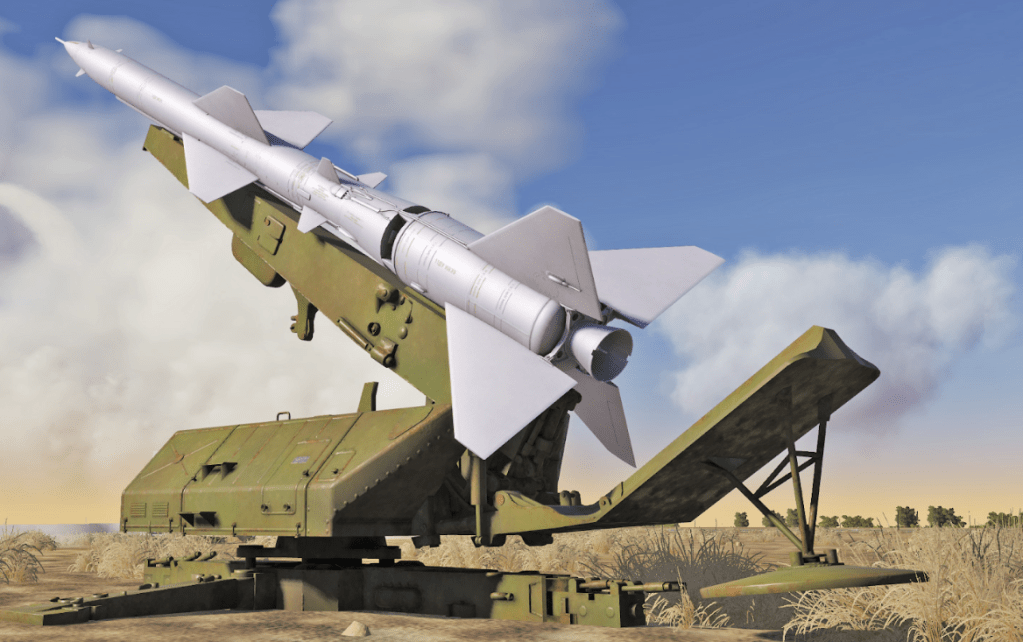
This is the SA-2/S-75 SAM. In Vietnam it accounted for only a single digit percentage of American losses. So it must be ineffective-right?

This is Texans cornerback Derek Stingley Jr who just got a monster contract. But he’s never had more than five interceptions in a season, good but not even close to league leading… Overpaid, or?

Or maybe SA-2s forced planes down low into the teeth of AAA and maybe the best corners succeeded because opposing QBs are deterred from throwing in their direction to start with.