Weird Wargaming: The All Union US Military Part 2: Air Force(s)

Part two of this alternate history series.

Background/USAF

Until September 9, 1998, the US Air Force and Navy was mostly in a holding pattern. About the only large procurement decision was going ahead with the A-6F and F-14E Super Tomcat programs due to the continued USSR, leaving the Super Hornet as a paper plane in this timeline.

Then the Sovereign Union destroyed 80% of Romania’s air force on the ground in minutes, and panic set in. V/STOL research and dispersed operations immediately began taking the highest priority, and as an interim measure, the first major foreign-built fighter in American service since the AV-8A was made in the form of the F-21 Griffin, aka the Gripen. A huge fight ensued over whether to phase out the F-16 or keep it. The results were mixed.

US Naval Aviation

The US Navy and Marine Corps have a mixture of Super Tomcats, F/A-18A-Cs, Sea Gripens, F-24 NATFs, and A-6Fs in a support role. The Intruders and Hornets are being phased out. No, this is not just an excuse to run scenarios in CMO.

5th Gen/Updates

A lot of helicopters, high-performance VTOLs, and the F-24 being “Phantomed” into the Air Force as well. The equivalent of the F-35 is just the F-35 B/C equivalent, since a pathological fear of normal air bases exists. (Ironically the Sovereign Union does NOT have quite a fear despite knowing what it can dish out, but that’s another story).
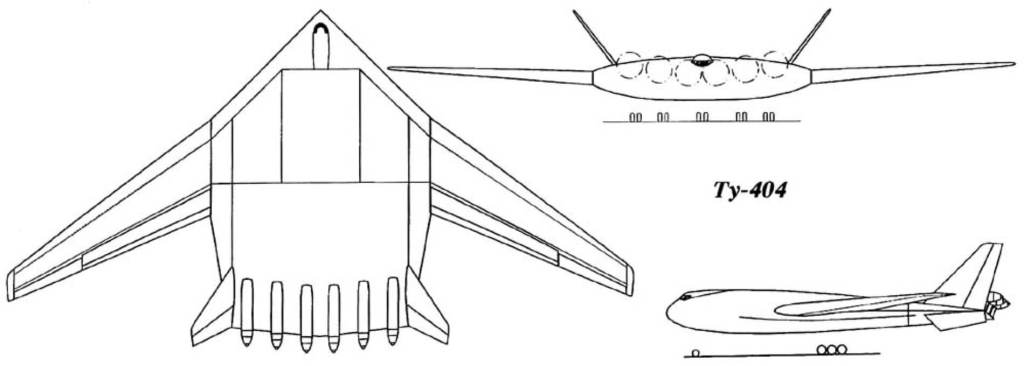
The Megaliners

I mentioned a long time ago how I had a fascination for “megaliners”, “superjumbos”, or aircraft designed to hold more passengers than a 747. Leaving aside the impracticality of them, most were/are pretty conventional. They just took an existing jumbo and either added or stretched the upper deck.

But not the Tu-404. This not-found Tupolev design was a flying wing for maximum passenger space.

Some variants stretched capacity into the four digits, and it would have been driven by six propfans.

Review: Alamo on the Rhine

Alamo on the Rhine

For the first World War III review of the new year, I turn to T. K. Blackwood’s Alamo on the Rhine, a spinoff/side story of the Iron Crucible 1990s World War III. It’s about a daring strike on a vital air base at the start of the war. Told with the same effectiveness as the other entries, I greatly enjoyed it.

I couldn’t help but see the parallels to Market Garden, Kitona, and Hostomel and wonder what role those historical battles played in the crafting of this book, similar to how I wanted a “Soviet Gulf War” in All Union but not an exact one. It’s to Blackwood’s credit that the excellent story does not come across as a simple historical copy-paste.
This is a very fun book of the kind I haven’t read in a while. Nice job.

Review: The BAC Three-Eleven

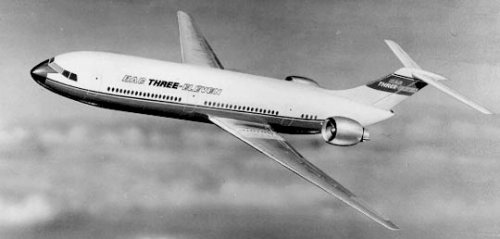
The BAC Three-Eleven: The Airbus That Should Have Been

In one of those “only someone like me would like this book” book purchases, I got Graziano Freschi’s book on the BAC Three-Eleven. The actual never-was airplane itself was an all-British two engine jumbo jet similar to the Airbus A300 only slightly larger and with both engines in the back.

Freschi both describes the plane and makes the argument that it was a mistake for the British to cancel it, as with many (if not all) their big postwar programs, they would spend large sums of money on something and then cancel it, getting the worst of both worlds. His case is weakened by Britain’s poor reputation in such regards, and he kind of hedges from “This would have been a success” to “Britain would have been in a better negotiating position when they rejoined Airbus”.

Though not perfect, it is an interesting look at an obscure plane.

A Thousand Words: Pearl Harbor

Pearl Harbor

I couldn’t let a Pearl Harbor anniversary go by without reviewing the infamous (pun intended) movie by Michael Bay. Now this is frequently on the list of worst movies ever. However, I liken it to Jefferson Starship’s We Built This City, something that yes, isn’t really good, but is criticized and slammed so much that you kind of have to defend it, since you can enjoy it as a guilty pleasure juuuuuust a little bit. I mean, are you really expecting historical accuracy from Michael Bay?

I didn’t think so. But one fair bit of criticism is Bay attempting his hand at a love story, which is kind of like a romantic comedy director trying to make an action movie. Said love story takes over far more of the plot than it needs, and is probably the biggest criticism I can give other than “Michael Bay.”

So yes, World War II as told by Michael Bay. I can think of a lot better. But I can also think of a whole lot worse.

Review: Quantifying Counterfactual Military History

Readers of Fuldapocalypse should not be surprised to learn that when I saw a book called “Quantifying Counterfactual Military History“, I instantly bought and read it. The premise is simple: The authors use the Approximate Bayesian Computation method to get a large sample size in their various simulations-much, much larger than conventional wargames.

Starting off with one of the easiest and most popular ones, Jutland, that chapter made me go “a-ha! They got it.” My favorite quote is “but unlike in a wargame, our goal is to simply understand what is plausible and what is not.” This “War of the Spreadsheets” has its roles provided one knows its limitations, which the authors do. Then comes the Battle of Britain (where the goal is temporary German air superiority, along with a controversial conclusion. There’s Vietnam where the authors actually remember the large northern conventional forces that were always there. It concludes with Cold War game theory.

There’s some technical topics that are beyond me, but this is overall an excellent book whose authors know their own limitations. As someone who loves these kinds of simulations, I was delighted to read this.

Review: Icebreaker

Icebreaker

Perhaps Viktor Suvorov’s most infamous work is Icebreaker, a revisionist historical book that claims that Stalin was juuuuuust about to invade the rest of Europe from the east when the Germans launched a preemptive attack in 1941. What makes this not just wrong in the sense that his book on the hyper-Spetsnaz was inaccurate but outright disturbing is that someone else publicly stated such a claim repeatedly. Said someone else was famously portrayed in a movie by Bruno Ganz.

Thankfully, the book itself does not make the best case for this incredible claim. It’s not just that with hindsight and primary sources (that Suvorov inaccurately claimed were destroyed to cover them up) the image of the shambling wreck in peacetime formations that was the 1941 Red Army facing off against the bunched-up offensive force of the 1941 Wehrmacht. (Fun fact BTW: The Germans actually had a 3-2 numerical advantage in the early part of Barbarossa, and even more in practice if you account for the terrible logistics of the Soviets then).

The only evidence besides ‘trust me bro’ that Suvorov puts forward is basically “The Soviets had lots of ____ [such as fast tanks and/or paratroopers] that clearly meant they were meant for an offensive into western Europe.” It couldn’t just be that their doctrine was on mobile warfare and that they tried and failed to implement it defensively.

I knew about how bad its premise was, but I wasn’t expecting so weak an argument. Which is probably a good thing. Unlike this book.

Review: Hooves, Tracks, and Sabers

Hooves, Tracks, and Sabers

Raconteur Press’s Hooves, Tracks, and Sabers is an anthology of alternate history cavalry stories. You get helicopters in Southeast Asia (but not the way you might think), airships (of course) in the American Civil War, and plenty of good old horsies. While none of the stories are bad, a lot just feel like historical fiction with different names, which is a problem a lot of alternate history unavoidably has (I think that World War IIIs actually avoid this by being something so completely different from say, the Vietnam War, but that’s another story).

Thankfully, there are ones that go above and beyond that. My favorite is a World War I divergence where the Tsar Tank actually works. How can you not love a giant armored tricycle? Anyway, while the execution may not be the best in every case, the concept is so great that I still recommend this collection (and lament that I couldn’t write a story about armored recon units in the Soviet-Romanian War for it).

The Worst Pilot Ever

On May 22, 2020, Pakistan International Airlines Flight 8303 crashed in Karachi, killing 98 people. Its pilot, Sajjad Gul, may have exhibited the worst judgement and skill of any pilot involved in an air disaster ever, and he and almost a hundred other people paid the price.

In written and video form, it’s horrifying to behold. There was good weather, a familiar and established plane, no mechanical issues, no foul play, and nothing save for someone who went in on a crash course, had countless opportunities to step back from the brink, and did not.

Absent pilots who crashed on purpose or otherwise did things like make bets that they could land blindfolded (they couldn’t) or reenact the flight of Icarus, this is the least competent aircrew I’ve seen. By the final too-late moments, Gul and copilot Usman Azam were apparently trying to do two contradictory things (which gives you a sign of how bad the crew resource management was).

Review: Star Eagles

Having loved Starmada, I eagerly embraced Star Eagles as a fighter equivalent. I wanted a small unit space fighter game that balanced customization with play-ability and am happy to note that it succeeded in sating that desire. Star Eagles is based on movement templates, activation dice, and special playing cards that a player can use.

It’s not perfect, but I’ve been able to do viable battles with a lot of ships adapted from a lot of different ideas, and that’s what matters. I recommend it to tabletop space battle enthusiasts.