Review: Vati

Vati

R. M. Meluch’s Vati is a short story originally printed in the Alternate Generals anthology and since republished as a standalone ebook. It’s an alternate history with the divergence being Werner Moelders surviving and getting the wunderwaffe into service. Of course, the war still does not end well for Germany, with the Allies turning to something that makes a very, very big boom.

Although written before The Big One, and with likely no cross-pollination, I can’t help but think of Vati as “TBO done right”. Less rivet-counting technical accuracy to be sure, but a far more concise and far more literary way of illustrating the same point-“give the Germans their wunderplanes and see what good it truly does them.” Even without comparisons, this is well worth a read.

A Thousand Words: Two For The Money

Two For The Money

2005’s Two For The Money stars Al Pacino and Matthew McConaughey. It is one of the few movies about sports betting, and perhaps the only movie in recent history about sports betting “handicappers” who sell pick advice, or, as they’re known more derogatorily, “touts”. As someone writing my own fiction about touts, I knew I had to watch this film. What did I think about it?

First the plot. McConaughey is an injured college quarterback who goes from playing football games to predicting them. Pacino is a super-tout who values in his skill. The movie chronicles their rise and fall. It’s a classic, predictable narrative. Al Pacino does the stereotypical “Al Pacino Hamfisted Role”, but he does it well. His co-star is more erratic, and not in a good way.

Beyond that, the biggest issue I had was how it misrepresented touts. Now, I was fully expecting and prepared for sports-movie exaggeration (for instance, the way the main character’s picks zoom from great to poor so quickly and consistently). But this goes beyond that, treating the handicappers as sincerely trying to get the right pick and sincerely caring about the outcomes of the games. In reality, nearly all touts don’t.

They make referral deals with sportsbooks, meaning they have a vested interest in their customers losing. They will either cherry-pick or outright lie about their records to make them seem more impressive. And, most notably, they will pull the infamous “give half the callers one team and half the other” trick so that 50% will be ‘winners’. You get the idea. Honestly admitting to the inevitable losing periods doesn’t attract business. Neither does advertising the highest realistic win rate, which less knowledgeable people (ie, the people who’d fall for touts at all) would not consider impressive compared with “79% WIN RATE IN THIS CFB SEASON!”

The thing is, this movie could be equally dramatic, equally exaggerated, and equally able to pull off the “man’s descent into sleaze” plot if it treated its “handicapping” service in this way. There are a few times when it does get the image right, like its spot-on reenactment of over the top sports betting shows/infomercials. But far more often, Two For The Money misses when it didn’t have to. Which is a shame.

Review: The Night Stalker Rescue

The Night Stalker Rescue

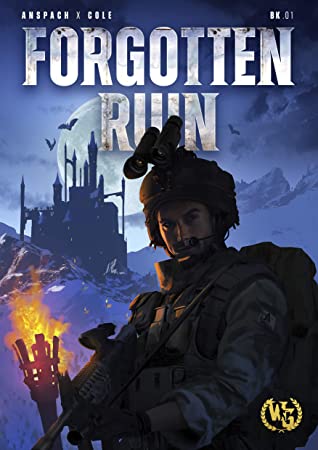
Jason Kasper’s The Night Stalker Rescue is a prequel novella (to a series I haven’t yet read) featuring the mission of saving a downed helicopter pilot in an anti-terror operation in the Philippines gone wrong. Short and cheap, it’s the kind of book that works best as a “literary snack.” And that’s often fine.

This is a 51% snack, but it’s a fun 51% snack. About the only real quibble I had was having the book be written in first instead of third person. I think the latter is better for thrillers because you don’t have to either have a severely limited view or give the protagonist ridiculously good situational awareness. But this isn’t a deal breaker at all.

The fundamentals are sound and the story works. This is a solid “appetizer” that makes me want to read more from its author, and that’s always good news about a book.

Review: The Hungry Dead of Yu-Ching And Other Stories

The Hungry Dead of Yu-Ching And Other Stories

From Sea Lion Press author Paul Leone comes The Hungry Dead of Yu-Ching And Other Stories, a series of horror-fantasy-thriller tales spanning history. From the ancient past to the Cold War and beyond, he brings to life one supernatural confrontation after another. Each story is short but sharp and never wears out its welcome.

I might be biased given the preferred subject matter of Fuldapocalypse, but I liked the “Red Dawn [no relation to the movie], Operation ___” stories the best. It’s very hard to go wrong with Soviet commandos facing extranormal enemies, and I grinned at every word of those tales. Not that the others were bad by any means, but these were my favorite.

In short, this is a very fun collection. I enjoyed it a lot and highly recommend it.

Review: Vortex (Larry Bond)

Vortex (Larry Bond)

Larry Bond’s Vortex is a tale of war in southern Africa, as a revanchanist South Africa seeks to retake Namibia, with the opposition of Cuba and the Americans drawn into it. My first proper Larry Bond novel in some time, I wanted to see how this, his last pre-Soviet collapse novel went. And the answer, sadly, is “not too well”.

I knew his style, and, starting this blog, thought it was a lot more common than it actually was. I knew it’d have a lot of conference room scenes. I knew it would have a very long opening act to set up the war everyone knows is going to happen. I knew it would hop around viewpoint characters a lot and focus on each and every part of the war. Yet I wasn’t prepared for how excessive all of it would be. This is the longest, clunkiest, and, I hate to say it, worst Larry Bond I’ve read.

It takes over a hundred pages just to get to the conference rooms. The book has this weird “too hot and too cold” feeling where it stays for a while on a low-rate cloak and dagger plot in the first half and then explodes into too many tangled threads in the second. Naturally, all of this makes the ending too contrived and neat.

This is a shame because the premise-expanding on a real conflict with truly interesting participants and tactics in a theater of war genuinely unfamiliar to many Americans-is a very good one. Which makes it being squandered in this huge mess all the worse. Bond has written much better than this, and his other works have similar-level battle scenes without the structural failings here.

Review: The Hamfist Trilogy

The Hamfist Trilogy

George Nolly’s Hamfist Trilogy consists of a compilation of novels set in the Vietnam air war, as written by a veteran of the Vietnam air war. The books are weirdly breezy and good-natured for war novels, which sets them apart. Especially since it also tries to be generally realistic-Mack Maloney this is not. This is a passion project, for better and worse.

Thus it sometimes feels sloppy. The tone can sometimes come across as overly rambling and not the most suited for the story Nolly is trying to tell, with the first person perspective not always helping. But it gets enough of the basics and little details right that I enjoyed reading it. And I say this as someone who often doesn’t go for straight historical fiction.

Review: Whirlwind

Whirlwind

The 56th book in the Kirov series and the conclusion of its third World War III arc is Whirlwind. By this point, the same issues present in any other installment are there. The prose is what it is, and the “time travel soap opera mixed with wargame AARs” is familiar as well. A large chunk of this book doesn’t even pretend to be a conventional narrative and just recaps the war in detail.

While this (supposedly) second-to-last arc in the series doesn’t just nuke everything and overwrite the timeline like its predecessor, it leaves an uncomfortable feeling. The talk about how weapons and doctrine in-universe evolved gave me the impression that Schettler would pull the football yet again and have yet another four-books-too-long wargame sim. Especially because the main ship plot does have a lot of genuine promise.

The concept of the titular ship’s crew going back in time to stop delightful supervillain Ivan Volkov from destroying the timeline is a great one, and I know very well that you could merge such a plot with wargame scenarios. But even my patience is wearing down with the formula. The circle could be squared if the ship and its crew got a good final conclusion while allowing the toy box lets plays to continue, but I’m not really confident in that happening.

Review: Tier One

Tier One

Brian Andrews and Jeffrey Wilson’s Tier One is the first installment in a series that, like a surprisingly high number of Fuldapocalypse review entries, I learned about via negative comments. I’ve been pleasantly surprised by such books before, so I decided to give this tale of a SEAL turned super secret super commando a try. Of course, I’ve also often found them to be just as bad as they said.

This is not a good book, but it was a strangely enjoyable one. The action was passable but not the best. The main character comes across as a ‘difficult’, unlikable person. And the plot-well, the plot seemed like it was trying to check each and every box of what a stereotypical modern thriller would contain. This was enough to make it swing all the way around from “cliche and bland” to “weirdly interesting”. Thus Tier One is the kind of work I cannot recommend but did not mind reading.

Review: Storied Independent Automakers

Storied Independent Automakers

Charles K. Hyde’s Storied Independent Automakers tells the tale of the American-owned car companies that were not the Big Three. It’s a story worth telling, because they illustrated just how ruthless and consolidating the car industry is. These car companies went under or were bought out at the height of the domestic auto industry’s success (one ironic silver lining was that many of their left-hanging dealers turned to import brands and proceeded to make a fortune from them).

They had one brief moment of popularity due to a completely artificial boom when World War II resulted in years of pent-up demand. And now and then they managed to pull an innovation out that gave them a temporary edge (like compacts for AMC) until the big three caught up. But that was mostly it, and other than that it was all uphill. Hyde rightly points out it was impressive that they lasted as long as they did, and gives credit where it was due.

Though written in a history book tone (ie, it’s not exciting for anyone other than me), Hyde’s book is light enough to be readable while still containing lots of well-researched statistics on cars. It tells the story of an overlooked but important part of the auto industry’s history. Any enthusiast should enjoy it.

Review: The Stars Shine Down

The Stars Shine Down

Sidney Sheldon’s The Stars Shine Down is the story of ruthless businesswoman Lara Cameron, her rise and fall as she builds a real estate empire and gets entangled with everyone from mob lawyers to piano players. It’s the type of gilded trash melodrama I know very well after reading so many of his books. This one, released later in his life, feels a little less than his at his best. It’s still a very readable book, and it’s still well ahead of The Other Side of Midnight. Yet there’s just so much that brings it down. And it’s not just the formula being familiar to me by now.

The plot is a little more scattershot than what Sheldon was capable of in some of his other books, and the ending feels a little rushed. There are a few weird choices like the decision to have all the Scottish character dialogue in clunky phonetic writing that subtracts more than it adds. Sheldon focuses too much on the nuts and bolts of Lara’s building development, something he doesn’t write well.

One legitimately good part is its main character, with Lara drawing both opposition and sympathy. As Sheldon at his worst wrote characters as either dumb, naive dopes or ruthless Machiavellian masterminds, having someone who can truly have elements of both strikes me as a solid achievement. The protagonist is arguably Sheldon’s best I’ve read so far. It’s just the book around her isn’t.