Review: Long Road To Mercy

Long Road To Mercy

In another one of those “big name authors that are nonetheless novel to me”, I turned my attention to David Baldacci. Long Road to Mercy is the first in his Atlee Pine series of thrillers starring the titular FBI agent. How is it?

The first thing that caught my eye was how dense and well, overdescriptive, for lack of a better word, the writing style is. It doesn’t feel like it’s the best for a thriller. The second was talking about how built-up and muscular the heroine was. This made me think “this is a justification for her being able to take on bigger men hand to hand”. I was right (although the action scenes are not gratuitous).

As the book progressed, it went from the smaller and more personal tale promised in the opening scene to a very, very rote cheap thriller plot. It even had a climax featuring the most stale “shocking” item in the genre, a nuclear bomb. About the only thing distinctive I can say is that instead of the opponents being TERRORISTS! they were instead part of a CONSPIRACY! Wow!

Of course, cheap thrillers don’t succeed or fail based on concept. They do so with their execution. And the way this is pulled off is-well, something. The words that came into my mind were “decaf thriller”. It’s like it ended up, either accidentally or deliberately, being the kind of book that checks all the thriller boxes, but without too much adrenaline.

So I can understand its appeal to a certain kind of reader, and thus its author’s success. But that nature, mixed with its huge amounts of descriptions that don’t even feel like they were intended as padding, isn’t exactly my cup of tea. Especially since it feels like the wrong kind of thriller for its writing style.

A Thousand Words: Unmasking The Idol

Unmasking The Idol

The film Unmasking the Idol may be the most 1980s action movie ever. And one of the most ridiculous, whatever the decade. The film has ninjas, a trained baboon, “homages” to nearly every popular film of the time, a super-lair, and, as the icing on the cake, a flying pickup truck that looks as “majestic” as it sounds. And an incredibly 80s soundtrack, but you could have probably guessed that already.

Besides being very dumb fun in its own right, this movie has special resonance for this blog. It illustrates how by this point, visual media could provide cheap thrills just as well as, if not better than, any book. Stuff like this was the “Tecmo Bowl” compared to the “electric football” of men’s adventure novels. And the “Madden” was yet to come.

Review: Scorpion Strike

Scorpion Strike

The tenth Jonathan Grave book, I picked Scorpion Strike out of the pile because I thought its concept from the blurb-a Die Hard-esque story of the main character’s vacation interrupted by nefarious actors- was the most distinct and potentially entertaining. The bad news was that turned out not to be the case. The good news was that it’s still a good Gilstrap thriller.

After the initial (and, as always, well-done) setup, the supporting cast of the series returns in force. From there it becomes just another Jonathan Grave novel with all the same issues. The mixture of “too serious” and “too over the top”. The elements beginning to repeat too many times. The too-timid hewing to genre conventions (it reached the point where I groaned twice at how rote the MacGuffins were).

And yet it has the good parts as well. The action is still well handled, and here Gilstrap actually dares to kill off a heroic supporting character. If this had been my first Jonathan Grave novel, I think I’d have thought more highly of it, and it’s still a better-than-average cheap thriller.

Review: Armor Attacks

Armor Attacks

John Antal’s Armor Attacks is essentially a choose your own adventure book about a tank platoon. Created as a training tool, it was originally released shortly before the Gulf War. Thus it provides a window into Fuldapocalyptic tank battles.

The premise is that the Krasnovians (or, as they’re called in the book, the “Threat”-essentially a Soviet-style OPFOR) wants to seize the Middle East, and the Americans (and you) must stop them. While it shouldn’t be fair to criticize what’s clearly just a setup for the instructional vignettes he wants, I should still point out the Melville-esque prose clearly leaves something to be desired. Everyone talks in unrealistically robotic, exact terms. It’s understandable, but I still didn’t really like it in that sense.

At least this doesn’t do what Antal did in his first proper novel, Proud Legions, and try to make the reader’s unit the absolute conflict-defining centerpiece. The low, dirty place of the reader is emphasized, and rightfully so. Which is a good thing, as the actual vignettes/choices are well done.

I was “genre-savvy” enough to make some of the right decisions when I tried a run through of one of the scenarios. Tanks are more vulnerable to artillery than you might think, so don’t stay in one spot too long. Taking on a company of T-72s with a platoon of M1s is totally viable, even with 105mm M1s (I have the feeling that this would have been less intuitive pre-Gulf War). And so on.

However, and this may have been the legacy of The Henry Stickmin Collection and its “failure is just as good and entertaining as success” mindset at work, I also attacked up the middle. It didn’t go so well. In fact, I’d have loved for one of the scenarios to be a “Kobayashi Maru” one where you get wiped out no matter what you do.

The newest digital edition of this book does the orginal one better by showing the instructor’s material used. To me at least this was fascinating and interesting. For anyone interested in tanks of the period, I highly recommend this book.

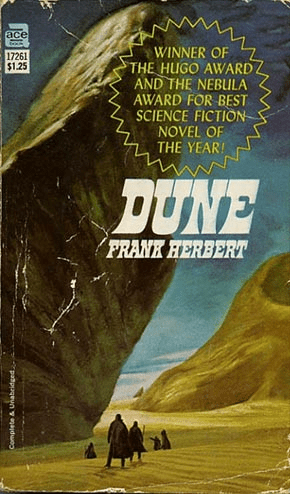
Review: Dune

Dune

It’s finally here. The time has come to do a review of Dune, Frank Herbert’s legendary science fiction classic. Arrakis is a very long way from the Fulda Gap. This book is not the usual fare of this blog. Even beyond that, it’s pretty tricky to get a really solid opinion on, because it has two qualities that are both richly deserved.

On one hand, it deserves to be a classic. It’s one of those sci-fi books that has genuine depth, and you can see how enduring and influential its setting is, even little factors like me thinking that Jabba the Hutt had to be inspired by Vladimir Harkonnen. Compared to spacesuit commandos and Kenneth Bulmer making up five million words for “plot-creature”, this is the real deal.

Unfortunately, it’s also a novel that’s written in an overly long, overly flat manner. While it has the imagination to back it up, its prose is still over-descriptive. And while this obviously isn’t Herbert’s fault, Dune has been famous enough that seeing its world doesn’t bring about the sense of wonder it would have to a far more fresh reader.

Dune is both of those things, which makes it very hard to actually judge. But science fiction is richer for it having existed. It can be an apple that stands alongside the pulpier oranges.

Review: Pale Horse 3

Pale Horse 3

Russell Greer’s Pale Horse 3 is the story of a B-52 in a 1980s World War III-published in 2020. So it’s another entry in the “alternate history World War III after Vietnam” genre which, as I’ve said many times, thought was too big but ended up being too small. Except this is in an even smaller field because it has nuclear weapons involved. But wait, unlike the apocalyptic For Alert Force, this falls back into limited plotnukes.

That quibble as to what tinier chuck of a tiny segment of fiction it falls into aside, how is the actual book?

The answer, I’m sad to say, is “not the best”. Given that this is only the author’s second novel, I’m not holding it against him, but the prose is still very clunky, the plot is kind of jumbled and a little slow with the backstory, and even the action gets a little too Herman Melville-y. Dale Brown at his finest this is not.

Besides the review of the book itself, this has a very bittersweet “closing the frontier” feeling for me. It’s one thing to know the “AHWW3AV” (how’s that for an acronym?) genre inside and outside, but quite another to literally read the literal last one on the current list. One reason I actually like having backlogs of books is because of the empty feeling when they’re finished, even if in a satisfying way.

Once the magic of figuring out the genre is gone, you’re left with a field that, like any other, has good, bad, and in this case middling entries. Conventional (or mostly conventional) World War III felt like something to explore. Something to help me mature when I saw how little it actually resembled the “Icelandic” picture I had in mind before. Something to start a whole blog about. Now it’s just another tag in this blog, and I’m really not sure how I feel about that.

Review: Zulu Hour

Zulu Hour

The second Kirov “Keyholders” spinoff, Zulu Hour takes a look at an alternate Battle of Isandlwana. Like the previous installment at Waterloo, this has an excuse plot that’s really forced and blatant even by Kirov standards. A pair of gambling time travelers use their time-keys to go back and try to change various historical battles for the sake of their rivalry. Don’t worry about the seemingly massive butterflies this would cause, because thanks to the mechanics of time travel, they can always “overwrite” it later.

Yeah, it’s that blatant. But this is the Kirov series, and using time travel to set up all kinds of alternate battles is the exact point of the series. Besides the battle itself and the time travelers trying to persuade Chelmsford and Cetshwayo, this also involves the Fairchild Group, another weird subplot in the series involving an oil heiress and her own personal Type 45 Destroyer. In past Kirovs, several people from that were timeshifted to… the Isandlwana site.

Once the fighting actually starts, what emerges may be one of the most legitimately good things Schettler has written. Maybe it’s just how a one-part spinoff simply has to be more concise than an eight-book series, or maybe it’s just the novelty. Yet it worked.

It could be a change of pace after seeing so many large-scope modern wargames. Or it could be that the late 19th Century is an area of warfare that I haven’t seen that much of, compared to the subject matter of the main series. Whatever it was, the action here felt and looked better than the norm for Kirov.

This long-foreshadowed book was a lot of fun. And the Kirov spinoff concept of just reenacting/changing historical battles via wargaming has a lot of possibilities. Those are taken advantage of here in an enjoyable book.

Review: Battle of the Three Seas

World War 1990: Battle of The Three Seas

It’s time to return to William Stroock, an author who I’ve previously slammed as the worst World War III writer ever. Has this been fair? And has his new Battle of the Three Seas improved on his previous entries?

For the first question, it’s a weird answer. It’s like talking about the New York Knicks or Jets. They’re still pro-level teams, and even a “bad” pro player is still among the greatest in the world. Being the 32nd-best team in the world is still an accomplishment. Similiarly, to write a long novel at all in a niche genre is a talent many don’t have, and Stroock has still gotten more basics right in the field than non-specialized authors have. (Research on military equipment, especially above small arms, is something frequently in very, very short supply). So yes, it has been unfair to simply denounce in fire-breathing terms.

Yet it’s still fair to consider the Knicks and Jets not the 32nd-best teams in the world, but the worst compared to their colleagues. They’re still bad by those (incredibly high) standards. And they’re not going against college/international teams-you judge them by who they’re up against. So, with a heavier heart, I still have to say that Stroock is one of the worse World War III specialist writers, and while this book has improved somewhat compared to the earlier ones, it’s not enough to shift the rankings that much.

The book is less one-sided in absolute terms than some of his previous books. It’s undeniably improved in prose quality. But it still has a jumbled structure with way too many viewpoint changes for its own good and writing that’s still too flat to really work. There are still bizarre subplots that don’t really add anything.

It’s ultimately just still too hard to find something in this book, or Stroock’s series as a whole, that does what another “conventional World War III” book doesn’t do better, be it characterization, tone, or technical plausibility. It might be better than a historical “sports nadir” team. But it’s still, in a now-obsolete baseball term, very much a “second-division” series.

Review: End Game

End Game

After five hits that ranged from “good” to “excellent”, the Jonathan Grave series finally gets a miss in End Game. Which is a shame, for it’s still an uncovered gem of a series. Now, five solid books is an excellent run, and even this on its own isn’t that bad. But it’s still weaker than what had come before.

Basically, the formula is there stronger than ever, which means that all the issues with it are also there and stronger than ever. What makes things far worse is a mundane plot and dull antagonists who just don’t seem fitting. That its super-protagonist gets involved at all feels off in a way that none of the previous other plots did. Those felt like challenges befitting someone of Grave’s abilities. Here, it feels weirdly like a 1990-2000s technothriller where the villains have to be propped up in a crude way. And the whole point of the small-unit action hero thriller is that it shouldn’t have to rely on such gimmicks.

So this is a disappointment. A readable disappointment, but still a definite disappointment. For authors who’ve proved their worth, the expectations often feel higher. And this didn’t meet them.

Review: Target Response

Target Response

Somehow my mind said “you know what you really need to read next? Another ‘William W. Johnstone’s’ book.” And thus I decided to try and roll the boulder up the hill yet again with Target Response. I mean, maybe it could be a serviceable cheap thriller? Maybe one of the anonymous, carefully-hidden authors behind what’s become a house name worked well this time?

Or not. But really, what did I expect?

There’s two barely connected plots that only stay together by virtue of sharing a common villain and “theme” of the Dog Team assassins being targeted for death by said villains. The first is a paint-by-numbers set piece in Nigeria that takes up the opening act. This at least doesn’t have very far to sink. But the second is another Dog Team member back home having to fight off a literal family of assassins, and it’s something that a better thriller writer could have done just so much better. The potential is lost and it falls flat, like the writing.

The writing style is extremely sparse and flat. It’s meant as a basic reading thriller, but comes across as just rote and artificial-which makes sense given what the series is. And yet I couldn’t help but think that in some ways this was actually, at least in context, better than many of the “rival” later Gold Eagles. The weapon descriptions aren’t quite as blocky and overstuffed. And while the plot is just as erratic and wrapped-up too quickly, there’s less outright obvious padding.

Now, there are so many more deserving books by both big and small name authors that I’d recommend over these literary clunkers. They still share the same basic and deep flaws. And as I said in the last Dog Team book review, going from “distinctively, memorably bad” to “forgettably mediocre” in many ways works against it. So this is kind of like saying one old-design, tiny cheap subcompact car is “better” than another old, cheap subcompact car. But I still need to give a bit of credit where it’s due.