Review: The Nash Criterion

The Nash Criterion

After three stumbles, Erec Stebbins suddenly struck the right note with The Nash Criterion.

After one bad and two middling thrillers, Stebbins suddenly turns into Jon Land-if not Hideo Kojima- with this ridiculously overstuffed tale of a second American Civil War and ancient world-controlling super conspiracies. This book just was so over-the-top that I grinned at every single later page.

A lot of times it’s hard to review additional books in a series. This is not one of them, as it offers a distinct change. Many more times, if there’s a distinct change worth pointing out, it’s a negative one as the series drops in quality. Here, the opposite is thankfully true. The INTEL 1 series has gained in quality with this book, and I was very glad to see it.

Review: Life Without Giamotti

Life Without Giamotti

Sean Munger’s surreal Life Without Giamotti may be one of the most influential books I’ve read, with its surrealism influencing so much of my thinking with regards to fiction that I’ve sometimes had to step back and look to see if the tracks are there. For instance, my story thought of the pilot who finds his wingman is just a shell is, upon even a brief inspection, very much inspired by it. Possibly too much so. Oh well.

The narrative is a strange and unconventional one about an author and his character who has gained sapience. Perhaps fitting, it’s very hard to review. How can one score a book like this? It’s a strange book. Either you’ll think it’s a thought-provoking psychological story, pretentious emptiness, or a sum of parts that doesn’t quite add up to a whole. At times I’ve felt each of those opinions about this book.

Yet it’s well-written technically and its prose is sound. I can’t help but recommend it, to see if another reader will find it appealing.

Review: Manuscript For Murder

Manuscript For Murder

Jon Land took over writing the Murder She Wrote books, and Manuscript For Murder is the result. Inside a very thin shell of a cozy mystery, Land releases one of his thrillers, complete with the super-conspiracy of the week.

Jessica Fletcher starts by investigating murders (how shocking) and ends up following a enigmatic political thriller manuscript that turns into a murder-soaked conspiracy reaching to the highest levels of power. In other words, it’s par for the course for his books.

One strange factor is the context vs. the actual details. The former would make it weirder-after all, this is supposed to be a cozy mystery, yet it involves multiple gunfights and deathtraps. This is an older woman author, not Blaine McCracken. The latter, in comparison to Land’s other books, seems less weird, since this is still Jon Land we’re talking about.

That being said, the nameplate ultimately doesn’t matter much. This is a weird, bizarre quirky, and quick Jon Land book. I can understand why actual cozy mystery fans would be disappointed, but come on, this is the guy who had monster truck chases in his “proper” books. I can also understand why this is tamer than his “normal” books. Still, normally a book like this would sink into the mix. Shifting genres gives it a chance to stand out.


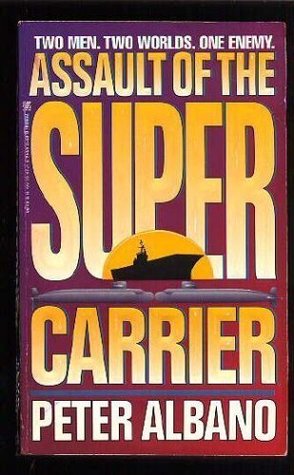
Review: Assault of the Super Carrier

Assault of the Super Carrier

supercarrierfinale

Peter Albano’s Seventh Carrier series comes to an ignominious end in Assault of the Super Carrier. The action has gotten incredibly repetitive, the worldbuilding feels like even more of a toy box, the novelty has worn off for a long time, the characters are horrifically stereotypical, and the base writing just isn’t good enough for eleven books.

There’s two things that make this last entry especially disappointing. The first is the “girl of the book” subplot becoming its sleaziest, most useless, and most distracting yet. The second is that there really isn’t an ending. There’s a battle that feels like every other battle in the series, a victory that should have been an arc-level one at best, and then the novel-and the whole series- just ends quickly.

What I’ve found after searching out books with novel setups is that they alone can’t carry a series. And this is the best example. Take away the goofy “carrier thaws out, jet/rocket engines get insta-zapped” setup, and all you’d have is something like Ian Slater, only with (even?) worse writing and a fixation on World War II military equipment. And like Slater, that’s not enough to sustain a huge amount of books by itself. Maybe the Seventh Carrier saga could have worked with three books. It couldn’t with this many.

Review: Daughters of the Night Sky

Daughters of the Night Sky
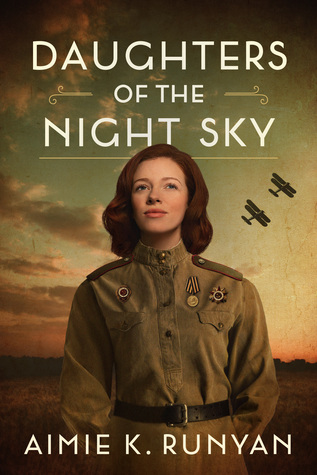
nightskycover

With Aimie Runyan’s Daughters of the Night Sky, Fuldapocalypse moves into yet another new genre-the Romance Centered Around Night Witches. It’s a little tricky to review, but I’ll try. The first “issue” is that this is obviously chick-lit, which is not something normally associated with the Eastern Front, for good reason. That the heroine falls in love with an artist is kind of the icing on the cake.

The second issue is that it feels like chick-lit and not like characters who are actually in the middle of a horrendous world war. What this came across as was “romance characters, plus add a few obligatory flying scenes and the occasional stereotype like a reference to blocking detachments.” While the author admits she wasn’t that knowledgeable about Russia or military aviation, it just feels too generic.

And that brings me to the third issue, which is that the actual flying isn’t very good. While I wasn’t expecting Dale Brown and while it’s actually admirable to not try and dwell on something you admit you don’t have much knowledge of, this still falls short. The problem is there’s too much of it and not enough research.

It would be like if a writer was making a story about American football (hey, I’m posting this review on NFL Draft day) and only knew the basic positions, such as quarterback and receiver. This would be obvious to those who read it and knew even a bit about the subject matter, but the writer still insisted on showing several games. This is like that, only with Polikarpovs instead.

As a whole, this is just a fluffy romance novel with World War II flying scenes and the characters having Russian names.

 

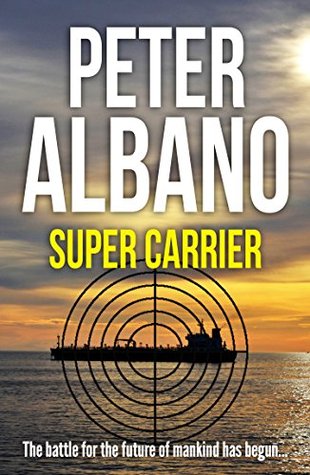
Review: Super Carrier

Super Carrier

supercarrier

Peter Albano’s “epic” series about a thawed-out Shinano fighting in a world where the clock is turned back lasted for eleven books. With me not considering the first two of be of the highest quality, and hearing that they got very repetitive, I jumped to the second-to-last installment, Super Carrier.

And I probably didn’t jump far ahead enough, for the tenth book is very much like the second, only worse. A gigantic chunk at the beginning is devoted to a overly long mission in a B-24. A smaller but still horrendous portion consists of a tank battle that is not exactly the equal of Team Yankee or Tin Soldiers. Then there’s the “romances” and the girlfriends getting killed horribly for “poignancy”. Neither is written well.

The retro dogfighting also appears clunkier than I remembered it being in the first two books, and the list of horribly written national stereotypes grows even larger. This book is only recommended to people who really liked the past Seventh Carrier entries.

Review: Phantom Force

Phantom Force

A Mack Bolan novel from 1991, Phantom Force is the sort of book that you’d kind of feel would come out of a rushed adventure assembly line. Written by Rich Rainey, it tells the story of the Executioner fighting an evil Japanese cult.

It’s a 51% book through and through. I was not surprised in the least to feel this, for it’s what I expected it to be. No doubt it would accomplish its purpose for the person seeking a small, safe literary diversion. It’s just that even in the context of the cheap thriller, this sort of thing can be done so much better. I inevitably thought of Jerry Ahern’s The Yakusa Tattoo when I read this, and that book’s gonzo excess compared to the rote box-checking of this one could not be more different. You can probably judge for yourself which one would be more memorable.

At this point in time, the pulpy, rapid-fire “men’s adventure” genre was imploding even faster and even more thoroughly than the technothriller. The biggest reason was simple economics-these kind of slim throwaway books were just too low margin in a market already starting to decline and consolidate. The second-biggest was that visual media was now quite able to provide violent, trashy entertainment in a much more suitable form. But a lack of quality cannot be overlooked.

I know this from personal experience. Even when younger and hungry for cheap thrillers, the output of the collapsing Gold Eagle line never appealed to me. I’ve read a few of them since then, but never to the degrees I’ve gone for other lines. And Phantom Force doesn’t seem that much different.

Of course, it’s another comment on the book’s value when writing about the context is more interesting to me than writing about the story itself.

Snippet Reviews: April 2020

So, it’s time for a few more snippet reviews.

Bloodline

After reading only a few Sidney Sheldon books, I found that Bloodline matches his formula very closely. This is not a bad thing. While it doesn’t exceed the excess of Master of the Game, it comes fairly close, and his story of elite “intrigue” is everything you’d expect.

False Flag

A disappointing second entry in the Jason Trapp series, False Flag keeps the semi-serious tone while turning the plot up to full Roger Moore Bond ridiculousness. It doesn’t work well compared to its predecessor.

Extraordinary Retribution

Erec Stebbins’ second INTEL 1 novel, Extraordinary Retribution, is kind of an in-name-only endeavor. Not only are the politics even more blatant and hamfisted, but the main characters of The Ragnarok Conspiracy only appear at the end as a final deus ex machina. Otherwise, it’s a completely separate story. And not the best-written one.

Review: The Hard Kill

The Hard Kill

hardkillcover

Reading The Hard Kill got off to a good start when I saw it was by “the Manning brothers.” Though a coincidence, I was reminded of the quarterbacks. This sports joke got me in the perfect lighthearted mood for a book that defines the term “Cheap Thriller”.

It stars a John Stone out to save his goddaughter and keep the Macguffin out of the wrong hands. Now, I’ve already read cheap thrillers starring a Mark Stone and a Luke Stone, so I guess someone else with that last name was inevitable. The time this book really clicked for me was when John pursued a villain named Karl (which also brings up a sports reference to my mind, one of the the greatest basketball duos ever) in a vehicle chase involving an Audi R8 and a bunch of conveniently placed big vehicles the R8 hits.

Then after that there’s a finale where the main character brings a rifle, a pistol, and a submachine gun to the fight. What I’m trying to say is that this is an incredibly over-the-top thriller despite its pedestrian plot. It’s also incredibly fun. In fact, it’s the most fun I’ve had reading an action hero thriller in some time, and I highly recommend this book to anyone who likes “cheap action”.

Review: The Return of the Dog Team

The Return of the Dog Team

It’s time for Fuldapocalypse to dive into the world of “William W. Johnstone’s” novels. Johnstone himself wrote (and apparently considered his proudest work) the original Last of the Dog Team in 1981. By 2005 he was dead, though he lived on as a “Tom Clancy’s”-esque brand name, with its sequel being written “with” “Fred Austin” (who I’m convinced is just a house name).

To be honest, this isn’t really that bad-or that good. Yes, the heroes are ridiculous unstoppable Mary Sues, but this is far from the only book to have that issue. Yes, the military details are frequently inaccurate, often to excess (behold the “A-130” gunship helicopter), but that’s also common. Yes, there’s axe-grinding politics and horrible stereotypes, but-you get the idea.

In a strange way, William W. Johnstone stood out. This doesn’t. It’s just “shoot the terrorist” mush that hundreds of writers have done better without the baggage attached to the name. It’s a little better technically than Johnstone himself, but still. People remember the 1899 Cleveland Spiders. They don’t remember the 2002 Kansas City Royals.