Review: The Pact

The Pact

pactcover

Robert Patrick Lewis’ The Pact is the tale of Special Forces operators representing the only viable defense against a Russian-Chinese-Iranian invasion of the United States. The good news about this book is that Lewis is a Special Forces veteran who brings his knowledge to it. The bad news about this book is that Lewis is a Special Forces veteran who brings his biases to it.

The plot is the same kind of basic invasion novel plot that was old when Teddy Roosevelt was young. After the EVIL LIBERAL GUN GRABBERS have had their way with the US, the enemy alliance swoops in with computer attacks and unconventional warfare that naturally goes off without a hitch, save for the intervention of the special forces vets who’ve planned and built the lairs and stockpiled the equipment needed (against the advice of their nagging wives, of course). Then they fight back with the aid of a Freemason counter-conspiracy.

The first problem is that the action in this book is too realistic for its own good. I can’t blame a genuine veteran for writing what he knows, but come on. Axis Of Evil invasions and Freemason-operated super-bunkers do not exactly go well with detailed, nominally realistic operations. It also has a lot of “have your cake and eat it too”, such as one scene where it’s mentioned how hard it is to shoot down a helicopter with an unguided weapon-but oh look, they did it anyway.  Finally, realism or not, it isn’t the best written.

The second and bigger problem is that the main character is totally insufferable. He spends the entire first-person book monologing repeatedly about how awesome special forces are and how awesome he is. Repeatedly and constantly. It had the opposite effect on me, giving the impression of an arrogant swashbuckler who’d be foolishly overconfident if not for plot shields. The scene where the heroes find a former EVIL LIBERAL GUN GRABBER politician turned prisoner and execute her while smiling didn’t really help matters either. The icing on the cake is when the main character turns out to have the same name as the author. Really.

And those plot shields are there, from the “conveniently lucky” (the enemy neglecting flank protection) to the blatant (an M2 Bradley falling right into their laps). It’s a problem I’ve noticed in, of all things, some of the more out-there modules in Twilight 2000. If the mechanics/style is supposed to be realistic and grounded but the plot calls for the protagonists to do extraordinary things, you need a lot of pure contrivances for them to succeed. It’s a very tough tightrope to walk, especially when the premise is stretched to the level it is here.

Even by the standards of the “invasion novel”, there’s better works in the genre out there than this one. I’m not going to say it’s impossible to mix the concept of a Jerry Ahern novel and the rigorous execution of say, a Duffer’s Drift-style work like The Defense of Hill 781. But it would require a considerably better author than the one who wrote The Pact.

Review: PRIMAL Unleashed

PRIMAL Unleashed

primalunleashedcover

PRIMAL Origins was good. PRIMAL Unleashed is better. Here Jack Silkstone hits his stride with the super-agent supermercs as they fight warlords and arms dealers in a struggle from Afghanistan to Eastern Europe and beyond. To be honest, it felt a little like X-COM, only against terrorists instead of aliens.

It’s just a really good example of a cheap thriller that hit all the right notes. The plotting and pacing are well done. The action manages to be well done with just a touch of grounding even as spectacular feats are performed. The enemy is credible (from a challenge standpoint) and Silkstone isn’t afraid to have them do damage to the heroes.

There’s also, completing the puzzle, a diversity of action that fits very well. It isn’t just a classic Gold Eagle-style “a few guys with rifles”. There’s scenes in APCs, shootouts, and aircraft attacks. This feels closer to the ideal of “a more serious Mack Maloney” I’ve always sought than any other book I’ve read in quite some time.

It’s also an example of the post-2000 technothriller. Which is to say, it’s a story of super-technology and special forces as they fight to stop the villains from taking the MacGuffin. But here, it’s done right. I highly recommend this book.

Snippet Reviews: July 1-6, 2019

Ok, it’s time for the next round of snippet reviews.

Trident Force

Trident Force is one of those mushy, mediocre 2000s cheap thrillers, not bad so much as just dull. Not much action happens, and not much else interesting happens (it’s definitely not a Melville-style “slice of military life” book-it’s meant to be a thriller). A one sentence summary is “A lethargic version of SEAL Team Seven”.

I don’t know why I keep reading thrillers from this time period, but I do. Maybe it’s the hope of finding another Tin Soldiers, or maybe it’s a weird fascination with seeing a genre at its lowest.

Merchants Of War

Merchants of War is a decent mindless popcorn mecha action novel. It’s let down by a few weird perspective shifts, but still works if you just want to see mechs explode. You have to suspend disbelief about their effectiveness, but that’s true of almost all fiction.

Belfast Blitz

A middling entry in the Cody’s Army series, for the most part Belfast Blitz offers what one might expect from a second-tier 1980s action-adventure series. The “International Flashpoint” wheel landed on “Northern Ireland” for this adventure. The only standout is an incredibly telegraphed “tragic love story” between the British member of the Army and a local woman.

Review: The Battle Begins

The Battle Begins

battlebegins

So, a part of me, probably the same part of me that went “OK, read a long Jerry Ahern series in order”, said “OK, now read another, slightly less long Jerry Ahern series in order.” So it was time to go to the Defender series, namely the first installment, The Battle Begins.

Instead of John Rourke, ex-supercommando and high-powered gun nut, we have David Holden, ex-supercommando and high-powered gun nut. Cue a large amount of action as he and a group of “Patriots” fight back against a plot that can best be described as “Cyrus from The Warriors actually put his mega-gang war plan into action, and he was sponsored by the Kremlin.”

This has many of the same strengths as The Survivalist. Namely, it’s 80s action in novel form with a sincere attempt at humanizing its protagonists that isn’t seen as often as it should be. When the inevitable Detonics .45 pistol showed up, to me it was like the scene in a Zelda game when Link grabs the Master Sword. And the final battle is in a nuclear power plant with a computerized voice counting down the seconds until meltdown, with said meltdown able to be stopped by pushing one button.

Yet it has some of the Survivalist’s weaknesses as well, and then some. First, it’s a lot more politicized than the Survivalist ever was, and while the portrayal of the Soviets in Total War was decently evenhanded, the portrayal of the antagonists in this book is not. Ahern put a lot of effort into trying to dodge the uncomfortable racial implications by blatantly diversifying his heroes. He put very little in trying to make their opponents even slightly sympathetic. But then again, this is a 1980s action novel, and at least it’s not that much worse.

The phrase “at least it’s not that much worse” can arguably be applied to this book as a whole. Is it better than The Survivalist? No. Would I recommend it over the Survivalist to someone for their first Jerry Ahern book? Is it still a perfectly readable ridiculous over the top 1980s action novel? You bet it is.


Review: The Alpha Deception

The Alpha Deception

alphadeceptioncover

It’s not Jon Land’s fault that his first Blaine McCracken book left big shoes to fill. How does the second, The Alpha Deception, fare? In it, Blaine McCracken has another crazy adventure as he fights a rogue Soviet general with a death ray and an army of cheap thriller flunkies.

The book starts with a scene where a Hind-D helicopter is treated like it’s some kind of Airwolf-style superweapon. It only gets more ridiculous from there, from a fight with a pet panther to McCracken being subjected to a combination Dr. Evil Deathtrap and Greek mythology reenactment to a giant submarine/crab-mecha.

There’s a few stumbles with the plot. First, the ending is, well, a little Indiana Jones-y, and not in a good way. More important is the plot centered around the villain’s takeover of a small town and the resistance of its residents, which is far less interesting than McCracken’s own exploits (until, of course, they intersect). But those stumbles are very small, and The Alpha Deception maintains all the charm of the first book and then some.


Review: Firefall

Firefall

Ed Ruggero’s Firefall was a disappointment.

On paper, it had a lot to recommend. It was written by a veteran Ranger. I heard good things about his premier novel, 38 North Yankee (which I still haven’t read yet). Because of these, I had high hopes for it.

Sadly, it was a let-down for two reasons. The first was the simple prose. It’s just ‘meh’. Not absolutely bad or unreadable. Just “meh”, a middle of the road cheap thriller that was firmly in the forgettable middle of the pack. The second is the plot, a rare case when the post-USSR scramble for different opponents turned out poorly. The zombie sorceress in charge of coming up with the opponent pulled “neo-fascist German militia” out of her hat.

This made me disappointed in it. It probably made me disappointed more than I should have been, but still. The zombie sorceresses were purely and simply unnecessary. The list of potential opponents that can credibly threaten a ranger company/battalion is much, much longer than the remaining national-level challenges that technothriller writers tried desperately to find. What would be a mild opponent (in big picture terms) to a heavy brigade is something far worse to a light, unconventional one. In many cases, the ranger unit would need every force multiplier available to not just get crushed.

So what I was hoping for was someone using genuine expertise to lend a slightly fanciful story a hand. What I got was merely decent prose in service to a story that exemplified a bad trend in action/technothrillers. Namely, taking an out-there concept/threat and treating it in a bland, po-faced way.

Firefall is not bad, and viewed in another context it would work as a “51% book”, but I still found it disappointing.

Snippet Reviews: June 2019

So this “snippets” feature is here so I can share books I recently read, but which I would struggle to write in a longer review. So here it goes.

Third Law: Let It Burn

Third Law: Let It Burn is the sort of throwaway cheap thriller it’s hard to write about. It’s at the prose level of a lower-grade self-published book and with a lot of really blocky paragraphs. But at the same time it’s not totally bad, and it worked for a day’s read. The only thing really interesting is that it’s one of the first books I’ve read since Ian Slater to have a domestic militia as the antagonist.

Sweetwater Gunslinger 201

William LaBarge’s Sweetwater Gunslinger 201 is basically “Herman Melville, but with aircraft carriers”. This is not an insult. It’s the story of fighter pilots on an aircraft carrier, not facing any technothriller-level threat (but indeed facing the Libyan Air Force over the Gulf of Sidra-it had to have some action). Good for what it is.

Texas Lockdown

Robert Boren’s Texas Lockdown is the first book out of thirteen in the Bug Out: Texas series, which is itself a spinoff of the Bug Out series (13 books) and Bug Out California (15 books). It’s a combination invasion novel, survival novel, and (unsubtle) political novel. It’s adequate, if cliche, and its focus on the characters makes it better than some. But I’m skeptical as to it being a good starter for a series that long.

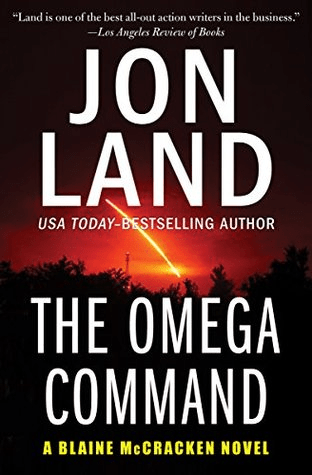
Review: The Omega Command

The Omega Command

blainemccrackencover

Jon Land’s The Omega Command is the first entry in a series of thrillers starring someone with arguably the best thriller protagonist name ever: Blaine McCracken. It starts with a typical cheap thriller plot involving a space shuttle getting blown up, and then goes on a one-way trip to Crazyville, going from New England to Atlanta to secret mercenary islands to supervillain lairs to outer space.

Blaine McCracken is a “Rogue Agent Who Doesn’t Play By The Rules” cliche. The supporting characters are equal mixes of cliches and stereotypes. The plot can basically be described as this conspiracy theory pileup of escalations, swerves, and “twists” without foreshadowing. 80s Computer Technology is involved, and I would feel comfortable in saying that this is a technothriller. However, it is an off-the-wall bonkers goofy ridiculous monster of a technothriller, and I loved it all the more for it.

This was amazing to read. Simply amazing. Not really a “good” book in the true sense of the term, although the action and pacing essential to every cheap thriller were by no means bad. It was a spectacle, and an ridiculous, stupid, bizarre, and somehow totally satisfying spectacle at that.


Review: PRIMAL Origin

PRIMAL Origin

Jack Silkstone’s PRIMAL series kicks off with a bang in PRIMAL Origin. This tale of supermercs features solid action, humor that makes the characters more than just the automatons found in the worst action books, and, most importantly, a car chase in a Toyota Prius (it’s a bit of a long story).

This is the kind of book that’s tough to review, not because it’s bad, but because I find it a lot easier to explain how I didn’t like something than how I did. Well, I liked this book. I liked it a lot. As a cheap thriller, it’s excellent and hit all the right notes.

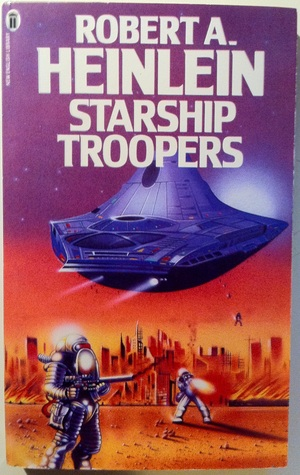
Review: Starship Troopers

Starship Troopers

sstcover

Ah, this book. Starship Troopers is a misunderstood classic. It’s also something where the influence is worse-considerably worse- than the content of the book itself. Heinlein’s famous tale of the Mobile Infantry deserves a lot of scrutiny, and it’s very, very hard to give a “conventional” score.

For the book itself, if the average military sci-fi cheap thriller is an apple, this is definitely an orange. Viewed as a coming of age story, a training story with realistic drudgery, and (however worthy or unworthy the politics) a political piece, Rico’s story is better than it would seem from the perspective of “how many explosions are there?”. If I had to give a critique of the orange that’s independent of that, I’d say the writing tone is a major problem.

The book is written in a sort of, for lack of a better word, “Gee-whiz” style that I recognized from another Heinlein book of the time I read, Tunnel in the Sky. This style happens to not go well with any of the elements. Not the “Space Herman Melville”, not the politics, and not what action there is.

If it was just an orange,  I’d feel better about it. It’d just be a type of orange that I could personally dislike to a degree, but still understand why others would like the taste. However, it’s an orange that influenced a whole lot of apple farmers.


When reading military sci-fi and then reading what I call “contemporary action”, there are differences that drag the former down. Perhaps the most obvious, and the most obviously taken from Starship Troopers, is filling every first part of the first installment with training. Contemporary action heroes, in contrast, tend to just stride in wholly trained. There are exceptions, but those are the trends I’ve seen.

Imagine if, somehow, the romantic-ish Vigdis subplot of Red Storm Rising made the book popular to readers of romance fiction (let’s just assume the zombie sorceress mind control was particularly effective that day). Now imagine that what sometimes feels like every fluffy romance novel you read adopts the structure of a technothriller, with a lot of viewpoint characters, a lot of sitting in conference rooms giving details of little particular relevance to the (crowded out) main characters, and a general “big-picture” scope that doesn’t seem to fit the small, intimate story you’d expect from a romance. And you just stand there going “no, no, Red Storm Rising wasn’t a romance, it was the story of a third world war! It didn’t really fit but people are copying it anyway!”

That’s what Starship Troopers has done to military science fiction. I don’t want to put too much blame on it or any one book, but it’s a definite influence in that negative direction, and, apple or orange, I don’t see the original as being good enough to make up for the way it pushed its genre down the road of the (pun very much intended) “spacesuit commando.”