Review: Raptor Force

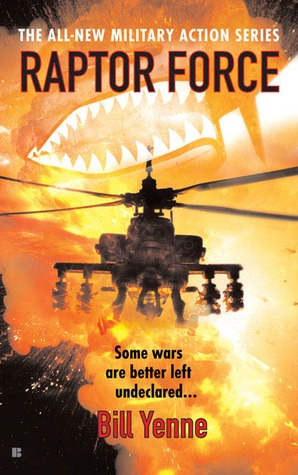
Raptor Force

raptorforcecover

Bill Yenne’s Raptor Force is a case of a book that dips into multiple action subgenres and seems determined to take the worst parts of each while being unable to grab the best. It’s the kind of commandos-vs-terrorists novel that might seem simply pedestrian if it didn’t have the premise it did.

See, the reason the task of hunting down bloodthirsty and effective terrorists is entrusted to this mega-top-secret band of off the grid commandos (based on the Flying Tigers in-universe) is because the US (along with most other countries) gave the UN veto power over its military power projection (!). This is the kind of thing that zombie sorceresses were made to do.

The heroes are all flat space-fillers, the villains are the most cliche terrorists straight out of Command and Conquer Generals, and the stock supporting characters are exactly who you’d expect them to be. This wouldn’t be a big problem if the fundamentals were good, but they’re not.

Raptor Force has the constant perspective and place-hopping of a technothriller but none of its technology or great power conflict. It has the focus of a small-unit book but none of the spectacle or “punch” that a good one has. The actual action scenes are decidedly underwhelming, the worst thing a cheap thriller can be.

This was not a good novel. Even the potentially over the top premise wasn’t run with, opting for the overly serious technothriller style instead of a shameless spectacle.


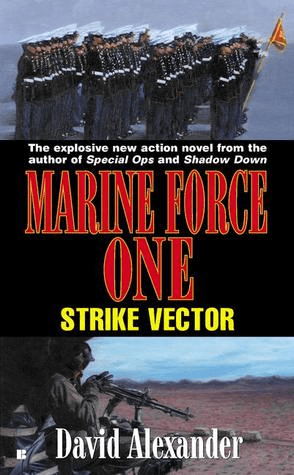
Review: Marine Force One

Marine Force One

The book Marine Force One is an example of a “51% book” that is elevated by the context in which it stands.

The book tells the story of an elite commando force tasked with hunting SAMs in the Balkans, in a conflict that feels like a jumbled mix of historical recollections of Operation Allied Force (evasive SAMs! Stealth fighters lost!) and think-tank reports (Resurgent Red Russians!) all tossed together. The Cobra Force of our heroes has to hunt the SAMs while butting heads with a Spetsnaz force assisting their Slavic ally.

If there’s one thing distinctive besides being dated, it’s that the main character, Maj. David Saxon, is an ass. He’s a one-dimensional figure who gave up his material possessions and marriage to focus on being in the military (and doesn’t miss his ex or even his son at all), he punches someone for being annoying to him during a debriefing, and when (however briefly) off-duty, he just uses prostitutes as the sole “relationship”. Yet rather than have his seriously flawed character be taken advantage of, Saxon is otherwise treated as a Mary Sue who can do what the rest of the military can’t. Very few other characters, even the villains, enjoy such detail.

Other than that, everything is just good enough. The action is just good enough but not the best. The pacing is at least fast, if not the best. The exposition can be annoying but isn’t too annoying, and so on. So why did I feel better about this book than I ‘ought to’ have? Well , the first part is that sometimes a 51% book is what one needs.

The second part is that given the publication date of 2001, the beginning of a very, very dark decade for technothrillers, the “competition” is less serious. In a context full of overpriced, under-proofread self-published books, legacy series continuing on pure inertia, and the few remaining editor-proof super-authors, a nice light 51% book isn’t bad at all.

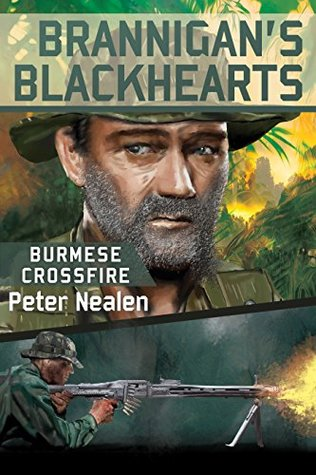
Review: Burmese Crossfire

Burmese Crossfire

burmesecrossfire cover

One of the reasons why I sound more critical towards Peter Nealen than I actually am is because this particular book set the bar very high. From the moment I read it, I fell in love. The Brannigan’s Blackhearts series was meant to be a love letter to the classic action-adventure novels of the 1980s, and Burmese Crossfire delivers.

Colonel Brannigan, leader of a small mercenary band, gets a mission to go to the titular Southeast Asian country. Cue a “rumble in the jungle” (with apologies to Ali and Foreman) against many Burmese and North Koreans. This isn’t that much more than a classic simple action-adventure novel. But it takes that formula and with beautifully written, well-done action, hits a home run.

It’s in a well-researched, obscure part of the world that’s an ideal place for a book of its genre. One of my favorite small-unit action-adventure books of all time, this is well worth a read.


Review: Sacred Mountain

Sacred Mountain

blackeagleforcecover

The second book in the Black Eagle Force series, Sacred Mountain, takes a look at the over-the-top goofiness of the first and goes “all right, time to unleash the cheap thriller equivalent of the dubstep gun.”

The president is kidnapped by ninjas. Are the people of Black Eagle Force bad enough dudes to rescue her? That is the plot of the book, but the execution is something. See, the Mexican billionaire from the first book returns in his volcano-lair. And so does Osama bin Laden (see, it was his brother acting as a stand-in who died in Abbotabad). And so do a huge number of Russian mercenaries with their accompanying hardware. It’s like the opening scene of The Naked Gun, only stretched into a ridiculous, and ridiculously fun spectacle.

The book is still a little too long and clunky, it has a few typos including one of the character’s names being slightly inconsistent, and at times it got a little bit too tasteless. But it manages to be ridiculously goofy while taking the action just seriously enough, and I enjoyed it a lot for being “more Mack Maloney than Mack Maloney”.  It’s hard to go wrong where one of the protagonists is a dog in a suit of armor.

Review: The Guns Of The South

The Guns of The South

gotscover

Harry Turtledove’s classic alternate history novel started when another author complained to him that the cover art on one of her books was as anachronistic as “Robert E. Lee holding an Uzi.” After that, writing a book about South African time travelers changing the fate of the American Civil War via a huge quantity of AK-47s was in order.

Guns of the South is a frustrating book, because it manages to be good, bad, and unnerving at the same time. The good part of the book is in its action and use of viewpoint characters. It has only two, Lee himself and low-ranking soldier Nathan Caudell, and the perspectives they can apply are well taken advantage of. As for the action, it keeps it well-written even when one side has muzzleloaders and the other AKs-and that’s not always the case.

The bad part is mainly in its ultimate antagonists, the time travelers themselves. These rank in my eyes as some of the worst villains I’ve ever seen in fiction. Besides the moral issues which I’ll discuss in a bit, they’re ultimately dumb and mysteriously stop taking advantage of their high technology and training at exactly the moment it’s convenient for the plot.

The unsettling part is that Guns of South has a disturbing feel of Confederate apologism to it. I think it’s just the result of unintended consequences, but still. Make Confederate protagonists who a modern audience will find relatable and sympathetic, and there’s going to be some (no pun intended) whitewashing. The two biggest problems are the Confederately ultimately phasing out slavery without much protest and the behavior of the time travelers. Said time travelers are stupidly and cartoonishly racist in ways that exist to make the CSA look better in comparison. It’s not only creepy, it’s lazy and annoying-and makes them even worse as antagonists.

This is still readable and it’s still one of Turtledove’s better books, lacking the bloat a lot of his later novels have. It’s just weighed down by its terrible villains.

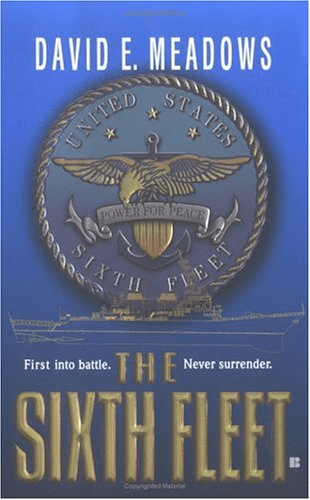
Review: Sixth Fleet

Sixth Fleet

meadowssixthfleet

I look at the Sixth Fleet series by David Meadows. Looks like it could be to naval warfare in general what Tin Soldiers was to tanks and Raven One was to aviation. Then I look at the publication date-2001. I start to have a bad feeling. Still, I shouldn’t stereotype 2000s technothrillers, so I go ahead anyway. Then I read the book in full, and yipes.

It’s very much a 1990s technothriller at heart. Regional enemy (Libya) with a super-gimmick? Check. Hand-wringing over defense cuts? Check. COMPUTER DIGITAL WARFARE? Check. Even leaving all of that aside, the prose is just very, very clunky and any scene with a character who isn’t American is rather “dubious”.

Worse still is how the first book is meant as the opening act in a long series. This means the pacing goes from “bad” to “REALLY REALLY BAD”. I’ve seen better pacing in later Survivalist books than here, and instead of Ahern’s flights of fancy, there’s a generic “mustache twirlers with super-gimmicks” story with the usual technothriller viewpoint jumping.

I wanted to like Sixth Fleet but just couldn’t. The fundamentals are too iffy, the subject isn’t that conceptually interesting, and its pacing is just horrifically slow and uneven. In many way, it feels like the stereotypical late-1990s/2000s technothriller writ large.

Review: The $3 Million Turnover

The $3 Million Turnover

I’ve been in a basketball mood recently, tracking the evolution of the sport from pre-shot clock clunking around to the 1961 superfast play to the grinding and “isoball” of the late 1990s and early 2000s to the current superfast play and three point launching. And of course the off-court drama.

So, having already heard of the “Pro” series of sports agent mysteries in the 1970s from Paperback Warrior, I read the initial hoops-centered installment, The $3 Million Turnover. Centered around a sports agent/private eye and a kidnapped star basketball prospect, I found it-iffy.

The prose is really, really dated and reads almost like an unintentional parody of old “hard boiled gumshoe” novels. There’s that and the basketball part of the story being mostly incidental to the main plot-the stuff like the then-present rivalry between the NBA and the ramshackle ABA is just window dressing and the player himself is really just a MacGuffin. I had a lot less fun with this book than I hoped I would, though to be fair I was stepping out of my comfort zone.


Review: Soldier of Gideon

Soldier of Gideon

soldierofgideoncover

The Casca series takes its path to the Arab-Israeli wars hinted at in the first book. Soldier of Gideon is a “modern” Casca, as opposed to the ancient Cascas. Taking place in the Six Day War, it’s typical of later Cascas-formulaic but good.

The action-packed book is in this kind of particular subgenre of war story that’s more gory and grisly than a John Wayne-style sanitized work, but still far more over the top and spectacular than a truly grounded novel. This isn’t a bad thing, but it’s interesting.

(Sidenote: For whatever reason, historical war fiction isn’t usually my cup of tea. I’ve read good examples, but it just doesn’t grab me the way action-adventure or even technothrillers do. That being said, I have read enough to tell which slot Soldier of Gideon fell into)

The Arab armies seem to use primarily western equipment (to the extent that only Jordan did in the historical war)  with a few IS-3 tanks thrown in as level bosses challenging encounters. Casca and friends go to every theater of the war. In the process, Sadler demonstrated both his greatest strength and greatest weakness as the series dragged on.

The greatest strength is managing to maintain dramatic tension and fluid excitement in a story that features A: A historically decisive blowout victory, and B: An immortal protagonist. This is no easy task, and it’s a sign of Sadler’s proficiency that Casca never devolves into the “unironic One Punch Man” that it could have.

However, the other side of the coin is the almost complete lack of interest in using the immortal protagonist who’s lived for thousands of years, met every important Eurasian historical figure in that time, and is linked personally to Christianity as anything but a placeholder to build period pieces around. While cheap thrillers like these aren’t philosophical works, the wasted potential is still very high.

That said, as cheap thrillers, the Casca books still work, and work well.


Review: Hellfire in Haiti

Hellfire in Haiti

codysarmy2

If I had to pick a favorite entry in the seven-book Cody’s Army series, Hellfire In Haiti would easily win. Nothing else has the same mix of action, fun, and good villains. I never had as much entertainment out of a Cody’s Army book as I did here.

The entire Cody’s Army series feels to me like the action adventure novel version one of those knockoff fighting games that tried to piggyback on the Street Fighter and Mortal Kombat-not bad , but the incredibly obvious influence is still there, and it could only have existed in the middle of a very big pack. Still, none of the Cody’s Army books are unreadable, and this one in particular is a highlight of the entire genre.

Hellfire in Haiti sort of recycles its main plot from an earlier Cody’s Army book, Philippine Hardpunch. There, a former buddy of Marcos plots to reconquer the Philippines. Here, a former buddy of Duvalier plots to reconquer Haiti. The former book simply didn’t punch as hard as it could (I had to say it). This delivers a Mike Tyson haymaker.

Army member Rufe Murphy is kidnapped and subjected to a voodoo ritual, adding to the over-the-topness of this book. The villains in this book are excellent action-adventure fodder. There’s main villain Clairvius Bourreau  the ex-death squad leader and drug lord who enjoys dressing in showy outfits. And there’s his American ally Wes Taggart, a psychotic former Vietnam unit-mate of protagonist John Cody. That brought a smile to my face as Taggart reminded me of some of the sort of dubious “hard man who breaks the rules” “protagonists” of more recent war-fantasy novel.

And the final battle featuring the Army vs. Bourreau’s stronghold stands as the literary version of Arnold Schwarzenegger’s Commando. It’s easily one of the best climaxes I’ve read in an 80s action-adventure book. Cheap thrillers, especially ones of the time, don’t get much better than this.

Review: Eye Of The Storm

Eye Of The Storm

eyeofthestorm

The first book in the “Black Eagle Force” series by Ken Farmer and Buck Steinke, Eye Of The Storm is a delightfully cheesy exercise in Mack Maloney-style military melodrama.

Starting a Super Secret Task Force With Super Tech and Super Planes, the men, women, and high-tech aircraft of Black Eagle Force battle a Mexican billionaire whose last name is an obscenity in Spanish (uh…) and who has a private island with a pyramid-lair and a gigantic arsenal of soldiers and military equipment (ok…).

I was impressed. Oh, it’s not the best ever. Even beyond its cheesiness, cliche-ness, and dubious character names, it’s about a hundred pages too long. But its downsides are thankfully much fewer than its upsides. I just really like Mack Maloney-esque “over the top but not really science fiction” military action, and when the action happens, it happens well.

The nature of the story means any “errors” or “contrivances” are easily forgiven. The BEF gets opponents of an appropriately challenging nature-no small feat. It has just the right amount of threat and “look at ’em go.” This is an excellent “popcorn book” and one I was overjoyed to uncover.