Review: Wheels

Wheels

Arthur Hailey’s Wheels, published three years after Airport, turned its attention to the auto industry. While I’ve been a fairly new study to the aircraft industry, I’ve been interested in cars for much, much longer. So I knew I had to at least try this book. Especially because there are bizarrely few novels about the auto industry’s shenanigans. The biggest names are just this and The Betsy, which barely counts as a coherent book.

This is only somewhat more focused than Robbins’ scattershot, crazed novel. And it’s less focused than Airport. While that had a big broad soap opera and industry exposition that concluded with a rushed thriller plot, this is nothing but a Detroit drama. Or to be more specific, a series of Detroit dramas that range from car design to the struggles of a poor assembly line worker to the not-exactly-scintillating subject of middle class adultery.

I can respect this book for what it is-a lot of the research holds up, even if Hailey once again fell for futurist wonders being just around the corner (room-temperature superconductors in this case). It does work as a snapshot of an utterly rotten industry that was practically begging for the imports to come and whip it into shape (Published in 1971, the only reference to Japanese cars is a Subaru 360-esque “four wheeled motorcycle” that no one likes). But it doesn’t really work as a practical narrative.

Review: Airport

Airport

Author Arthur Hailey had a gimmick. He would find a certain field, research it massively, and then build a thriller and/or pop epic around said filed. One of his most famous and successful novels was 1968’s Airport, which inspired the movie series and the parody Airplane!. In it, an airliner is threatened by a both literal and figurative perfect storm of everything from horrible weather to a blocked runway to angry neighbors to a man determined to kill himself and blow up the plane-for the sake of insurance, nothing political.

Hailey spent a gargantuan amount of time on research, and it shows. I’ve always wondered if him being around in the age of the internet would have made his endeavours quicker and easier, or if it would have just prompted him to go even further down the rabbit hole. My hunch is the latter. There’s a lot of well-done and accurate depictions of airport operations (and a lot of weird-in-hindsight 1960s futurism, such as talk of superlifter cargo planes being thought of as something that would render sea freighters as obsolete as ocean liners and passenger pods being loaded into civilian C-5s).

The biggest issue is that the pacing is incredibly slow and lethargic for about four fifths of the book, then it hurriedly sprints to its conclusion. Maybe it was deliberate to try and be suspenseful, but if so, it didn’t work. The second biggest issue is that the characters are dull and dated-most obviously shown in a subplot where one of the main characters gets a flight attendant pregnant and the resulting drama.

This is a decent product of its time, but it’s still a product of its time and not the most recommended for later readers. It comes from an age when air travel was still something novel, and where readers would be less familiar with it. It’s not Hailey’s fault, but the book has aged terribly in that regard. Now it just comes across as 80% Herman Melville’s Airport Tales and 20% A Brief Disaster Novella, neither of which can really stand up.

Review: Sunrising

Sunrising

The wide and ever-expanding amount of genres covered by Fuldapocalypse has now extended to “Zimbabwean Historical Fiction” with Susan Hubert’s Sunrising. Openly inspired by the author’s own background, this is the story of a turn-of-the-century Englishwoman settling in Bulawayo. It’s not the type of fiction I normally read and review, so that might explain a lot of my lukewarm attitude towards it.

But I also think that it’s just too slow and relies too much on the self-proclaimed wonders of seeing Southern Africa as a way to attract attention. To me, I get the impression that the intent was “look at the train disrupted by elephants, wow!” but what came across to me was “I get it. Elephants exist.” That’s an example from one scene in the book and I could easily give more.

I don’t consider this a bad book, and am willing to accept that it being not my usual novel genre may explain my comparative lack of interest. But it feels like the kind of pre-widespread visual media novel that leans massively on its setting. It was published in 2020 but the style feels like a book made fifty years earlier. That’s not a bad thing, but it does make the book feel a little strange to me.

Review: Confrontation

Confrontation: The War With Indonesia 1962-1966

Peter van der Bijl’s Confrontation is a military history of the four-year small war known as the Konfrontasi. It goes into extremely military detail. What’s not to like? The answer is, surprisingly, a lot. This isn’t really a bad book, but it is a flawed one.

The first flaw comes from the nature of the war: It really wasn’t much of one. It was more a political stunt by Sukarno than anything else, and the actual service chiefs did the bare minimum to support it. This isn’t the author’s fault, but his priorities are. There’s less of the politics (though they’re still present) and more of firefights in the jungle that blend together (almost always ending with “better-trained Commonwealth troops get the better of worse Indonesians”).

The second comes from the author’s biases. There are a lot of rants about journalists, especially journalists covering the Troubles, which feel kind of out of place. Worse is the absolute fawning hagiography of the British and Commonwealth armies. This is accurate in terms of specifics vis a vis the Indonesians, but still gets annoying, as does the very British slant of “unlike you knuckle-dragging Yanks, we won our jungle war” without noticing the very different context of Malaya. Finally, there’s no real attempt to explore escalation counterfactuals beyond just “The Indonesian air force and navy wasn’t very good”.

This ultimately comes across as just a series of jungle warfare vignettes. It’s not the worst book about its conflict, but it’s not the best and could be much more.

Review: The Rhodesian War

The Rhodesian War: A Military History

The subject of Rhodesia and its war is dominated by uh, “iffy” sources that I shouldn’t have to explain the problems with. Thankfully, among these strides a beautiful unicorn: Moorcraft and McLaughlin’s The Rhodesian War: A Military History. Originally released not long after the war’s end and Zimbabwe’s creation, it recently got an updated edition on post-war developments.

What this is is a very evenhanded, very detailed look completely devoid of “Fire Forces! Selous Scouts!” “Shorts!” “Be a Man Among Men!” Soldier of Fortune romanticism. It doesn’t hesitate to look at the negatives of the guerillas (and, in the updated edition, the Mugabe regime), but it’s unsparing in its blunt assesment of the minority government: Rhodesia was doomed from the start. The British knew it. Apartheid South Africa knew it, which is why they tried to twist Rhodesia into stepping aside in favor of a moderate African government, rather than face a radicalized one on their border that would develop from a victorious war. I don’t think it’s an exaggeration to say that even South Vietnam and 2001-2021 Afghanistan rested on vastly sturdier foundations than Rhodesia did.

The Rhodesians had no concept of war as a political entity and were only good at leveraging limited resources in tactical operations. Even those were aided by weaker opponents (Rhodesians themselves had said that if the guerillas had been as astute in military craft as the Vietnamese ones had been, the war would have been lost much sooner), and said opposition was becoming better as the end of the decade neared.

This is one of the best-single volume military histories I’ve read. It’s also a great antidote to noxious internet fandom surrounding a country that simply did not deserve it.

Review: Gadget

Gadget

Nicolas Freeling’s Gadget is a book about a terrorist nuclear weapon. It can sort of be described as Red Army (villains win) meets The Sum of All Fears (nuclear terrorism). Only without the strong points of ether and with the latter’s weaknesses.

See, if you really, really loved the scenes in Fears where the nuclear bomb is being constructed, you will like this book. In fact, if the editor had chopped the entirety of that novel down to just the bomb construction scenes and ended the book right when it was successfully brought to the target and detonated, you’d have something very much like Gadget-a dry, technical nuclear tale.

I’ve pondered before why most nuclear terrorism novels were the way they were. The reason is “because it’s more dramatic than this”. If you absolutely need a detailed Herman Melville’s Nuclear Bomb story, this is the book for you. Otherwise, stay away.

Review: The Gamekeeper’s Night Dog

The Gamekeeper’s Night Dog

David Putnam’s The Gamekeeper’s Night Dog is one of the weirdest alternate history novels I’ve read. And yes, I have read every single Kirov novel. None comes close to this… thing. Really, to talk about it in conventional literary terms is almost beside the point. It’s middling in terms of quality and is a little too bloated, but why talk about that when you have such a befuddling premise?

See, in the 1890s, protagonist David Banner (no relation to the Hulk) has the Judeo-Christian God appear in a dream from His home in the black hole in the center of the Milky Way. A nightmare scenario (aka actual history) awaits if the last of the classic English Bulldogs (always capitalized in the book) goes extinct. There’s exposition where World War I, II, and even III is shown, with animal cruelty activists being portrayed as the equals of history’s worst monsters.

Also, apparently the divine value of a nation comes from the kind of dog that it has. Yes, it’s a weird book. Anyway, man and dog alike uplift the world, fight a very different Boer War, and continue to battle in an ahead-of-its-time World War I. We get loving depictions of bulldogs ripping men and animals to pieces. In fact, most of it is basically just bulldogs in “action”. The question remains: How do you even judge this book? My answer is simple. You can’t. It is not a novel so much as a very bizarre artifact.

Review: The Burma Wars

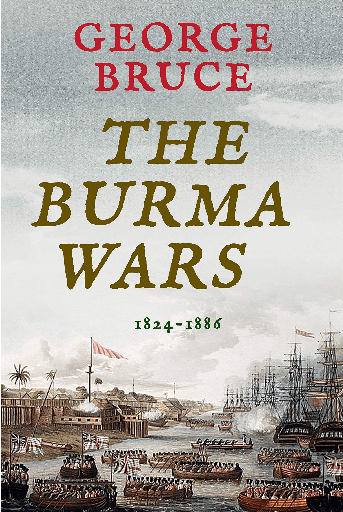
The Burma Wars

Because Myanmar/Burma features so prominently in my current novel draft, I figure I’d look at George Bruce’s The Burma Wars , a history of the British conquest. There were three large Anglo-Burmese wars, but Bruce mostly concentrates on the first. This is understandable, as the latter two were uninteresting squashes.

Bruce is every bit the Empire fan you’d expect a British pop-historian of the 1970s to be, but he still gives the Burmese credit when due. They were comparably armed, had a knack for building fortifications quickly, and the Anglo-Indian force that went against them was logistically troubled and questionably led. And yet, the British still eventually won, and it only got better/worse from there.

I wouldn’t make an old piece of popular history the sole source on any big historical event, but this at least made for a good starting point. I’m glad I read it.

A Thousand Words: The Assassination of Trotsky

The Assassination of Trotsky

Directed by Joseph Losey and starring Richard Burton as the title character, The Assassination of Trotsky is often placed on many “worst movies ever” lists. It is a well deserved placement. For this is a terrible, terrible movie. And it’s deliberately terrible-it’s not due to circumstances, but due to creative choices.

First off is Richard Burton’s performance. His Trotsky looks like a cheap Colonel Sanders mascot and acts like that aging beatnik professor you had in college and loathed. You will learn absolutely nothing about the historical context from this film. In fact, the only way to make sense of the incoherent plotting is to assume that Losey thought the audience would already know everything historically relevant.

Second is the massive, massive padding. Since it doesn’t take ninety minutes to have an ax hitting someone in the head (SPOILER ALERT!), Losey fills the movie with filler. This includes a scene involving rabbits being raised, a long gondola ride where Stalin’s image appears in the water, and, worst of all, a long and gruesome bullfight scene. The only attempts at suspense involve dragging every scene out and playing minimalist music. This gets old after about, oh, two such scenes.

About the only sympathetic character is Romy Schneider’s “Gita”, who is as confused with the situation and disgusted with the bullfight as the audience is. Sadly, she cannot carry on her own, and is the subject of a padding scene as well.

This is a terrible, terrible mess that’s almost so bad it’s good. Almost.

Review: US Narratives of Nuclear Terrorism

US Narratives of Nuclear Terrorism Since 9/11

Because of my current “itch” for material involving nuclear weapons, I knew I had to read Liverpool University professor David Seed’s US Narratives of Nuclear Terrorism Since 9/11. In spite of its title, this covers material written long before 2001. As I love highbrow analyses of lowbrow fiction, I dug deep into this book.

Doing more than just digging into stuff like The Sum of All Fears, Seed in fact wades through the Augean Stables of fiction that makes up what I’ve dubbed the “shoot the terrorist” subgenre. To have read so many books of that nature seems astounding even to me, who loves cheap thrillers. Some are books that I’ve read from big names like Tom Clancy and Mario Puzo (Fears and The Fourth K). Some are from series that I’ve heard of (like SEAL Team Seven). Others are extremely obscure and unknown to me prior to seeing Seed’s compilation.

This isn’t perfect. At times the book gets a little too stereotypically “academicese” in it writing, and there are the occasional typos here and there. And while it sounds like a clickbait video, I’d have loved to see someone with more technical knowledge critique the plausibility of many of these scenarios. Seed tries and often does a good job, but an actual nuclear expert could probably do better.

But it’s something very near and dear to my heart, and as a review of thriller fiction, I remain in awe of this smooth narrative. Where else could I hear of books like Thomas Fillinger’s Chameleon’s Shadow, where Seed mentions the following plot point in a deadpan fashion:

“Detroit is destroyed when a nuclear bomb detonates by accident, but this proves to be a sideshow from the main search for the leader of the conspirators, who are all depicted as stereotyped fanatics.

It’s plots like that that make me love my reviews. And this brave struggle of a book has warmed my heart. I mean, even I probably couldn’t make it through that many “shoot the terrorist” novels without gaining an insatiable urge to lick the Chernobyl Elephant’s Foot. It’s not Seed’s fault, but so many plot elements repeat throughout his summaries: Warheads stolen by/sold to the antagonists and the dreaded “suitcase nukes” are two of the most common. Granted, this comes with the cheap thriller territory, and these kind of books succeed or fail more on execution than concept, but still.

There are definitely a lot more terrorist nuke books than conventional WW3 books, and this does a great job covering them and (however accidentally) showing the different subgenres of thrillers.