Review: Mikoyan MiG-23

Famous Russian Aircraft: Mikoyan MiG-23 and MiG-27

Another Gordon/Komissarov book specializing in the study of just one platform, I knew I had to get the volume on one of my favorite ugly ducklings: the MiG-23. The Flogger did not enjoy a charmed life. With hindsight, it occupied an uncomfortable niche between the cheap MiG-21 and advanced later fighters. Its swing-wing design was a long-term limiter. The MiG-23MS export version, with no long-range missile ability, was the equivalent of using a Manning brother as a running quarterback.

This is a little better laid out than the MiG-29 book, but it still has iffy formatting and a tendency to shift into colloquialisms like lots of exclamation points! That being said, it delivers a lot of technical-and operational-info. It has the strike and fighter variants all covered, as well as exotic proposals like the IFR-capable carrier versions and my most beloved unsuccessful attempt to put new wine in old wineskins: The MiG-23-98 series.

It’s definitely written by and for aviation enthusiasts, but I had fun with this book. It’s a worthy tribute to an often (and not unreasonably) savaged aircraft.

Review: Russian Air Power

Russian Air Power

The 2002 book Russian Air Power, by Gordon and Dawes, is something I was eager to get for the sake of seeing a past snapshot. I was not disappointed. Sure it’s dated (including a laughably inaccurate prediction that by 2010 the Russian Air Force would have streamlined down to three platforms, including the PAK-FA), but I expected it to be dated. A slightly worse criticism is how the doctrinal specifics of a high-intensity “air operation” are left a little vague for my liking.

But I have the Heavy OPFOR stuff for that, and the rest of the book is good. That I already knew much of it was no knock against it. And the part about the air force’s role in the Chechen Wars is excellent (and further reinforces my belief that, despite huge investment in the twenty years since, it may have actually regresssed from that in terms of overall capability in the early part of the Ukraine War.)

If you can get this book, do so. It’s a good historical reference, and Dawes keeps a lot of Gordon’s issues in check.

Review: The Churchill Memorandum

The Churchill Memorandum

Sean Gabb’s The Churchill Memorandum is an alternate history spy thriller taking place in a world where World War II was averted due to Hitler’s death in 1939, the libertarian British Empire rules strong-and the US has devolved into a dictatorship complete with a “Republican Guard”. It’s one of the hardest books to review.

See, this may be the most extreme example of “alternate history as a setting” I’ve seen. By itself, the book is nothing but a 51% installment in a genre that, while not disliked, isn’t my first choice. But the setting, oh boy. The setting combines a big dose of L. Neil Smith-style libertarian utopianism with a British version of “libertarian” nostalgia for something you’d think wouldn’t be appropriate. In this case, it’s THE EMPIRE. You can be forgiven for wondering “isn’t an empire using the power of the state to a great degree to suppress others”.

Anyway, the setting goes farther than that. Historical British politician Michael Foot is portrayed as a supervillain who dissolves his victims in pits full of acid. His associate in the League of Evil is Harold Macmillan.

This book is kind of like a 1980s hair band that dresses extravagantly but plays the most mundane pop. The surface is crazy, but what’s behind it isn’t really. Ok, except for Michael Foot’s Evil Tub of Acid. That has to count for something, right?

Review: American Secret Projects: Airlifters

American Secret Projects: Airlifters

Craig Kaston and George Cox’s two volume series on American airlifters is one of the main reasons for the recent fascination I’ve had with these cargo-bearing beasts. Like a lot of books in the series, both are excellent. However, one of the volumes outshines the other, though through no fault of the authors.

The first volume is well-written and illustrated, but it describes a time period where, for the most part, it’s just variations on big-bellied freighter aircraft. The second volume has a lot of those too, but also has weird shapes, VTOLS, napkin company projects that make Mukhamedov and Stavatti look like Boeing and Airbus, and so much more.

If you have to get one book, get the post-1961 volume. But both are well worthy of any aviation history enthusiast’s bookshelf. Fair warning-you may twist your brain into a pretzel trying to estimate just what some of these oddballs can and can’t transport. It’s what I’ve been doing a lot, and I have no regrets.

Review: Conclave

Conclave

There’s this only half-joking thought I’ve often stated in regards to book writing that, if you’re stuck, just write the characters fighting a bunch of crazy bikers. This is a lesson I learned from The Survivalist. And I saw something like that in a place I didn’t expect.

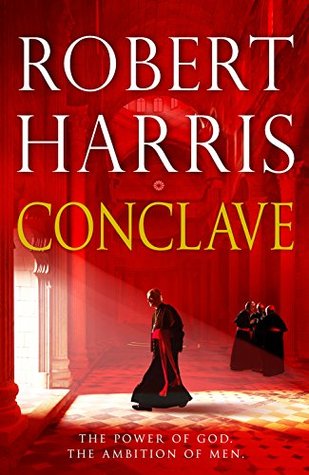
Robert Harris’ Conclave is the tale of a papal succession by a well-known author who’s written the alternate history classic Fatherland. He does not have the cardinals face off against crazy bikers. But he does have them encounter what seems like everything else. The writing itself is often good, and certainly Harris’ skill is on display. The setup of the book is excellent, save for a contrivance where a secret cardinal manages to slip into the conclave in spite of historical precedent.

…And then the plot goes off the rails into more and more melodrama. One of the papabili is felled by baby mama drama. Then another, who steered the baby mama into the Vatican to crush his rival, has his machinations uncovered and his candidacy sputters. Then the main character finds the papal equivalent of Regina George’s Burn Book and metaphorical chaos happens. Then there’s a terror attack outside the chapel (really) and literal chaos happens.

With all of the rivals having shot themselves in the foot (and the book has gotten to the point where a papabili cardinal pulling a Plaxico Burress wouldn’t be surprising), Mr. Sneaky Cardinal then becomes pope. Then in the final twist, it turns out that the new pope was born a girl , mixing the Pope Joan legend with the likes of such highbrow epics as Fate Stay/Night and Sleepaway Camp. The book ends with Pope Joan Angela Saber I Innocent XIV taking the throne.

I mean no transphobia, and think that you could make a perfectly tasteful, good, and profound novel with that (and its discovery) as the premise. But as the biggest swerve in a book full of them, it still comes across as bizarre and tacky. Even if the concept is quite doable, the execution here falls flat.

In fact, as another review in the conservative Catholic World Report has noted, Harris’ sources in the acknowledgements are a little questionable. Imagine a military novel where the sources are well-intentioned and good-hearted but obviously slanted antiwar activists and axe-grinding Pentagon Reformers, and you can get an idea for how skewed this is (even if I agree with a lot of it on the merits as a nonreligious descendant of Lutherans).

This isn’t the equivalent of one of the worst popes ever. But it isn’t one of the best either.

Review: American Secret Projects: Bombers

American Secret Projects: Bombers, Attack, and Anti-Submarine Aircraft

One of the American Secret Projects series, this book looks at air-to-surface planes from the end of World War II to Vietnam. Covering everything from mammoth strategic bombers to light propeller planes, it’s an ideal aviation niche history book. With lots of illustrations, the obscure become visible.

With this book you can see all the bizarre and erratic 1950s designs. You can see how the AX project that became the A-10 started off as just a rich man’s Skyraider. This is an excellent book for any aviation enthusiast.

Review: British Cruisers

British Cruisers

Norman Friedman turns his knowledgeable eye to one of the most arbitrary ship classes in British Cruisers. Going from the early 20th Century to the Cold War, he covers the enigmatic ship type that can best be summed up as “bigger than a contemporary destroyer, but not too big”. From wartime workhorses to unusual goofy designs, Friedman leaves few Royal Navy stones unturned.

The final desperate attempts at large capital ships after 1945 are the most interesting to me. The large “escort cruisers” started off as ASW helicopter ships, then grew into the famed de facto light carriers they became and were later used as. Everything else was rightly shelved. But this is a typically excellent technical history of cruisers in all eras.

Review: AlloAmericana

AlloAmericana: Myths and Legends From Other Americas

Alexander Wallace’s edited anthology of the folklore from different Americas is a treat. From Native American legends adopted by settlers to the West Coast from 17th century Japan to D. B. Cooper, this takes the reader through many a myth and legend. The collection of authors each brings something distinct and good to the table.

If I have any critiques, it’s that the short story collection format is only useful for a brief snapshot of a world. But that’s not the fault of the editors or authors, and some times this is all you need. I believe this is my favorite Sea Lion Press anthology to date.

Review: Invasion Chronicles

Invasion: Chronicles

DC Alden’s “epic” ends with less than a bang in the last two installments, gathered with the previously reviewed two in the Chronicles omnibus. The politics do take an interesting turn, and that’s that the Evil Continental Caliphate is actually too feminist. It has women in its military in exactly the same places as its opponents (including such non-nurse/clerk roles as AWACS radar operator and explosives technician). And of course the evil collaborator ex-lawyer turned butcher governor (and not a figurehead one either) is a British woman. This all felt deliberate on the author’s part. It wasn’t a redeeming quality or the act of adapting something else. It made “sense” given how more of the vitriol was aimed at the “traitorious British” than the actual invaders, but adds to the creepiness of the books.

The last two entries, Frontline and Deliverance, have all the same issues of their predecessors. The camera is either jumping around various viewpoints or focusing on big arcs involving unsympathetic characters. Having to combine these together leads to plot contrivances clearly designed to make them tied when they shouldn’t have been. Sending a super-secret stealth aircraft to rescue several AWOL squaddies on an ill-conceived raid into Birmingham is the biggest example of this.

The conclusive battle involves a clumsy attempt at Fortress London that’s designed to try to fit a square peg into a round hole. Having to tie the high and low level parts together means it couldn’t just focus on individual danger, and having the previous war be so one-sided means a broad-scope view doesn’t work. There’s more contrived, artificial drama and a very strange series ending that’s at best a sappy dream sequence and at worst implying that the whole thing was just a nightmare (that would explain the military inaccuracies at least…)

So yes, having read this entire series, I can say that it deserves the infamy and scorn it’s gotten. Even accepting its premise as an invasion novel with all the inherent baggage, this could have been executed a lot better. As it stands, it was not.

Review: Invasion Uprising

Invasion: Uprising

DC Alden’s Invasion: Uprising follows the Anglo-American counterattack into occupied England, and manages to be (even?) worse than its predecessor in all that matters. The only real highlights are some middling amounts of mediocre cloak-and-dagger stuff and a few C-list infantry firefights, neither which can make up for the collapse elsewhere.

First, the big battles come across as something that could have been written by post-Sum of All Fears Tom Clancy. They involve Americans with supertech handily crushing their hapless opponents. Needless to say, they’re not very good. The weird and slapdash enemy arsenal is still there, as is the politics.

Criticizing an invasion novel for its politics is kind of like criticizing a professional wrestling match for its melodrama. But I feel obligated to note that the book seems to direct less of its anger towards the invaders themselves and more towards the British who enabled and allied with them, in a message that is not exactly subtle. From a series that started off iffily, this book has the “achievement” of sinking lower.