Review: The Burma Wars

The Burma Wars

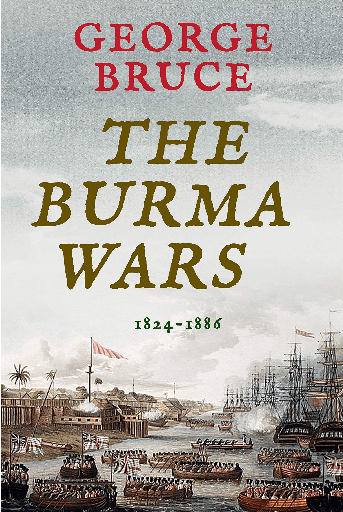
Because Myanmar/Burma features so prominently in my current novel draft, I figure I’d look at George Bruce’s The Burma Wars , a history of the British conquest. There were three large Anglo-Burmese wars, but Bruce mostly concentrates on the first. This is understandable, as the latter two were uninteresting squashes.

Bruce is every bit the Empire fan you’d expect a British pop-historian of the 1970s to be, but he still gives the Burmese credit when due. They were comparably armed, had a knack for building fortifications quickly, and the Anglo-Indian force that went against them was logistically troubled and questionably led. And yet, the British still eventually won, and it only got better/worse from there.

I wouldn’t make an old piece of popular history the sole source on any big historical event, but this at least made for a good starting point. I’m glad I read it.

Review: K Company

K Company

For the first in literal years, I deliberately sought out and read a western, Robert Broomall’s K Company. A story of army life on a hardscrabble post on the Kansas frontier and the inevitable conflict with Native Americans, it combines two genres that have never really gelled with me: The western and the historical war novel. How is it? Ok.

The old west is, of course, a setting more than anything else. Westerns can range from the cheapest cheap thrillers to the most staid literary epics. This book is more on the ‘realistic’ end, and I like that it’s vastly more evenhanded about the native/settler conflict than I feared it would be. Still, if I had to sum up the book in one sentence, it’d be “good, but not good enough”.

The writing is good, but not good enough for me to really get into it. The action is good, but not good enough for me to get into it. The characters-you get the idea. Still, I would recommend it if you do like westerns and/or more grounded historical war novels.

People Playground Peoples

People Playground Peoples

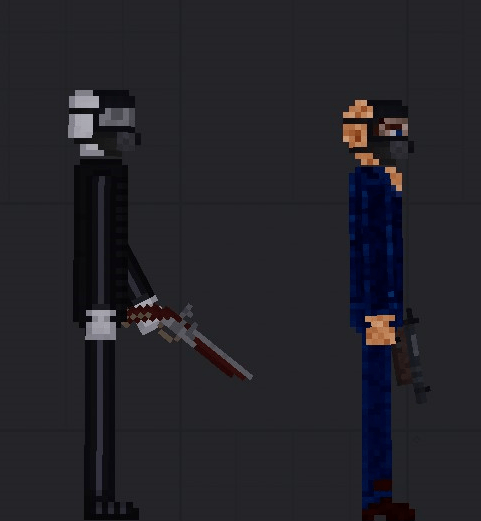
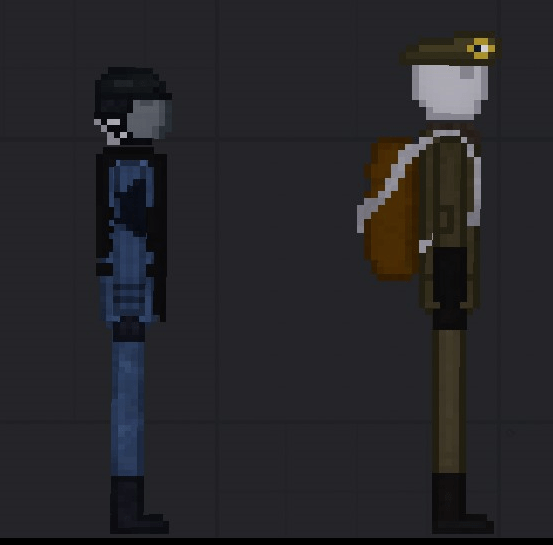
My favorite go-to relaxing game now, especially after I’ve discovered the massive and excellent mod scene, is People Playground. I of course act out a lot of scenarios-ok, a few types of scenarios, involving the mysterious mad science facility. And here are the “roles”.

Subjects

Represented usually by the default “humans”, subjects are the test subjects who are either being killed in terrible ways (don’t feel too bad for them, they struggle to walk several steps) or rebelling in some form (and usually ending up getting killed in terrible ways).

Technicians

Dressed in work-esque outfits, technicians usually sport some kind of chemical mask. They’re often placed by pieces of machinery, where they operate them and oversee experiments (very, very frequently becoming collateral damage). Unlike troopers, technicians mostly use a min-max arsenal-either finicky destructive contraptions or simple/improvised-type weapons that they built themselves.

Troopers

Troopers are the enforcement arm of the facility, being dressed in various kinds of military uniform and carrying a large variety of conventional weapons. Don’t worry, they always get killed in quantity too.

Commanders

Clad in various types of ornate and/or formal clothing, commanders wield sidearms and direct the “experiments”. However, a field commander is just as vulnerable as anyone else on the playground.

Review: Coup D’Etat

Coup D’Etat

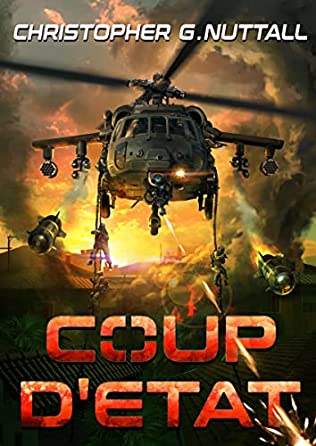
Chris Nuttall’s Coup D’Etat is a book I knew I had to get when I saw the premise. A princess of a Middle Eastern country wrangles western mercenaries to overthrow it in a modern Dogs of War (explicitly cited as an influence, and obvious enough even without the citation)? Sounds good enough. The possibility of a thriller that can be more than just a small group of commandos? You betcha!

The premise is thus very good. The problem is that the execution is not. First, the main character comes across as an uncomfortable Mary Sue, and his opinions along with a more important portrayal cross the line from “hardened realist” to “creep”. But the bigger problem is the setting.

Taking place in a petrostate is a good, and arguably great setting. Having a fictional one so you don’t need to step on real toes and can make it to your needs is another good literary tool this book uses. The problem is that, well…

Say you had a fictional US state in the Old South for your story, and it was portrayed as being composed entirely of corrupt redneck bosses, uneducated and bigoted rural poor, Klansmen, and oppressed African-American sharecroppers who are used entirely as a mentioned prop to show how bad things are without actually being elaborated on. Replace that with the contemporary Middle Eastern equivalents and you have “Kabat”, the oil kingdom the novel takes place in. Compounding the worst true elements of an environment for the sake of fiction isn’t necessarily bad, but here it is. It takes away the stakes by making it look like an irredeemable and worse, dull wasteland. Pretty much any character who isn’t a power broker, trigger puller, or supervillain is used as nothing but a pop-up attraction in the freak show obstacle course.

Granted, you could reasonably argue that I’m overthinking the backdrop for an action thriller. Except this isn’t a very good action thriller. Not just because the prose is only decent at best, but because so much is devoted to the setup and exploring this dubious setting. So this book fails at being a suspense thriller and it fails at being an action thriller. It aims very high and falls very, very short.

Inputs

The analysts who swung and missed regarding the (initial phase of the) Ukraine War and the Russian performance in it still made reasonable assumptions.

  • It was reasonable to assume that Russia’s modernization was deep and genuine.
  • It was reasonable to assume that, having spent a year moving the forces, that Russia would also spend a year planning.
  • It was reasonable to assume that modern weapons on the Ukrainian side (like the few Georgia had in 2008) and/or any degree of qualitative superiority would just increase Russian casualties slightly without changing the outcome.
  • Finally, it was reasonable to assume that Russia would follow its paper doctrine, like it did in Chechnya, Georgia, and in 2014.

Of course, it was also reasonable to assume that even a smashed-by-the-fire-strike Ukraine would still fight ferociously, and that a conventional “victory” would just mean occupying a large country that loathed them. Yet few expected something that would have a Voroshilov instructor saying this:

Yet the most baffling part is how the Russians struggled with the very areas where they had a reputation for being good: Operational planning, concentration of force, and air defense. It would be like the U.S. going to war, and not just struggling, but struggling with logistics and air power. Goes to show that even the best model or most well-thought out analysis is only as good as its inputs.

And one of those inputs, and one of the hardest to actually measure, is personnel quality. It came to me as an armchair theory that “professionalizing” the military without creating more incentives for the middle class to join meant that its recruit base, centered around the rural poor, would actually be of lower quality. Then I saw a piece from the Organized Crime and Corruption Reporting Project that seemed to reinforce this, containing the explicit quote “‘Contract soldiers are getting worse and worse‘” amidst describing training woes. This would seemingly lead to the worst of both worlds-personnel who are more expensive but not more capable than the previous mass-mobilization system.

Review: The Russian Way of War

The Russian Way of War

One of the biggest surprises of the initial part of the 2022 Russo-Ukrainian War was that the former did not fight according to its paper doctrine. At all. Lester Grau and Charles Bartles The Russian Way of War is an excellent attempt at explaining said doctrine for a western audience. As anyone who’s studied them knows, they’ve left quite the paper trail. While sources like the VDV Textbooks Collection can provide them online in Russian fairly handily, this translates them to English.

And it translates them to English well. I have a few quibbles. The biggest is the authors taking an overly optimistic view of vehicle adoption, perhaps taking propaganda sources a little too much at face value. But the rest of it is well-done and evenhanded. The only real “problem” I’ve noticed is that I’ve read so many OPFOR documents that much of what they’re saying is already familiar.

But that’s a good “problem” to have, and I was still enlightened by this book. Every wargamer wanting to do missile-age combat involving the Soviets/Russians should read this.

Review: The Bear And The Dragon

The Bear And The Dragon

Tom Clancy’s The Bear and the Dragon is not just the greatest technothriller of all time, but also one of the greatest novels of all time. With its accuracy and evenhanded portrayal of various cultures, it transcends the shackles of genre fiction to create a new class of literature. Not since Vasily Grossman has a writer truly understood and shown the effects of war in its entirety-

-AHAHAHAHAHAHAHAHAHAHAHAHAHAHAHAHAHAHHAHHAHAHAHAHAHAHAHAHAHAHAHAHAAHAHAHAHAHAHAHAHAHAHAHAHAHAHAHAHAHAHHAHHAHAHAHAHAHAHAHAHAHAHAHAHAAHAHAHAHAHAHAHAHAHAHAHAHAHAHAHAHAHAHHAHHAHAHAHAHAHAHAHAHAHAHAHAHAAHAHAHAHAHAHAHAHAHAHAHAHAHAHAHAHAHAHHAHHAHAHAHAHAHAHAHAHAHAHAHAHAAHAHAHAHAHAHAHAHAHAHAHAHAHAHAHAHAHAHHAHHAHAHAHAHAHAHAHAHAHAHAHAHAAHAHAHAHAHAHAHAHAHAHAHAHAHAHAHAHAHAHHAHHAHAHAHAHAHAHAHAHAHAHAHAHA

-Just kidding, by all accounts it’s even worse than Executive Orders. April Fools!

VTOLs and Airships

Technically speaking, lighter-than-air airships that have the ability to rise vertically just by dropping ballast are VTOLs. But a lot has struck me about how these heavier-than-air contraptions should be, but mostly aren’t, a staple of alternate history the way airships are. Oh, in science fiction they appear in force (see the Orcas from Command and Conquer and Vertibirds from Fallout), but in regular AH, not so much.

VTOL craft run a gamut from simple (conventional helicopters) to ultra-complex. After normal rotorcraft you have so-called “compound helicopters” like the cancelled Cheyenne that have additional horizontal engines to make them go faster. Then you have tilt-rotors/wings like the V-22. After those there are airplanes with dedicated lift engines. Then you have Harrier-style thrust vectored craft. Perhaps the most complex proposal was a giant Beriev seaplane with literally dozens of lift engines.

VTOLs have been technically possible as long as aircraft themselves, but they’ve run into issues. Trading complexity and the problems that come with it, as well as other performance issues, for small advantages (mostly speed for helicopters and takeoff distance) is one problem. Another is stability, with computerized controls being almost necessary. Of course, another design with tradeoffs that has been underused despite being technically possible is…. lighter-than-air airships!

Yet while the presence of airships has become a cliche in alternate history circles, VTOLs have not been. Alternate history is full of Victorian zeppelins, not Vietnamese tilt-wings and jet-copters. If I had to give one reason why, I’d say it’s because of brand appearances. Zeppelins look like something from the past, therefore it’ll be “historic but with zeppelins”, aka alternate history, while VTOLs look futuristic, and therefore writers are more likely to just make a story with them pure science fiction (or sold as such).

Or it could just be genre inertia. But it’s a fascinating subject about fascinating vehicles all the same.

Review: A Pius Stand

A Pius Stand

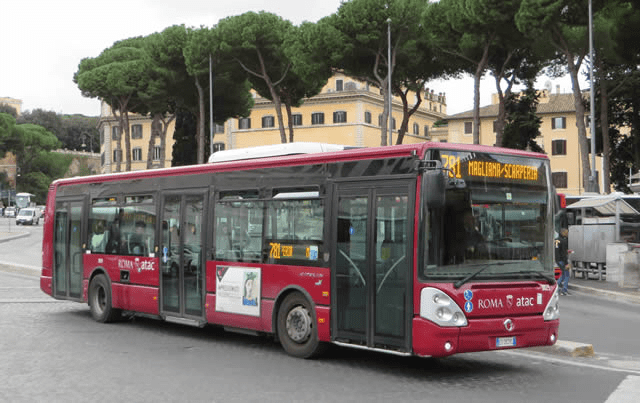
The concluding volume of Declan Finn’s Pius Trilogy, A Pius Stand gets still weirder yet. A giant invasion force in the thousands is organized by the International Community League of Evil. It attempts to storm the Vatican, but its soldiers do so in a type of vehicle that sets the tone for the book as a whole. Instead of lavishly described tanks, the League of Evil rides in…..


these

Don’t believe me:

Instead of walking up the middle of the Via della Conciliazione, they drove up the streets on either side—the Via dei Corridori, and Via Borgo Santo Spirito. And, since bringing in armored personnel carriers was too expensive, it was just cheaper to bring their soldiers to St. Peter’s Square with local buses. With each bus driving down the street side-by-side, this amounted to 140 buses shipping in seven thousand soldiers between both streets.

Once the battle actually starts, it’s a goofy spectacle that’s far more Home Alone than Zulu. This is due to the desire of the main characters to keep it as nonlethal as possible. There are Hollywood booby traps, stun beams, and, most ridiculously, cavalry charges with ex-stuntmen. Meanwhile, a League of Good consisting of everyone from NYPD officers to Israeli commandos to the IRA to mobsters (!) fights back and helps defeat the League of Evil.

Like I’ve said about the first two (comparably) tamer installments, this is not exactly anyone’s idea of a good book. But I’d take something weird like this over a thousand shoot-the-terrorist novels any day.

Weird Wargaming: The Jeep Compass Army

Using variants of civilian vehicles from Model Ts and Rolls Royces in World War I to the omnipresent Land Cruisers and Hiluxes of today is nothing new. But I saw a proposal from an Indian armoring firm (which also advertised the boxiest armored vehicles ever) for uparmored Jeep Compasses, and my brain sparked. After all, compact crossovers like it are so common now, so why not send them to war? This isn’t like the classic jeep, even in its latest form.

Well, there’s obvious reasons against it. It can barely fit five normal-sized people without wargear. Five big soldier men with all their equipment would probably be a nonstarter. You could use it as a pure weapons carrier-but the disadvantages of that would be obvious as well. There are plenty of off the shelf SUVs far more suitable… but I don’t care.

The Compasses would be used by recon/raiding teams, being too small (regardless of how many people you can stuff inside) to be a line carrier. The least bad option, of gun vehicles, involves a crew of three with extra munitions in the (gulp) trunk/back. Even then, the Compass has a max payload of only around 1,100 pounds/500 kilograms. Which would probably have been eaten up by the armoring, but I’ll let it slide for now.

So, here it goes:

  • Command vehicle: Unit commander, driver, comms equipment, aide, maybe lighter machine gun RWS.
  • Personnel Carrier: Driver, 2-4 additional troops, lighter machine gun RWS.
  • Weapons Carrier: Driver, Gunner, Commander, either light missile or heavy machine gun.

The number of vehicles of each type depends on the exact mission. And the Jeep Compass could be replaced by any light SUV. And I do not recommend actually trying these small light SUVs unless you have no other choice.