Soviet-Romanian War: The Chronology

I finally have a set chronology for the course of the Soviet/Romanian alternate history war I keep posting about. And yes, I’m now running three WIP books simultaneously.

Using the classical best-case 60km a day (on average) rate of advance, the Soviets would cross Romania in a little more than a week. Under their 70-100km guidelines for weaker opponents (which it’d definitely qualify as), it would fall in 5 days (too optimistic)[1] However, the same sources drop their rate to 30 km in mountainous terrain, found in central Romania.

The Bulgarians take an outsize share of the casualties. In part, this is because of the difference in both skill and equipment (in 1989, the Bulgarians historically still had T-34s equipping their reserve formations!). It’s also because of them having to cross the Danube opposed, never an easy task.

Bucharest, with its population of 2 million people, is not initially stormed in full. Instead it’s surrounded, left for the Bulgarians to keep encircled, and squeezed while the rest of the country is overrun. In around two weeks at absolute most, it is.

In a nod to the Gulf War, BARCAPS are placed to keep the doomed RoAF from escaping to Yugoslavia…. but the majority of planes that make it across due so to Hungary, the longtime rival, instead.

The stumbling block I had because of how much it depends on the story is what would happen to Ceausescu. Whether he successfully escapes, tries and fails to escape, gets couped, or killed/captured by the Soviets (keeping in mind he’d be very old and was in terrible health already in 1989). Of course, now I’ve found a solution that I can work into the plot…

Regardless, it ends in considerably less time than the current Russo-Ukrainian War has already been going on for (which is why I feel comfortable posting this now.) Using MCOAT with variables and unit sizes that I feel are close enough, casualties amount to:

  • Union of Soviet Sovereign Republics: Circa 3,500 killed, 14,000 wounded to varying degrees.
  • Bulgaria: Circa 6,500 killed, 26,000 wounded
  • Afghanistan: Circa 640 killed, 2,900 wounded
  • Romania: Circa 47,000 killed, 131,000 wounded [around a quarter of forces deployed at least hurt!]

These calculations assume nine days of high-intensity combat. Bulgarians and the Basic Forces divisions would take a large share compared to Mobile Corps with better armor, equipment, and medicine.

The result is a regime installed made up of local collaborators and those with some ties to Romania. Occupation duty is largely left to the Bulgarians and Afghans. Although prewar Romanian doctrine called for guerilla fighting, there isn’t terribly much stomach for it from the apathetic, shell-shocked population. Much of Romania’s population flees during and after the war, primarily to Hungary and beyond.

And out of it emerges, among other things… a mystery. Or several mysteries….

[1]The coalition managed a rough 45 km a day in the Gulf War, against a weak opponent in open terrain, and 30 km in the conventional phase of the Iraq War, with a pause and while facing the rougher areas of Iraq itself.
Review: The Iraqi Army

The Iraqi Army: Organization and Tactics

The NTC special text dubbed “The Iraqi Army: Organization and Tactics” is a valiant attempt at quickly trying to adapt to a different enemy. While the Iraqis used lots of Soviet equipment, their actual doctrine was more British-based on paper and often varied from both (usually for the worse). Just all on its own, it’s a fairly conventional and standard OPFOR document. But I find the context incredibly fascinating.

Like in Lester Grau’s much later The Russian Way of War, a tightrope had to be walked between the observed performance and the theoretical doctrine. Given the latter country’s vast paper trail and its known obsession with quantifying everything, separating the two was/is an easy task. As is/was noticing when theory inevitably diverged from practice, from Grozny to Hostomel.

Here, not so much. The Iraqi Army was notoriously slapdash, so the challenge was even greater. One example I like is that an Iraq War wargame supplement even told the player not to try and use any kind of standardized formation for them at all (!). On the more important doctrine, it acknowledges the flaws shown in the war with Iran, but cautiously and wisely goes with what can be paraphrased as “This may have been an aberration, treat them as a mechanized force worthy of their equipment”. That in many cases they turned out not to be showed the importance of assuming strength rather than weakness.

As a primary source, this is a very interesting snapshot. Plus it’s in the public domain and available readily now.

Even Cheapies Are Expensive

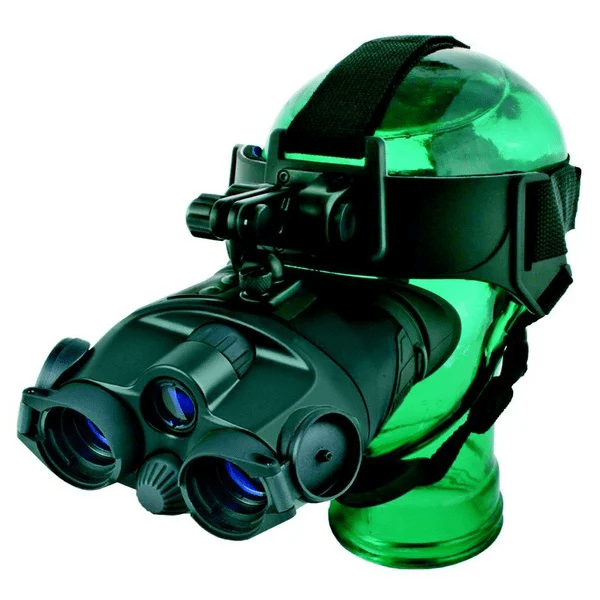
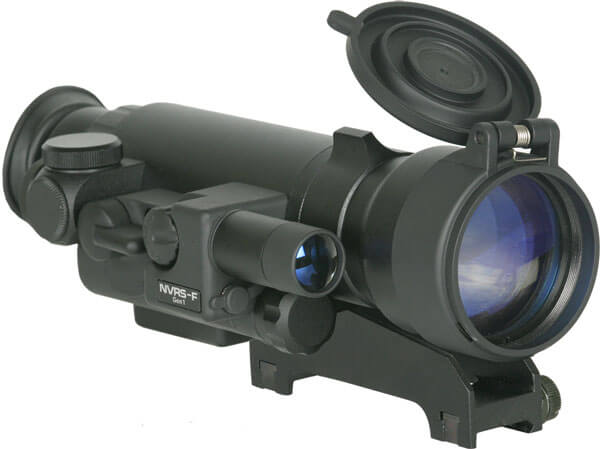
So take these cheapie eastern night vision division devices: Good for a range of 150-200 meters depending on context, around $700 a pop. Both goggles/binoculars and rifle scopes for different contexts.

Yukon Tracker
Yukon NVRS Scope

To equip the line personnel (defined here as those in the actual fighting regiments/brigades) of one small division in the absolute most oversimplified fashion would be around $7-10 million, depending on the exact size. Getting around 5,000 sets, but then there comes the hard part: Maintaining 5,000 sets, keeping track of 5,000 sets, making sure that those 5,000 sets aren’t lost (via honest or dishonest means…), and so on.

Now apply this to almost any even slightly expensive piece of military equipment and you can see why, for instance, Egypt still issues its draftees equipment left over from the Yom Kippur War. That’s an extreme example, but you can see how even the individually “cheap” stuff can be expensive, particularly for less funded armies. And you can see both the political and military advantage of reserving such a thing for “elite” units if one has no choice but to only acquire a limited number of said items.

And you need a lot of stuff, to the point where it’s almost an “I, Pencil” situation. Boots, uniforms, load bearing equipment, helmets, packs, shelters, it all adds up. The bottlenecks can appear where you wouldn’t think they would. For instance, many people know of WWII Germany’s fuel shortages, and historians know of their special alloy shortages, but what a lot of either don’t know is of their cotton shortage resulting in less effective leather load bearing equipment.

A Thousand Words: Alien3 The Gun

Alien3: The Gun

Based off the ugly duckling of the Alien franchise (infamous for killing off the beloved non-Ripley cast of Aliens, for starters), Sega’s Alien3: The Gun was an arcade lightgun shooter a la Revolution X. Unlike that “how do you do fellow kids” game, this actually manages to be atmospheric. The visuals match the movie’s themes well, and the music is excellent.

In fact, this is the rare game that manages to have its cake and eat it too. Alien properties, following in the wake of the second movie, have this tendency to turn xenomorphs into uglier Koopa Troopas, being generic expendable enemies. (The game Alien: Isolation was a deliberate reaction to this trope). Naturally, a light gun arcade game can only do that… but it still manages to be chilling and foreboding too.

Then there’s how the action is jury-rigged into the movie plot. The player controls an anonymous marine who somehow ended up on the doomed Sulaco and goes through all the parts of the actual movie. There are robots, including a giant tank. Despite there being hordes of xenomorphs, the real one from the actual movie is inexplicably more durable as a boss. And finally, the last boss, in a game full of hideous monsters is….. a human with a flamethrower. It would be annoying in other contexts, but here it’s endearing.

This is the rare quarter-muncher with class and poise, and a pleasant surprise from a genre with low expectations.

Review: Siege

Siege

Edwin Corley’s Siege is a 1968 thriller with a bizarre premise. In many ways it’s like the ahead-of-its-time version of Mike Lunnon-Wood’s Dark Rose. Except everything the much later Dark Rose does right, this does wrong.

The premise here is that Black Power militants are holding Manhattan hostage so that the American government will give them New Jersey as a new homeland for African Americans. As a New Yorker, I am obligated to bash Jersey, but I will suppresses the urges here. This makes it seem like the book would be wacky. But it’s actually not. It’s very dreary and sometimes even ugly.

First, the obvious issue. You might think a cheap thriller from 1968 would not be the most progressive or racially sensitive novel. And you would be right. But even by those low standards, the racial content becomes outright uncomfortable too many times here. Second, even leaving that aside, the book is terribly paced. Like Richard Rohmer, it’s just mostly meetings and plans, and the competence of the characters changes on a dime. Skip this book. It’s not worth it.

A Confession About TDGs

I have a possibly unpopular confession about tactical decision games. I’m not the biggest fan of them. Now, don’t get me wrong, I have no problem with them existing and I can definitely see their use. It’s ironically not in spite of, but because of my armchair enthusiast status that I’m somewhat wary of them. From the perspective of someone who isn’t potentially doing them in real life, it feels like couch coaching. You’re sitting on the couch telling the sportsball player to sports the ball in the right way, when you have past school experience at best.

And that of course assumes there is one right way. One thing I like about John Antal’s Choose Your Own COA-Adventure books is that doing counterintuitive things like charging up the middle can sometimes work.

That being said, it’s less a “down with TDGs” and more “I should like them more than I do”. Plus I’ll admit that I have a soft spot for converting fictional battles/actions into TDGs with just the right amount of modification. While it’d be outside the scope of a “TDG” per se, my dream is to do a simulated reenactment of Iron Eagle (imprisoned pilot, generic Middle Eastern OPFOR) using realistic mechanics and seeing what assets are needed to save Col. Masters.

Review: McNamara’s Folly

McNamara’s Folly: The Use Of Low-IQ Troops in the Vietnam War

Involving applicants and draftees who would previously have been rejected, Project 100,000 was one of the least-covered but most horrendous parts of the Vietnam War. Hamilton Gregory, who served along multiple “entrants”, writes one of the most scathing and personally touching history books in McNamara’s Folly. I say “personal” because I have some mental conditions, and growing up, went to school with others with traits very similar to those described in the book. To send these people into battle, whatever one thinks of the Vietnam War as a whole, feels particularly wrong-as did the theory that military service would make them better.

Project 100,000 was done mostly to avoid tapping into a National Guard/reserve force that came from a wealthier and more politically sensitive background (only around a hundred National Guardsmen were killed in action in the whole war). Its recruits were killed in action at a rate three times greater that of serving soldiers as a whole. Officers of all ranks hated the program, and their reactions ranged from trying to steer the “Moron Corps” (or less nice terms) people into the least dangerous areas to having them be the point man on patrols because of perceived expendability. Gregory is clear to point out that he could not find any confirmed cases of Project 100,000 recruits being deliberately executed by their compatriots to prevent their ineptitude from resulting in more deaths, but the constant rumors are telling.

Weaving personal experiences (such as one particularly chilling story of a fellow recruit who didn’t even know that the Vietnam War was happening when he entered boot camp) with scholarly research, this is an excellent recounting of a project that benefited no one, save for maybe the North Vietnamese.

Review: Ice and Monsters

Ice and Monsters

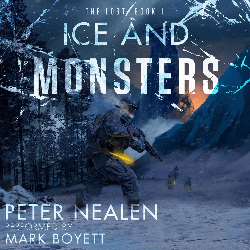
When I saw that Peter Nealen was doing an entry in the same “Wargate” military isekai series as Forgotten Ruin, I knew I had to instantly get it. So I did instantly get Ice and Monsters. It has the same basic concept as Forgotten Ruin, only the deliberate expedition gives way to an inadvertent gate transport, as recon marines on an exercise near Norway find themselves in a Norse-themed horror fantasy world. It also has the same basic strengths-and weaknesses.

The strengths are that the action is good and the modern forces weaknesses and vulnerabilities are emphasized instead of their capabilities and advantages. The weaknesses involve not taking advantage of the potential for worldbuilding in favor of just an artificial swarm of trash mobs. What’s grated upon me after seeing it the second time is the nominal commander being a cross between a Gorman-style out-of-his-depth boss and a “we need to talk things out” nebbish. As the narrator even admits, you should have to see what local ties you can forge when severely outnumbered.

But nope, the captain is clearly duped by the Evil Magic Viking one-dimensional savages from the get-go, and all hints of moral ambiguity are tossed aside once the protagonists find a set of imprisoned “good guys”. How convenient! Yes, it’s a cheap thriller in what’s openly stated as an Adventure Friendly World. But a little more worldbuilding would go a long way.

Also there’s a personal stylistic nitpick, which is that Nealen clearly is comfortable writing in first person when I prefer his third person thrillers. But I kind of expected that. This is a decent cheap thriller but it still could have been better with just a bit more thought and finesse.

Review: Building The Tatmadaw

Building The Tatmadaw

Likely because it’s lacked the direct confrontation with a major western power that North Korea or Middle Eastern states have had, Myanmar is one of the more forgotten and undercovered of the militarized pariah states. That military dictatorships are not exactly known for their openness and transparency doesn’t help things. Thankfully, Maung Auyng Myoe has risen to the challenge with Building The Tatmadaw.

The often murky and convoluted history of the military, as well as the brutal but often underreported internal wars, is shown in depth. As is the Tatmadaw’s force structure and conventional paper doctrine. For the former, it follows (at least as of the writing of the book) a common in Southeast Asia pattern of having “regional forces” tied to a certain area and mobile reaction forces (known here as “light infantry divisions”) that can travel where needed. Regarding the latter, Myoe’s description comes across as basically a Light OPFOR right out of Central Casting. The picture is that of an infantry-heavy force where advanced and heavy equipment is present but not dominant, and where the strategy against an external opponent consists of fortifications and irregular tactics to counter the material disadvantage.

Published in 2009, this is bound to be outdated, especially given the massive tumult that has happened since then (the “thaw”, the anti-Rohingya campaign, and the military re-takeover). But as always, that’s not the author’s fault. I did notice a few slip-ups and a bit of clunkiness when talking about specific military issues, but none of those are very big or bad. If you want to learn about the Tatmadaw, this book is an excellent resource.

Weird Wargaming: The Soviet-Romanian War

If you want to use small-unit wargames in my never-was draft percolating of a futuristic USSR deciding to finish off a surviving Ceausescu, some basic guidelines. Obviously, it’ll depend on the exact ruleset, but here’s the basics:

Union of Soviet Sovereign Republics

The USSR, under a Sovereign Union that in real life got scuttled by the August Coup, follows the 1990s GENFORCE “Mobile Forces” concept. Which is to say a multi-tier force. The “Basic Forces” divisions resemble slightly better late Cold War ones. The Mobile Forces ones have more futuristic equipment, better body armor/night vision, and substantially better training.

Mobile Forces battalions are organically combined arms mixed. APCs/IFVs are three to a platoon with each squad having a magazine LMG and rocket launcher. Company weapons platoons have lighter ATGMs and belt/tripod GPMGs. All Mobile Forces mechanized battalions have a large number of organic 2S31s (or Nonas for less-equipped formations).

Given the terrain, mountain formations have been plucked and sent in. GENFORCE mountain brigades are a four-infantry-one-tank battalion setup with supporting equipment suited for high altitudes (ie, lighter and higher-angle artillery). They also have a separate APC battalion that can be used to motorize if the terrain is appropriate. The one historical Soviet mountain brigade was inherited by Kyrgyzstan and consisted of two BMP and two soft-skin battalions with some attached cavalry and pack animal units.

Soviet Allies

The main contributors to the Soviet effort are Bulgaria and the stabilized Afghanistan. The former mobilizes to its full ability, which means it runs the gauntlet from “1980s NSWP” to “T-34s and World War I heavy artillery” (hey, if it can shoot and make a big explosion, it’s still worth something). The latter contribute a fairly standard BTR-equipped motor rifle division and numerous commando units.

Romania

Romania has a regular army with a degree of military modernization that it lacked. While select units have SRBMs based on foreign civilian sounding rockets, bespoke grenade launchers, and more (comparably) advanced tanks like the bizarrely shaped TAA, others are bottom of the barrel. All units should be mostly low quality, but some (particularly Securitat irregulars) will have better morale than others if applicable.

Organizationally, most should resemble lower-tier eastern forces.