Review: Soviet Era Airliners

Soviet-Era Airliners: The Final Three Decades

In many ways, Aeroflot mirrored the USSR itself. Its breakup in 1991 scattered the massive airline’s assets across all the independent republics. Christopher Buckley’s Soviet-Era Airliners: The Final Three Decades tells the story of what happened to all the “Classics”, “Crusties”, “Carelesses”, “Clobbers”, and more. While the collapse of the USSR and the failure of its aviation industry to make a competitive product caused its new-build civil aircraft industry to fall apart instantly, there were lots of surplus planes around.

This book does a great job showing most of their fates. There’s lots of details and even more excellent photographs. If you like civil aviation at all, this is a great book. I was curious to see what happened to these flying trilobites, and now I know.

Review: The Machine That Changed The World

The Machine That Changed The World

The product of a large MIT study of the auto industry, The Machine That Changed The World attempts to tell the story of “lean production”. The two other production types of motor vehicles mentioned in the book are obvious: Handmade/custom “craft production”, only used for a handful of low-unit firms, and classic assembly line “mass production”. But what is “lean production”? This was and still is a hard question to answer. But in its attempt, the book is an excellent study of the car industry.

One hand, this is a masterpiece in many ways. It’s a very technical but also very accessible study. It shows the difference between the older and newer ways of auto production very clearly. And its anecdotes are good in and of themselves.

But it also has some pretty serious flaws. This book is not only dated, but also was released at the absolute peak of the Japanese market bubble. So its veneration of Japanese production when the industry had a huge tailwind and was yet to experience a massive stress test needs to be taken with a large quantity of salt.

That being said, while not the most definitive book on auto production, it’s still a great historical resource.

Review: Confrontation

Confrontation: The War With Indonesia 1962-1966

Peter van der Bijl’s Confrontation is a military history of the four-year small war known as the Konfrontasi. It goes into extremely military detail. What’s not to like? The answer is, surprisingly, a lot. This isn’t really a bad book, but it is a flawed one.

The first flaw comes from the nature of the war: It really wasn’t much of one. It was more a political stunt by Sukarno than anything else, and the actual service chiefs did the bare minimum to support it. This isn’t the author’s fault, but his priorities are. There’s less of the politics (though they’re still present) and more of firefights in the jungle that blend together (almost always ending with “better-trained Commonwealth troops get the better of worse Indonesians”).

The second comes from the author’s biases. There are a lot of rants about journalists, especially journalists covering the Troubles, which feel kind of out of place. Worse is the absolute fawning hagiography of the British and Commonwealth armies. This is accurate in terms of specifics vis a vis the Indonesians, but still gets annoying, as does the very British slant of “unlike you knuckle-dragging Yanks, we won our jungle war” without noticing the very different context of Malaya. Finally, there’s no real attempt to explore escalation counterfactuals beyond just “The Indonesian air force and navy wasn’t very good”.

This ultimately comes across as just a series of jungle warfare vignettes. It’s not the worst book about its conflict, but it’s not the best and could be much more.

Review: Shadow Strike

Shadow Strike

In true Israeli fashion, the country’s leadership stayed publicly mum when a building in eastern Syria mysteriously exploded on September 6, 2007. Ten years later, they announced what everyone already knew-they had bombed and destroyed a Syrian reactor building. Yaakov Katz proceeded to write Shadow Strike, the story of the operation and its lead-up.

Previously, I had regarded the operation purely in terms of its anticlimactic execution. Like so many other times since 1948, the Israelis came, they bombed, they conquered. For the sake of secrecy, the site of the North Korean-supplied reactor had no defenses around it. But Katz tells the story of how a combination of flukes (getting a Syrian official’s laptop that showed very well what it was), politics (in Jerusalem and Washington), and urgency (the reactor had to be destroyed before it went critical) and in the process, makes it far more intriguing then the tip of the iceberg.

The reactor, unlike Osirak, was optimized to produce plutonium for weapons, and getting it operational would have cleared the biggest bottleneck to nuclear warheads. While no reprocessing or warhead assembly buildings were found, those are significantly easier to hide.

This has to rank as one of the lucky fates of history. I do not think Assad would have launched a first strike-his family did not survive by being foolhardy. And even with the bottleneck cleared, there were still more obstacles to actually making a bomb. But knowing that the Syrian Civil War beckoned, having a hot reactor running during it-and one of a more rickety design than the heavily shielded ones at Enerhodar, is a nightmare that was averted.

Review: The Rhodesian War

The Rhodesian War: A Military History

The subject of Rhodesia and its war is dominated by uh, “iffy” sources that I shouldn’t have to explain the problems with. Thankfully, among these strides a beautiful unicorn: Moorcraft and McLaughlin’s The Rhodesian War: A Military History. Originally released not long after the war’s end and Zimbabwe’s creation, it recently got an updated edition on post-war developments.

What this is is a very evenhanded, very detailed look completely devoid of “Fire Forces! Selous Scouts!” “Shorts!” “Be a Man Among Men!” Soldier of Fortune romanticism. It doesn’t hesitate to look at the negatives of the guerillas (and, in the updated edition, the Mugabe regime), but it’s unsparing in its blunt assesment of the minority government: Rhodesia was doomed from the start. The British knew it. Apartheid South Africa knew it, which is why they tried to twist Rhodesia into stepping aside in favor of a moderate African government, rather than face a radicalized one on their border that would develop from a victorious war. I don’t think it’s an exaggeration to say that even South Vietnam and 2001-2021 Afghanistan rested on vastly sturdier foundations than Rhodesia did.

The Rhodesians had no concept of war as a political entity and were only good at leveraging limited resources in tactical operations. Even those were aided by weaker opponents (Rhodesians themselves had said that if the guerillas had been as astute in military craft as the Vietnamese ones had been, the war would have been lost much sooner), and said opposition was becoming better as the end of the decade neared.

This is one of the best-single volume military histories I’ve read. It’s also a great antidote to noxious internet fandom surrounding a country that simply did not deserve it.

Review: The Burma Wars

The Burma Wars

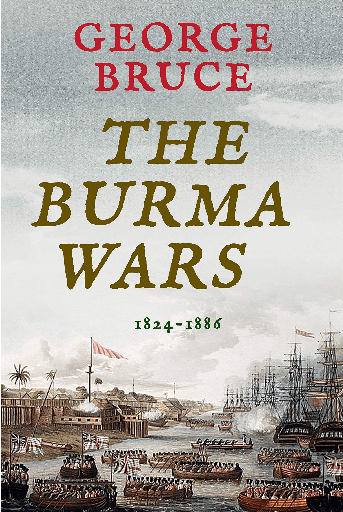
Because Myanmar/Burma features so prominently in my current novel draft, I figure I’d look at George Bruce’s The Burma Wars , a history of the British conquest. There were three large Anglo-Burmese wars, but Bruce mostly concentrates on the first. This is understandable, as the latter two were uninteresting squashes.

Bruce is every bit the Empire fan you’d expect a British pop-historian of the 1970s to be, but he still gives the Burmese credit when due. They were comparably armed, had a knack for building fortifications quickly, and the Anglo-Indian force that went against them was logistically troubled and questionably led. And yet, the British still eventually won, and it only got better/worse from there.

I wouldn’t make an old piece of popular history the sole source on any big historical event, but this at least made for a good starting point. I’m glad I read it.

Review: US Narratives of Nuclear Terrorism

US Narratives of Nuclear Terrorism Since 9/11

Because of my current “itch” for material involving nuclear weapons, I knew I had to read Liverpool University professor David Seed’s US Narratives of Nuclear Terrorism Since 9/11. In spite of its title, this covers material written long before 2001. As I love highbrow analyses of lowbrow fiction, I dug deep into this book.

Doing more than just digging into stuff like The Sum of All Fears, Seed in fact wades through the Augean Stables of fiction that makes up what I’ve dubbed the “shoot the terrorist” subgenre. To have read so many books of that nature seems astounding even to me, who loves cheap thrillers. Some are books that I’ve read from big names like Tom Clancy and Mario Puzo (Fears and The Fourth K). Some are from series that I’ve heard of (like SEAL Team Seven). Others are extremely obscure and unknown to me prior to seeing Seed’s compilation.

This isn’t perfect. At times the book gets a little too stereotypically “academicese” in it writing, and there are the occasional typos here and there. And while it sounds like a clickbait video, I’d have loved to see someone with more technical knowledge critique the plausibility of many of these scenarios. Seed tries and often does a good job, but an actual nuclear expert could probably do better.

But it’s something very near and dear to my heart, and as a review of thriller fiction, I remain in awe of this smooth narrative. Where else could I hear of books like Thomas Fillinger’s Chameleon’s Shadow, where Seed mentions the following plot point in a deadpan fashion:

“Detroit is destroyed when a nuclear bomb detonates by accident, but this proves to be a sideshow from the main search for the leader of the conspirators, who are all depicted as stereotyped fanatics.

It’s plots like that that make me love my reviews. And this brave struggle of a book has warmed my heart. I mean, even I probably couldn’t make it through that many “shoot the terrorist” novels without gaining an insatiable urge to lick the Chernobyl Elephant’s Foot. It’s not Seed’s fault, but so many plot elements repeat throughout his summaries: Warheads stolen by/sold to the antagonists and the dreaded “suitcase nukes” are two of the most common. Granted, this comes with the cheap thriller territory, and these kind of books succeed or fail more on execution than concept, but still.

There are definitely a lot more terrorist nuke books than conventional WW3 books, and this does a great job covering them and (however accidentally) showing the different subgenres of thrillers.

Review: On Nuclear Terrorism

On Nuclear Terrorism

Michael Levi’s On Nuclear Terrorism has been the best book I’ve read in some time. In fact, of all the books and papers I’ve read on this topic, it’s arguably the greatest. Levi takes a holistic approach, using the analogy of a sports team where trying to judge each component in isolation falls short. Although he uses baseball when football is a much better analogy. Oh well.

The decision to look at the big picture as well as noting the issues that alarmist worst-case analysis brings are relevant to much more than countering nuclear terrorism. He also turns “the terrorists only have to succeed once” statement on its head by pointing out that while true, it can also be said that “they have to succeed every step of the way, while their opponents only have to succeed at one”. This sort of reasoning is welcome whatever the subject.

Not that this is a brief overview-it goes into a lot of detail on things like the uses and limitations of scanning detectors and does a lot of detail on gun-type weapons (implosion ones get less effort, because given the issues states have had, non-state actors going for them is arguably pushing it). And he even goes into psychology as well, which is important for the goals of irregular groups.

The impression I’ve gotten from this and other sources is that nuclear terrorism can be compared to Y2K. Y2K was mistakenly perceived as an overblown panic when in reality it was a legitimate issue largely solved by a massive effort when the new millennium rolled around. Similarly, while the threat of even a radioactive Beirut/Tianjin/Port Chicago-level blast (to say nothing of even a Little Boy-level bomb) is a legitimately frightening one, the similarly massive efforts to work against it have (to date of course) deterred even attempted nuclear terror attacks. The Aum Shinrinkyo cult marked the only known attempt at a substantive irregular nuclear program, and it failed despite numerous factors in its favor (lots of money, able to operate openly pre-chemical attacks, and access to Russia at the depths of its 1990s desperation).

Bad sports analogies and occasional clunkiness aside, this is an excellent book.

Review: Revisiting South Africa’s Nuclear Program

Revisiting South Africa’s Nuclear Program

Apartheid South Africa built a handful of nuclear bombs before the ANC government dismantled them. As a result of that revelation and transparency, it provided an interesting look into a a field that is understandably quite opaque otherwise. David Albright and Andrea Stricker’s Revisiting South Africa’s Nuclear Program show it in depth.

Altough this is a technical nonfiction book, Albright and Stricker nonetheless write well, and it’s quite accessible to non-nuclear physicists. The creation, developmental struggles, warhead production, and removal of South Africa’s nuclear weapons is all covered, and there are several interestingly unique factors about it that the book provides.

The first is a technical tidbit. South Africa went with a conceptually simpler gun-type device in the style of Little Boy. However, their device was small enough to fit on a Raptor glide bomb carried by a Blackburn Buccaneer, and there were (preliminary) plans to boost it to around a hundred kilotons using a special pellet. As most powers have used implosion devices, South Africa’s experience shows how far the basic gun-type can be pushed.

The second is that, unlike other nuclear programs, South Africa’s was comparably well run and efficient. The pragmatic choice of a gun-type was one of the good decisions that it made. And it still took several years in peacetime while running into bottlenecks-most notably the enriching of uranium.

For those interested in the relevant subjects, this book is thus a good read.

Review: The Russian Way of War

The Russian Way of War

One of the biggest surprises of the initial part of the 2022 Russo-Ukrainian War was that the former did not fight according to its paper doctrine. At all. Lester Grau and Charles Bartles The Russian Way of War is an excellent attempt at explaining said doctrine for a western audience. As anyone who’s studied them knows, they’ve left quite the paper trail. While sources like the VDV Textbooks Collection can provide them online in Russian fairly handily, this translates them to English.

And it translates them to English well. I have a few quibbles. The biggest is the authors taking an overly optimistic view of vehicle adoption, perhaps taking propaganda sources a little too much at face value. But the rest of it is well-done and evenhanded. The only real “problem” I’ve noticed is that I’ve read so many OPFOR documents that much of what they’re saying is already familiar.

But that’s a good “problem” to have, and I was still enlightened by this book. Every wargamer wanting to do missile-age combat involving the Soviets/Russians should read this.