Review: The Voroshilov Lectures

The Voroshilov Lectures

The Voroshilov Academy was/is one the most prominent Soviet/Russian military training centers of all time. In the late 1980s, a peek behind the curtain emerged. An Afghan officer named Ghulam Wardak attended the academy in the mid-1970s and carefully transcribed the courses. Wardak later fought with the mujaheddin and escaped to the United States, where staff from the US Army’s Soviet Army Studies Office eagerly edited and published his notes. Since its publication, the CIA’s FOIA reading room has declassified similar lectures and studies from there that support Wardak’s interpretation of them.

In three volumes (two on strategic and one on operational combat), the lectures go into detail about how to plan and execute a Soviet campaign in 197X. Most importantly, they occurred in a time period that finally allowed for the discussion and making of purely conventional plans. The lectures and planning do not take the naive belief that a Fuldapocalypse would stay conventional from start to finish, but they do view non-nuclear war as important. (Of course, with Soviet conventional superiority at the time, they’d have a vested interest to keep it non-nuclear as long as possible…)

Obviously much of these lectures need to be taken with a pile of salt. There’s obvious politically uh, slanted passages and some of the advance rates seem a little too optimistic. But these are nonetheless an invaluable resource for the wargamer and/or conventional World War III historian. As detailed Soviet primary sources, they excellently fill a previously blind spot in knowledge.

Review: Super-Squad

Super-Squad: The Now Missing Component

It’s time to look at one of the most prolific military theorists: Vietnam veteran H. John Poole. Poole’s recent Super-Squad is a detailed call for improved light infantry tactics and a different squad organization, along with a historical study of various opponents from World War I to the present.

I may have never, ever encountered a “mean 51%” nonfiction book like this one. Poole is an infantry veteran who’s walked the walk. His desires are sincere and heartfelt, and many of his goals are valid or at least understandable. Yet there’s just so much else wrong in presentation and even theory here.

The book could probably be around half of its length and work with a concise message of “This is my proposed squad organization. This is how various limited-resource opponents across history used maneuver and skill to counter their lack of direct resources. You cannot always assume superior resources, so this is vital.”

Instead, it’s a long rambling bunch of anecdotes and illustrations, often from old field manuals. Anything that shows the “eastern army” succeeding is trumpeted. Anything that shows them failing is quickly glossed over. The writing lacks humility, to put it mildly. There are statements like “no combined infantry/tank attack has succeeded except on open terrain”, which is simply untrue. The ridiculous lumping of every possible Asian opponent into generalized “eastern armies”, combined with an obsession with ninjas (really!) doesn’t exactly help much. Neither does (especially if you want change) the constant bashing of the existing American military, something that will put most people on the defensive.

This has to be understood as being like Curtis Lemay calling for a giant fleet of super-bombers dropping souped-up nuclear weapons. If your experience involves a hammer, everything looks like a nail. Everything. It gets kind of repetitive and even a little annoying at places.

I don’t regret getting this book. As an “OPFOR light infantry tactics and case studies as written by your kooky old granddad who’s convinced he can save the economy through multi-level marketing” book, it (and many of Poole’s other books, given their similarities) works for what it is. Just don’t really expect it to be anything more.

Review: Tehran’s Wars of Terror

Tehran’s Wars of Terror and Its Nuclear Delivery Capability

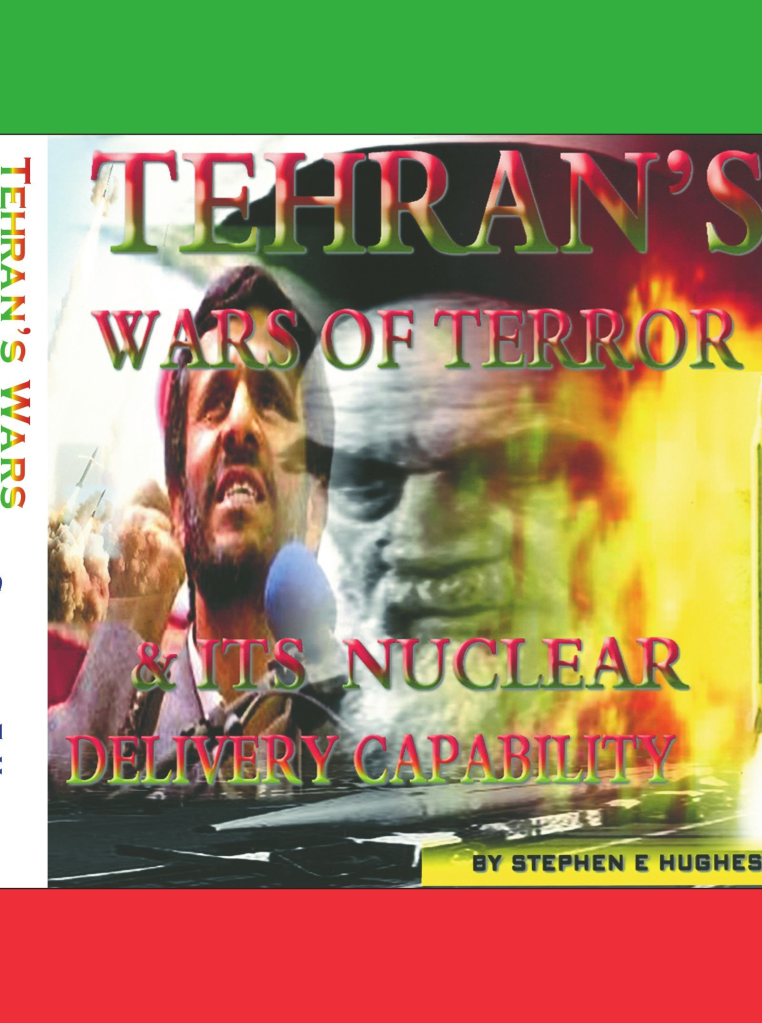
The worst book cover deserves to be seen in all its “glory”

Stephen Hughes’ The Iraqi Threat was a letdown. This is even more of a letdown. Trying to move through the smoke of the infamously secretive post-revolutionary Iranian military (with their five million new systems that appear in every new parade) would be a worthy and very useful endeavor. This not only fails in that regard, it acts like it doesn’t even try.

First off, I’m a “you can’t [usually] judge a book by its cover” type of person. I can understand having a bad cover or a crude cover. But this is an exception, because the cover of Tehran’s Wars of Terror is, without a doubt, the worst I’ve seen of any military reference book. And one of the worst I’ve seen period.

The cover is perfectly representative of the absolute slapdash mush inside. The Iraqi Threat at least had a central theme that it followed. This is just a rambling collection of various articles that are connected with only a vague link to Middle Eastern warfare. It doesn’t even work as a basic “know your enemy” primer because it’s so gargantuan and aimless. I feel surprisingly confident in saying that it’s quite possibly the worst military reference book I’ve read. And if not, it’s certainly down there.

Review: Russian and Soviet Ground Attack Aircraft

Russian And Soviet Ground Attack Aircraft

Alberto Trevisan and Anatoly Borovik’s Russian and Soviet Ground Attack Aircraft is the latest addition to my collection of technical, diagram-filled books on aviation history. It’s meant to be a comprehensive, picture-heavy catalogue of all the “Samolety Polya Boya”, a term that can be very awkwardly translated to [their definition] “Battlefield Aircraft”. The “Russian” in the title is accurate, as this book also includes World War I and post-1991 designs.

The “Samolety Polya Boyas” in this book range from the famous Il-2 and Su-25 Sturmoviks to low-end propeller planes to high performance edge cases like the MiG-23BN/27s (the proposed but never adopted final upgrade package that included the ability to mount radar pods and refuel in midair warms my Flogger fan heart). It also looks at never-were designs in the same range, most notably the postwar Illyushins, which were victims of technology, doctrinal changes, and being extremely ugly.

Some of the types it does and doesn’t focus on can feel a little arbitrary. While I suppose that’s the perils of dedicating a book to as vague a term as “ground attack aircraft”, I feel obligated to point it. Thankfully their choices never feel too weird or too bad, and I can understand the desire to avoid mission creep.

If I had one quibble (besides a somewhat iffy layout), it’s that there isn’t enough “how” in the book for my tastes. I would have liked to see an Air Battle Central Europe-esque section on the doctrinal “division of labor” between them, helicopters, and higher-performance bombers/strike aircraft, and how it evolved and changed. While I can get information on that from other sources (and/or intuit it based on capability-your slow short-legged ground attackers are not going to be used for deep, well-defended targets if they can help it), it’s still a lacking feature.

But the rest of the book is still great. The artwork is excellent, the list of aircraft covered is very big despite its self-imposed limitations, and the technical detail (especially for paper aircraft with fewer sources available) is surprisingly high. Even without the parts I would have liked, this is still a great resource for a centerpiece of the VVS.

Review: The Afghan Way Of War

The Afghan Way Of War

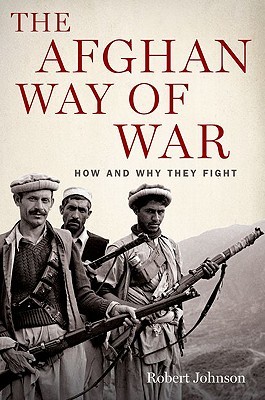
Robert Johnson’s The Afghan Way of War was an obvious buy for me based purely on its relevance to current events. I was expecting a concise military history of that country and got it. But I also got more. The “more” had a few rough spots but was mostly good. As the book was published in 2011, it does not contain the decade that saw massive changes in the war even before the fall of Kabul. But that’s not it’s fault. Anyway, this was an interesting book, and not just because of its subject matter.

From the get go, the book wants to avoid and debunk “Orientalist” stereotypes. Because of this, at times it can get a little too “argumentative”, for lack of a better word. There are some passages that remind me of Stephen Biddle’s Nonstate Warfare in terms of being a little too focused on going “Well, these sources are wrong”. But only a few, and they aren’t deal breakers by any means. That the book succeeds at achieving its goal helps a lot.

And when The Afghan Way of War goes from being “argumentative” to “informative”, it works wonderfully. Johnson avoids not just the “idiot fanatic savage” stereotype, but also its cousin, the “cunning inscrutable super-warrior that the poor dumb lazy westerner cannot comprehend” that the likes of William Lind and H. John Poole like to trot out. The Afghans from the 1700s to the present are shown at their best and worst, never being truly dominant even in irregular warfare but always a threat.

One of the most fascinating and best written sections dealt with the Soviet war in the 1980s. The picture it paints of the mujaheddin there is not a flattering one. They come across as being substantially and massively flawed, and accomplishing as much as they did purely due to external support and the inherent advantages of irregular war on home ground.

Granted, its conclusions are not exactly shocking to anyone knowledgeable. Said conclusions amount to “a country known for poverty and disunity will have that manifest in its military and operations”. And it sometimes dives a little too deeply into supposed motivations (the “why”) when a deeper dive into operations (the “how” ) would have been, at least in my opinion, more useful.

Still, this is an excellent book and I highly recommend it.

Review: Praxis Tacticum

Praxis Tacticum

Canadian retired colonel Chuck Oliviero has released the new Praxis Tacticum. It’s one of those “mean 51%” books, being incredibly erratic. Much of the actual content is not objectionable-ie, “learn to face someone who isn’t a low intensity, technically inferior opponent”. Some of it is stuff even unqualified armchair general me picked up-me being the OPFOR addict I am, I’ve seen journal articles complaining about the rigidity of the OPFOR in practice compared to its flexibility in theory that he states. And some of it, however much I’d disagree with, is at least defensible and understandable. Oliviero is much, much more of a “manueverist” than I would be.

Plus, anyone who wants to simplify documents and instructions into something that isn’t in field-manualese has their heart in the right place.

However, the execution does not come across as ideal. For something aimed at lower-level commanders, it feels far too pretentious and buries the important stuff (stuff like how to do rapid drills and move a unit very quickly without outrunning your supply lines), in a mess of pompous mush. His decision to have a flexible, winning OPFOR (good) turns into an embrace of exercise munchkinism. This also has its heart in the right place (again, an opponent with the ability will seek to disrupt your setup and can often succeed) but I had the uncomfortable feeling that it was just him wanting to show off his supposed genius, crossing the line too often from “spar in an unconventional way” to “spar in traditional boxing and then instantly launch a Masvidal-Askren flying knee to crush your partner before patting yourself on the back.”

And this is the biggest problem. There is a very, very, very obvious barely disguised subtext of resentment that he didn’t get to be in charge throughout the book. High technology is treated with skepticism, unless it’s on tracks. Like everyone, Oliviero comes across as unavoidably biased-but he takes it to extremes.

I would recommend this for enthusiasts or intellectuals who have a full grasp of the context surrounding this book. Yet from my limited viewpoint, I actually would not recommend it to his target audience. It comes across as too slanted and inefficiently written.

Review: The Iraqi Threat

The Iraqi Threat And Saddam Hussein’s Weapons of Mass Destruction

In the run-up to the 2003 Iraq War, Stephen Hughes released an unofficial sort of OPFOR compilation called “The Iraqi Threat And Saddam Hussein’s Weapons of Mass Destruction.” As the intelligence forces of the world found out after the war, getting any kind of accurate information on a country both as secretive and as slapdash as Saddam Hussein’s Iraq was a very difficult challenge. So I can forgive Hughes for any inaccuracies in the book, just as how I can forgive pre-1991 western sources on the USSR for not having information that was only unclassified/found out later.

What is significantly harder to forgive is the layout of the book. It’s, to be frank, a total mess. A lot of the most important parts on Iraqi (conventional) capabilities are lifted from an NTC document but strewn about in a way that makes them less understandable. Likewise for his pieces on Iraqi equipment. And militias. And so on. About the only thing really interesting and coherent is a huge section on mountain formations and defenses, which is applicable to far more than just Saddam’s Iraq.

But that can’t save the rest of the book, which is just too poorly organized to be much good. Even accepting it as a product of its time, it’s still effectively unusable, unlike many other OPFOR documents.

Review: Unflown Wings

Unflown Wings

I was somewhat critical of Yefim Gordon’s book on the MiG-29. Yet for his Unflown Wings, showing nearly a century of never-built Soviet/Russian aircraft, I’m far less so. This is an amazing book about amazing aircraft. It’s rightfully massive, covering every major design bureau.

People looking at the weird “Luft 46” German aircraft often overlook that every country had its similar oddball paper planes. And so it is with this book. With many illustrations, one can see everything from the redundant to the too expensive to the too out-there. It’s a lot to make you wonder what could have been, from the cancelled jet-powered maritime patroller to giant seaplanes to my personal favorite, the overambitious “Backfiretomcat” Tu-148 multi-role fighter.

The very nature of this book means that the issues I had with the Fulcrum one are far less so. Because the aircraft here never actually entered service in any event, it means there’s less need for total rigor and one doesn’t have to be “deep”. Breadth is required for this overview, and it’s very, very broad indeed.

This is a very fun, very thick book, and I recommend it to any aviation fan in spite of its size and expense.

Review: Mikoyan MiG-29 and MiG-35

Mikoyan MiG-29 and MiG-35: Famous Russian Aircraft

The MiG-29 was the last hurrah of the legendary Cold War bureau. Aviation authors Yefim Gordon and Dimitry Komissarov write about it in the extensive Famous Russian Aircraft: MiG-29 book. The book is both a wonderful treat and a bitter “what could have been”. First, the obvious needs to be stated. This is a book for aviation enthusiasts and not a general audience. If you don’t know much about the MiG-29 or military aircraft already, it’s not a good first choice.

But even as a niche in-detail work, it’s uneven. Gordon has a reputation online for not being the most reliable source, but I wouldn’t know enough to comment in that regard. Whatever the veracity, the book is extremely broad, covering each and every prototype, variant, and proposal of the Fulcrum complete with excellent pictures and once-rare photographs. You want to know the exact radar designations? This is for you. You want to know the slight visual differences? This is also for you.

Yet while it’s broad, this book also feels shallower than it could have been. This manifests most visibly in the section on the actual service of the MiG-29. There, it’s a combination of more lists and stuff that I’d already heard about. It was disappointing and could have used a little more doctrinal meat.

Finally, the book feels a little, well, inefficient. It’s a very long impressive paperweight of a hardcover, but its layout and formatting doesn’t look very space-effective. The pictures are good, but their organization isn’t. That being said, take this book for what it is-something meant for serious aviation fans. It’s what you’re getting, for better or worse.

Review: Hitler’s Last Levy

Hitler’s Last Levy

Hans Kissell was chief of operations for the German “Volkssturm” (lit. “People’s Storm”), the infamous last-ditch militia created at the end of World War II. In Hitler’s Last Levy, published in German in the 1960s and translated decades later, he told their story. It’s an interesting look at a horrific footnote.

The Volkssturm was both a desperation formation and Martin Bormann’s attempt at making his own pet army (like the SS was for Himmler or the Luftwaffe ground formations were for Goering). Kissell goes into detail and includes a massive amount of direct primary sources. While this is a work by a German WWII commander, its subject matter makes it at least a little better than the usual “we fought in our unstoppable kitty-tanks until we ran out of ammunition and fought totally cleanly” memoirs. It’s impossible to portray the ragged old men as some kind of super-army, and they had far less opportunity to commit war crimes simply because by that point they were losing. And Kissell doesn’t hesitate to point to their (many) weaknesses.

Because of this, and because of the wealth of primary sources and details (for instance, describing how on paper, some Volkstturm battalions had an organic battery of captured anti-tank guns), I recommend this for anyone wanting to know about them or similar emergency territorial formations. Yes, it’s dated and slanted. But it’s not nearly as bad in those regards as you might think.