Review: SEAL Team Seven Direct Action

SEAL Team Seven 4: Direct Action

directactioncover

The SEAL Team Seven series, however much I enjoyed the first installment, is not the kind of series where reading every book in order is the most appropriate. So I decided on Direct Action for two main reasons. The first is that the summary seemed a little interesting. The second is that it’s the first book after original author William Keith was replaced by another writer under the “Keith Douglass” house name.

So, Lt. Blake Murdock (it’s not quite Blaine McCracken but it’s close) has to lead his SEALS into Lebanon to destroy a plant producing counterfeit American money, fighting Hezbollah and the Syrian Army in the process. The prose is a little clunkier and the action somewhat more extreme than the first book, but it’s still a good cheap thriller.

In fact, this book manages to have its cake and eat it too in a good way. It manages to have its SEALS scything their way through enemy fighters, soldiers, commandos, BMPS, and helicopters while at the same time throwing semi-plausible bits of “friction” in their path to make them earn their mission-and not without loss.

A part of me has “glass half empty” thoughts where I think “what if the big-name technothriller writers did a slightly higher-brow version of this instead of clunking along with an increasingly obsolete Cold War thriller model?” and lament what wasn’t. But another part of me has “glass half full” thoughts where I can just enjoy this well-done cheap thriller for what it is.

Review: War Breaks Out

War Breaks Out

When I got Martin Archer’s War Breaks Out, I was expecting a plodding Cold-War-Turned-Fuldapocalyptic-Hot story. The initial premise and the mediocre experience of the previous book I’d reviewed, Israel’s Next War, made me think that. Instead, I got one of the most crazy and just plain out-there examples of a World War III story I’ve ever read.

  • The timestream got scrambled. There are Eurofighter Typhoons and people who were injured in the Iraq and Afghanistan wars, but at the same time there’s a 1980s WWIII and everyone is using M60s and T-62s. Oh and Belgium has F-15s for some reason.
  • We’re introduced to the main character (who frequently appears in a weird form of first-person similar to that present in Israel’s Next War) immediately. He’s a one-star general who gets a quick promotion worthy of spacesuit commandos. The president decides he’s just that good, and needs a fighter, not those deskbound bureaucrats! (To be fair, this is officially the third in a series with the same main character, but still).
  • Said main character promptly comes up with a bunch of gimmicky tricks and special ops to turn the tide of the impending war against the USSR. These range from tricking Soviet AWACS with mass transponder changes to landing troops with ferries in the Baltic. Naturally, they all work.
  • The actual battle scenes themselves are the least amusing and most clunky and repetitive. Except for something I haven’t seen in a while-the attempted Soviet invasion of Iceland! It’s been a while, Ísland. I missed you!
  • The book ends with one of the most ridiculously blatant examples of “Foreshadowing” for the next installment in the series that I’ve seen. It’s not foreshadowing so much as building a city of giant neon signs indicating the plot point, then causing it to be lit up in a giant fireworks display that’s internationally televised, telling the plot point in a Super Bowl commercial, and then carving the plot point into the moon for good measure.


This was an experience. It’s probably as bad as “World War 1990” in terms of pure writing quality, but I had a lot more fun reading (and reviewing) it. I guess a better example would be an even more rough version of Ian Slater.

Review: Steel World

Steel World

steelworldcover

For BV Larson’s Steel World, I returned to a familiar place-the land of spacesuit commandos. Almost every single value checks out. Dystopian background? Check. The main character is a super-special spacesuit commando in a super-special spacesuit commando unit (in this case, a secret dirty tricks “Legion”)? Check. The main characters use nothing more than power armor and ray guns that don’t seem to really do much? Check. The tactics are iffy and everyone uses Roman ranks? Check.

The only novel feature, besides the use of “rules of war” that are clearly structured to enable the plot, is revivification. However, in practice all it does is remove tension, best summed up by having people -multiple times at that- want to be “killed” for the sake of convenience.

For all my complaining, Steel World manages to dodge the biggest problem with the subgenre. Its training sequences are not overly long, and I was thankful for that. And for all its issues, it’s still readable and fun as a mindless spacesuit commando novel.

Review: Red Storm Box Set

The Red Storm Box Set

James Ronsone and Miranda Watson’s “Red Storm” series ran for six books. The omnibus box set I bought contained the first three- “Battlefield Ukraine, Battlefield Korea, and Battlefield Taiwan”.

This checks all the boxes. Lots of conference room infodumps with generals and leaders? Check. Huge descriptions of everything? Check. Characters whose sole characterization is at best an infodump and (more frequently) at worst a “Steel Panthers Characterization” where they’re just paper placeholders who crew military equipment? Check. Hopping around viewpoint characters around the world with what feels like no rhyme or reason? Check. And the cherry on top is the Hackett-style “city trade” plotnukes, as Oakland and Shenyang go boom.

This is what I thought I’d be reading en masse when starting Fuldapocalypse. Thankfully, it hasn’t been what I actually have been reading. Reading countless non-dry, non-World War III books has allowed me to view this in a better perspective than I had before. In the past, I’d have probably just denounced it with a combination of fire-breathing and eye-rolling.

I still view this as a subpar book-it’s in the awkward, neither fish-nor-fowl area of being too “literary”, gimmicky, and inaccurate in a rivet-county way to be a War That Never Was-style pure play by play while being too bland and disjointed to be an actual literary book. But now I can weirdly appreciate it for trying to scratch a specific itch. My mindset has gone from “this is bad” to “this has flaws and isn’t really my thing.”

If a sort of “Hackett but with some technothriller gimmicks” style book is your thing, you could do worse than this series.

Review: Transit To Scorpio

Transit To Scorpio

scorpiocover

Though published close to fifty years ago, Kenneth Bulmer’s Transit to Scorpio was already almost an anachronism when it was released. Much of what we now know as “science fiction” and “fantasy” was once unified in a type of genre following in the footsteps of the legendary John Carter of Mars, one known as “sword and planet”, involving Earthmen traveling across exotic worlds and fighting with blades.

This book fits that category to a T. 18th century sailor Dray Prescot is transported to the planet Kregen around the star of Antares, where he proceeds to be rejuvenated and made near-immortal, only to be cast loose as he disobeys his masters to aid a beautiful woman, Delia. Cue a book of “planetary romance” (another name for the genre) in every definition of the term.

Transit to Scorpio has a lot of prose that’s sadly familiar even to someone like me who’s only read a bit of the style of the day, being both overwrought and clunky. It also has a plot setup that’s familiar, with almost all of the “science fiction” elements being used to set up the plot and little more. In spite of this, it’s not bad, particularly by the standards of the genre.

Review: The Peace of Amiens

Drake’s Drum: The Peace Of Amiens

drakesdrumcover

A fresh Sea Lion Press Release and the first book in an intended series, Drake’s Drum: The Peace Of Amiens is classic “crunchy” alternate history. Starting with flaws in British naval shells being fixed in World War I and a more decisive British victory at Jutland, the “butterflies” spiral off until a bankrupt Britain throws in the towel in World War II, the Caucasus is overrun and the Soviet economy collapses, and the stage is set for a German-American confrontation (the cover depicts Amerika Bombers striking New York, with the book ending on a cliffhanger).

The book cuts between character vignettes and “pseduo-history”. I didn’t get the most out of the character scenes, as well intended as they were, save for one chilling scene depicting the Madagascar Plan in “action”. Thus like a lot of alternate history, it leans a lot on plausibility.

And here, it does better than many others. I’ll also admit to not being the biggest fan of this kind of genre, but this is how to do it right. First, there’s very clearly a lot of research being done, and it being done in a good way. Second, there’s a sense that a lot of it feels right. There are handwaves like the war outcomes and stumbles like my pet peeve of the pool of American political candidates being too small. But there’s more things that sound right and plausible, especially compared to other alternate histories.

For people who like detailed alternate history, The Peace of Amiens is a treat.


Review: Reflexive Fire

Reflexive Fire

reflexivefirecover

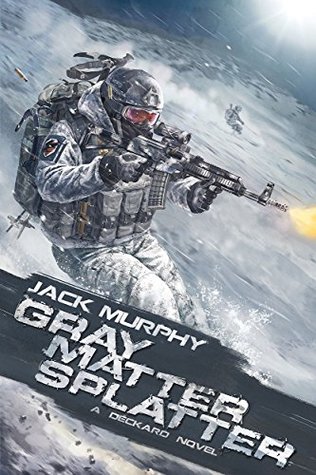
Special Forces veteran Jack Murphy’s Reflexive Fire is a very strange kind of thriller. The low-level action is very well done, gritty and gory with almost the right amount of “semi-plausibility” and “exaggeration” (I learned about Murphy’s books from Peter Nealen’s posts on them, and could see the similarities in the action immediately). The high-level plot is this huge mega-stakes mix of ancient conspiracy theories, and to say it doesn’t fit the best with the low-level action is a huge understatement. It’s like a video game with ARMA’s mechanics but Metal Gear Solid’s plot. There are Blaine McCrackens that have less ridiculous plots and MacGuffins than this.

The pacing is very jumpy, with lots of viewpoint characters (it’s a rare instance of “just a name and nationality” Steel Panthers Characterization in a small-unit action book) and a very long “Herman Melville’s Guide To Building And Training Your Dream Army With The Help Of A Super-Conspiracy” section. There’s some hamfisted politics that don’t really add anything and are ruined by the presence of the super-conspiracy.

That being said, this was Murphy’s first novel in the series, and he demonstrated enough legitimate strengths for me to be forgiving of its many weaknesses. Plus, if I have to choose between a bland middling book that doesn’t stand out from the pack or a zigzagging, “really good in one way, bad in others, and quirky to boot” book that does, I’m choosing the latter instantly.

Special First Anniversary Review: The Sum Of All Fears

SPECIAL FIRST ANNIVERSARY REVIEW: THE SUM OF ALL FEARS

sumofallfearscover

This is it. For the first anniversary of Fuldapocalypse, I felt I had to review something big by a big-name author. And The Sum Of All Fears was not exactly a difficult choice. I felt it had to be Clancy, and I wanted to pick what’s often regarded as his absolute height.

Now, I’m not and have never been that much of a Tom Clancy fan. Even in his Hunt For Red October/Red Storm Rising-era “early, lean” period, I’ve felt he was never more than decent, and that his rise was more about circumstance and being able to tap a national mood than actual standout writing. And his later period (at least from Executive Orders onward) is just bad.

Enter The Sum Of All Fears, between them. It’s 1991, right before the Soviet Union collapses. How does it hold up? Well, that’s a tough question. What bizarrely helps is that judging it by the standards of something like Executive Orders, as opposed to The Hunt For Red October (to say nothing of books by other authors), means that any improvement over that clunker makes it look better. Also beneficial is that The Sum Of All Fears is over 100,000 (!) words shorter.

Comparing the two, they have a very similar structure. There’s a bunch of plot threads and they move forward for hundreds of pages with all the speed and gracefulness of a NASA Crawler making its way through the aftermath of the Boston Molasses Disaster. Then in the final couple hundred of pages or so, the plot becomes vastly more focused, moving fast and much, much more smoothly.

And here’s where The Sum Of All Fears beats out Executive Orders dramatically. The latter’s final act was nothing but a dull, triumphalist stomp. This is a far more somber and unflashy piece with the goal being to stop a war rather than fight one. If I had to pick out a strange analogy, it’s the “peaceful resolution” paths of Undertale or a Fallout game. Jack Ryan being Pacifrisk or a speech-maxed protagonist is more conceptually interesting than him as a cook-shooting action hero or as a president.  Here’s the sharp-tongued analyst doing sharp-tongued analyst things in a way that takes advantage of a character built as a sharp-tongued analyst.

This also has the best villain(ess) I’ve read in a Tom Clancy book, in the form of national security advisor/presidential girlfriend Elizabeth Elliot. In a strange way, I liked that she was just petty, shallow, and wrong in a world of blindly ideological supervillains. She’s also one of the few fictional characters that I could instantly pick an ideal actress for-in this case, Amy Poehler (aka Regina’s mother from Mean Girls).

So was The Sum Of All Fears a Team Yankee-style pleasant surprise for me?

Not really. First, there’s still the rest of the book. The plot threads aren’t as tangled as in Executive Orders, and they fold back into the final climax better (there’s nothing like EO’s useless “rednecks with a bomb” subplot in Fears), but they’re still there and clunking along. The setup portion of the book has its share of out-there plots (The “Swiss Guards For Middle Eastern Peace” is very zombie sorceress ) and axe-grinding political figures. Not to the extent of Executive Orders, but still there.

Second, the book is plagued by what felt to me like what can only be described as self-indulgence, even in the conclusion. There’s the infamous chapter (actually, chapters) devoted entirely to a nuclear bomb exploding, but the descriptions of actually building the stupid thing get a much larger word count than they deserve. The adventures of various submarines, aircraft, and electronics get giant infodumps. That’s to be expected, but what really pushed me over the line to “Ok, you’re going ‘Look how much I know’ constantly ” was talking about the vice presidency, from its initial “loser gets in” to the post Twelfth Amendment ticket system.

In the first act, this contributes to the bad pacing. In the climax, it neuters some of the punch (there’s nothing like going from Denver being nuked to a rote description of something far away). This would have been a good finale to the Jack Ryan series. But it had to go on, and some of the elements that weren’t so bad here move on to devour it in later books (which are set up here in plot points that do nothing but slow down the main plot of the current book even more).

If The Sum Of All Fears was four hundred pages long, focused completely on the nuclear bombing and subsequent near-World War III, and written as something completely self-contained by a writer who expected no further success, it would be a good technothriller, if a little clumsy. But it’s over a thousand and clearly written by someone who (accurately) saw nothing but new books, dollar signs, and ever-lighter editing ahead of him.

So, for my conclusions on The Sum Of All Fears, I’d say that the people who argued that this book marked when Clancy jumped the shark were right. It has most of what made his post-USSR books as bad as they were, and the redeeming part is its conclusion. Had it gone with something different (like more direct action, which Clancy never was the best at), I would have viewed it as just a slightly better Executive Orders. But it has that well-done, appropriate climax.

That leaves The Sum Of All Fears as a deeply flawed novel that still has a good conclusion and can serve as an ideal stopping point for Jack Ryan-if not for the writer, then for the reader.


Review: Homecoming

Homecoming

homecomingcover

John Schettler’s Homecoming is two things. The first is yet another entry in a ridiculously long soap opera Axis of Time knockoff with a Kirov battlecruiser sent back in time to World War II. While it’s been stated that this book could serve as a standalone beginning and people didn’t need to read the previous 40 (!) books to get it, I still felt a little lost.

The second is a contemporary World War III and a glorified let’s play/after action report of Command: Modern Air/Naval Operations (think a stiffer version of The War That Never Was). When I read the battle scenes, there was this suspicious part of me that went “ok, these are so rote and so exact that it looks like he was simming them through Command or Harpoon or some other wargame.” And it turns out that he was.

I was happy because of all my work with and use of Command. No matter what my feelings are regarding the literary quality of such a work, I felt happy and kind of proud of it being used in such a fashion.

As for leaning so heavily on wargaming itself, well, I’ve kind of adopted a more “glass half-full” approach to it. In the past, I’d have probably denounced it dramatically along the lines of “why should I read about a wargame when I can play it?”. Now, in no small part thanks to my horizons being broadened by many other books, I’ve softened somewhat.

I still can and will criticize books (like this) for being too much like a rigid let’s play/after action report. I still feel using wargaming as an exactly transcribed play-by-play (ie, 10 A-6 Intruders escorted by eight F-14 Tomcats launched to bomb ________…) rather than just to get a general feel for the situation (ie, “how much of a threat is ______’s air force to a carrier air wing? What’s a good figure for how many aircraft I should have the protagonist carrier lose?), isn’t the best way to go if one is making a literary story.

But at the same time, I’ve gotten a renewed appreciation for wargaming in fiction, even in cases like this. What I feel it does is add at least some more plausibility than would be the case in a less-researched book. And it simply isn’t the case that moving the “technical plausibility and detail” slider forward causes the “literary quality” slider to automatically go backward.

Leaving the battles aside, one of the biggest issues with Homecoming is the pacing, especially in matters of conversation. Let me just say that it’s easy to see why the Kirov series had 40 books before this one. It’s a shame, because a series that involves a time-traveling battlecruiser and properly wargamed-out divergences holds a lot of promise. It’s just the execution leaves something to be desired.

Review: Escalation

Escalation


Escalation by Peter Nealen is meant as a kind of spiritual successor to his American Praetorians series. It starts in a dystopian future world where everything bad in current society is made dozens of times worse, and every taken-for-granted part of the international order is going to crumble. I was reminded of an old classic alternate history timeline called “For All Time” , where in place of the postwar western world, we get…. something else.

I have mixed feelings on all this. On one hand, most of the time, like a lot of the best political commentary, the exaggerations are close enough to be genuinely chilling. On the other, that every single shoe drops stretches my credibility a little too far, and some of the pushing that does go too far stretches it even more. Still, compared to his axe-grinding contemporaries, Nealen is both more intelligent with the political commentary and  better at making it more important and relevant to the main plot.

Said main plot is a struggle to fight through a war-torn Slovakia. Nealen’s action is, as always from him, top-notch. The soldiers of the Triarii (the protagonist organization) face everything from tanks to ordinary enemy footsoldiers in well-written action that balances well between “just grounded enough” and “just spectacular enough”. The biggest problem is an insistence on a big-world, big-battle story told through a first-person viewpoint. This doesn’t really work as well, and it’s a credit to Nealen’s skill that it’s not an even bigger problem.

I still prefer the breezier, less political and lower-scale Brannigan’s Blackhearts books from Peter Nealen, but a lot of this is just preferring apples to oranges. It’s good that he’s willing to push the limits, and for all its faults, I enjoyed Escalation.