Weird Wargaming: Payday

Payday: The Heist

The focus of this Weird Wargaming is the game series that started off as an obvious homage to classic heist movies and became a struggle against a world-controlling super-conspiracy that ended with confronting an evil dentist in a cave underneath the White House.

The Payday Gang themselves are more customizable, and their opponents shouldn’t be too much of a problem to come up with. Bulldozers have heavier armor, cloakers are stealth and possibly melee-based, tasers use electricity, and shields should be obvious. Not all of the specials are suitable for all kinds of rules, so use common sense.

The big issue is choosing between “hard” and “soft”. In “hard” mode, there’s at least a pretense of grounding, everything has to be stealthed if possible, and even loud heists are, by definition, short. In soft mode, closer to the game, the gang massively outclasses its opponents individually and can take on gigantic waves of people. All this depends on the rules and the theme, but Payday certainly offers a lot of chances.


Review: Deep State

Deep State

slatercover

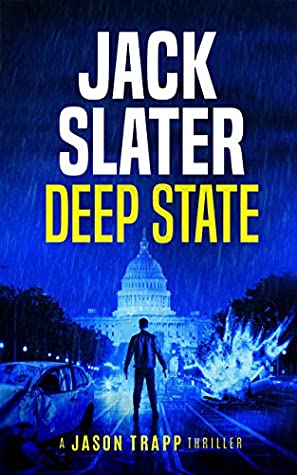
Jack Slater’s debut, Deep State , is a very zig-zaggy book. It features super-operative Jason Trapp (another action hero name for you) as he foils the same kind of “attempted American coup” plot that has been going on in cheap thrillers since Seven Days in May. Despite its title, it’s not really that political, which was a pleasant surprise.

This book has one of my cheap thriller pet peeves front and center-when the writer repeatedly goes “this isn’t like the movies” but then has the characters do ridiculous stuff anyway. This is why the book goes up and down so much. It wants to go “THIS IS SERIOUS AND NOT MOVIE-LIKE” but then has Trapp doing incredible things. It also has a few extraneous characters, a villain contrivance so powerful it needs a heroic contrivance to compensate, and manages to hit a few too many genre notes (although that could just be me having read waaaaaaaay too many of these kinds of books).

In spite of all this, the fundamentals are good enough (barring the “this isn’t like the movies, he just does incredible things in an un-cinematic way” dissonance) and it flows well enough to make all of that forgivable. This is still worth a read.

Using Paratroopers

One of the biggest problems with using paratroopers besides the limit on airlift, and why they’ve just been high-readiness/at-least-theoretically higher skill infantry in real practice, is the cost-benefit with their operations. This is very tricky.

The Practical Reasons

Apart from situations where there just is no other way to move in quicker (ie, over bodies of water/other gaps), airborne landings, particularly on a very large scale, have faced the issue of either being unnecessarily risky and complicated for the task at hand or simply being too weak to accomplish anything (especially in a situation where everyone has a lot of heavy forces).

The impression I’ve gotten is that anything bigger than a company-sized landing force is dicey, and anything bigger than a battalion is really, really dicey. Yes, if everyone had giant Mi-26 sized helicopters and/or the landing forces had mechanized equipment of their own (ie, BMDs/Sheridans) it would help, but only somewhat.

The Literary Reasons

On the other hand, the literary reasons for big airborne operations are obvious. Just look at Band of Brothers, to say nothing of considerably more obscure works of fiction that range from Marching Through Georgia to Northern Fury H-Hour.

  • They’re big and dramatic all by themselves.
  • Because they’re often centered around (seemingly) important targets, it makes the actions of the protagonists look bigger.
  • Because airborne forces are inherently limited, it means drama can be maintained against a seemingly weaker opponent (a pretty extreme example of this is Marching Through Georgia, where the Draka are otherwise utterly superior to their opponents and paratroopers against a panzer force are the only way to have something even slightly even).

Review: The Trench Soldier

The Trench Soldier

cascatrenchcover

This is the 250th post on Fuldapocalypse. I could write about the undeniable fear living a hundred miles from a pandemic epicenter. I could write about how the blog has been one of the few high points during an unsatisfying life ridden with mental health issues even before the crisis,

But instead, since there’s enough gloom out there already, I’m going to write about a bad Casca book. And The Trench Soldier is very bad. And unlike The Samurai, which had Casca just plopped inside an essentially unrelated adventure, this has him front and center. It’s bad in a criticize-able way. While trying to find the true authorship of the Sadler-fronted Cascas is essentially impossible, the talk has been that he did not personally write this. Whoever did, well, they failed-but failed amusingly.

The Casca Formula I saw after just a few books is in rigid force here. Take a historical period-World War I, in this case. Plop Casca in it and subject him to the most stereotypical pop culture set pieces of that era, from charges into machine guns to poison gas. Have him meet the appropriate historical figures, in this case Immelman and a young Herman Goering. Utterly fail to explore any element of his character, or I should say any potential element of his character, because his character doesn’t really exist or stay consistent at all.

What makes The Trench Soldier special is that it goes above and beyond the usual. Events that took place throughout the war are stuffed into a few months in 1914. There’s a ridiculous scene where Casca battles a Zeppelin. If the whole series was full of this over-the-top craziness, I’d think a lot more highly of it. Sadly, it’s not. The historical inaccuracy can be summed up by him defending the Maginot Line at Verdun in 1914.

It’s not a good book, and it’s rare that even a bad example in a series puts every single one of its flaws in the forefront. But this is what The Trench Soldier does. It somehow manages to take all the Casca weaknesses and amplify them while keeping the very small number of strengths. And that’s strangely impressive.

Review: The Vengeance Of The Tau

The Vengeance Of The Tau

The first Blaine McCracken book to stumble, The Vengeance Of The Tau is an interesting case study in how a series can lose its mark while still remaining good. This still has all of Land’s strengths and weaknesses.

Where it goes wrong, besides just having big shoes to fill, is in the revelation of its MacGuffin. While Land is normally great at slowly building up and finally showing what ridiculous premise the book has as its foundation, here he implies something incredible and reveals it to be more lame and mundane. This isn’t just the final gimmick turning out to be something less than Land’s most out-there, it’s an example of going backwards that he almost never does in other books.

This, combined with somewhat less crazy set pieces, makes this lesser in comparison to McCracken books that came before and after it. In a vaccuum it’s still Jon Land, and it’s not even the worst book in the series, but there are definitely better ones.

Review: Black Sea Terror

Black Sea Terror

Eric Meyer and Todd McLeod’s SEAL Strike: Black Sea Terror is a short story. The story of SEALs preventing a shipment of S-400 missiles to Syria, it reminded me of Chet Cunningham’s SEAL Team Seven novels. Or rather, it reminded me of a hypothetical Chet Cunningham SEAL Team Seven novel that was shrunk to a fifth of its size to fit in a magazine.

The S-400 system itself is treated as a multirole missile that’s somehow incredibly dangerous on its own (and no, it doesn’t have any kind of different warhead) instead of just being a high-end SAM. The action is just passably good enough, in a “small bag of potato chips” way.

In fact, a “small bag of potato chips” accurately describes the entire book. It’s tiny, insubstantial, and not truly “good” by any measure, but it’s still quite “edible”.

Autoloaders in Soviet tanks

Why did the Soviets so eagerly adopt autoloaders for their tanks? I don’t have any direct primary sources supporting it, but I have some hunches.

  1. Size. Soviet/Russian tanks have always had substantial size/weight limitations for transporting them along the entire length of the rather large country. This explains a lot, including why there was less (which is not the same as no) focus on tanks fighting other tanks, as opposed to using artillery and ATGMs. If the autoloader can make the tank smaller by removing one of the crew, it helps a lot.
  2. Making crew training less relevant. If you have a gigantic force of in-and-out conscripts, you don’t want to rely on something that relies a lot on individual skill.
  3. The third, which I saw in an intelligence piece on the Soviet tank company, stated “in understrength units there may be no loader in tanks other than those of the company and platoon commanders.” I’d really like to see more evidence for this, although it does say understrength.

There’s probably more like how it makes using bigger guns easier, but those are the biggest three that come to my mind. I also like to think of how the inevitable national bias would change if it was, for whatever reason, the opposite. Instead of tales of arm-wrecking autoloaders, there’d be sniggering of “we have high-tech auto-loaders, and the Soviets are still having people stuff the tank with shells-look at how they’d get tired.”

Review: The Gambit

The Gambit

Take a stilted first novel, add a difficult genre, and you have Brad Carlson’s The Gambit. This tale of Iranian plots and the Americans out to stop them reminds me of, if anything else, an even rougher version of Gavin Parmar’s Unseen Warriors. The problem is that technothrillers are harder to do right than small unit thrillers. I don’t want to be hard on the author. This is a first novel, I know firsthand how much effort writing any kind of long fiction is, and everyone has to start somewhere. But I have to be hard on the book.

There’s the clumsy prose, but there’s also the awkward pacing. There’s the action that falls well below even the standards of Marine Force One, but there’s also a ton of conference rooms and really rote instances of military equipment doing its thing (I hesistate to use the term “action” for the scenes describing it). There isn’t even an out-there premise. It’s just “shoot the terrorist” and stopping the most basic and mundane plots, all the while moving through something horrendously unpolished.

There are good independent first novels. This is not one of them.

Review: Black April

Black April

George Veith’s Black April is an excellent chronicle of the final fall of South Vietnam. Taking as many sources as he could, Veith paints the picture of an understudied and underappreciated campaign.

The interior workings of the North Vietnamese are very fascinating and, in my opinion, the best part of the book. This is because the campaign was the biggest example of a Soviet-style army defeating a western-style one decisively. While all the planning texts and documents can show a strict operational plan where everyone adheres to their role, in any reality, friction and human conflict is always there, and this shows an example of it in practice.

Veith is on less firm footing with the southerners. While his goal to emphasize the damage of the aid cutoff and give the southerners a fair emphasis compared to their scapegoating as inept bumblers from start to finish is admirable, his opinions about the primacy of the aid cutoff don’t always match with the examples he shows. This isn’t to say that it wasn’t an incredibly important factor, but the frequent examples are of southern units getting chopped up by better-handled northern ones, not attritional slugfests that only ended when they ran low.

Still, this book is an excellent historical reference.

Review: Bloodstorm

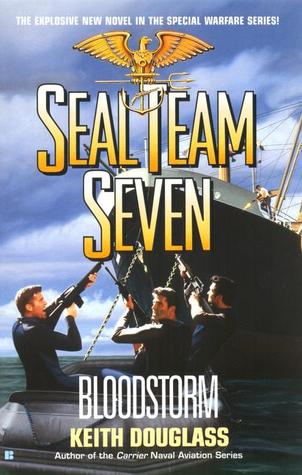
SEAL Team Seven: Bloodstorm

st71 cover

A Chet Cunningham SEAL Team Seven novel, Bloodstorm is a strange book. It features a globetrotting chase to hunt down loose ex-Soviet nukes, going everywhere from Libya using them in a Dale Brown-ist fashion to Afghanistan (in a pre-9/11 book) to Syria.

There’s the usual tons of weapon descriptions, including a “Bull Pup” (two words) that matches the ill-fated OICW in terms of what it does. Like Frontal Assault, this is a hyperactive thriller that zips around the world over the span of a comparably short book-and yet it still feels overly padded. Cunningham was no stranger to writing out large quantities of books very fast, and this feels like one of them, with a huge amount of  sloppiness. While a cheap thriller is better off moving too quickly than moving too slowly, there are better books of this type out there.