Review: Storied Independent Automakers

Storied Independent Automakers

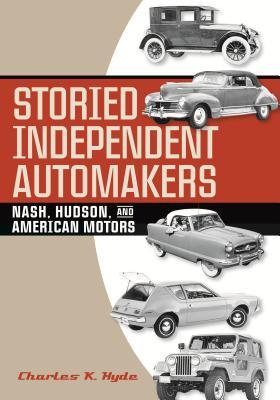
Charles K. Hyde’s Storied Independent Automakers tells the tale of the American-owned car companies that were not the Big Three. It’s a story worth telling, because they illustrated just how ruthless and consolidating the car industry is. These car companies went under or were bought out at the height of the domestic auto industry’s success (one ironic silver lining was that many of their left-hanging dealers turned to import brands and proceeded to make a fortune from them).

They had one brief moment of popularity due to a completely artificial boom when World War II resulted in years of pent-up demand. And now and then they managed to pull an innovation out that gave them a temporary edge (like compacts for AMC) until the big three caught up. But that was mostly it, and other than that it was all uphill. Hyde rightly points out it was impressive that they lasted as long as they did, and gives credit where it was due.

Though written in a history book tone (ie, it’s not exciting for anyone other than me), Hyde’s book is light enough to be readable while still containing lots of well-researched statistics on cars. It tells the story of an overlooked but important part of the auto industry’s history. Any enthusiast should enjoy it.

Review: The Stars Shine Down

The Stars Shine Down

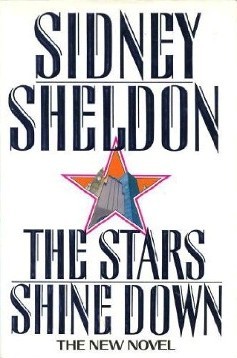
Sidney Sheldon’s The Stars Shine Down is the story of ruthless businesswoman Lara Cameron, her rise and fall as she builds a real estate empire and gets entangled with everyone from mob lawyers to piano players. It’s the type of gilded trash melodrama I know very well after reading so many of his books. This one, released later in his life, feels a little less than his at his best. It’s still a very readable book, and it’s still well ahead of The Other Side of Midnight. Yet there’s just so much that brings it down. And it’s not just the formula being familiar to me by now.

The plot is a little more scattershot than what Sheldon was capable of in some of his other books, and the ending feels a little rushed. There are a few weird choices like the decision to have all the Scottish character dialogue in clunky phonetic writing that subtracts more than it adds. Sheldon focuses too much on the nuts and bolts of Lara’s building development, something he doesn’t write well.

One legitimately good part is its main character, with Lara drawing both opposition and sympathy. As Sheldon at his worst wrote characters as either dumb, naive dopes or ruthless Machiavellian masterminds, having someone who can truly have elements of both strikes me as a solid achievement. The protagonist is arguably Sheldon’s best I’ve read so far. It’s just the book around her isn’t.

Review: Assault By Fire

Assault By Fire

Ripley Rawlings’ Assault By Fire is an invasion novel. It’s an invasion novel that features that common staple of video games-the Teleporting Russians. Yes, via some kind of supercomputer (that’s the explanation given), the Russians can conduct a successful amphibious invasion of the US. This is a “pulpy invasion” book. And it is very, very pulpy.

Everything from a main action in Appalachia to WWII weapons to a knockoff of Vasquez from Aliens is there. And it’s somehow amazing. The rational part of my brain could not comprehend or make sense of how the invasion progressed, with me asking such questions as “where are the stated MiGs staging from?”. The part of me that eagerly read every Survivalist loved every page of it.

Review: Strong Enough To Die

Strong Enough To Die

The debut book in the Caitlin Strong series of thrillers, Strong Enough to Die is the first Jon Land book I’ve read in some time. How does she fare compared to Blaine McCracken? Well, it’s a tough question. It’s not bad by any means, but it’s still a little lacking compared to his earlier thrillers.

The plot has a lot of Land’s signature elements, and it’s not quite as jarringly mundane as Dead Simple was. By the standards of other thrillers, it’s a competent, somewhat out-there action novel. But by Land’s own high, past standards it’s not their equal. While the central MacGuffin fits, the action around it is more conventional than the craziness of the early McCrackens. The literary fundamentals being a little bit off compared to Land at his height doesn’t help either. The book just jumps around too much, and it’s too fragmented.

In isolation, I’d like this book. But its author has done better, and I’d recommend reading the Blaine McCrackens over this.

Review: The Clone Republic

The Clone Republic

A (comparably) long time ago, before the rise in self-publishing, I read a novel called The Clone Republic, the first in a series of military science fiction books by Steven L. Kent. And in hindsight, it seems kind of impressive in how it nailed a type of story that would later appear in much greater numbers. It’s a strange kind of impressiveness, but impressive nonetheless.

Even at the time, I never thought this story of a futuristic clone army was never more than a merely satisfactory cheap thriller. But it really fits the niche of what I’d call a “spacesuit commando” novel because of its “genericness”, limited technology, and weird touches. For instance, the clones don’t know they’re clones, believe themselves to be genuine orphans, and all but the main character biologically self-destruct (!) if told they’re a clone.

So this book and its series is in the “weird nostalgia segment” for me. Then it may have stood out a little by being so generic (!). Now it wouldn’t diverge from the considerably bigger pack. Still, I had fun with it.

Review: My Next Life As A Villainess Vol 1

My Next Life As a Villainess: Volume 1

I felt it was time to check out of one of those “anime antics” settings that Spacebattles has a bizarre fascination with. In this case, it was Saturo Yamaguchi’s light novel series, My Next Life As A Villainess: All Routes Lead To Doom (these are notorious for their extremely long titles). Frequently abbreviated as Hamefura, this is the story of someone who is reincarnated as a video game character.

More specifically, it’s the story of a schoolgirl who stayed up too late playing her dating sims, which led to her death in a bicycle/car accident as she tried to hurry to compensate the next day. This led to her being reborn as Katarina Claes, the antagonist/rival girl in one of them set in a fantasy academy setting. Upon recovering her memories of her past life, and knowing that Katarina is fated to have a bad end in the game, the heroine tries to get a better fate.

This initial installment isn’t bad. I can see the “it’s a good concept even if the execution is ‘iffy’ ” that made appealing to fanfic writers. The prose is pretty well, matter of fact. I don’t know how much of that is due to translation issues and how much is due to the novel being intended to be smooth and easy to read (you could say it was meant as light literature). But it’s not a deal breaker, and neither are the “anime antics” surrounding Katarina and the inevitable boys. I had fun with it and it’s a nice change of pace from the usual fare here.

Review: Holy Ground

Holy Ground

As readers of this blog undoubtedly know, I’ve dipped pretty deep into the small field known as [mostly] conventional World War III fiction. So when I saw an actual new release of one, Evan Currie’s Holy Ground, I felt obligated to check it out. The book is a prequel to an extensive science fiction series, and it shows. It centers around the defense of the island of Iwo Jima, on land, sea, and air.

Honestly, the setting image that came to my mind was “Command and Conquer Generals”. Not in the exact form or in it being an exact ripoff of that game-it definitely is not. But in the general (no pun intended) sense of a combination of sci-fi technology and stuff that’s visible in the obvious headlines/popular culture. Despite nominally taking place several decades in the future, there’s a lot of contemporary fighter aircraft designations. There’s also a lot of “cinematic” stuff, like missile-age aircraft using guns far more often than they realistically should.

Because of these limitations, it doesn’t succeed in being a technothriller. At the same time it’s too comparably grounded to be a Wingman-style pulpy thriller. And even judged purely on its own terms, the action isn’t the best. I want to emphasize it’s not the worst either, but I’ve definitely read better. For me it was a little fascinating to see what a technothriller in the style of a popular science fiction book looked like, but that can’t raise the novel above average on its own.

Review: Deadly Intent

Deadly Intent

The second book in Brent Towns’ Team Reaper series, Deadly Intent is one of the best thrillers I’ve read in some time. The action here is almost literally non-stop as the titular force battles against a seemingly never-ending stream of enemies in a battle that spans multiple continents.

The constant action, team-based protagonists, vast geographic setting, and more out-there elements of the plot (to put it mildly) reminded me of one of the Stony Man Gold Eagles. The difference though is that this is done better than the Stony Man/Able Team/Phoenix Force entries I’ve read. The action and narrative flows a lot more smoothly, and the characters feel more developed (in a small sense, but still).

There are times when a book, even a cheap thriller, benefits from slowing down and having lots of buildup. But there are other times when one, like this, benefits from just welding the gas pedal to the floor. This is quite the experience and I highly recommend it.

Review: The Iron Dream

The Iron Dream

Norman Spinrad’s The Iron Dream is an alternate history satire of the er, “issues” in lowbrow fiction. In it, Adolph Hitler doesn’t go into politics, instead becoming a pulp science fiction author. The book primarily consists of an in-universe novel involving the manly men of Heldon triumphing over hideous mutants and their masters, the mind-controlling Dominators. Does this remind you of anything?

This book is not subtle in the slightest concerning its message of the er “dubious” parts of adventure fiction. I could feel a tone of “Ok, here’s a very obvious reference? Do you get it? Ok, here’s another one. Get it? And to make absolutely sure that you get it, I’ll have an in-universe epilogue that explains everything”. My own reaction was “I get it! All right, I get it. Seriously- I GET IT.”

Thankfully, it’s quite understandable why Spinrad is so forceful. The stories of people not getting it despite his best efforts speak as to why. But it’s also dated in some ways. First, the type of exact “thud and blunder” prose/story he was parodying is now long obsolete. Second, it’s interesting to see a huge example of something coming not that long after its publication that was both prominent and different from the tone-Star Wars. Star Wars features a multispecies alliance of often-ugly aliens fighting a human-dominated empire. It may be a single example, but it’s the biggest example.

Beyond that, I can still understand and sympathize with the message. It’s one of the reasons why, while not a deal breaker, I tend to not like science fiction that has alien species’ introduced purely to be antagonists. However, I’ll admit it also feels a little like punching down at a very easy and very obvious target.

Nonetheless, this type of satire is very hard to write well. I know this firsthand. Of all the parodies of conventional WW3s I’ve tried to write, all of them I’ve junked as being too inaccurate and/or mean spirited. So Spinrad probably succeeded as best as he could, and the biggest satirical part does come across as him knowing his source material well.