Review: ATP 7-100.3 Chinese Tactics

ATP 7-100.3 Chinese Tactics

After seeing the excellent work on North Korea, I eagerly awaited the next installment in the ATP 7-100 series on the most potential opponents. When ATP 7-100.3, Chinese Tactics dropped, I was not disappointed. Well detailed and well laid out, this is the first comprehensive unclassified analysis of the PLA in decades.

In some ways, being a far more advanced opponent that’s far closer to the fictional maximum-challenge “composite OPFOR” than North Korea is means that the tactics shown feel a lot more mundane and slightly less interesting. But showing the (deliberately overcomplicated and confounding) organization is where this shines. The modern PLA is organized a lot like the old “GENFORCE-Mobile” OPFOR with a bunch of brigades and combined arms battalions jumping straight to corps-equivalents with six line brigades each.

This is a great resource and I highly recommend reading it. Besides its topicality, seeing a force structure diverge from the classic Russo-American style is interesting to see and valuable for wargamers.

New Command scen for testing: Sneaky Sneaky

I got back into making Command: Modern Operations content with another draft scenario that I’ve called Sneaky Sneaky. It’s in an alternate historical setting where a “Walkerist” rogue state survived in Central America. Now they have to try and slip a few improvised mini-subs past the Royal Navy to Belize. Much inspirational thanks goes to the Covert Shores website for its great work on analyzing such submarines.

The scenario can be tried out here.

Review: Our Man On The Hill

Our Man On The Hill

Matthew Kresal’s debut on Sea Lion Press (full disclosure, I’m published there too) is Our Man On The Hill, a story which takes a bit of historical commentary and plays with it. It’s been said that Joe McCarthy was such a blustering bumbler that he actually did damage to legitimate anti-communism. Thus Kresal turns into him being a Soviet agent intended to sabotage the opposition.

Though not exact, this has parallels with Agent Lavender, the book that started SLP in the first place. Both make alternate histories where a conspiracy theory about a huge political figure (Wilson, McCarthy) is treated as true. Both are well researched. And both are excellent reads.

Even though I’m not generally the biggest fan of this kind of political/spy story, Our Man On The Hill is well done enough that I had a blast reading it. I highly recommend this book.

Review: North Korean Tactics

North Korean Tactics

One of the best OPFOR manuals I’ve seen, and one of the most recent, is ATP 7-100.2, North Korean Tactics. The manual itself is a good read, and the “Breaking Doctrine” podcast that comes along with does a great job explaining how both it and other OPFOR documents (a long weird guilty pleasure of mine) have come into being.

Thus the manual isn’t a direct “They will do this” the way that some of the more overly rigid Soviet-inspired ones were. But it does show the characteristics of the secretive country (light infantry, high willingness to take casualties, artillery over tanks, etc…) and has to focus on its specific qualities instead of just lumping them in with a generic OPFOR designed for challenge above adherence to any specific country.

It’s not perfect, but it’s intriguing and well-done, showing the seeming contradiction of mass asymmetric warfare in action. Ones for China and Iran are planned, and I’m awaiting them. (There’s one for Russia announced, but it’s kind of in limbo. My hunch is that the need for something so specific is less for a country that’s already studied and already fairly close to the generic OPFOR).

Review: Dodgebomb

Dodgebomb

Darrin Pepple’s Dodgebomb is a historical fiction novel about the Iraq War. I will freely admit that plain historical military fiction, as opposed to alternate/never was conflicts, just isn’t my favorite (sub)genre. Nonetheless, this is a very good book.

The work of a veteran, it shows. Everything rings true, and it’s overall a well-written piece. Occasionally there are overly clunky paragraphs and/or descents to Herman Melville levels of detail, but those are small nitpicks. This is an excellent novel and I highly recommend it. Often it’s hard to describe how I like something as opposed to how I didn’t like it, but trust me-I liked this book.

Review: Nonstate Warfare

Stephen Biddle’s Nonstate Warfare aims to debunk the myths around warfare featuring nonstate actors and point out that there really isn’t as clear a line as thought between “conventional” and “unconventional” warfare. As I’ve been annoyed by the use of the terms “Hybrid War” and especially “4th Generation War”, I was eagerly awaiting this book. However, I found the execution significantly flawed.

Now, the premise is sound and well supported, which makes the flaws in outcome all the more severe. Basically, even the most mass-mobilized total wars with the clearest defined front lines have an irregular and/or deep element (he uses the excellent example of partisans on the Eastern Front in World War II). Likewise, even non-state elements can and have fought battles with large forces, heavy weapons, and the aim to hold territory. Very few people would dispute this. Biddle also points out that the progress of industrial-age technology means that ill-equipped irregulars can have weapons that the most advanced world powers didn’t have a few decades prior.

None of this is really controversial, and simply stating that would make for a very short book. What would be useful would an example of middle-level armies that don’t fit categories very well. Biddle does do this, with his descriptions of the Sadrist militias in the Iraq War and Adid’s forces in Somalia fitting well. He also has an interesting analogy with a spectrum from “Fabian” operations (a reference to the Roman strategy of avoiding defeat) to “Napoleonic” ones (a reference to seeking decisive battlefield victory). To be snarky, Fabian operations to excess are Kalib Starnes spending the entire MMA fight running away from Nate Quarry, while Napoleonic ones are the bandit in a Bethesda game charging the player in super-armor.

Unfortunately, this is written in clunky academese. Biddle uses a rigid scale to rank various forces from “Fabian” to “Napoleonic”, one that I found to be too rigid for an inherently arbitrary judgement. His writing is full of hair-splitting and nitpicking of what honestly feels like a strawman that everything is either phalanxes on a field or nothing but backstabbing. There’s weird hangups like a fixation on force density for its own sake, obsession on individual technical examples (so Adid had TOWs? So what? Even in 1993 it wasn’t like they were stealth fighters), and not enough focus on non-state forces supplied by state ones.

I wanted to like this book. And I don’t disagree with the overall point. But it could have been made just so much better. This feels like an academic squabble in academic language, when a plain-text history of case studies with “conventional irregular armies” would have been far more suitable in promoting the argument.

Review: Hit And Fade

Hit And Fade

The second book in the Forgotten Ruin series, Hit And Fade features the timeshifted Rangers going against something close to the original Fuldapocalypse “mascot”. Not a zombie sorceress, but a lich, a zombie sorcerer. I guess his sister was off provoking a Third World War and disabling the nuclear warheads.

The book is very similar to its predecessor in terms of quality, which makes it a little hard to review (in contrast to the original). All of what I’ve said about the good and bad parts has been stated already, and it doesn’t feel that different. If I had to say something, I’d say that the contrivances in worldbuilding add up when repeated, and that there aren’t enough new good qualities to make up for that.

Still, this is not a bad book. Its flaws are not insurmountable, and if this was the first in the series that I’d read, I’d probably feel differently. If you want to see Rangers fighting a skeleton mage, you’re in the right place.

Review: On The Path of Songun

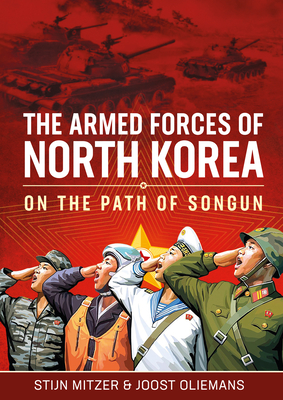
The Armed Forces of North Korea: On The Path of Songun

It’s been a while since I read a really, really good military nonfiction reference. Thankfully, Stijn Mitzer and Joost Olieman’s The Armed Forces Of North Korea: On The Path Of Songun takes the cake. The product of the same people behind the legendary Oryx Blog of military intelligence, this took a while to finally get going. Thankfully, it’s well, well, well worth the effort.

So why is it so good? Well, for a start, it’s incredibly well researched, written, and photographed. It’s not an OPFOR manual or a ridiculously broad order of battle chart. What it does do is go into legitimate detail and depth about the KPA and its rise, fall, and rise. What made me absolutely fall in love with this was how this is the rare military book that doesn’t fall into either extreme of “unstoppable or helpless”. When I saw the self-proclaimed intent to the debunk the notion that the KPA wasn’t/isn’t a threat, I feared it would go too far in the opposite direction.

That was not the case. I was treated to a very evenhanded look that amounts to “Yes, there’s modernization, yes there’s legitimately advanced indigenous developments, but as of now it’s limited and foreign support is undoubtedly there” and doesn’t hesitate to point out their shortcomings and material issues. The authors are even good at pointing out what they can verify and what they can’t, a must for dealing with a country as secretive as North Korea.

For enthusiasts, general audiences, wargamers, and anyone, really, this is a great book that I highly recommend.

Review: War To The Knife

The latest Brannigan’s Blackhearts novel is War To The Knife. This time Brannigan and his gang go on a romp through South America, in an adventure that Nealen admitted was inspired by the classic video game Jagged Alliance. As the ninth book in the series, it’s hard to get the feeling of awe-inspiring thrills that I got when I read the first and second books. But this is still a very solid entry in a very solid series.

One thing I’ve always liked about this series is how the Blackhearts enemies convincingly portrayed as having vastly different levels of skill and capabilities. The raw irregulars they fight in this book are nothing like the supermercs or a former Soviet army complete with AFVs they’ve encountered in the past. Yet they all come across as credible threats, whatever their qualities. This can be tough to do, but it works here.

If I had one small quibble, it’s actually for something I’ve previously pointed to as a strength of these books. The opening acts almost always feature the dirty business of getting a job, rallying the crew, and seeing their off-duty jobs that makes them more human and less action hero robot. Yet this time I felt it dragged on a little too much. I wouldn’t mind one installment where the “Team Yankee Model” of going straight to the action was used. Other than that, this is well worth a read.

Review: Righteous Kill

Righteous Kill

For all the prominence of the “go back in time to kill Hitler” trope in popular culture, there are surprisingly few books that feature it as the main plot point. Ted Lapkin’s Righteous Kill is one of them. The book has a delightfully simple plot-Israeli commandos go back in time to kill him.

The book has its flaws. The prose can be clunky and frequently descends into “I know the exact designation of a Scud TEL” level infodumps. This is also not a neutrally toned book, to put it mildly, and the ending is a little too neatly tied up. But these flaws are outweighed by its strengths, which is to say it manages to pit 2010s troops the author thinks are awesome against 1940s ones and still feel like a credible fight. This is not an easy feat, and it’s to Lapkin’s great credit that he succeeds in pulling it off.

This is both a fun book and a good one.