Review: No Man’s Land

No Man’s Land

The 58th Kirov book, No Man’s Land takes the series to World War I. It has tanks and monsters, but not monstrous tanks. This installment isn’t quite as good as The Mission, and returns somewhat to the “excuse to show a bunch of battles” plot format. This isn’t unexpected from the series, but it is a little disappointing after seeing the previous one be a little more cohesive.

This is Kirov, for better or worse. It’s got all the weird elements and now it’s making them even weirder. This is not a bad thing. I still don’t think it’s really possible for the series to end gracefully by this point. It’s going to be some mushed-up variation of “destroy everything”, “reset everything”, and/or “just stop”. But I honestly don’t care.

A Thousand Words: Automation

Automation: The Car Company Tycoon Game

Because one of my past jobs involved working in a parking lot, I developed an interest in cars just as I discovered that Automation: The Car Company Tycoon Game existed. It was a great fit at the time, and has only grown and developed since then. A very detailed car design simulator with a basic but growing campaign mode, it’s not for everyone but is a delight for auto enthusiasts.

I’ve enjoyed making all sorts of cars in there, from the ones you’d expect to weird ones like gigantic rumbling inline 4 motors and stuffing monster engines into the bays of Corolla-sized econoboxes (talk about “hot hatches”). I even made something like the Dodge Ram SRT-10 by putting a supercar engine into a pickup truck. The game is unforgiving and has a pretty steep learning curve, but if/when you get the hang of it, you can do really great car things.

Review: The Mission

The Mission

The 57th Kirov book, The Mission is a delightful change of pace. For a start, the absolute basics are changed. It’s less of a long, big, every-tank-and-every-missile wargame lets play like the past two seasons. This alone makes it preferable to the formula that was wearing out its welcome after sixteen previous installments.

The setting is also different. And by different, I mean “a lot more awesome”. There’s not only a change of scenery back to the Russian Civil War and airship fights, but the ridiculous goofy time manipulation and mystical elements come back with a vengeance. It reminds me of the later Payday 2 metaplot, and I say this as a total compliment.

This book was a lot of fun, the most I’ve had with Kirov in a while.

Review: Dixie Curtain

Dixie Curtain

Mark Ciccone’s Dixie Curtain is an alternate history thriller set in a Confederate victory North-South Cold War.

The first important thing to note is that the worldbuilding is very much in the vein of “soft” alternate history, with a lot of obvious parallels and historical figures still in the same places and times well after the point of divergence. This is not a bad thing-mostly. At times it gets a little too much in terms of parallel historical figures used, but for the most part it works with the style it’s going for.

As for the actual book, it’s a a solid cloak and dagger thriller beyond its setting. The genre isn’t my favorite type of cheap thriller, but I still liked it. I recommend this to people who like spy dramas and/or alternate history.

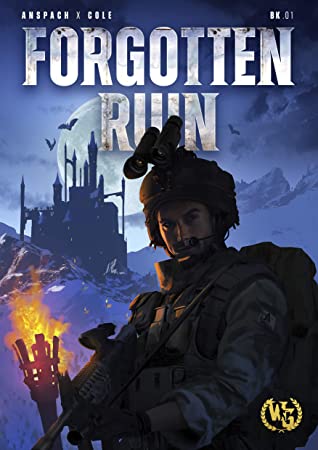
Review: Forgotten Ruin

Forgotten Ruin

A lot of books are what I call “median 51%”, middle of the road stuff that’s perfectly fine to read but which can be hard to actually review well. Then there’s Jason Anspach and Nick Cole’s Forgotten Ruin. I can hardly think of a better example of a “Mean 51%” book. The means a work of fiction that does some things very well and others-not so much. This kind of book can both be disappointing and engaging, and perfect to critique.

Since its magic-vs-technology, fantasy-vs-firepower conflict is music to my ears, I knew I had to check it out. So how was it?

From the start, it’s written in first-person, which I consider suboptimal for thrillers. But this isn’t a deal-breaker. A lot of the characters are one-note stereotypes and the main narrator comes across as a macho ass. But that’s not a deal-breaker either.

The bigger dichotomy comes from the worldbuilding and action. To be frank, the worldbuilding doesn’t live up its potential. It puts its modern military heroes in a fantasy world, but then does nothing but stuff it full of generic fantasy creatures. And the contrivances needed to set it up range from “oh, this political reference is really hamfisted and likely will age quickly” to “OH COME ON!”. (What a coincidence the main character is a linguist who just happens to be able to speak all the right languages, which are variations of existing human ones!)

Then there’s the fighting, which is of course the centerpiece of this kind of book. I’m also of two minds on this. On one hand, at times it reminded me of artificial Payday 2 assault waves where masses of enemies just keep charging forward into superior firepower, which is not a good thing. But on the other, there were instances of cleverness and, more importantly, the setup was evenhanded. As I’ve seen way too much fiction where the “primitives” are just tomato cans for the “awesome modern armies”, this was a welcome change.

While I had mixed feelings about this, its premise is good enough and well executed enough to make me want to continue. And it’s the kind of book I really enjoyed thinking about and writing about. And that alone makes it worthwhile to me.

Review: The Night Stalker Rescue

The Night Stalker Rescue

Jason Kasper’s The Night Stalker Rescue is a prequel novella (to a series I haven’t yet read) featuring the mission of saving a downed helicopter pilot in an anti-terror operation in the Philippines gone wrong. Short and cheap, it’s the kind of book that works best as a “literary snack.” And that’s often fine.

This is a 51% snack, but it’s a fun 51% snack. About the only real quibble I had was having the book be written in first instead of third person. I think the latter is better for thrillers because you don’t have to either have a severely limited view or give the protagonist ridiculously good situational awareness. But this isn’t a deal breaker at all.

The fundamentals are sound and the story works. This is a solid “appetizer” that makes me want to read more from its author, and that’s always good news about a book.

Review: The Hungry Dead of Yu-Ching And Other Stories

The Hungry Dead of Yu-Ching And Other Stories

From Sea Lion Press author Paul Leone comes The Hungry Dead of Yu-Ching And Other Stories, a series of horror-fantasy-thriller tales spanning history. From the ancient past to the Cold War and beyond, he brings to life one supernatural confrontation after another. Each story is short but sharp and never wears out its welcome.

I might be biased given the preferred subject matter of Fuldapocalypse, but I liked the “Red Dawn [no relation to the movie], Operation ___” stories the best. It’s very hard to go wrong with Soviet commandos facing extranormal enemies, and I grinned at every word of those tales. Not that the others were bad by any means, but these were my favorite.

In short, this is a very fun collection. I enjoyed it a lot and highly recommend it.

Review: Whirlwind

Whirlwind

The 56th book in the Kirov series and the conclusion of its third World War III arc is Whirlwind. By this point, the same issues present in any other installment are there. The prose is what it is, and the “time travel soap opera mixed with wargame AARs” is familiar as well. A large chunk of this book doesn’t even pretend to be a conventional narrative and just recaps the war in detail.

While this (supposedly) second-to-last arc in the series doesn’t just nuke everything and overwrite the timeline like its predecessor, it leaves an uncomfortable feeling. The talk about how weapons and doctrine in-universe evolved gave me the impression that Schettler would pull the football yet again and have yet another four-books-too-long wargame sim. Especially because the main ship plot does have a lot of genuine promise.

The concept of the titular ship’s crew going back in time to stop delightful supervillain Ivan Volkov from destroying the timeline is a great one, and I know very well that you could merge such a plot with wargame scenarios. But even my patience is wearing down with the formula. The circle could be squared if the ship and its crew got a good final conclusion while allowing the toy box lets plays to continue, but I’m not really confident in that happening.

Review: Assault By Fire

Assault By Fire

Ripley Rawlings’ Assault By Fire is an invasion novel. It’s an invasion novel that features that common staple of video games-the Teleporting Russians. Yes, via some kind of supercomputer (that’s the explanation given), the Russians can conduct a successful amphibious invasion of the US. This is a “pulpy invasion” book. And it is very, very pulpy.

Everything from a main action in Appalachia to WWII weapons to a knockoff of Vasquez from Aliens is there. And it’s somehow amazing. The rational part of my brain could not comprehend or make sense of how the invasion progressed, with me asking such questions as “where are the stated MiGs staging from?”. The part of me that eagerly read every Survivalist loved every page of it.

Review: Holy Ground

Holy Ground

As readers of this blog undoubtedly know, I’ve dipped pretty deep into the small field known as [mostly] conventional World War III fiction. So when I saw an actual new release of one, Evan Currie’s Holy Ground, I felt obligated to check it out. The book is a prequel to an extensive science fiction series, and it shows. It centers around the defense of the island of Iwo Jima, on land, sea, and air.

Honestly, the setting image that came to my mind was “Command and Conquer Generals”. Not in the exact form or in it being an exact ripoff of that game-it definitely is not. But in the general (no pun intended) sense of a combination of sci-fi technology and stuff that’s visible in the obvious headlines/popular culture. Despite nominally taking place several decades in the future, there’s a lot of contemporary fighter aircraft designations. There’s also a lot of “cinematic” stuff, like missile-age aircraft using guns far more often than they realistically should.

Because of these limitations, it doesn’t succeed in being a technothriller. At the same time it’s too comparably grounded to be a Wingman-style pulpy thriller. And even judged purely on its own terms, the action isn’t the best. I want to emphasize it’s not the worst either, but I’ve definitely read better. For me it was a little fascinating to see what a technothriller in the style of a popular science fiction book looked like, but that can’t raise the novel above average on its own.