Soviet-Romanian War: The Chronology

I finally have a set chronology for the course of the Soviet/Romanian alternate history war I keep posting about. And yes, I’m now running three WIP books simultaneously.

Using the classical best-case 60km a day (on average) rate of advance, the Soviets would cross Romania in a little more than a week. Under their 70-100km guidelines for weaker opponents (which it’d definitely qualify as), it would fall in 5 days (too optimistic)[1] However, the same sources drop their rate to 30 km in mountainous terrain, found in central Romania.

The Bulgarians take an outsize share of the casualties. In part, this is because of the difference in both skill and equipment (in 1989, the Bulgarians historically still had T-34s equipping their reserve formations!). It’s also because of them having to cross the Danube opposed, never an easy task.

Bucharest, with its population of 2 million people, is not initially stormed in full. Instead it’s surrounded, left for the Bulgarians to keep encircled, and squeezed while the rest of the country is overrun. In around two weeks at absolute most, it is.

In a nod to the Gulf War, BARCAPS are placed to keep the doomed RoAF from escaping to Yugoslavia…. but the majority of planes that make it across due so to Hungary, the longtime rival, instead.

The stumbling block I had because of how much it depends on the story is what would happen to Ceausescu. Whether he successfully escapes, tries and fails to escape, gets couped, or killed/captured by the Soviets (keeping in mind he’d be very old and was in terrible health already in 1989). Of course, now I’ve found a solution that I can work into the plot…

Regardless, it ends in considerably less time than the current Russo-Ukrainian War has already been going on for (which is why I feel comfortable posting this now.) Using MCOAT with variables and unit sizes that I feel are close enough, casualties amount to:

  • Union of Soviet Sovereign Republics: Circa 3,500 killed, 14,000 wounded to varying degrees.
  • Bulgaria: Circa 6,500 killed, 26,000 wounded
  • Afghanistan: Circa 640 killed, 2,900 wounded
  • Romania: Circa 47,000 killed, 131,000 wounded [around a quarter of forces deployed at least hurt!]

These calculations assume nine days of high-intensity combat. Bulgarians and the Basic Forces divisions would take a large share compared to Mobile Corps with better armor, equipment, and medicine.

The result is a regime installed made up of local collaborators and those with some ties to Romania. Occupation duty is largely left to the Bulgarians and Afghans. Although prewar Romanian doctrine called for guerilla fighting, there isn’t terribly much stomach for it from the apathetic, shell-shocked population. Much of Romania’s population flees during and after the war, primarily to Hungary and beyond.

And out of it emerges, among other things… a mystery. Or several mysteries….

[1]The coalition managed a rough 45 km a day in the Gulf War, against a weak opponent in open terrain, and 30 km in the conventional phase of the Iraq War, with a pause and while facing the rougher areas of Iraq itself.
Review: The Iraqi Army

The Iraqi Army: Organization and Tactics

The NTC special text dubbed “The Iraqi Army: Organization and Tactics” is a valiant attempt at quickly trying to adapt to a different enemy. While the Iraqis used lots of Soviet equipment, their actual doctrine was more British-based on paper and often varied from both (usually for the worse). Just all on its own, it’s a fairly conventional and standard OPFOR document. But I find the context incredibly fascinating.

Like in Lester Grau’s much later The Russian Way of War, a tightrope had to be walked between the observed performance and the theoretical doctrine. Given the latter country’s vast paper trail and its known obsession with quantifying everything, separating the two was/is an easy task. As is/was noticing when theory inevitably diverged from practice, from Grozny to Hostomel.

Here, not so much. The Iraqi Army was notoriously slapdash, so the challenge was even greater. One example I like is that an Iraq War wargame supplement even told the player not to try and use any kind of standardized formation for them at all (!). On the more important doctrine, it acknowledges the flaws shown in the war with Iran, but cautiously and wisely goes with what can be paraphrased as “This may have been an aberration, treat them as a mechanized force worthy of their equipment”. That in many cases they turned out not to be showed the importance of assuming strength rather than weakness.

As a primary source, this is a very interesting snapshot. Plus it’s in the public domain and available readily now.

The Airlifters

Airlifters are very interesting to me, especially mega-lifters. But “exotics” are also fun, like tilt-ducted fans, compound helicopters, convertiplanes, flying wings, and much more. I think there’s several reasons why I’ve taken a liking to them, besides some very good sources that I’m eager to review.

  1. They represent an army marching on its stomach, or in this case, flying on its stomach. They’re the behind-the-scenes things that no one can do without.
  2. They’re military but not inherently destructive (unless converted to bombers, of course). Thus they can serve humanitarian and civilian support efforts very well.
  3. Finally, the numbers analyst in me likes seeing, especially for inherently risky airborne drops/landings, what you can accomplish with X number of airlifters with a capacity of Y per unit. Operations researchers with far more resources and far better command of math than me have been studying this since the parachute was invented.
  4. Plus I live fairly close to an airlifter base and see the big grey Globemasters and Galaxies flying overhead fairly frequently.
  5. Paradropping can be used as a way to add drama to the characters in a story, regardless of the overall force balance.
  6. It’s hard not to be impressed by something weird and/or big.

What I’m most interested in at the moment is: “To what extend does having big lifters that can reach the LZ safely remove bottlenecks?”

Review: American Secret Projects: Bombers

American Secret Projects: Bombers, Attack, and Anti-Submarine Aircraft

One of the American Secret Projects series, this book looks at air-to-surface planes from the end of World War II to Vietnam. Covering everything from mammoth strategic bombers to light propeller planes, it’s an ideal aviation niche history book. With lots of illustrations, the obscure become visible.

With this book you can see all the bizarre and erratic 1950s designs. You can see how the AX project that became the A-10 started off as just a rich man’s Skyraider. This is an excellent book for any aviation enthusiast.

Saddam’s Almost-Bomb

Saddam Hussein’s Iraq had a legitimate nuclear weapons program that was, by most accounts, very close to building a functioning Fat Man-level device before the invasion of Kuwait. A draft nuclear operations manual was even made. For all intents and purposes, it was destroyed in the 1991 Gulf War and there was no serious attempt to restart it prior to 2003.

The WMD swing-and-miss isn’t really the subject of this post. It was a combination of the inherent untrustworthiness of the Iraqi regime (which still would have more than willing to make genuine WMDs), a desperate desire to avoid a false negative after 9/11, and a bizzare bluff aimed at Iran by a Saddam who was increasingly believing his own propaganda. I have increasingly believed that, after 1991 and especially after 2001, that the Iraq War, or at least the country undergoing a catastrophic meltdown (see the Syrian Civil War), would have been inevitable given that element and the inherent instability of it, but that’s for another time.

Anyway, the Iraqi design was a spherical implosion device centered around 15-18 kilograms of highly-enriched uranium. The first incarnation of it was very wide (over a meter), with the big Tu-16 and Tu-22 bombers being the only delivery systems capable of dropping it. Later it shrank to the point where it could fit inside a ballistic missile, and active programs were focused on making longer-ranged missiles that could carry such a device. The yield is unknown and the only available references to them in open sources I’ve found are understandably redacted. One theory based on text size I’ve seen argued that the small design had the strength of only one kiloton and the big one three, which fits with the yield of early North Korean (pure test) designs. More generous estimates put it around 10-20. Regardless, it was unlikely to be more than low double digit kilotons in terms of blast strength. It’s worth noting that even the lowest-end estimate would still mean a radioactive version of the 2020 Beirut explosion.

Barring the invasion of Kuwait or other serious external interference, the program could have been up and churning out warheads by the mid-1990s. Of course, there would be serious external interference. Israel’s hyped attack on the Osirak reactor arguably owed more to the mania of Menachem Begin than any practical effect. Begin was the admitted inspiration for the supervillain Magneto (to give an idea of his temperament), and someone who embodied Alexander Wallace’s “hurt people hurt people” statement. Osirak was physically unsuited to producing weapons-grade material in quantity, and its destruction led to a much more hardened and dispersed program. Nonetheless, the Israelis would try.

Would they succeed? Would having the bomb actually lead to a calming effect, as argued by some? (Given the Kargil and Ussuri wars, I’m skeptical). As with everything involving the “devices”, there’s a thankfully small sample size to consider. There are many, many unknowns. But the atomic wolf was truly there.

Clustering launchers for fun and profit

You are a rogue state with limited resources, and you want to make more powerful rockets. What is your improvised expedient? The answer, be it in North Korea or (with the most documentation) in Saddam’s Iraq, is frequently to cluster existing engines.

And what kind of engines would they be? There are the ubiqutuous Scud derivatives, but there’s also something even more readily available-surface to air missile engines, especially those (ie, SA-2s) becoming ever-less effective against actual opposing planes. Iraqi rocket/missile designs made extensive use of repurposed Guideline engines.

It’s gotten to the point where I’ve been making (oversimplified, of course) hypotheticals using the launcher and ballistic missile online calculators. Just input the relevant characteristics, thrust and size dimensions for the engines/rockets in question, and see the result! Quite an interesting bit of diversion for me.

Review: Blue Masquerade

Blue Masquerade

T. K. Blackwood’s Blue Masquerade is a treat I knew I had to read. First, it’s one of those beasts that are as rare as left-handed baseball catchers or male calico cats-the conventional World War III novel that takes place as an alternate history after the Vietnam War. That its premise involves two of my personal tropes I wish got used more often made it even more appealing.

The first premise is that instead of the USSR backsliding after a successful August Coup or something like it, it reforms enough to avert such a thing. This happens here. Don’t expect to see MiG 1.42s or robot-turret supertanks here-it’s just the classic tanks and BTRs/BMPs. Still, it’s heartening to see this gimmick after wanting to for so long. The second is Yugoslavia, the tinderbox of Europe, being the catalyst for the war. This is a lot more plausible than some other World War III novels you may have heard about.

As for the substance of the book, I would call it a “51% World War III big war thriller”. It gets enough of the basics right and never comes across as truly “bad” in any way. That being said, I have seen everything it does being done better in other books. However, I’ll adjust for context, since this subgenre is extremely hard to do well. In that case, a 51% book is quite the accomplishment, like a baseball pitcher having a positive win-loss record while playing for an otherwise bad team.

If you like alternate history, conventional World War IIIs, or both, check this out. For another opinion, see Alexander Wallace at Sea Lion Press.

Review: Invasion Chronicles

Invasion: Chronicles

DC Alden’s “epic” ends with less than a bang in the last two installments, gathered with the previously reviewed two in the Chronicles omnibus. The politics do take an interesting turn, and that’s that the Evil Continental Caliphate is actually too feminist. It has women in its military in exactly the same places as its opponents (including such non-nurse/clerk roles as AWACS radar operator and explosives technician). And of course the evil collaborator ex-lawyer turned butcher governor (and not a figurehead one either) is a British woman. This all felt deliberate on the author’s part. It wasn’t a redeeming quality or the act of adapting something else. It made “sense” given how more of the vitriol was aimed at the “traitorious British” than the actual invaders, but adds to the creepiness of the books.

The last two entries, Frontline and Deliverance, have all the same issues of their predecessors. The camera is either jumping around various viewpoints or focusing on big arcs involving unsympathetic characters. Having to combine these together leads to plot contrivances clearly designed to make them tied when they shouldn’t have been. Sending a super-secret stealth aircraft to rescue several AWOL squaddies on an ill-conceived raid into Birmingham is the biggest example of this.

The conclusive battle involves a clumsy attempt at Fortress London that’s designed to try to fit a square peg into a round hole. Having to tie the high and low level parts together means it couldn’t just focus on individual danger, and having the previous war be so one-sided means a broad-scope view doesn’t work. There’s more contrived, artificial drama and a very strange series ending that’s at best a sappy dream sequence and at worst implying that the whole thing was just a nightmare (that would explain the military inaccuracies at least…)

So yes, having read this entire series, I can say that it deserves the infamy and scorn it’s gotten. Even accepting its premise as an invasion novel with all the inherent baggage, this could have been executed a lot better. As it stands, it was not.

Review: Invasion Uprising

Invasion: Uprising

DC Alden’s Invasion: Uprising follows the Anglo-American counterattack into occupied England, and manages to be (even?) worse than its predecessor in all that matters. The only real highlights are some middling amounts of mediocre cloak-and-dagger stuff and a few C-list infantry firefights, neither which can make up for the collapse elsewhere.

First, the big battles come across as something that could have been written by post-Sum of All Fears Tom Clancy. They involve Americans with supertech handily crushing their hapless opponents. Needless to say, they’re not very good. The weird and slapdash enemy arsenal is still there, as is the politics.

Criticizing an invasion novel for its politics is kind of like criticizing a professional wrestling match for its melodrama. But I feel obligated to note that the book seems to direct less of its anger towards the invaders themselves and more towards the British who enabled and allied with them, in a message that is not exactly subtle. From a series that started off iffily, this book has the “achievement” of sinking lower.

Fatadin Mukhamedov

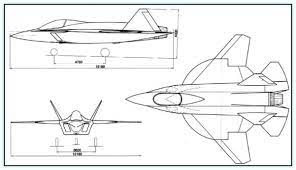
In one of those weird footnotes of aviation history, Mukhamedov, like Stavatti in the west, has been a maker of so-called “paper planes”. The company owes its existence to Fatadin Mukhamedov, a Soviet/Tajik engineer who had a successful career with the big bureaus (for instance, the Dushanbe center of Mikoyan) before striking out on his own. No actual aircraft were produced by the Mukhamedov bureau before Fatadin’s death in 2013, but the bulk had one specific shape.

Mukhamedov designed everything from fifth-generation fighters to gargantuan transports with the same distinctive circular inner wing. The most practical and achievable design was an advanced jet trainer/light strike aircraft for the competition eventually won by the Yak-130. Not coincidentally, the design may have found its way to Iran as the would-be HESA Shafaq. All of the other circular planes were just interesting and distinctive dreams.

But, in other timelines, dreams can come true….