Clustering launchers for fun and profit

You are a rogue state with limited resources, and you want to make more powerful rockets. What is your improvised expedient? The answer, be it in North Korea or (with the most documentation) in Saddam’s Iraq, is frequently to cluster existing engines.

And what kind of engines would they be? There are the ubiqutuous Scud derivatives, but there’s also something even more readily available-surface to air missile engines, especially those (ie, SA-2s) becoming ever-less effective against actual opposing planes. Iraqi rocket/missile designs made extensive use of repurposed Guideline engines.

It’s gotten to the point where I’ve been making (oversimplified, of course) hypotheticals using the launcher and ballistic missile online calculators. Just input the relevant characteristics, thrust and size dimensions for the engines/rockets in question, and see the result! Quite an interesting bit of diversion for me.

Review: Blue Masquerade

Blue Masquerade

T. K. Blackwood’s Blue Masquerade is a treat I knew I had to read. First, it’s one of those beasts that are as rare as left-handed baseball catchers or male calico cats-the conventional World War III novel that takes place as an alternate history after the Vietnam War. That its premise involves two of my personal tropes I wish got used more often made it even more appealing.

The first premise is that instead of the USSR backsliding after a successful August Coup or something like it, it reforms enough to avert such a thing. This happens here. Don’t expect to see MiG 1.42s or robot-turret supertanks here-it’s just the classic tanks and BTRs/BMPs. Still, it’s heartening to see this gimmick after wanting to for so long. The second is Yugoslavia, the tinderbox of Europe, being the catalyst for the war. This is a lot more plausible than some other World War III novels you may have heard about.

As for the substance of the book, I would call it a “51% World War III big war thriller”. It gets enough of the basics right and never comes across as truly “bad” in any way. That being said, I have seen everything it does being done better in other books. However, I’ll adjust for context, since this subgenre is extremely hard to do well. In that case, a 51% book is quite the accomplishment, like a baseball pitcher having a positive win-loss record while playing for an otherwise bad team.

If you like alternate history, conventional World War IIIs, or both, check this out. For another opinion, see Alexander Wallace at Sea Lion Press.

Review: Invasion Chronicles

Invasion: Chronicles

DC Alden’s “epic” ends with less than a bang in the last two installments, gathered with the previously reviewed two in the Chronicles omnibus. The politics do take an interesting turn, and that’s that the Evil Continental Caliphate is actually too feminist. It has women in its military in exactly the same places as its opponents (including such non-nurse/clerk roles as AWACS radar operator and explosives technician). And of course the evil collaborator ex-lawyer turned butcher governor (and not a figurehead one either) is a British woman. This all felt deliberate on the author’s part. It wasn’t a redeeming quality or the act of adapting something else. It made “sense” given how more of the vitriol was aimed at the “traitorious British” than the actual invaders, but adds to the creepiness of the books.

The last two entries, Frontline and Deliverance, have all the same issues of their predecessors. The camera is either jumping around various viewpoints or focusing on big arcs involving unsympathetic characters. Having to combine these together leads to plot contrivances clearly designed to make them tied when they shouldn’t have been. Sending a super-secret stealth aircraft to rescue several AWOL squaddies on an ill-conceived raid into Birmingham is the biggest example of this.

The conclusive battle involves a clumsy attempt at Fortress London that’s designed to try to fit a square peg into a round hole. Having to tie the high and low level parts together means it couldn’t just focus on individual danger, and having the previous war be so one-sided means a broad-scope view doesn’t work. There’s more contrived, artificial drama and a very strange series ending that’s at best a sappy dream sequence and at worst implying that the whole thing was just a nightmare (that would explain the military inaccuracies at least…)

So yes, having read this entire series, I can say that it deserves the infamy and scorn it’s gotten. Even accepting its premise as an invasion novel with all the inherent baggage, this could have been executed a lot better. As it stands, it was not.

Review: Invasion Uprising

Invasion: Uprising

DC Alden’s Invasion: Uprising follows the Anglo-American counterattack into occupied England, and manages to be (even?) worse than its predecessor in all that matters. The only real highlights are some middling amounts of mediocre cloak-and-dagger stuff and a few C-list infantry firefights, neither which can make up for the collapse elsewhere.

First, the big battles come across as something that could have been written by post-Sum of All Fears Tom Clancy. They involve Americans with supertech handily crushing their hapless opponents. Needless to say, they’re not very good. The weird and slapdash enemy arsenal is still there, as is the politics.

Criticizing an invasion novel for its politics is kind of like criticizing a professional wrestling match for its melodrama. But I feel obligated to note that the book seems to direct less of its anger towards the invaders themselves and more towards the British who enabled and allied with them, in a message that is not exactly subtle. From a series that started off iffily, this book has the “achievement” of sinking lower.

Fatadin Mukhamedov

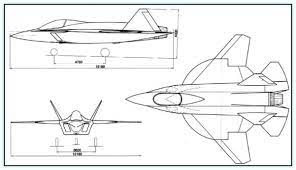
In one of those weird footnotes of aviation history, Mukhamedov, like Stavatti in the west, has been a maker of so-called “paper planes”. The company owes its existence to Fatadin Mukhamedov, a Soviet/Tajik engineer who had a successful career with the big bureaus (for instance, the Dushanbe center of Mikoyan) before striking out on his own. No actual aircraft were produced by the Mukhamedov bureau before Fatadin’s death in 2013, but the bulk had one specific shape.

Mukhamedov designed everything from fifth-generation fighters to gargantuan transports with the same distinctive circular inner wing. The most practical and achievable design was an advanced jet trainer/light strike aircraft for the competition eventually won by the Yak-130. Not coincidentally, the design may have found its way to Iran as the would-be HESA Shafaq. All of the other circular planes were just interesting and distinctive dreams.

But, in other timelines, dreams can come true….

Review: The German Aircraft Carriers

The German Aircraft Carriers

A book devoted to German aircraft carriers could have all the pages be blank and still be technically accurate. After all, the decision to not go ahead with them was one of the very, very few good ones the country made in World War II. But Simon Beerbaum’s work on them manages to show an excellent train of thought. For most of the actual writing and layout quality, what I said about the Russian carriers book applies just as well to this. What’s interesting is the content.

You might think that a compilation of never-built German designs would have a lot of weird ones as gargantuan as they were impractical. And you would be right. But there was a method to the madness of several. Intended as commerce interdictors, the carrier designs mostly had substantially large gun armament but smaller airwings. They resembled a pre-missile version of the Kiev “air carrying cruisers” in that regard. The book also covers postwar helicopter/VSTOL designs proposed by shipyards for export customers. It’s an interesting look at an interesting set of designs.

Review: The Soviet/Russian Aircraft Carriers

The Soviet/Russian Aircraft Carriers

It’s time to ring in the new year with…. another history book. This one is Simon Beerbaum’s book on Soviet and Russian aircraft carriers. It’s not just about the Kiev and Kuznetsov classes, which I feared it might have been. On the contrary, it has everything from pre-WWI czarist proposals to post-revolution plans for converting surplus ships (with limited technology/resources, it would have been easier to finish a large warship as a carrier rather than an armored, big-gun battleship) to never-weres like the Ulyanovsk and Project 11780 Kherson “Ivan Tarava” helicopter amphib based on the Kiev.

This is an amateur enthusiast project, so it has issues with formatting and inconsistent quality in the line drawings. Those are small issues, and if I had a bigger gripe, it’d be that far too little attention is given to the actual air wings of those carriers-the entire reason they’re built. It’s vague, especially when there’s no shortage of equally fascinating never-were carrier planes as well (from the Yak-141 to navalized MiG-23s to other exotics).

Still, this book does what it sets out to do. For a country whose carriers have arguably all been prestige peacocks, a lot of designs were made. If you want an intro to these flattops, you could do a lot worse than this book.

Soviet-Romanian War: Background

I’ve talked before about a Soviet-Romanian War that’s a kind of “Soviet Gulf War“. There have been many obstacles to me actually writing such a thing, ranging from “what do I do with it” to “it’s a little eerie seeing Russia’s OTL buildup and interventions, including currently off Ukraine…”. But I figure I might as well get the rivet-counting parts of it down now while they’re fresh in my mind.

The Setting

It is the year 199X. The USSR is still intact. The reason isn’t because, as in Northern Fury, the August Coup succeeded. Here, it never happened, and the result is a “Union of Soviet Sovereign Republics” ( Союз Советских Суверенных Республик ), which allows for the continued use of the “USSR”, “Soviet Union”, and “CCCP” abreviations. The resulting semi-decommunized USSR has varying degrees of freedom and business openness, and is best symbolized by a flag: Still red, but with the hammer and sickle replaced with a light green vertical stripe on the left and a darker blue one on the right (to symbolize Central Asia and the Western Slavic republics).

Its economy has also been better improved from the historical collapse, but it retains its gigantic spending on the military. Having a bigger pie and more access to the Asian tech industry helps a lot. The result is that one of my favorite OPFOR models, the “Mobile Forces“, can finally be put into practice.

Meanwhile, to its west, the renegade Romania has clung on. But the time has finally come to eliminate it…

(Yes, I haven’t thought of the casus belli yet. Oh well.)

The Combatants

The USSR is able to deploy the Dniester and Danube Fronts. The Dniester Front is to the north and is composed mainly of national-level deployment forces and local ones in the Ukrainian and Moldovan military areas. The Danube Front stages out of Bulgaria (the most docile Warsaw Pact ally), and consists mainly of Bulgarian units with a smattering of Soviet ones, often in support roles. The only other foreign ally participating in a major role is a by-now-fairly-stabilized Afghanistan, contributing a motor rifle division and various mountain/commando units to the Dniester Front.

Investment has paid off, as the new pride and joy of the Red Army, its “mobile corps” are ready and set to participate in the invasion. A new generation of equipment has entered service. Many of the local participants are less well-equipped (in Bulgaria’s case, sometimes severely less so). The force contains thousands of tanks, artillery pieces, and aircraft, many of them new.

Opposing it is a force long considered the bottom of the Warsaw Pact barrel. Romania has had time to introduce some external and indigenous weapons systems. It has also semi-openly planned for a conventional delaying action followed by irregular resistance since the Ceausescu/Soviet split. But it remains hopelessly outclassed.

The Plan

The Dniester Front will do the bulk of the heavy lifting, sweeping through Romania. The Danube Front’s main goal is to cut off Bucharest and the Yugoslav border to head off reinforcement or escape in that direction. The biggest airborne and special operations since World War II will be conducted to aid the advance, secure the western side of the Carpathian Mountains, and interfere with the Yugoslav crossing.

Romania’s plan is to simply hold off long enough to set up a guerilla oppositions. In addition to all their other problems, an insistence on holding down the more Hungarian northwest, if only with security troops, lingers. (Hungary proper cares little for either side and has almost no intervention ability).

The Outcome and the Story

Ah, now that’s what I want to write about. I have many vignettes in my mind as of now but less of a coherent narrative. Still, I think I’ll have fun trying.

World War 199X

The Zapad-99 exercise, the first massive maneuver conducted since the fall of the USSR, shows some interesting insight into the conduct of a World War III in the 1990s instead of the classic 1980s. The conduct of the exercise went essentially like this:

  • The OPFOR, or “Hypothetical Enemy”, as is the official Russian term for such things, launched a giant campaign in the Baltic/Belarusian region, overwhelming the overmatched CIS troops with air and missile power.
  • Kaliningrad was overrun by the Blueeaglelanders.
  • In the most famous and controversial part of the exercise, a limited nuclear “escalation by deescalation” after the fall of the exclave was conducted in which bombers attacked several important targets with cruise missiles. Two Tu-95s and two Tu-160s were successfully launched, and the missiles on those are enough to cause monstrous damage. (that’s 36 AS-15s with 200kt warheads. Ouch.)
  • Said targets are likely to be NATO bases in Europe and American bomber and logistics bases in the continental US.

To a degree, this era has already been explored, however imperfectly, in Arc Light and Red Hammer 1994. Northern Fury takes place in the 1990s but assumes a stronger, intact USSR and conventional weapons (at least for now…)

A Thousand Words: Ishtar

Ishtar

The film Ishtar, about a pair of dopey musicians that end up involved in a Middle Eastern revolution, is frequently labeled one of the worst films ever. Is it that bad? Not really. Is it bad, period? Kind of. See, it wants to be smart, but it fails spectacularly at being smart. When it lets itself be dumb, it has some good moments.

The highlight of the film is a scene in a bazaar involving a ton of secret agents with terribly stereotyped disguises. It had me laughing massively, and reminded me of the classic Oktoberfest scene in The Pink Panther Strikes Again. But the attempts at actually providing DEEP POLITICAL COMMENTARY? Not so much. Even some of the dumb comedy moments don’t work-there’s a scene later in the movie that involved arms dealers, natives, and the main characters “translating” by speaking gibberish that came across as contrived, unfunny, and honestly a little offensive.

The acting is iffy. Charles Grodin does a great job as a secret agent. The actor playing the emir of Ishtar is undeniably talented and would have worked well in a serious movie, but fails here where a Chaplin/Baren Cohen-style goofball dictator would have fit a lot better. The main characters are annoying and idiotic, but they’re meant to be annoying and idiotic. Does that help? You can decide.

It’s not the best movie of all time or even really “good”, but it doesn’t deserve to be considered one of the worst films ever.