Review: X-COM UFO Defense

X-COM UFO Defense

Video game novelizations do not have the best reputation. Keeping that in mind, how does Diane Duane’s work on the classic video game X-COM turn out?

The story of X-COM commander Jonelle Barrett running a base in Switzerland, Duane seems interested in making a huge effort to write about everything except fighting aliens. This by itself isn’t too bad. In terms of accuracy, X-COM, particularly the original, is as much about managing resources as it was battling the invaders. In terms of plausibility, no one’s going to be spending every waking moment shooting Sectoids. In terms of characterization, they shouldn’t be automaton spacesuit commandos.

And yet they basically are, for the book is about 95% pure padding. Descriptions of Swiss geography fill most of it, alongside what seems like an obligatory mention of every element in the game. The rest consists of half-hearted “she just looked at the names and wanted to get them over with” battles with redshirts that are every bit as expendable and forgettable as the actual minions one controls in the games. This is one of the most blatantly obvious “I did this for the money with no enthusiasm” books I’ve read.

Review: Edison’s Conquest of Mars

Edison’s Conquest of Mars

From energy guns to ancient aliens building ancient civilization megastructures, a lot of sci-fi tropes originated in Edison’s Conquest of Mars. Besides that, this book is fascinating because of how min-max it is. A sequel to War of the Worlds bootlegs (it’s a bit of a long story), author Garrett Serviss made-something.

On one hand, the prose is terrible and flat even by 19th Century standards. It’s a self-promoting effort by the title character/famous person. The plot goes against Wells’ theme to a ridiculous extent. The most ridiculous elements seem mundane when actually described. It was originally a short-form serial and it shows in the writing.

And yet so much of the sci-fi cheap thriller was started, or at least popularized here. This, is very much like seeing a video game or movie that’s at the very, very beginning of its genre. It looks horrifically crude in comparison to its later successors, but you have to start somewhere.

Review: The One Who Eats Monsters

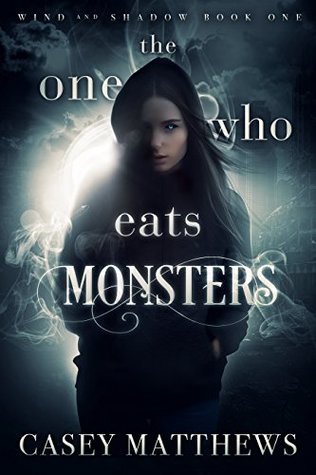
The One Who Eats Monsters

monstercover

Once again, Fuldapocalypse takes the plunge into a new genre. After seeing a good review of it on Spacebattles, I decided to read Casey Matthews’ The One Who Eats Monsters for myself.

This of course, is an “urban fantasy” novel, where you have supernatural entities hidden inside the modern world. Ryn, the protagonist is one of them, an ancient humanoid creature and vicious ‘hunter of monsters’. Throughout the book she alternates between being a vigilante and protecting a politician’s daughter she begins to develop very human feelings for.

Urban fantasy isn’t really a genre I read much of, although more for matters of admitted personal taste than any actual, inherent dislike. With that in mind, it was good for what it was. It definitely has some notable flaws. The human dialogue was often, er, “subpar”, and there were dramatic contrivances that made sense in-universe but still felt forced from a storytelling perspective.

But that’s more than made up for by the book having exactly what a cheap thriller needs to succeed-good action and good pacing. This definitely has both, although the sequel hook segment at the end is incredibly rushed.

The characterization is mixed but still ultimately positive. Many of the other characters are either shallow, stereotypical, or both. However, Ryn’s “monster with a conscience” is well-done, and that’s what matters most. Even the romance (and this is not a romantic fiction blog) is done surprisingly well-done.

One interesting note is that this is technically an alternate history novel. Among other things, supernatural shenanigans prolonged the existence of the Soviet Union (ah, those Fuldapocalypse zombie sorceresses). It reminded me, alternate history reader and writer, of this very big phenomena where a lot of fiction could be reasonably labeled “alternate history”, but because there’s no real incentive to do so, it isn’t.

I’m still not exactly a fan of urban fantasy, but I don’t regret taking a chance on a different genre with this book.

Review: Sandstorm

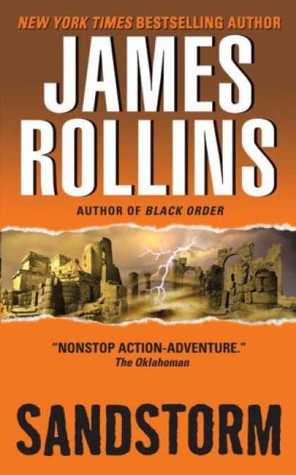
Sandstorm

sandstormcover

James Rollins’ Sigma Force series begins with Sandstorm.

I might have a little bit of “hype backlash” because of the way this series has been praised so much. I might also be used to ridiculous thrillers because of the way I’ve actively sought them out, so what seems utterly crazy to a less prolific reader might not be that way to me.

That being said, this was a very good, very out-there cheap thriller. I’d describe it as a more tacticool version of Clive Cussler. The ridiculous technobabble and ancient puzzle-solving is there, but the action (which is both incredibly frequent and often janky) is more conventional and, for lack of a better word, “tactical”, save for an amazing scene where someone dual-wields pistols on horseback. While I like it, it’s not the best ever in my eyes.


Review: The Nash Criterion

The Nash Criterion

After three stumbles, Erec Stebbins suddenly struck the right note with The Nash Criterion.

After one bad and two middling thrillers, Stebbins suddenly turns into Jon Land-if not Hideo Kojima- with this ridiculously overstuffed tale of a second American Civil War and ancient world-controlling super conspiracies. This book just was so over-the-top that I grinned at every single later page.

A lot of times it’s hard to review additional books in a series. This is not one of them, as it offers a distinct change. Many more times, if there’s a distinct change worth pointing out, it’s a negative one as the series drops in quality. Here, the opposite is thankfully true. The INTEL 1 series has gained in quality with this book, and I was very glad to see it.

Review: Life Without Giamotti

Life Without Giamotti

Sean Munger’s surreal Life Without Giamotti may be one of the most influential books I’ve read, with its surrealism influencing so much of my thinking with regards to fiction that I’ve sometimes had to step back and look to see if the tracks are there. For instance, my story thought of the pilot who finds his wingman is just a shell is, upon even a brief inspection, very much inspired by it. Possibly too much so. Oh well.

The narrative is a strange and unconventional one about an author and his character who has gained sapience. Perhaps fitting, it’s very hard to review. How can one score a book like this? It’s a strange book. Either you’ll think it’s a thought-provoking psychological story, pretentious emptiness, or a sum of parts that doesn’t quite add up to a whole. At times I’ve felt each of those opinions about this book.

Yet it’s well-written technically and its prose is sound. I can’t help but recommend it, to see if another reader will find it appealing.

Review: Manuscript For Murder

Manuscript For Murder

Jon Land took over writing the Murder She Wrote books, and Manuscript For Murder is the result. Inside a very thin shell of a cozy mystery, Land releases one of his thrillers, complete with the super-conspiracy of the week.

Jessica Fletcher starts by investigating murders (how shocking) and ends up following a enigmatic political thriller manuscript that turns into a murder-soaked conspiracy reaching to the highest levels of power. In other words, it’s par for the course for his books.

One strange factor is the context vs. the actual details. The former would make it weirder-after all, this is supposed to be a cozy mystery, yet it involves multiple gunfights and deathtraps. This is an older woman author, not Blaine McCracken. The latter, in comparison to Land’s other books, seems less weird, since this is still Jon Land we’re talking about.

That being said, the nameplate ultimately doesn’t matter much. This is a weird, bizarre quirky, and quick Jon Land book. I can understand why actual cozy mystery fans would be disappointed, but come on, this is the guy who had monster truck chases in his “proper” books. I can also understand why this is tamer than his “normal” books. Still, normally a book like this would sink into the mix. Shifting genres gives it a chance to stand out.


Review: Assault of the Super Carrier

Assault of the Super Carrier

supercarrierfinale

Peter Albano’s Seventh Carrier series comes to an ignominious end in Assault of the Super Carrier. The action has gotten incredibly repetitive, the worldbuilding feels like even more of a toy box, the novelty has worn off for a long time, the characters are horrifically stereotypical, and the base writing just isn’t good enough for eleven books.

There’s two things that make this last entry especially disappointing. The first is the “girl of the book” subplot becoming its sleaziest, most useless, and most distracting yet. The second is that there really isn’t an ending. There’s a battle that feels like every other battle in the series, a victory that should have been an arc-level one at best, and then the novel-and the whole series- just ends quickly.

What I’ve found after searching out books with novel setups is that they alone can’t carry a series. And this is the best example. Take away the goofy “carrier thaws out, jet/rocket engines get insta-zapped” setup, and all you’d have is something like Ian Slater, only with (even?) worse writing and a fixation on World War II military equipment. And like Slater, that’s not enough to sustain a huge amount of books by itself. Maybe the Seventh Carrier saga could have worked with three books. It couldn’t with this many.

Review: Daughters of the Night Sky

Daughters of the Night Sky

nightskycover

With Aimie Runyan’s Daughters of the Night Sky, Fuldapocalypse moves into yet another new genre-the Romance Centered Around Night Witches. It’s a little tricky to review, but I’ll try. The first “issue” is that this is obviously chick-lit, which is not something normally associated with the Eastern Front, for good reason. That the heroine falls in love with an artist is kind of the icing on the cake.

The second issue is that it feels like chick-lit and not like characters who are actually in the middle of a horrendous world war. What this came across as was “romance characters, plus add a few obligatory flying scenes and the occasional stereotype like a reference to blocking detachments.” While the author admits she wasn’t that knowledgeable about Russia or military aviation, it just feels too generic.

And that brings me to the third issue, which is that the actual flying isn’t very good. While I wasn’t expecting Dale Brown and while it’s actually admirable to not try and dwell on something you admit you don’t have much knowledge of, this still falls short. The problem is there’s too much of it and not enough research.

It would be like if a writer was making a story about American football (hey, I’m posting this review on NFL Draft day) and only knew the basic positions, such as quarterback and receiver. This would be obvious to those who read it and knew even a bit about the subject matter, but the writer still insisted on showing several games. This is like that, only with Polikarpovs instead.

As a whole, this is just a fluffy romance novel with World War II flying scenes and the characters having Russian names.


Review: Super Carrier

Super Carrier

supercarrier

Peter Albano’s “epic” series about a thawed-out Shinano fighting in a world where the clock is turned back lasted for eleven books. With me not considering the first two of be of the highest quality, and hearing that they got very repetitive, I jumped to the second-to-last installment, Super Carrier.

And I probably didn’t jump far ahead enough, for the tenth book is very much like the second, only worse. A gigantic chunk at the beginning is devoted to a overly long mission in a B-24. A smaller but still horrendous portion consists of a tank battle that is not exactly the equal of Team Yankee or Tin Soldiers. Then there’s the “romances” and the girlfriends getting killed horribly for “poignancy”. Neither is written well.

The retro dogfighting also appears clunkier than I remembered it being in the first two books, and the list of horribly written national stereotypes grows even larger. This book is only recommended to people who really liked the past Seventh Carrier entries.