Review: Armies of Sand

Armies of Sand

This is the first Fuldapocalypse nonfiction book review. Kenneth Pollack’s Armies of Sand is a semi-adaptation of his thesis, The Influence of Arab Culture on Arab Military Perfomance, and a semi-sequel to his book, Arabs at War. That looked at how Arab armies underperformed in the 20th century and examined the “how”. This looks more at the “why”.

Pollack uses bits and pieces from both Arab states at war and the non-Arab “control groups” to look at the four explanations-Soviet doctrine, over-politicization, underdevelopment, and culture. The first is a total red herring, with Pollack concluding that if anything, it was at least a little helpful. The middle two have had obvious influence, but can’t explain all of it. The final one is what he feels is the most satisfactory answer.

My biggest problem is his methodology, even though I think his conclusions are mostly sound. A lot of his sources are dated, some of the more lurid anecdotes are thinly-sourced, and a few times the implications go from the more reasonable “New York Knicks” (undeniably underperforming, sometimes significantly so) to the exaggerated “Washington Generals” (completely hopeless from start to finish at everything). This is the kind of argument where you need a lot of rigor, so seeing him pass on examples,  even those that would support his case like looking at the North Vietnamese air force when he used the Vietnam War in another control group, has made me raise an eyebrow.

Still, Pollack handles the cultural argument well, by pointing out education and particularly military training as how it took root. He stresses the dangers of stereotyping and, most importantly, shows both how culture and warfare can change and how workarounds were developed. All of the workarounds involved, in some form or another, a smaller army with a more selective choice of personnel.

Armies Of Sand is not and should not be the last word on the Middle East or military history, and should not be unhesitatingly accepted. But I still highly recommend it, and not just for information on Arab armies. Its study of politicization and underdevelopment in general is fascinating, and it’s well-written.
 

Review: The Yakusa Tattoo

The Yakusa Tattoo

aherncover

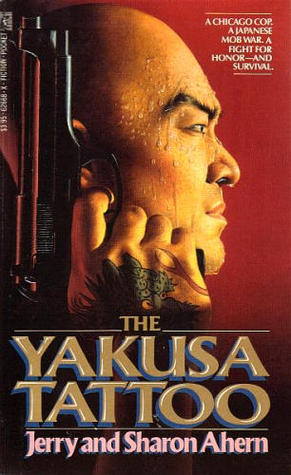
Jerry Ahern’s turn into (sort of) hardboiled detective fiction, The Yakusa Tattoo, is something.

Ahern has the stereotypical Hardboiled Vietnam Vet Police Officer being tasked to go to (a stereotypical) Japan for a secret mission. Cue a plot with everything from a Hunt For Red October-style super-submarine to lots and lots of ninja fights. What were you expecting from someone who wrote a 27-book centuries-long epic with Hitler’s corpse as a MacGuffin in one of the books?

The prose is – not exactly the best, to put it mildly. There are the huge descriptions of guns and holsters (although thankfully a Detonics only appears once). There are characters talking in gigantic blocky paragraph-speeches. There are perhaps a few too many fight scenes for the sake of fight scenes.

And yet it has the same “I’m not holding anything back” charm that the Survivalist series at its best had. I mean, it has ninjas and Cold War spy plots. And where else can you get a hardboiled Chicago officer storming an ancient castle?

Review: The Lost Codex

The Lost Codex

The third OPSIG Team Black book, The Lost Codex manages to sink lower than the first two-by a considerable amount. The bulk of the actual book is the most bland, clunky thriller against the most bland, generic terrorists imaginable, falling straight into the trap of being too “normal” to be bombastic but too exaggerated to be truly realistic.

This time, profiler Karen Vail is close to being a main character, and is handled in the worst possible way. She’s Miss Infodump and Miss Dragged Along Because The Plot Demands and , finally, Miss Action Heroine all in the same book.

But the icing on the cake is a barely connected bit of Dan Brown-style “secret religious history”. This is only linked to the “shoot the terrorist” plot in the thinniest, clumsiest way, and adds essentially nothing save for giving the book its title and a chance to sell it as being like Clive Cussler. It’s not. It’s worse. A lot worse.


Review: Master Of The Game

Master Of The Game

mastergamecover

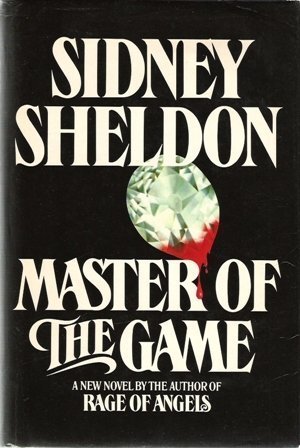
Sidney Sheldon’s Master of the Game is, on paper, the story of Kate Blackwell, an heiress to a South African diamond fortune-turned international conglomerate. In practice, Kate herself is only a supporting character.

First is a pulp-historical thriller as Kate’s ancestor makes his diamond fortune. Then it’s Kate herself and her son. Finally, and taking up most of the book, is the saga of Kate’s granddaughters, Eve and Alexandria. The feud can be described as the vicious, wicked, and evil Eve constantly attempting to kill the stupid and clueless Alexandria so that she can take all the family fortune for herself.

Like a lot of Sheldon’s other books, this throws in Big Historical Events (the Boer and World Wars) almost as an afterthought to make it look slightly “sophisticated”. The rise of Kate herself, which was the biggest reason I got the book, is too simple and too rushed. This is another one of Sheldon’s gimmicks-dress the book up in the trappings of a legal/business/political struggle but use that as the backdrop for a lurid soap opera.

Fortunately, it has the ridiculously melodramatic saga of the twin sisters, starting with Eve’s “Agent 47 meets Pinky and the Brain” assassination attempts and ending with a climax where one twin poses as the other (gee, I didn’t expect that).

This book is obviously trash, but I can’t help but like it. For a start, it’s not the product of ineptitude-this is from the hands of a skilled showbiz writer who knew how to play to the popular crowd. Second, it gets so cliche and so lurid, it actually becomes fun in a “really?” kind of way.

A Thousand Words: Command And Conquer Generals

Command And Conquer: Generals

EA’s 2003 real-time-strategy game Command And Conquer Generals was a fixture of my childhood. Along with Advance Wars, it was one of the two “bottom rungs” on the complexity ladder of getting me into wargaming. (From there came Fleet Command and Steel Panthers: Main Battle Tank, then came Command: Modern Air/Naval Operations and the rest is history).

In gameplay terms, it has the same benefits and flaws all RTSes do (A “turtle/murderblob” singleplayer, a “chess boxing” multiplayer that’s utterly different from single-player) and the specific issue all C&C-style RTSes have (infantry are weaker than they should be because vehicles can run them over). And, through no fault of its own, it has the awkward turn of the millennium “the graphics are 3D models, but they’re not the best 3D models” effect. It arrived at kind of the tail end of that, but still.

But what I think is most interesting is the tone. Beyond just the stereotypes and the “it’s ripped from the headlines, honest” parts, there’s some “iffy” parts. China has double-barreled megatanks but its infantry don’t even have AKs. F-117s are stealthier than F-22s because they’re stealth fighters, duh. It’s very much a “pop culture war” from the early 2000s.

Review: Rage of Angels

Rage of Angels

rageofangelscover

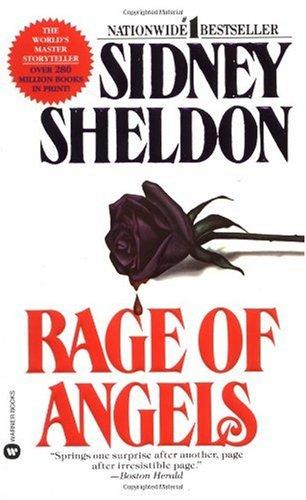
Sidney Sheldon’s parade of “gilded cheap thrillers” continues in Rage of Angels. This is the tale of lawyer Jennifer Parker and her twists and turns as she tangles with (and beds) powerful politicians and more powerful mobsters.

Now, it’s still a sleazy sow of a cheap thriller that smothers its face in just enough designer cosmetics to appear slightly respectable for those bookshelves. But for all its cliches, it’s considerably less sleazy and considerably more genuine than The Other Side of Midnight ever was.

This helps it a lot, as there’s more focus on the actual substance and less on forced pretentiousness. What this leads to is a virtuous cycle. Being able to dial back on some of the pseudo-splendor means the characters are more interesting, which in turn means that there’s less need for “look at this wonderful exotic place” filler…

The opening act is Fuldapocalypse’s first dip into that lucrative genre-the legal thriller. I know very little about law, but even I know that the cases move way too fast and that certain ones that I’m 99.999999999999999999999999999999% sure would result in a settlement end up in front of a jury so that Parker can win. Yes, I’m utterly and horribly shocked that a book reviewed on Fuldapocalypse is unrealistic. And I’m even more shocked that a lot of the later plot turns out to be contrived.

The later parts, although told in the faux-flowery style I’d come to know from Sheldon’s previous book, actually work better. The ending is rushed, but it’s actually less so than some of the outright pulp I’ve read. Sheldon knew his audience and knew his style, and by those standards, Rage of Angels works.


Review: The Dragons of Dunkirk

The Dragons of Dunkirk

dragonsdunkirkcover

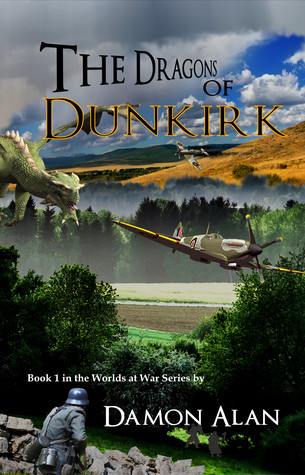
Damon Alan’s The Dragons Of Dunkirk grabbed me the moment I looked at the cover. Naturally, I thought of Harry Turtledove’s Worldwar series, only with fantasy invaders instead of sci-fi ones. I also thought of an early Fuldapocalypse review, Dark War Revelation, only set forty years earlier.

So, the German supernatural unlocking goes horrifically wrong, leaving the world exposed to a classical fantasy realm ruled by an ancient wizard (but not a zombie sorceress, sadly). Multiple characters of both sides take in the conflict as it ensues.

There’s a lot this book hasn’t done well. The dialogue is a little stiff, and the action not the best. The worldbuilding on the fantasy side isn’t the most truly distinctive.The characters, while adequate, aren’t more than that.

But what it does do well outweighs that. Alan manages to keep the conflict between a magical and technologically advanced side balanced in a way that doesn’t seem too contrived. (I’ll just say that bullets are something they can withstand to a big degree, but artillery shells are something else).

It has a great concept and an execution that, though imperfect, doesn’t squander it in any way. What’s not to like?


Review: The Circle War

The Circle War

circlewarcover

The second entry in Mack Maloney’s Wingman series, The Circle War remains every bit as ridiculous, if not more so, than the first. If one desires accurate depictions of military hardware, any kind of deep plot, or moral ambiguity, this book is not for you.

However, if you desire a tale of a man named after a fighter aircraft flying his super- F-16 from everywhere from Hawaii to Yankee Stadium, fighting everything from “air pirates” to Mongolian horsemen, and periodically recharging by bedding a beautiful woman jumping right into his lap, this book is for you.

What I like is that there’s absolutely no attempt at making this “realistic”, “plausible”, or “grounded” apart from sometimes getting the equipment names right (but only sometimes). It’s just a continent-spanning parade of goofiness, and that’s not a bad thing at all.

Review: Vortex

Vortex

Jon Land’s third novel, Vortex, is easier for someone like me who’s already read many books to review. This is because this is where the writing finally clicks. This is where Jon Land goes from “out-there thriller author” to “Jon Land.”

For all that The Doomsday Spiral and The Lucifer Directive were out-there, this manages to one-up them with its tale of cosmic manipulation, a conspiracy that threatens the universe (yes, the universe), and psychic powers. The foot is on the crazy car gas pedal and it never leaves. From here, it’s just a short step to the “majesty” of Blaine McCracken.

Review: Angels Of War-Veritas

Angels Of War: Veritas

In short, D. J Thompsons Angels Of War: Veritas is a ridiculous tacticool fantasy. This is not a bad thing.

So the son of a Secretary of State described as looking like a “rich preppie kid” leads a conspiracy/army of people in gray trenchcoats that takes over the US. These “Deciders” reminded me nothing short of the enemies in a B-list first person shooter game from the 1990s or 2000s. The main character, with the book told in first person view, is caught up in the struggle against them.

When I said the book was “tacticool”, I meant it. Everything-and I mean everything is in the lens of “describe every gun in detail, describe every armored vehicle in detail, have everymen-turned-super-operators carry out their operations against the evil trenchcoat-men with TACTICAL PRECISION.” In another context, I might have found it annoying. Here, when it’s accompanied by “level bosses”, every popular conspiracy theory being true, and a fight scene that reminded me of the Raiden-Armstrong showdown in Metal Gear Rising Revengeance, it’s part of the fun.

Is this the best written book? No. But I had a lot of fun with it all the same. It’s the sort of thing that’s just so gonzo and ridiculous enough that it fits my standards for being fun.

(This is the last book review of 2019. I’ll be wrapping things up with a year in review post and then on to the new year!)