Review: Skygods

Skygods: The Fall of Pan Am

Written by aviator and former Pan Am captain Robert Gandt, Skygods is the most fun I’ve had reading a history book in quite some time. First, I want to get the small negatives out of the way: This is very much a David Halberstam style ‘History as Narrative’ book, so I’d recommend taking specific claims with even more grains of salt. That said, everything important I did find corroborating evidence for.

The good part of this “history as narrative” is well, it feels great to read, flowing smoothly and going into the minds of people in a way that Gandt can clearly write from personal experience. And what he says about Pan Am is both interesting and dismal.

Pan Am’s decline, arguably inevitably terminal, started long before Lockerbie. It started long before deregulation. The impression I got from Skygods was that Pan Am was basically to airlines what Harley Davidson is to motorcycles: A wheezing lummox with poor fundamentals whose longevity was/is due to mystique over any practical advantage. There’s also the “British Industrialization” problem Pan Am had where being the first to do big international routes meant they were stuck with the most baggage.

So this is a great book I highly recommend for anyone, not just aviation/history enthusiasts.
Review: Hard Landing

Hard Landing

Thomas Petzinger’s Hard Landing is a 1995 book about the corporate wars in the airline industry. It’s naturally dated, but that’s not something it can help. I view it as a very good book that could have been great. Why?

On the plus side, there’s lots of things even I didn’t know. Everything from FDR’s attempt to renationalize the air transport industry that served as a rare early bungle to how the Gulf War was truly what finished off Pan Am is there. This is a very detailed history.

On the minus side, it misses the forest for the trees too often. We get long, long descriptions of meetings and takeovers mixed with the occasional vignettes that aren’t really relevant. Yet it’s not good at articulating the basic problem with airlines, similar to sports betting of all things: It’s hard to truly differentiate the product, and costly sales wars are one of the few weapons marketers have.

But there’s a lot more good than bad here. It just hit a triple instead of an inside the park home run.

The Atomic Bombs Are Not Controversial

Every August 6 this comes around, and I have to give my take. No, the atomic bombs were not controversial and were entirely justified. Totally justified. When Japan was already being starved and firebombed, when the bloodbath of Okinawa was fresh in sight, to not use the superweapons would be wrong even by 2020s standards, much less 1940s ones.

Were they horrific? Definitely. Were they a magic win button that guaranteed a peaceful surrender in place of an invasion that could have killed a million Americans and ten-twenty times as many Japanese? Not by themselves. Could you have wished the war would have ended without them? Of course.

But there was no way they were not being used, and they very well could have prevented something worse. Much worse.

Review: Red Bandit

Red Bandit

Mike Guardia’s Red Bandit is a brief history of the MiG-29, covering its basic designs and all the conflicts it participated in. Do not expect a technical deep dive or a massive tactical overview. This is a short and small book.

It’s also a book that won’t surprise any serious scholar. The MiG-29 was really just a rich man’s Fishbed meant as a point interceptor first and foremost. It did not have the versatility or capability of western 4th gen fighters or the Su-27. In most of the conflicts it’s fought in, it’s suffered heavy losses, though not always by fault of its own. We see its service in the Gulf War to Ukraine in a short overview.

This isn’t the most illuminating book on the Fulcrum. But it is an excellent start for a plane I have a soft spot for.

Review: Russian Gunship Helicopters

Russian Gunship Helicopters

The content of a book called Russian Gunship Helicopters should be pretty self-explanatory. Especially as it’s a Yefim Gordon book. This means you get tons of technical details that are uncited and frequently questionable, mixed with bad formatting and huge diversions into the pros and cons of various scale model kits. And a ton of pseudo-witty quotes that are really jarring compared to technical analysis. They come out of nowhere.

This book naturally covers the Mi-24, Mi-28, and Ka-50. As it was published in early 2013, it’s dated and doesn’t cover things like the Ukrainian and Syrian wars where these saw their first extensive use. It’s one big infodump and model kit review on the Hind, then one on the Havoc, then one on the Hokum.

The biggest problem is that while we get long explanations of what various components are on the helicopters, there’s one glaring omission. That’s how they’re actually used. The Mi-24 with its extensive track record is treated as an afterthought with Wikipedia-level “it flew around and shot things and occasionally dropped off people” simplicity. Reading a single Heavy OPFOR free document gives a lot more info on the actual doctrine of these things.

This is like many aviation enthusiast books: Weird and clunky but detailed. Even if in the wrong ways.

Review: America’s Favorite Son

GG Allin: America’s Favorite Son

The semi-autobiography (it’s a long story) of infamous “punk rocker” GG Allin , America’s Favorite Son is a look into the life and mind of someone who was legitimately not well. Going up to the “Ann Arbor Incident” which resulted in his longest of many prison sentences, the book is honestly disturbing. It does show Allin’s appeal, which was in the same category as the intentional train crashes that Scott Joplin immortalized.

Allin started off as someone who made simple, vulgar punk rock before shedding what talent he had and turning into an outright freak long before his overdose. This book does not paint a good picture of his mental state, and it’s supposed to be sympathetic. But reading it is an experience. Just like watching one of Allin’s “”””concerts””””.

The Stingley and the SA-2

Time to look at one of my favorite examples of “Statistics don’t tell the whole story.”

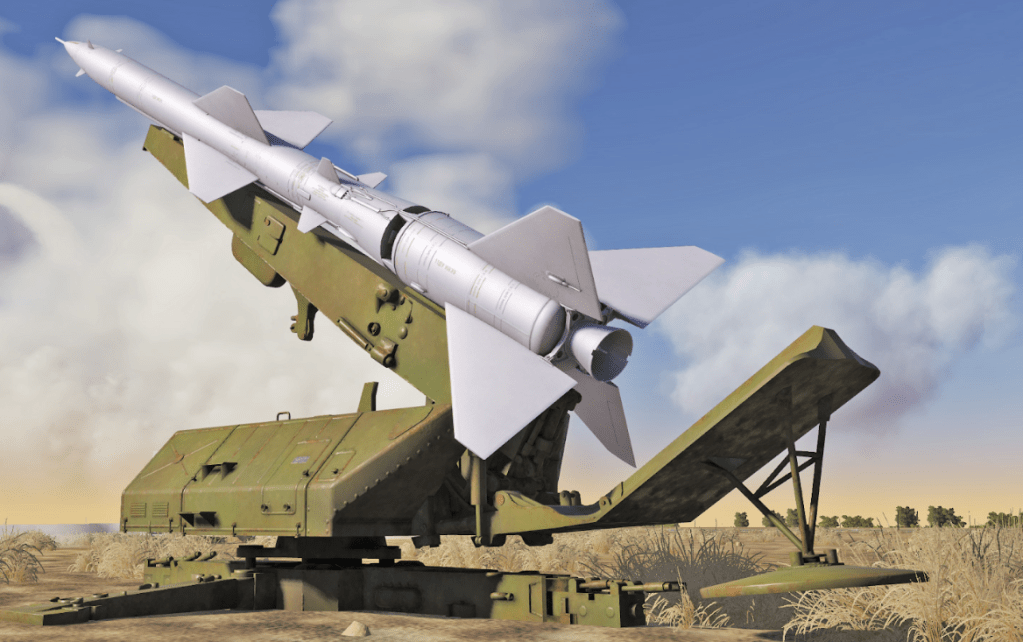
This is the SA-2/S-75 SAM. In Vietnam it accounted for only a single digit percentage of American losses. So it must be ineffective-right?

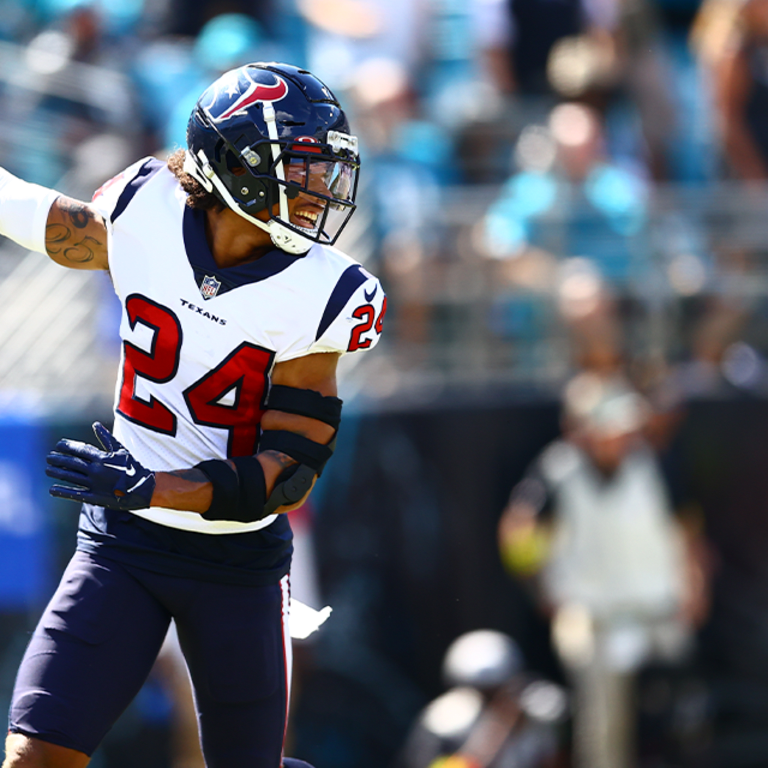
This is Texans cornerback Derek Stingley Jr who just got a monster contract. But he’s never had more than five interceptions in a season, good but not even close to league leading… Overpaid, or?

Or maybe SA-2s forced planes down low into the teeth of AAA and maybe the best corners succeeded because opposing QBs are deterred from throwing in their direction to start with.

Review: Military Strategy For Writers

Military Strategy for Writers

I’d love to see a book that can concisely explain strategic concepts to non-army nerds. But Stephen Kenneth Stein’s Military Strategy for Writers is not that book.

The biggest problem is the tone. It’s less “here’s what strategy is and why it’s often overlooked” and more “The generals are idiots, the writers are idiots, but I the great Historian shall tell you why all of them are wrong”, a tone that at absolute best is unhelpful.

It doesn’t help that I see typical pop-history cliche sneers that trigger alarm bells. WRT Vietnam and Iraq, for example it,s “hurr durr greeted as liberators” (during the actual invasion, that was largely accurate) and “Hurr durr us did big conventional war in Vietnam not smart coin like the British in Malaysia ” (they did that because the north was also doing it, with large northern armies being a complication that pure guerilla wars never had).

Ironically you could use Vietnam and Iraq to show the limits of strategy. Like the best case in Vietnam was going to be a Korea-style divided country, likely without South Korea’s economic boom. As a powder keg held together solely by a dictator’s lash and with a neighbor that had the ability to stir up trouble and the reasonable fear it could be next, Iraq was always going to pose a challenge.

Anyway, it fails to balance storytelling. Like yes, you get unrealistic amounts of decisive battles in fiction, but that’s because not every work needs or wants to be a hazy grey tale and because decisive conflict works for storytelling.

The Draft Bust That Changed History

It’s almost Super Bowl time, and it’s Black History Month. So I figure I’d post this tiny bit of gridiron history I was checking out. So if you were to list pioneering black quarterbacks overcoming the past stereotypes of the position to thrive in pro football, maybe you’d pick the first starter in the modern era, Marlin Briscoe. Or maybe Doug Williams, the first to win a Super Bowl. Or Warren Moon, the first superstar.

How about seemingly forgettable draft bust Andre Ware? Picked out of Houston college by the Detroit Lions no. 7 overall in 1990, he sputtered out in the pros. Now the “how” isn’t really the point of this article. From what I’ve read, it was a college scheme that didn’t really translate well to the pros, especially at the time. That white quarterback David Klinger followed a similar “went to Houston, was drafted high, and was a pro bust” seems to support that. But again, that’s not really the point.

The point is that Ware set a precedent for drafting black quarterbacks very high that has never stopped. Looking at later drafts:

  • 1995: Steve McNair: 5th overall
  • 1996: Tony Banks: 42nd overall, second round, however was first quarterback picked
  • 1999: Donovan McNabb (2nd), Akili Smith (3rd), Daunte Culpepper (11th), this was the final nail in the coffin

Now obviously high draft picks are not total evidence of prejudice being eliminated. But it is interesting to note see the exact moment when, in practical terms, the tide turned.