Weird Wargaming: The Jeep Compass Army

Using variants of civilian vehicles from Model Ts and Rolls Royces in World War I to the omnipresent Land Cruisers and Hiluxes of today is nothing new. But I saw a proposal from an Indian armoring firm (which also advertised the boxiest armored vehicles ever) for uparmored Jeep Compasses, and my brain sparked. After all, compact crossovers like it are so common now, so why not send them to war? This isn’t like the classic jeep, even in its latest form.

Well, there’s obvious reasons against it. It can barely fit five normal-sized people without wargear. Five big soldier men with all their equipment would probably be a nonstarter. You could use it as a pure weapons carrier-but the disadvantages of that would be obvious as well. There are plenty of off the shelf SUVs far more suitable… but I don’t care.

The Compasses would be used by recon/raiding teams, being too small (regardless of how many people you can stuff inside) to be a line carrier. The least bad option, of gun vehicles, involves a crew of three with extra munitions in the (gulp) trunk/back. Even then, the Compass has a max payload of only around 1,100 pounds/500 kilograms. Which would probably have been eaten up by the armoring, but I’ll let it slide for now.

So, here it goes:

  • Command vehicle: Unit commander, driver, comms equipment, aide, maybe lighter machine gun RWS.
  • Personnel Carrier: Driver, 2-4 additional troops, lighter machine gun RWS.
  • Weapons Carrier: Driver, Gunner, Commander, either light missile or heavy machine gun.

The number of vehicles of each type depends on the exact mission. And the Jeep Compass could be replaced by any light SUV. And I do not recommend actually trying these small light SUVs unless you have no other choice.

Even Cheapies Are Expensive

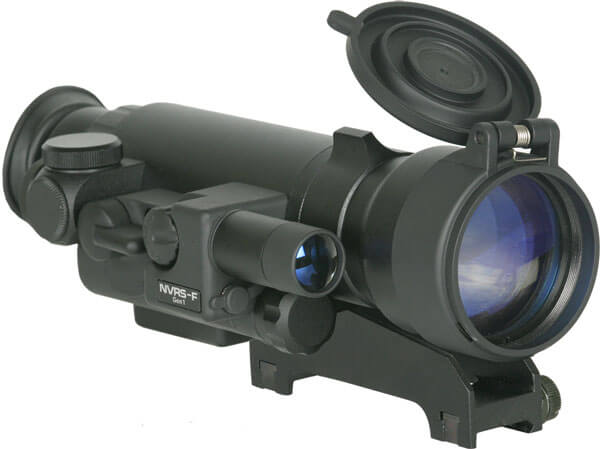
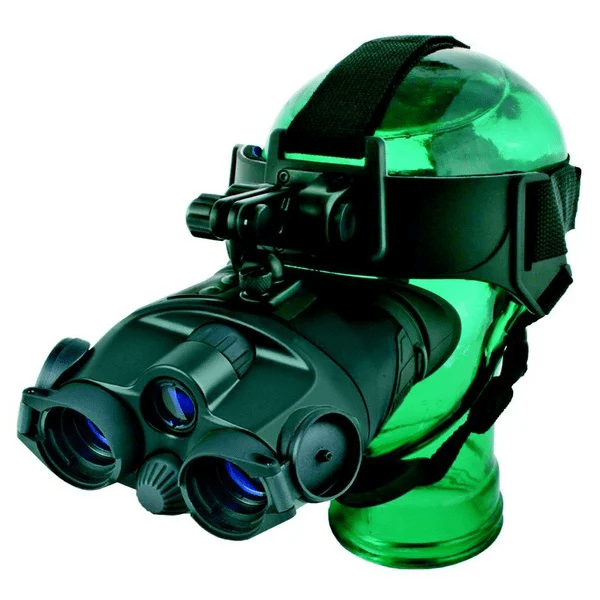
So take these cheapie eastern night vision division devices: Good for a range of 150-200 meters depending on context, around $700 a pop. Both goggles/binoculars and rifle scopes for different contexts.

Yukon Tracker
Yukon NVRS Scope

To equip the line personnel (defined here as those in the actual fighting regiments/brigades) of one small division in the absolute most oversimplified fashion would be around $7-10 million, depending on the exact size. Getting around 5,000 sets, but then there comes the hard part: Maintaining 5,000 sets, keeping track of 5,000 sets, making sure that those 5,000 sets aren’t lost (via honest or dishonest means…), and so on.

Now apply this to almost any even slightly expensive piece of military equipment and you can see why, for instance, Egypt still issues its draftees equipment left over from the Yom Kippur War. That’s an extreme example, but you can see how even the individually “cheap” stuff can be expensive, particularly for less funded armies. And you can see both the political and military advantage of reserving such a thing for “elite” units if one has no choice but to only acquire a limited number of said items.

And you need a lot of stuff, to the point where it’s almost an “I, Pencil” situation. Boots, uniforms, load bearing equipment, helmets, packs, shelters, it all adds up. The bottlenecks can appear where you wouldn’t think they would. For instance, many people know of WWII Germany’s fuel shortages, and historians know of their special alloy shortages, but what a lot of either don’t know is of their cotton shortage resulting in less effective leather load bearing equipment.

Review: The Counter Terrorist Manual

The Counter Terrorist Manual

I’ve had a soft spot for Leroy Thompson’s The Bodyguard Manual, simply because of its excess. Sadly, The Counter Terrorist Manual is not quite as well, excessive. The impression I got of this was, well, like one of those “here’s what happens!” picture books, giving a very basic history and overview of SOF units. So it’s not even a book for mall ninjas. It’s a book for wannabe mall ninjas.

But, that’s not necessarily a bad thing. This does give the idealized basics of counter-terror special forces. Just take everything in it with a highway truck of salt and you’ll be fine. And don’t read if you desire the slightest depth or critical perspective.

Review: Ice and Monsters

Ice and Monsters

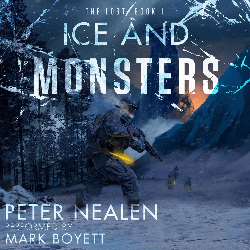
When I saw that Peter Nealen was doing an entry in the same “Wargate” military isekai series as Forgotten Ruin, I knew I had to instantly get it. So I did instantly get Ice and Monsters. It has the same basic concept as Forgotten Ruin, only the deliberate expedition gives way to an inadvertent gate transport, as recon marines on an exercise near Norway find themselves in a Norse-themed horror fantasy world. It also has the same basic strengths-and weaknesses.

The strengths are that the action is good and the modern forces weaknesses and vulnerabilities are emphasized instead of their capabilities and advantages. The weaknesses involve not taking advantage of the potential for worldbuilding in favor of just an artificial swarm of trash mobs. What’s grated upon me after seeing it the second time is the nominal commander being a cross between a Gorman-style out-of-his-depth boss and a “we need to talk things out” nebbish. As the narrator even admits, you should have to see what local ties you can forge when severely outnumbered.

But nope, the captain is clearly duped by the Evil Magic Viking one-dimensional savages from the get-go, and all hints of moral ambiguity are tossed aside once the protagonists find a set of imprisoned “good guys”. How convenient! Yes, it’s a cheap thriller in what’s openly stated as an Adventure Friendly World. But a little more worldbuilding would go a long way.

Also there’s a personal stylistic nitpick, which is that Nealen clearly is comfortable writing in first person when I prefer his third person thrillers. But I kind of expected that. This is a decent cheap thriller but it still could have been better with just a bit more thought and finesse.

Weird Wargaming: The Soviet-Romanian War

If you want to use small-unit wargames in my never-was draft percolating of a futuristic USSR deciding to finish off a surviving Ceausescu, some basic guidelines. Obviously, it’ll depend on the exact ruleset, but here’s the basics:

Union of Soviet Sovereign Republics

The USSR, under a Sovereign Union that in real life got scuttled by the August Coup, follows the 1990s GENFORCE “Mobile Forces” concept. Which is to say a multi-tier force. The “Basic Forces” divisions resemble slightly better late Cold War ones. The Mobile Forces ones have more futuristic equipment, better body armor/night vision, and substantially better training.

Mobile Forces battalions are organically combined arms mixed. APCs/IFVs are three to a platoon with each squad having a magazine LMG and rocket launcher. Company weapons platoons have lighter ATGMs and belt/tripod GPMGs. All Mobile Forces mechanized battalions have a large number of organic 2S31s (or Nonas for less-equipped formations).

Given the terrain, mountain formations have been plucked and sent in. GENFORCE mountain brigades are a four-infantry-one-tank battalion setup with supporting equipment suited for high altitudes (ie, lighter and higher-angle artillery). They also have a separate APC battalion that can be used to motorize if the terrain is appropriate. The one historical Soviet mountain brigade was inherited by Kyrgyzstan and consisted of two BMP and two soft-skin battalions with some attached cavalry and pack animal units.

Soviet Allies

The main contributors to the Soviet effort are Bulgaria and the stabilized Afghanistan. The former mobilizes to its full ability, which means it runs the gauntlet from “1980s NSWP” to “T-34s and World War I heavy artillery” (hey, if it can shoot and make a big explosion, it’s still worth something). The latter contribute a fairly standard BTR-equipped motor rifle division and numerous commando units.

Romania

Romania has a regular army with a degree of military modernization that it lacked. While select units have SRBMs based on foreign civilian sounding rockets, bespoke grenade launchers, and more (comparably) advanced tanks like the bizarrely shaped TAA, others are bottom of the barrel. All units should be mostly low quality, but some (particularly Securitat irregulars) will have better morale than others if applicable.

Organizationally, most should resemble lower-tier eastern forces.

Review: Small Unit Tactics

Small Unit Tactics

Because of a desire to write action scenes that are at least slightly more maybe, kinda-a-little more realistic than “hand cannons and elbow drops”, and because I’m a sucker for instruction books, I’ve been dipping into visual tactical guides. These are the kind of things the infamous Paladin Press would publish, and aim to translate from field-manualese to English (a more charitable interpretation is that they’re aimed at genuine military personnel and try to make legitimately important stuff clearer). One of them is Matthew Luke’s Small Unit Tactics. How is it?

This book focuses almost entirely on the ambush. Because I actually enjoy reading field manuals for fun, there wasn’t a lot I didn’t already know. But this is a clear example, and it talked about ambushes in a way different from how I’d previously read about them. Maybe because I had read so much about irregular forces, the type most firmly in my mind was “fire, do as much damage as you can, and then immediately try to escape”. The book talks about a further close assault, and labels that kind a mere “harassing ambush”, used mainly for deterring patrols/reaction forces.

This is a good resource for fiction writers and/or armchair generals. The pictures and photos (mostly of military exercises practicing the type of actions written in the book) are well-done, the text is well done, and it can be applied to almost any type of formation. Yes, the classic OPFOR has the simplest foot infantry tactics (unitary squads deploying in lines), but those unitary squads are still capable of launching an ambush. It’s not the be-all-end-all of research, but it’s still a very good component.

Soviet-Romanian War: Background

I’ve talked before about a Soviet-Romanian War that’s a kind of “Soviet Gulf War“. There have been many obstacles to me actually writing such a thing, ranging from “what do I do with it” to “it’s a little eerie seeing Russia’s OTL buildup and interventions, including currently off Ukraine…”. But I figure I might as well get the rivet-counting parts of it down now while they’re fresh in my mind.

The Setting

It is the year 199X. The USSR is still intact. The reason isn’t because, as in Northern Fury, the August Coup succeeded. Here, it never happened, and the result is a “Union of Soviet Sovereign Republics” ( Союз Советских Суверенных Республик ), which allows for the continued use of the “USSR”, “Soviet Union”, and “CCCP” abreviations. The resulting semi-decommunized USSR has varying degrees of freedom and business openness, and is best symbolized by a flag: Still red, but with the hammer and sickle replaced with a light green vertical stripe on the left and a darker blue one on the right (to symbolize Central Asia and the Western Slavic republics).

Its economy has also been better improved from the historical collapse, but it retains its gigantic spending on the military. Having a bigger pie and more access to the Asian tech industry helps a lot. The result is that one of my favorite OPFOR models, the “Mobile Forces“, can finally be put into practice.

Meanwhile, to its west, the renegade Romania has clung on. But the time has finally come to eliminate it…

(Yes, I haven’t thought of the casus belli yet. Oh well.)

The Combatants

The USSR is able to deploy the Dniester and Danube Fronts. The Dniester Front is to the north and is composed mainly of national-level deployment forces and local ones in the Ukrainian and Moldovan military areas. The Danube Front stages out of Bulgaria (the most docile Warsaw Pact ally), and consists mainly of Bulgarian units with a smattering of Soviet ones, often in support roles. The only other foreign ally participating in a major role is a by-now-fairly-stabilized Afghanistan, contributing a motor rifle division and various mountain/commando units to the Dniester Front.

Investment has paid off, as the new pride and joy of the Red Army, its “mobile corps” are ready and set to participate in the invasion. A new generation of equipment has entered service. Many of the local participants are less well-equipped (in Bulgaria’s case, sometimes severely less so). The force contains thousands of tanks, artillery pieces, and aircraft, many of them new.

Opposing it is a force long considered the bottom of the Warsaw Pact barrel. Romania has had time to introduce some external and indigenous weapons systems. It has also semi-openly planned for a conventional delaying action followed by irregular resistance since the Ceausescu/Soviet split. But it remains hopelessly outclassed.

The Plan

The Dniester Front will do the bulk of the heavy lifting, sweeping through Romania. The Danube Front’s main goal is to cut off Bucharest and the Yugoslav border to head off reinforcement or escape in that direction. The biggest airborne and special operations since World War II will be conducted to aid the advance, secure the western side of the Carpathian Mountains, and interfere with the Yugoslav crossing.

Romania’s plan is to simply hold off long enough to set up a guerilla oppositions. In addition to all their other problems, an insistence on holding down the more Hungarian northwest, if only with security troops, lingers. (Hungary proper cares little for either side and has almost no intervention ability).

The Outcome and the Story

Ah, now that’s what I want to write about. I have many vignettes in my mind as of now but less of a coherent narrative. Still, I think I’ll have fun trying.

The Camouflage Sweepstakes

For some time after the fall of the USSR, the independent Russian military was known for its huge array of often-mismatched camo patterns. Even after the “digi-flora” standardization, this remains true to a degree (as in other armies-look at the classic “Woodland vest over desert camo” look in the Iraq War.)

For the camo sweepstakes of a surviving Red Army, I see a few options.

  • VSR-93. This pattern historically was in development when the USSR collapsed. There’s no reason why an intact, better-funded USSR wouldn’t be able to standardize.
  • TTSKO. This was an existing camouflage pattern widely continued by ex-Soviet republics.
  • For a more fanciful idea, a type of early digital camo could be adopted. As it stands, one was adopted by an ex-SSR, with Latvia’s “LATPAT” camo. Although not to the degree of the American Dual-Tex, the “pixels” are still significantly bigger than most other digital patterns.
  • Something else. Even in Russia itself, the Interior Troops adopted many patterns that could easily be used for the regular army.
  • Simple legacy pattern uniforms.
  • A combination. The GENFORCE-Mobile concept gives me the idea of the Mobile Corps and Airborne Forces having “fancier” uniforms.

Formations in the Fog Of War

Two previously speculated-upon formations that have not had much evidence to substantiate their (exact) existence include Iraqi “Special Forces Divisions” and the “Islamic Regiments” of the 1980s Afghan mujaheddin.

The former were depicted as regular army formations containing soldiers with at least some greater training and morale than the bottom-of-the-barrel rabble. They were fairly conventional triangular motorized infantry divisions in terms of structure, operating in either trucks or wheeled APCs. These divisions contained no organic (part of their structure) tanks, but could easily get them cross-attached if need be.

The latter were supposedly black-clad formations of raiders with more organization and standardization than the usual bands, but nothing (usually) heavier than normal crew-served weapons. They consisted of about 600-900 people broken into multiple small battalions. It’s worth noting that their layout does bear a resemblance to the kind of “guerilla regiments” that Mao described in detail in On Guerilla Warfare.

Of course, there is a hint of truth to these formations. There were/are large commando formations in the Iraqi and especially Syrian armies, the Republican Guard did have an unambiguous “Special Forces Division”, and the mujaheddin did occasionally operate in formations the size of the fabled “Islamic Regiments”, as well as deploy better trained and equipped subunits. This is of course is what leads to the inevitable exaggerations.

And also, the joy of generalist wargaming rules and alternate history is that these units can easily be simulated as if genuine. Neither requires much in the way of exotic equipment or modifiers to use.

Review: Point of Impact

Point of Impact

Stephen Hunter kicks off his Bob Lee Swagger (aka Deadshot-13) series of sniper thrillers with Point of Impact. I was eager to finally get the chance to read this book, as I’ve heard good things about the series. I was not disappointed. This was a great novel.

Now, granted, there are some bumps. The amount of machismo in the writing’s tone is a little much even for me. More importantly, it has an awkward mix of “Herman Melville for snipers” where it talks about grounded, important setting up for a shot, and “Sniper John Rourke” where the main character can fight at the level of a video game hero and make very accurate shots in a very short amount of time.

But these are not deal-breakers by any means. The action is excellent. The book is long yet well-paced and never feels like it drags on. It has the “slow buildup” of Jon Land at his best applied to a much more serious plot and executed quite effectively. Finally, the big twist feels like an unintentional/accidental critique of the worst “shoot the terrorist” thrillers where the main character doesn’t actually have that much agency. This is definitely not one of those.

I loved this book. I recommend this book. It’s not the absolute best thriller I’ve read, but it’s definitely up there.