Review: The Sword of the Templars

The Sword of the Templars
swordtemplarscovers

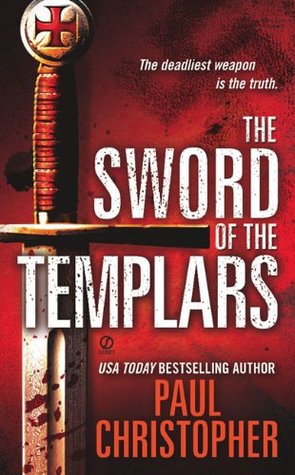
A work in the genre of “Templar Catholic Secret History” thrillers that followed in the wake of The Da Vinci Code, Christopher Hyde’s (under the pen name “Paul Christopher”) The Sword of the Templars manages to be somehow fun. Even though by all “normal means” it shouldn’t be.

First, it manages to check every single box one could imagine in a thriller like this. Everything from the academic hero to the unreformed Nazi descendant villain to the general shenanigans to the nature of “the secret” did not exactly surprise me when it was revealed. Second, I’ll just say it sticks to the thriller norms in terms of plot, pacing and action. Third, there’s lavish descriptions of every place that seem different. Fourth, the research ranges from too precise (knowing what color a box of commercial Prvi Partizan ammunition comes in) to too obviously wrong (calling a “point guard” a football position and, worse, describing the details on a submachine gun in terms dubious at best and wrong at worst). Fifth and finally, there’s a lot of blatant direction mentions of other popular books, the very definition of throwing stones from a glass house.

However, it all works somehow. The ability of the villains to throw one goon after another with just the “right” amount of capability against the heroes, the secret history that’s somehow both ridiculous and bland at the same time, and the actually sound literary fundamentals made this readable. In fact, I might say I liked it in part because it hit each and every cliche-it felt like it was to action hero thrillers what Thunder of Erebus was to technothrillers.
Review: The Dragons of Dunkirk

The Dragons of Dunkirk

dragonsdunkirkcover

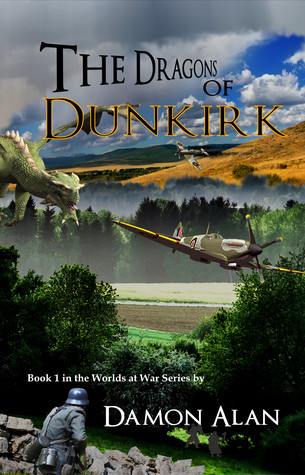
Damon Alan’s The Dragons Of Dunkirk grabbed me the moment I looked at the cover. Naturally, I thought of Harry Turtledove’s Worldwar series, only with fantasy invaders instead of sci-fi ones. I also thought of an early Fuldapocalypse review, Dark War Revelation, only set forty years earlier.

So, the German supernatural unlocking goes horrifically wrong, leaving the world exposed to a classical fantasy realm ruled by an ancient wizard (but not a zombie sorceress, sadly). Multiple characters of both sides take in the conflict as it ensues.

There’s a lot this book hasn’t done well. The dialogue is a little stiff, and the action not the best. The worldbuilding on the fantasy side isn’t the most truly distinctive.The characters, while adequate, aren’t more than that.

But what it does do well outweighs that. Alan manages to keep the conflict between a magical and technologically advanced side balanced in a way that doesn’t seem too contrived. (I’ll just say that bullets are something they can withstand to a big degree, but artillery shells are something else).

It has a great concept and an execution that, though imperfect, doesn’t squander it in any way. What’s not to like?


Blog Updates

So I’ve made a few updates to this blog in light of it becoming my sole focus after halting new posts on the Creative Corner.

First and biggest is: Fuldapocalypse now has a proper domain.

Second and considerably smaller is that I’ve enlarged the tag cloud yet again. Hey, I’m reviewing a lot of authors and branching out into ever-more genres, so I felt it appropriate at this time. I might be making a few more changes, so don’t be surprised if the blog looks different.

Review: The Circle War

The Circle War

circlewarcover

The second entry in Mack Maloney’s Wingman series, The Circle War remains every bit as ridiculous, if not more so, than the first. If one desires accurate depictions of military hardware, any kind of deep plot, or moral ambiguity, this book is not for you.

However, if you desire a tale of a man named after a fighter aircraft flying his super- F-16 from everywhere from Hawaii to Yankee Stadium, fighting everything from “air pirates” to Mongolian horsemen, and periodically recharging by bedding a beautiful woman jumping right into his lap, this book is for you.

What I like is that there’s absolutely no attempt at making this “realistic”, “plausible”, or “grounded” apart from sometimes getting the equipment names right (but only sometimes). It’s just a continent-spanning parade of goofiness, and that’s not a bad thing at all.

Weird Wargaming: Iron Eagle

Weird Wargaming: Iron Eagle

One may not expect a cheesy 80s action movie to produce a viable wargaming setting. Yet Iron Eagle offers a strange example of this.

The antagonist country in Iron Eagle is basically “close to Libya without saying Libya”. Several years before the Gulf War, the Middle Eastern antagonist du joir was Libya and not Iraq, and a hint at the end about Chappie being picked up by an “Egyptian trawler” gives another hint.

Equipment/Organization

First, the obvious issue. As Iron Eagle was filmed in Israel, we got Kfirs as “MiG-23s” and AH-1 Cobras as the enemy helicopters. Now the Mirage (which the Kfir is a variant of) is a hugely prolific fighter series serving in many air forces, including Iraq’s and Libya’s. The Cobra, not so much, but some other medium “attack helicopter on a transport platform” could stand-in.

It depends on the degree of “actor” vs. “character” the player wants.

For organization, Libya serves as an obvious inspiration, along with many other Middle Eastern countries. Having looked at various scenes of aircraft lined up, 5 to 6 appear on one side of a runaway, and six are depicted in one flight formation, for exact detail.

Proficiency

Considering that the antagonist nation failed to stop a pair of F-16s, including one which landed and took off again , that they’re based on Libya, a nation with a bad track record in conventional war even by the standards of 20th-century Arab armies, and they have incredibly poor munitions discipline (what else can explain every building going up in giant flames?), it’s safe to give them specifically a low overall proficiency in settings that allow it.

Other Notes

There’s two specific things I’ve considered for Iron Eagle. The first is to go “what realistic force would you need, against a pseudo-Libyan OPFOR, to have even a slight chance of rescuing the colonel”.

The second is how it leads into one of my pet projects, designing a generic Middle Eastern OPFOR country for wargaming purposes, with the working title “Seleucia” (after the Seleucid Empire), since a nameless, vague country fits that.

Conclusion

-Low proficiency in settings that allow it, for equipment use either Libya or whatever you’d expect a country of that nature to reasonably have, and have them be guarding a prisoner if you want to “realistically” (to the degree that such a thing is even possible) reenact the movie.

Review: Vortex

Vortex

Jon Land’s third novel, Vortex, is easier for someone like me who’s already read many books to review. This is because this is where the writing finally clicks. This is where Jon Land goes from “out-there thriller author” to “Jon Land.”

For all that The Doomsday Spiral and The Lucifer Directive were out-there, this manages to one-up them with its tale of cosmic manipulation, a conspiracy that threatens the universe (yes, the universe), and psychic powers. The foot is on the crazy car gas pedal and it never leaves. From here, it’s just a short step to the “majesty” of Blaine McCracken.

Review: The Third World War, August 1985

The Third World War: August 1985

hackettcover

John Hackett’s Third World War was, even more than Red Storm Rising, the book that started off the subgenre this blog was founded on. Thus I figured making it my first review of 2020 was an appropriate milestone.

This is incredibly hard to review. I was initially very dismissive of this book when I read it. And in an isolated “spherical cow” sense, I still feel that way.

Compared to Team Yankee, Red Army, Chieftains, and even RSR itself, it offers very little in terms of literary quality. It’s dated (there’s a reference to Abrams as “XM1s”, which is kind of like calling T-64s “Object 432s”). It’s a mixture of straight “pseudo-history” and clunky, sometimes dubiously written vignettes, all stuffed together awkardly. It has, with the Birmingham-Minsk “trade”, one of the worst examples of plotnukes ever. The whole thing is a political lobbying document in the shape of a novel.

And yet, this is perhaps the most context-affected book I’ve ever read. To someone like me who treated the Heavy OPFOR Tactical as casual reading and has seen many, many primary sources, it’s not novel in any way. To someone of that time period, especially someone who wasn’t an analyst, it definitely would be. The nature of this book makes its novelty even more essential than normal, due to its shortcomings.

Hackett’s Third World War has a few interesting scenes, like the chapter detailing how the general public saw the war. It deserves credit for being the first out of the gate. While I originally thought that it was a bad influence on later books of its type, a more thorough reading of the “big war thriller” subgrene reveals that it really wasn’t.

That being said, to a modern audience, it’s still really nothing more than an even more dated version of The War That Never Was, with all the baggage you might expect from it. It’s a very important historical piece and is worth a read for that alone, but it hasn’t aged well.