In the past, I’ve made three entries in the Command LIVE series of DLC scenarios for both Command: Modern Air Naval Operations and its sequel, Command: Modern Operations.
Now I’m proud to say that my fourth, Sahel Slugfest, has now been released.

In the past, I’ve made three entries in the Command LIVE series of DLC scenarios for both Command: Modern Air Naval Operations and its sequel, Command: Modern Operations.
Now I’m proud to say that my fourth, Sahel Slugfest, has now been released.
I’ve come across a declassified CIA document from 1972 illustrating a speculative Soviet air campaign in a Cold War turned conventionally hot. Having just emerged from the nuclear monomania of the past decade, it shows the weaknesses of the Soviet air forces in what was new territory for them. Almost everything was either too short-ranged, too vulnerable, carried too small a bomb load for conventional war, or a combination of the above.
That being said, it still would be very formidable to oppose, especially by the standards of “we only need to hold the air above the North German Plain for a few days”.
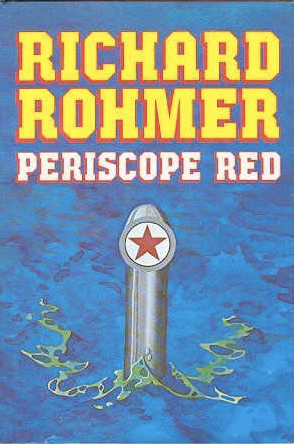
Richard Rohmer’s Periscope Red is a novel ahead of its time in the worst ways. That its concept of a Soviet covert-to-overt campaign against the world’s oil tankers is interesting makes the flawed execution all the more disappointing. The presence of numerous conference rooms and technical infodumps without any substance or excitement to “balance” them leads to a mismatch. It’s the equivalent of watching a sporting event where quarterbacks throw tons of incomplete passes as rushers stay on the side, basketball players attempt and miss three pointers by the dozens, or where baseball hitters strike out en masse but have absolutely no power when they do make contact.
That the literary fundamentals are slightly improved from Ultimatum and Exxoneration in a way doesn’t help it. It’s still not good by any means, and this quality makes it slightly more generic. Going from “interestingly bad” to “un-interestingly bad” isn’t necessarily a good trade off.
Thus this book is somewhat more realistic than Rohmer’s “invasion of Canada” novels, but lacks their out-there premise. It’s somewhat smoother in its pacing than those, but lacks the weird “appeal” of seeing just how blatant the padding can get. By conventional literary standards, it’s still very, very, bad. The technothriller style would have to wait until better authors than Richard Rohmer came along to achieve mainstream prominence.

It’s been some time since I read a nice, proper spacesuit commando novel. And C. J. Carella’s Decisively Engaged fits the bill. Because boy, is this of the biggest spacesuit commando books ever. It’s Space America vs. The Alien Hordes. Sure there’s a backstory, but all you really need to know is it being (literal) Space America vs. the Alien Hordes.
The military sci-fi cliches are present here in such massive qualities that they stop being annoying and start being oddly endearing. This and the fact that the action is actually decently written-not the best, but at least decently enough-is enough to make the book enjoyable for me. The worst part is overly jumpy perspective shifts, not helped a few clumsy flashback “interludes”.
This is the sort of pulpy cheap thriller that doesn’t feel like “good” would be the right word to describe it. Yet it’s enjoyable, and that’s ultimately what matters more.
What would a more “plausible” Roy Hobbs resemble? A part of me wants to say Bob Thurman or Chuck Hostetler. Those were two players who entered the big leagues past the point where most players retire as position players. Of course, neither matches Hobbs’ “shot and returned with thunderous flash much later” story. Thurman was kept out of the major leagues by segregation while Hostetler only got a spot due to the World War II roster crunch.
Hostetler hit for more average, with no home runs (although that could be due in part to the materially deader ball of the wartime period). Thurman hit for more power with a lower average. Hostetler had slightly more stolen bases. Both were pinch hitters/backup corner outfielders. Hostetler had a degree of infamy for failing on the bases in Game 6 of the 1945 World Series and costing the Tigers the win-yet with ultimately few hard feelings or remembrances as they won Game 7 anyway (this would have been the fate of Bill Buckner had the Red Sox won in 1986).
Could you make a book about a fictional version of someone like one of those two, a old low-list role player either hit (Thurman) or helped (Hostetler) by circumstance? Of course. And, in my opinion, such an unusual but not overly powerful standout would arguably be more interesting than a super-player who dominates the league until his character lets him down.

Having essentially run low on World War III books that both held interest to me and weren’t already read has been a slight issue for this blog. Thankfully, I found some newer ones. One of these was Jim Clonts’ FOR ALERT FORCE: KLAXON KLAXON KLAXON, an awkwardly-titled book telling the tale of SAC crews in World War III.
This is a near-immediate 1980s nuclear World War III with none of the contrivances to keep it conventional for any length of time that appear in other works. Clonts, a veteran of B-52s himself, tells their story of fighting in these apocalyptic conditions. The book is good for what it is, but tends to wobble a little.
It has the exact strengths and weaknesses of what something written by someone with personal experience brings. On one hand, it’s detailed and a lot of it is accurate (as far as I could tell). A lot of the scenes are tense and well-done. On the other, it has tons and tons of Herman Melville-grade explanations of everything minor and technical.
Still, it could have been a lot worse than it is, and works as an aviation thriller. It’s not the most pleasant, but as this is about nuclear war, that’s to be expected. A more focused Chieftains (albeit with airplanes instead of tanks) is not a bad thing.
Finally, I noticed that it openly declares itself an “alternate history” on the cover, something a lot of fiction, even the kind that could easily qualify as such, doesn’t do. This fits the description unambiguously. It takes place long before its writing time and has history-changing events. So it’s interesting that Clonts felt comfortable enough to label it as such.
In short, I didn’t regret reading this book.

The time has come to review another Larry Bond book, 1998’s Day of Wrath. Now, I was a little reluctant to do it because of a small meme I have where I joke about how few Larry Bond novels I’ve actually covered on the blog. Oh well.
It’s one of the biggest examples of “Captain Beefheart Playing Normal Music”. The plot is simple enough, as Col. Peter Thorn and Agent Helen Gray take on a super-terrorist plot by a wealthy and fanatical Saudi prince. As far as cheap thrillers go, you could do worse. In total isolation, this would be a middling, slightly above-average thriller book.
But it comes in the context of Bond’s writing style. Day of Wrath has all the weaknesses of it I’d noticed in Bond’s other books. The biggest is an extremely long and extremely predictable opening act, something I noticed in Cauldron, Red Phoenix, and to a lesser extent in Bond-contributing Red Storm Rising as well. This, along with a bit of clunkiness and the dichotomy between “wants to be realistic-sounding” and “has the main characters doing ridiculous action hero feats”, drags it down slightly.
The real problem with this book isn’t that it has Bond’s weaknesses, or that the weaknesses are more prominent than his others. It’s that it doesn’t take advantage of his strengths. This is a “shoot the terrorist” thriller that could have easily been written by one of the many, many other writers in that genre. The plot centers around the not-exactly underused MacGuffin of nuclear bombs. Bond’s ability to write large conflicts is simply never used at all.
Given how rare that type of fiction is, having Bond make a “big war thriller” with the stereotypical Middle East Coalition opponent who used their oil money to fund the production and procurement of various super-prototypes would at least be more distinct. It would be something that a more knowledgeable wargamer could do legitimately better than a “normal” thriller author trying to do such an ambitious tale.
Instead, he ends up like the weird musician doing a standard pop song-not technically bad, but merging with the pack instead of standing out. Putting him against tougher competition, his weaknesses become more apparent. It’s like having Eddie Van Halen for a song and, for whatever reason, not having him do a guitar solo of any kind. Yes, it’s music and the talent is obviously there-but you know it could have been so much more memorable.

The book The Last Panther is supposedly the memoir of Wolfgang Faust, a German tank crewman in World War II, in the bitter final part of the war. I say supposedly because, well, it’s pretty clear to anyone with any sort of actual knowledge that this book, like its predecessor Tiger Tracks, is a hoax. I could say it’s because the situational awareness is, well…
…There’s books in third person with no pretense towards realism that have less precision and detail than this supposed “memoir”. There’s how the exact number of tanks in every battle is described amazingly, where everything explodes in a way that takes paragraphs to describe. Then there’s how the the supposed narrator can’t remember anything about his own crew save for one nickname. So there’s that, and… yeah, the book is not a real memoir.
It also rivals Atlantisch Crusaders for the title of “most ‘Wehraboo’ modern book ever.” Perhaps the best example of this is when a Soviet soldier who climbs on the narrator’s tank is described in the book’s exact words as having “an Asiatic, Mongolian type face” (and that he somehow can remember!) The rest of the novel is only slightly less blatant in that regards, but-yeah.
This is an anachronistic throwback to German-starring WWII war pulp, which remains as over-the-top and dubious as its predecessors. It’s not a memoir, it’s not historically accurate save for depicting a real battle that happened (in that sense, it’s on the level of Michael Bay’s Pearl Harbor), and even leaving the Wehrabooism aside, it’s repetitive and a little too over-the-top for its own good, defining the word “tryhard” when used in a negative sense.
Looking back at the progression of this blog, I’m reminded a lot of the story of trying to make a cockpit design that could fit the “average pilot”, and then finding that no one actually met that criteria. I feel similarly when I look back at just how little anything actually met my stereotype.
Brad Smith’s Tales of World War III: 1985 series comes closest, edging out Larry Bond’s earlier work. It’s done by a wargame designer and thus features the wargame-friendly setting of 1985 Europe, with battles taking place in various parts of it. There’s a lot of technical description.
I don’t feel nearly as much negativity towards it as I would have and did in the past. Smith has sincerely tried to build characterization, even if the execution is still often clunky and the characters often Steel Panthers cameras in practice. And the wargaming at least takes the series above Ian Slater in terms of technical accuracy. But it’s still a 51% entry in a niche genre, the pilot who isn’t particularly good or bad but has the dimensions to actually fit well in the “average” cockpit.
Aleksander A. Maslov’s Fallen Soviet Generals is a long, detailed, historical list of how general officers died in World War II. It’s a book I’ve mentioned before on this blog, but it deserves a full review of its own. Because the subject is interesting to me (for some reason), I enjoyed the book in spite of its obviously morbid topic.
This has the weakness of a dry history book. It’s not very lively or engaging for someone not into the subject matter, and it’s not helped by the book both being originally written in another language and being translated/edited by David Glantz, a legendary historian whose prose is nonetheless sometimes, er, flat. But it also has the strengths, meticulously categorizing how, where and when every single Soviet general died in the war.
The topic is interesting to me because, especially to an American (the US lost only twenty generals in World War II, less than a tenth the Soviet total) used to technology where they theoretically should be at less personal risk, the loss of a general officer seems like a strange aberration. Yet it clearly wasn’t, and there are many conflicts where it would be. Even for conflicts of a different technological type, Maslov’s book remains an excellent resource for how and why general officers could die in battle.
 Fuldapocalypse Fiction