Review: Red Hammer 1994

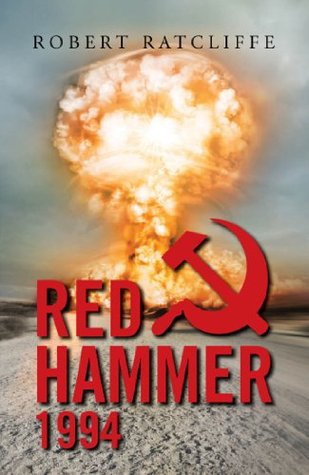
Red Hammer 1994

Robert Ratcliffe’s Red Hammer 1994 is a tale of an alternate nuclear World War III in the early 1990s. The feared regression to authoritarianism takes place in post-1991 Russia, and its leader proceeds to launch a nuclear strike on the west. Cue a big picture, wide-scope look at everything from bombers to silos to submarines to, yes, conference rooms.

The characters feel just like they’re just there to operate military equipment instead of being actual characters. The plot is basically “have a nuclear war that stays mainly counterforce and thus only mauls civilization instead of wrecking it totally, and show every part of it in set pieces”. The grounded and frequently realistic (at least technically) nature of the book is somewhat admirable, but works against it when questionable moments like a giant force of super-Spetsnaz in the continental US emerges-or for that matter, the basic plot happening at all. The ending is incredibly abrupt (and not in a plausible Dr. Strangelove way) and the most positive elements are some of the set pieces themselves.

This is what it is. If you like technical detail and want to see Herman Melville’s Story Of A Moderate Nuclear War, you’ll like this book. But if you want a solid narrative, this isn’t it.

Review: Primary Target

Primary Target

Jim Heskett and Nick Thacker’s Primary Target is not the deepest story, nor does it have the most plausible premise. Basically, circumstances lead to assassin Ember Clarke having to participate in a trial by combat, fighting off other assassins trying to kill her over the course of several weeks.

However, in spite of this setup, it’s well done. Yes, it has the “this isn’t a movie but I do super stuff anyway” gripe I’ve seen far too often, and its premise deserves action far more bizarre and over the top than what actually occurs. But the book remains a solid cloak and dagger thriller.

Granted, I’m not the biggest fan of such novels, but I still like variety. And this is cloak and dagger done very well.

Review: The Weekend Warriors

The Weekend Warriors

Reading James Burke’s The Weekend Warriors means I’ve now read all ten of the alternate history conventional World War III series I’d identified. So how is it?

Telling the story of National Guard soldiers and their families during a 198X Fuldapocalypse, Burke uses some plot devices I’ve thought would have worked, like using fictional unit designations. He also aims for characterization and doesn’t hesitate to show the duller parts of military life. The result is something that tries to be something fuller than just tanks exploding…

…With an emphasis on tries. A lot of the high-level military details are anachronistic and in some cases outright “off”. The most jarring example to me was how the Soviets would focus on NORTHAG (which would be true) and thus do nothing but special forces operations in the American sector at the beginning of the war (which would not be). The action suffers from the same rough prose as the rest of the work and sometimes devolves into listing armaments in full.

Because of this, it comes across as being like a somewhat worse Chieftains-a tale of a conventional World War III that’s ambitious, but erratic and unpolished in execution.

Review: The Man With The Iron Heart

The Man With The Iron Heart

One of my theories about Harry Turtledove is that, for all times he’s been labeled “the master of alternate history”, he never had the most enthusiasm for the genre. It goes like this: Turtledove wanted to write Byzantine/Eastern Roman-themed fantasy, but after Guns of The South, alternate history became the money-making niche that he was stuck in. Turtledove would be neither the first nor last writer to have their most successful fiction be considerably different from the type they actually wanted to write.

Or maybe he did have enthusiasm for the genre, but didn’t have the mindset needed to really take advantage of it. Or maybe the nature of alternate history and needing to appeal to a generalist audience who doesn’t have the most knowledge of history forced him into a corner. Whatever the reason, The Man With The Iron Heart symbolizes the weaknesses of his style vividly.

The plot is simple. Reinhard Heydrich survives, gets the Werwolf resistance movement up and running, and launches a horrifically hamfisted/anachronistic Iraq War analogy. In reality, the German populace at large had no stomach for continued resistance, and the Allies, who came close to turning Germany into a giant farm, were prepared to crack the whip. The Werwolf plan was doomed from the get-go by the scarce resources and infighting that was baked into the Nazi regime from day one.

The execution of the book is done just as clumsily and clunkily as the setup. Much of Turtledove’s writing has the problem of what I frequently call the “technothriller without technology or thrills”, and this is no exception. It uses the “alternate history as a genre format” where there’s a big-picture, broad-viewpoint look at the situation and changed world. However, if the changed world is nothing but an unrealistic and worse, uninteresting analogy, that format is the worst possible.

Alternate history is a very divided genre. There are a lot of reasons for this, from the vague nature of what it even is to the different desires of different fandoms to how it’s frequently not considered advantageous to label a work as such. But that the “mainstream” end often consists of books like this doesn’t help.

Maybe there’d be more overlap if someone really did extensive research, made it more character focused, and kept it feeling substantially different while providing still noticeable but far more subtle commentary. Instead, Turtledove wrote this book, which I do not recommend.

Review: Area 51

Area 51

The first book in a long series, Bob Mayer’s Area 51 (originally published under the pen name “Robert Doherty”) is a “secret history” flying saucer thriller story. By itself, it’s a decent enough 51% book. What brings it down is, weirdly, the plot. Oh, there’s a few technical inaccuracies like having F-16s be around in 1970 and putting them on aircraft carriers, but the real issue I found was structural.

What my binge of Cussler-esque “find the ancient MacGuffin” books has taught me is that premise alone doesn’t make for a good read. And this is definitely the case with Area 51.

Here, there’s two problems with the alien technology. The first is that it’s too powerful in context. Not only does it function as a convenient plot enabler and deus ex machina, but it basically turns the entire book into watching a tale of the aliens. And that tale is dull and cliche. The second problem is that flying saucers don’t embody majesty and secrecy, but rather goofy Plan 9 From Outer Space kitsch.

The result is that the book is little but a throwaway curiosity.

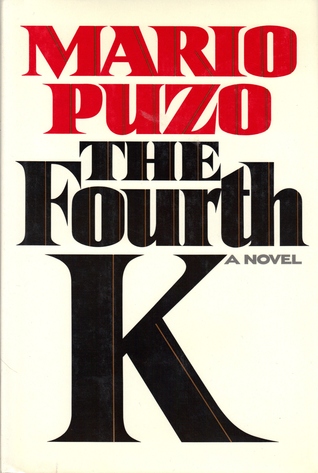
Review: The Fourth K

The Fourth K

fourthk

Fuldapocalypse now turns its attention to Mario Puzo’s The Fourth K. Puzo was most famous for writing The Godfather. In one of his later books, he writes of a fictional member of the Kennedy family becoming president before facing a crisis overload. I was reminded most of Sidney Sheldon’s “gilded trash” with this novel.

So little of it makes sense to anyone really knowledgeable,which makes its supposed prescience backfire. Instead of going “A-ha, that foresaw (vaguely related event) “, I went “Well, in real life (vaguely related event) didn’t happen anything at all like this”.

The political details don’t make sense. The military details especially don’t make sense (Puzo seemed to have no idea how big a “division” of troops would be, and that’s just the tip of the iceberg). But when did not making sense stop me?

The bigger problem comes from the prose. Sheldon’s writing was very simple and flowed freely and easily. This is incredibly blocky and clunky. The plot feels like a badly-flowing sequence of events, and isn’t helped by the “crisis overload”. Imagine House of Cards, The Sum of All Fears, pure sleaze, and a bit of science fiction all jumbled together.

It’s easy to feel the “one man’s descent” storyline that Puzo was sort of aiming for, but there’s nothing to really reinforce it. It just comes across as wandering, vaguely coherent, gilded sleaze.

Review: X-COM UFO Defense

X-COM UFO Defense

Video game novelizations do not have the best reputation. Keeping that in mind, how does Diane Duane’s work on the classic video game X-COM turn out?

The story of X-COM commander Jonelle Barrett running a base in Switzerland, Duane seems interested in making a huge effort to write about everything except fighting aliens. This by itself isn’t too bad. In terms of accuracy, X-COM, particularly the original, is as much about managing resources as it was battling the invaders. In terms of plausibility, no one’s going to be spending every waking moment shooting Sectoids. In terms of characterization, they shouldn’t be automaton spacesuit commandos.

And yet they basically are, for the book is about 95% pure padding. Descriptions of Swiss geography fill most of it, alongside what seems like an obligatory mention of every element in the game. The rest consists of half-hearted “she just looked at the names and wanted to get them over with” battles with redshirts that are every bit as expendable and forgettable as the actual minions one controls in the games. This is one of the most blatantly obvious “I did this for the money with no enthusiasm” books I’ve read.

Review: Edison’s Conquest of Mars

Edison’s Conquest of Mars

From energy guns to ancient aliens building ancient civilization megastructures, a lot of sci-fi tropes originated in Edison’s Conquest of Mars. Besides that, this book is fascinating because of how min-max it is. A sequel to War of the Worlds bootlegs (it’s a bit of a long story), author Garrett Serviss made-something.

On one hand, the prose is terrible and flat even by 19th Century standards. It’s a self-promoting effort by the title character/famous person. The plot goes against Wells’ theme to a ridiculous extent. The most ridiculous elements seem mundane when actually described. It was originally a short-form serial and it shows in the writing.

And yet so much of the sci-fi cheap thriller was started, or at least popularized here. This, is very much like seeing a video game or movie that’s at the very, very beginning of its genre. It looks horrifically crude in comparison to its later successors, but you have to start somewhere.

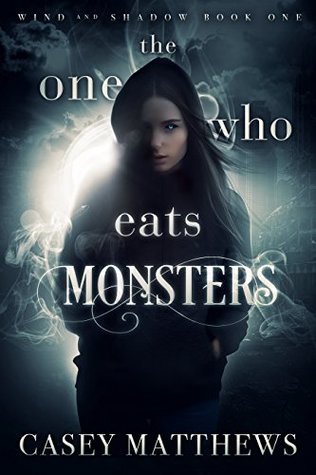
Review: The One Who Eats Monsters

The One Who Eats Monsters

monstercover

Once again, Fuldapocalypse takes the plunge into a new genre. After seeing a good review of it on Spacebattles, I decided to read Casey Matthews’ The One Who Eats Monsters for myself.

This of course, is an “urban fantasy” novel, where you have supernatural entities hidden inside the modern world. Ryn, the protagonist is one of them, an ancient humanoid creature and vicious ‘hunter of monsters’. Throughout the book she alternates between being a vigilante and protecting a politician’s daughter she begins to develop very human feelings for.

Urban fantasy isn’t really a genre I read much of, although more for matters of admitted personal taste than any actual, inherent dislike. With that in mind, it was good for what it was. It definitely has some notable flaws. The human dialogue was often, er, “subpar”, and there were dramatic contrivances that made sense in-universe but still felt forced from a storytelling perspective.

But that’s more than made up for by the book having exactly what a cheap thriller needs to succeed-good action and good pacing. This definitely has both, although the sequel hook segment at the end is incredibly rushed.

The characterization is mixed but still ultimately positive. Many of the other characters are either shallow, stereotypical, or both. However, Ryn’s “monster with a conscience” is well-done, and that’s what matters most. Even the romance (and this is not a romantic fiction blog) is done surprisingly well-done.

One interesting note is that this is technically an alternate history novel. Among other things, supernatural shenanigans prolonged the existence of the Soviet Union (ah, those Fuldapocalypse zombie sorceresses). It reminded me, alternate history reader and writer, of this very big phenomena where a lot of fiction could be reasonably labeled “alternate history”, but because there’s no real incentive to do so, it isn’t.

I’m still not exactly a fan of urban fantasy, but I don’t regret taking a chance on a different genre with this book.

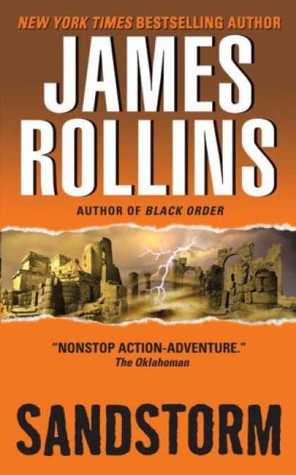
Review: Sandstorm

Sandstorm

sandstormcover

James Rollins’ Sigma Force series begins with Sandstorm.

I might have a little bit of “hype backlash” because of the way this series has been praised so much. I might also be used to ridiculous thrillers because of the way I’ve actively sought them out, so what seems utterly crazy to a less prolific reader might not be that way to me.

That being said, this was a very good, very out-there cheap thriller. I’d describe it as a more tacticool version of Clive Cussler. The ridiculous technobabble and ancient puzzle-solving is there, but the action (which is both incredibly frequent and often janky) is more conventional and, for lack of a better word, “tactical”, save for an amazing scene where someone dual-wields pistols on horseback. While I like it, it’s not the best ever in my eyes.