In many ways, Aeroflot mirrored the USSR itself. Its breakup in 1991 scattered the massive airline’s assets across all the independent republics. Christopher Buckley’s Soviet-Era Airliners: The Final Three Decades tells the story of what happened to all the “Classics”, “Crusties”, “Carelesses”, “Clobbers”, and more. While the collapse of the USSR and the failure of its aviation industry to make a competitive product caused its new-build civil aircraft industry to fall apart instantly, there were lots of surplus planes around.
This book does a great job showing most of their fates. There’s lots of details and even more excellent photographs. If you like civil aviation at all, this is a great book. I was curious to see what happened to these flying trilobites, and now I know.
Peter van der Bijl’s Confrontation is a military history of the four-year small war known as the Konfrontasi. It goes into extremely military detail. What’s not to like? The answer is, surprisingly, a lot. This isn’t really a bad book, but it is a flawed one.
The first flaw comes from the nature of the war: It really wasn’t much of one. It was more a political stunt by Sukarno than anything else, and the actual service chiefs did the bare minimum to support it. This isn’t the author’s fault, but his priorities are. There’s less of the politics (though they’re still present) and more of firefights in the jungle that blend together (almost always ending with “better-trained Commonwealth troops get the better of worse Indonesians”).
The second comes from the author’s biases. There are a lot of rants about journalists, especially journalists covering the Troubles, which feel kind of out of place. Worse is the absolute fawning hagiography of the British and Commonwealth armies. This is accurate in terms of specifics vis a vis the Indonesians, but still gets annoying, as does the very British slant of “unlike you knuckle-dragging Yanks, we won our jungle war” without noticing the very different context of Malaya. Finally, there’s no real attempt to explore escalation counterfactuals beyond just “The Indonesian air force and navy wasn’t very good”.
This ultimately comes across as just a series of jungle warfare vignettes. It’s not the worst book about its conflict, but it’s not the best and could be much more.
The subject of Rhodesia and its war is dominated by uh, “iffy” sources that I shouldn’t have to explain the problems with. Thankfully, among these strides a beautiful unicorn: Moorcraft and McLaughlin’s The Rhodesian War: A Military History. Originally released not long after the war’s end and Zimbabwe’s creation, it recently got an updated edition on post-war developments.
What this is is a very evenhanded, very detailed look completely devoid of “Fire Forces! Selous Scouts!” “Shorts!” “Be a Man Among Men!” Soldier of Fortune romanticism. It doesn’t hesitate to look at the negatives of the guerillas (and, in the updated edition, the Mugabe regime), but it’s unsparing in its blunt assesment of the minority government: Rhodesia was doomed from the start. The British knew it. Apartheid South Africa knew it, which is why they tried to twist Rhodesia into stepping aside in favor of a moderate African government, rather than face a radicalized one on their border that would develop from a victorious war. I don’t think it’s an exaggeration to say that even South Vietnam and 2001-2021 Afghanistan rested on vastly sturdier foundations than Rhodesia did.
The Rhodesians had no concept of war as a political entity and were only good at leveraging limited resources in tactical operations. Even those were aided by weaker opponents (Rhodesians themselves had said that if the guerillas had been as astute in military craft as the Vietnamese ones had been, the war would have been lost much sooner), and said opposition was becoming better as the end of the decade neared.
This is one of the best-single volume military histories I’ve read. It’s also a great antidote to noxious internet fandom surrounding a country that simply did not deserve it.
The one thing going in the would-be nuclear terrorists favor is that nuclear weapons have a lot of “slack” built into their design. IE, they can be ridiculously “inefficient” and still be devastating. Even a rough-implosion sub-kiloton warhead is still a much hotter, radioactive version of this:
But that’s it. Everything else works against them. There’s a lot of attention paid to nuclear material ever since the 1940s for obvious reasons. The materials require specialized personnel and are hazardous (radiation is the least of the worries-both uranium and plutonium are extremely flammable, for one). I used the analogy of Y2K in my review of the best book on the subject that I’ve read.
While reading Brian Michael Jenkins’ own book, one passage jumped at me. This was Jenkins, a renowned terrorism and security expert, talking about how the yields increased.
We have too easily slid from the scientists’ first estimates of terrorist nuclear devices with yields likely to be in the tenths of a kiloton range to a now-assumed standard of a ten-kiloton terrorist bomb. The worst case has become the baseline assessment.
-Brian Michael Jenkins. Will Terrorists Go Nuclear? (Kindle Locations 3611-3612). Kindle Edition.
And yet, both seem valid. Ten kilotons is slightly less than Little Boy, an extremely simple “bang two chunks of HEU together” design whose biggest limiter is that it requires a lot of fissile material. Less than a kiloton is what’s often theorized for a very basic implosion design, necessary with plutonium as the explosive material. Since in the 1970s there was justified fear around the glut of plutonium, that is not an unreasonable assumption. Likewise, it’s also not unreasonable to assume that with access to Little Boy levels of material (Cold War “Surplus”?) one could make a Little Boy level bomb.
There are no real case studies to go on. Aum Shinrikyo conducted the only known and most credible attempt to acquire nuclear weapons by a terror group. It never got beyond basic theoretical designs, as has every other terror daydream. With a (thankful) sample size of zero, all planners can do is base the possibilities on theory.
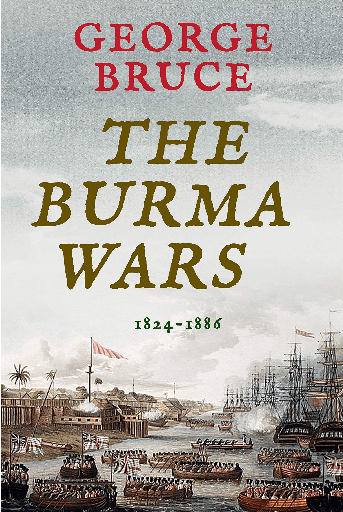
Because Myanmar/Burma features so prominently in my current novel draft, I figure I’d look at George Bruce’s The Burma Wars , a history of the British conquest. There were three large Anglo-Burmese wars, but Bruce mostly concentrates on the first. This is understandable, as the latter two were uninteresting squashes.
Bruce is every bit the Empire fan you’d expect a British pop-historian of the 1970s to be, but he still gives the Burmese credit when due. They were comparably armed, had a knack for building fortifications quickly, and the Anglo-Indian force that went against them was logistically troubled and questionably led. And yet, the British still eventually won, and it only got better/worse from there.
I wouldn’t make an old piece of popular history the sole source on any big historical event, but this at least made for a good starting point. I’m glad I read it.
Directed by Joseph Losey and starring Richard Burton as the title character, The Assassination of Trotsky is often placed on many “worst movies ever” lists. It is a well deserved placement. For this is a terrible, terrible movie. And it’s deliberately terrible-it’s not due to circumstances, but due to creative choices.
First off is Richard Burton’s performance. His Trotsky looks like a cheap Colonel Sanders mascot and acts like that aging beatnik professor you had in college and loathed. You will learn absolutely nothing about the historical context from this film. In fact, the only way to make sense of the incoherent plotting is to assume that Losey thought the audience would already know everything historically relevant.
Second is the massive, massive padding. Since it doesn’t take ninety minutes to have an ax hitting someone in the head (SPOILER ALERT!), Losey fills the movie with filler. This includes a scene involving rabbits being raised, a long gondola ride where Stalin’s image appears in the water, and, worst of all, a long and gruesome bullfight scene. The only attempts at suspense involve dragging every scene out and playing minimalist music. This gets old after about, oh, two such scenes.
About the only sympathetic character is Romy Schneider’s “Gita”, who is as confused with the situation and disgusted with the bullfight as the audience is. Sadly, she cannot carry on her own, and is the subject of a padding scene as well.
This is a terrible, terrible mess that’s almost so bad it’s good. Almost.
Apartheid South Africa built a handful of nuclear bombs before the ANC government dismantled them. As a result of that revelation and transparency, it provided an interesting look into a a field that is understandably quite opaque otherwise. David Albright and Andrea Stricker’s Revisiting South Africa’s Nuclear Program show it in depth.
Altough this is a technical nonfiction book, Albright and Stricker nonetheless write well, and it’s quite accessible to non-nuclear physicists. The creation, developmental struggles, warhead production, and removal of South Africa’s nuclear weapons is all covered, and there are several interestingly unique factors about it that the book provides.
The first is a technical tidbit. South Africa went with a conceptually simpler gun-type device in the style of Little Boy. However, their device was small enough to fit on a Raptor glide bomb carried by a Blackburn Buccaneer, and there were (preliminary) plans to boost it to around a hundred kilotons using a special pellet. As most powers have used implosion devices, South Africa’s experience shows how far the basic gun-type can be pushed.
The second is that, unlike other nuclear programs, South Africa’s was comparably well run and efficient. The pragmatic choice of a gun-type was one of the good decisions that it made. And it still took several years in peacetime while running into bottlenecks-most notably the enriching of uranium.
For those interested in the relevant subjects, this book is thus a good read.
Famous Russian Aircraft: Mikoyan MiG-23 and MiG-27
Another Gordon/Komissarov book specializing in the study of just one platform, I knew I had to get the volume on one of my favorite ugly ducklings: the MiG-23. The Flogger did not enjoy a charmed life. With hindsight, it occupied an uncomfortable niche between the cheap MiG-21 and advanced later fighters. Its swing-wing design was a long-term limiter. The MiG-23MS export version, with no long-range missile ability, was the equivalent of using a Manning brother as a running quarterback.
This is a little better laid out than the MiG-29 book, but it still has iffy formatting and a tendency to shift into colloquialisms like lots of exclamation points! That being said, it delivers a lot of technical-and operational-info. It has the strike and fighter variants all covered, as well as exotic proposals like the IFR-capable carrier versions and my most beloved unsuccessful attempt to put new wine in old wineskins: The MiG-23-98 series.
It’s definitely written by and for aviation enthusiasts, but I had fun with this book. It’s a worthy tribute to an often (and not unreasonably) savaged aircraft.
I had the great experience of participating in a Sea Lion Press discussion on power, war, and violence in alternate history. The first part has been posted here.
Norman Friedman turns his knowledgeable eye to one of the most arbitrary ship classes in British Cruisers. Going from the early 20th Century to the Cold War, he covers the enigmatic ship type that can best be summed up as “bigger than a contemporary destroyer, but not too big”. From wartime workhorses to unusual goofy designs, Friedman leaves few Royal Navy stones unturned.
The final desperate attempts at large capital ships after 1945 are the most interesting to me. The large “escort cruisers” started off as ASW helicopter ships, then grew into the famed de facto light carriers they became and were later used as. Everything else was rightly shelved. But this is a typically excellent technical history of cruisers in all eras.